
Written by Skin Excellence Medispa Editorial Team.
Clinic review by Zahra Erfan, Owner of Skin Excellence Medispa.
If your jawline has softened or the skin on your neck looks looser than it did two years ago, you are not imagining it. Loose skin is one of the most common concerns we hear at our Aurora clinic, and it is also one of the most misunderstood. Many people assume the only real fix is surgery, while others spend money on treatments that address fine lines but do little for sagging. In this guide, we explain how skin laxity develops, which non-surgical options can genuinely help, and how to choose a treatment that matches what is happening in your skin. If you are searching for a skin laxity treatment in Aurora, this is the framework we walk clients through before they book.
Table of Contents
- Quick Takeaways
- What Skin Laxity Actually Is
- Non-Surgical Options Available in Aurora
- Radiofrequency and Laser Tightening
- Matching the Treatment to the Area
- Comparing the Main Approaches
- Preparing for Your Consultation
- Common Mistakes With Loose Skin Treatments
- Frequently Asked Questions
- References
Quick Takeaways
| Key Insight | Explanation |
|---|---|
| Botox does not tighten skin | It relaxes the muscles behind some lines, which can soften the upper face. It will not lift a jawline that has lost support. |
| Sculptra works over time | It stimulates your own collagen, so judge the result after the full course, not after the first visit. |
| Belkyra targets fat, not skin quality | Deoxycholic acid reduces fat under the chin. It can refine a soft jawline profile, but it does not firm the skin itself. |
| Energy devices suit mild to moderate laxity | Radiofrequency and laser approaches work best when the skin still has some elasticity. Large amounts of excess skin usually need a surgical conversation. |
| Plan a series, not a single session | Most non-surgical tightening builds gradually. Compare progress across weeks, not days. |
| Sun protection protects your results | UV exposure keeps breaking down collagen. Daily sunscreen is the simplest way to protect any treatment you invest in. |
| Bring a clear goal to your consultation | A practitioner can only match a treatment to a specific target, such as jawline definition, neck texture, or overall firmness. |
What Skin Laxity Actually Is
Skin laxity is the loss of firmness and elastic recoil that lets skin sag or drape over the structure beneath it. It is not the same as a wrinkle. Fine lines are surface creases, while laxity is a change in how the deeper layers hold the face and body together.

Collagen and elastin do most of the work here. Both decline with age, and sun exposure speeds up the breakdown of collagen. Hormonal shifts, significant weight changes, and pregnancy can also change how the skin stretches and recovers.
Why the Jawline and Neck Show It First
In practice, the jawline and neck are where we see laxity most often. The skin there is thinner, and it has less fat and muscle support than the cheeks. A softening jawline or a band of loose skin under the chin is usually the first sign clients notice.
Laxity Is Different From Excess Skin
Mild to moderate laxity responds to non-surgical care because the skin still has some ability to rebound. When there is a large amount of extra skin, no device or injectable will remove it. A practitioner should be able to tell you which category you fall into before any treatment begins.
Demand for these options has grown quickly. A 2020 review in Plastic and Reconstructive Surgery Global Open reported that patient demand for nonsurgical skin tightening with little downtime had increased 600% over the previous 15 years. Much of that demand comes from people who want visible change without a recovery period.
Skin tightening works best when the goal is realistic, the diagnosis is accurate, and the treatment plan is built around the area that is actually loose.
Non-Surgical Options Available in Aurora
Our menu covers several categories that clients often lump together, but they do very different jobs. Some stimulate your own collagen over time, some relax muscle, and some add volume or reduce fat. Knowing which job a treatment does is the first step toward a useful result.
Sculptra and Gradual Collagen Support
Sculptra is a collagen stimulator rather than a traditional filler. It is placed beneath the skin to encourage your body to produce its own collagen, so the improvement builds over several weeks to months. For clients with thinning cheeks or a hollowed face that makes the skin look loose, this can change overall support. It is not an instant lift, and clients who expect a result after one visit are usually disappointed.
Micro-needling With PRP and PRF
Micro-needling creates controlled micro-injuries in the skin, which triggers a repair response. When it is combined with platelet-rich plasma (PRP) or platelet-rich fibrin (PRF), both prepared from your own blood, many clients use it as a skin quality and texture treatment. We find it works best for crepey skin on the neck, the chest, and the under-eye area, where the surface looks thin and tired. It does not replace energy devices for significant laxity, but it can be a sensible step for early changes.
Pro tip: If your main complaint is texture, such as crepey skin on the neck, ask whether micro-needling alone is enough before you commit to a multi-session plan.
Botox, Fillers, and Belkyra: Where They Fit
Botox relaxes the muscles that pull on the skin, which can soften horizontal forehead lines and the lines between the brows. It does not tighten sagging skin and should not be sold as a lift. Dermal fillers restore volume to areas that have deflated, which can change how the skin drapes over the cheek and jaw. Belkyra uses deoxycholic acid to reduce submental fat under the chin, so it can improve the profile of a soft jawline, but it does not tighten the skin itself.
Radiofrequency and Laser Tightening
Energy-based devices are the category most people mean when they ask about skin tightening. They deliver controlled heat into the deeper layers of skin, aiming to contract existing collagen and encourage new collagen formation. Radiofrequency and laser are the two approaches we discuss most often with clients looking for firmness rather than volume. Not every clinic offers every energy device, so ask which tools are used on site.
The clinical literature on radiofrequency is substantial. The 2020 review noted that the use of radiofrequency for soft tissue tightening has increased over the past 10 years, and that both minimally invasive and noninvasive devices are in frequent use. It focuses on the current evidence for their safety and efficacy, which is the right lens for judging any device a clinic offers.
How Radiofrequency Heats the Deeper Layers
Radiofrequency energy passes through the skin and warms the dermis to a controlled temperature. The heat causes existing collagen fibers to contract and signals the body to lay down new collagen over the following weeks. Because the surface is largely spared, many clients return to normal activity the same day, though some redness and warmth are common for a short period.
Where Laser Fits in the Plan
Laser skin tightening uses focused light energy to heat deeper tissue, and it is often chosen for fine crepe texture as well as mild laxity. When surface texture is part of the concern, laser is often part of the discussion. Radiofrequency is more commonly discussed for firmness along the jawline and neck.
Setting Realistic Expectations
Energy devices produce modest, gradual change. Most clients see improvement over several weeks as collagen rebuilds, and results vary with age, skin thickness, and how much laxity is present. A realistic target is a firmer, more defined contour, not a transformed face. Anyone promising a dramatic lift from one session deserves a second opinion.
Pro tip: Take photos in the same light and from the same angles before your first session. Comparing those photos at the six-week mark will tell you more than memory does.
Matching the Treatment to the Area
The area matters as much as the technology. A treatment that works well on the cheeks may do little for the neck, and the body has different skin thickness and laxity patterns than the face. The first question we ask is where the concern is most visible, both in photos and in the mirror.
Jawline and Neck
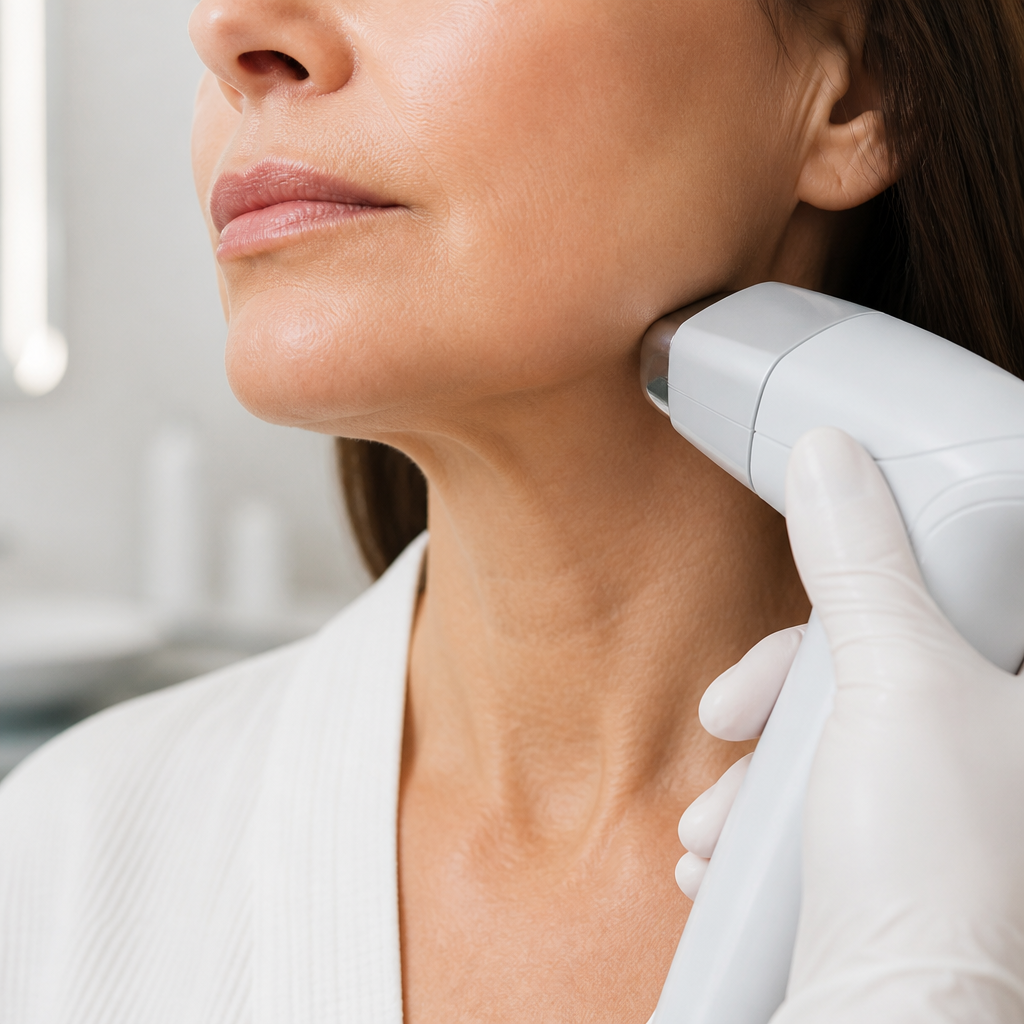
The jawline and neck respond best to a combined plan when laxity is mild to moderate. Energy devices can add firmness, while volume work such as Sculptra can help when the lower face has lost support. Neck skin is thin, so a practitioner should be cautious about aggressive settings there. Ask how often the team treats the neck before you book.
Under-Eye and Upper Face
The eyelid area is delicate, and crepey skin here often responds better to micro-needling than to high-energy devices. Botox can soften the lines created by muscle movement in the upper face, which can make the skin look smoother. It will not remove loose skin on the upper eyelid, and that question belongs in a surgical consultation.
Arms, Abdomen, and Body Laxity
Body laxity is harder to treat without surgery, especially after large weight changes or pregnancy. Some energy devices are used on the abdomen and arms for mild looseness, but results are usually more modest than on the face. If the skin has a large amount of excess, the honest recommendation may be to discuss surgical options rather than stacking non-surgical sessions.
Comparing the Main Approaches
Comparing options side by side makes the trade-offs clearer. The table below reflects how we usually frame these approaches for clients, and it is a starting point rather than a prescription.
| Approach | Best suited for | Typical limitation |
|---|---|---|
| Sculptra (collagen stimulator) | Thinning cheeks and volume loss that make the skin look loose | Results build gradually over weeks to months and are not an instant lift |
| Micro-needling with PRP or PRF | Crepey texture on the neck, chest, and under-eye area | Limited effect on significant laxity |
| Radiofrequency or laser energy devices | Mild to moderate firmness along the jawline, neck, and body | Modest, gradual change, and not suitable for large amounts of excess skin |
The most useful comparison is not which option is strongest, but which one addresses your specific problem. A client with thin cheeks and mild jowling needs a different plan from a client whose main concern is crepey neck skin.
Combining Treatments Without Overdoing It
Many good plans combine two approaches, such as volume restoration with energy-based firming, or micro-needling for texture. The risk is stacking too many sessions at once without a clear sequence. We prefer to space treatments so you can see what each one contributed before adding the next.
Why Cost Should Not Be the Starting Point
Choosing the cheapest session often leads to repeating treatments that do not match the problem. A single well-chosen plan usually gives clearer results than several unrelated appointments. Ask the practitioner to explain the expected timeline and what you should see at each stage before you commit to a package.
Preparing for Your Consultation
A good consultation should feel like an assessment, not a sales pitch. Expect the practitioner to examine your skin in good light, look at how your face moves, and ask about your goals and medical history. If you leave without a clear explanation of what is causing the laxity, the plan is probably not specific enough.
Questions to Ask Before You Book
Ask which treatments are recommended for your area and why the alternatives are not. Ask how many sessions are typically involved, how long before you would see change, and what downtime to expect. Ask who performs the treatment and whether you can see before and after photos of similar concerns.
Timing, Downtime, and Sun Exposure
Plan treatments around your calendar, not the other way around. Energy devices may cause temporary redness, and some injectables can bruise, so book with enough time before a wedding or photo shoot. Sun exposure before and after treatment can increase irritation and undermine results, so daily sunscreen should be part of the plan from day one.
Pro tip: Bring a list of your current skincare products and any medications you take. This helps the practitioner avoid conflicts and choose settings that suit your skin, which makes the first visit more productive.
Common Mistakes With Loose Skin Treatments
Most disappointing outcomes come from a few predictable mistakes. Clients rarely fail because the technology is poor. They usually fail because the target was wrong, the expectations were inflated, or aftercare was ignored.

Treating Excess Skin as if It Were Laxity
This is the most common error we see. A client with a large amount of extra skin hopes that a series of energy sessions will remove it. They may spend months and money before accepting that the skin needs a surgical conversation. An honest assessment at the start saves time for everyone.
Skipping Sun Protection
UV exposure continues to break down collagen, which works directly against any treatment meant to rebuild it. Clients who tan between sessions often notice less progress than they expected. Daily broad-spectrum sunscreen is not optional if you want to protect your results.
Judging Results Too Early
Collagen remodeling takes time. Clients who compare themselves after three days often decide a treatment failed when it had barely started working. Set a checkpoint at several weeks, and use the same photos and lighting each time to judge progress fairly.
Frequently Asked Questions
Can non-surgical skin tightening remove loose skin completely?
Not usually. Non-surgical options can firm mild to moderate laxity and improve how the skin looks, but they cannot remove a large amount of excess skin. If your skin has significant extra tissue, a surgical consultation is the more honest discussion.
How long do non-surgical tightening results last?
There is no single answer, because results depend on the treatment, your age, sun habits, and how much laxity you started with. Since skin keeps aging, most clients plan periodic maintenance rather than expecting a permanent fix.
Does Botox help with a sagging jawline?
Botox is not a tightening treatment for sagging skin. It relaxes muscles that cause some lines, so it may soften the look of the upper face, but it will not lift a jawline that has lost support. Volume or energy-based options are usually discussed for that concern.
How many sessions will I need?
Many plans involve a series of sessions spaced several weeks apart, while some clients need only one or two visits for a specific concern. The right number depends on your assessment, and your practitioner should explain the timeline before you start.
Is there downtime after these treatments?
Downtime varies by treatment. Energy-based devices often allow a return to normal activity the same day, although redness and warmth can last for a short time. Injectables and micro-needling can cause temporary swelling, redness, or bruising, so plan around any important events.
Do I need a consultation before booking a treatment in Aurora?
Yes. A consultation is where your practitioner checks skin quality, assesses laxity, reviews your medical history, and recommends an approach. You can book a consultation with Skin Excellence Medispa to discuss your goals.
About Zahra Erfan
Zahra Erfan is the owner of Skin Excellence Medispa in Aurora, Ontario. She oversees the clinic’s client experience, treatment standards, and aesthetic services. Her work with Skin Excellence gives her firsthand insight into the questions clients commonly ask when considering aesthetic treatments in Aurora.
Skin Excellence Medispa is an independently operated medical aesthetics clinic in Aurora, Ontario, owned by Zahra Erfan.
Skin Excellence Medispa
14845 Yonge Street, Unit 301
Aurora, Ontario L4G 6H8
(647) 979-5927
marketing@skinexcellencemedispa.com
Aurora, Ontario
This article is provided for general educational purposes and does not replace an individual medical consultation. Treatment suitability, risks and expected outcomes vary by patient and should be discussed with a qualified healthcare professional.
Considering a treatment in Aurora? Book a consultation with Skin Excellence Medispa to discuss your goals and determine whether it is appropriate for you.
Have you tried a non-surgical tightening treatment, or are you still weighing your options? We would like to hear about your experience or any questions you have.