About us
Execution is the single biggest factor in achievement so the faster and better your execution.
Contact Info
14845 Yonge street unit 301, Aurora Ontario, L4G 6H8
Tuesday to Sunday
10:00 AM to 6:00 PM
Execution is the single biggest factor in achievement so the faster and better your execution.
14845 Yonge street unit 301, Aurora Ontario, L4G 6H8
Tuesday to Sunday
10:00 AM to 6:00 PM
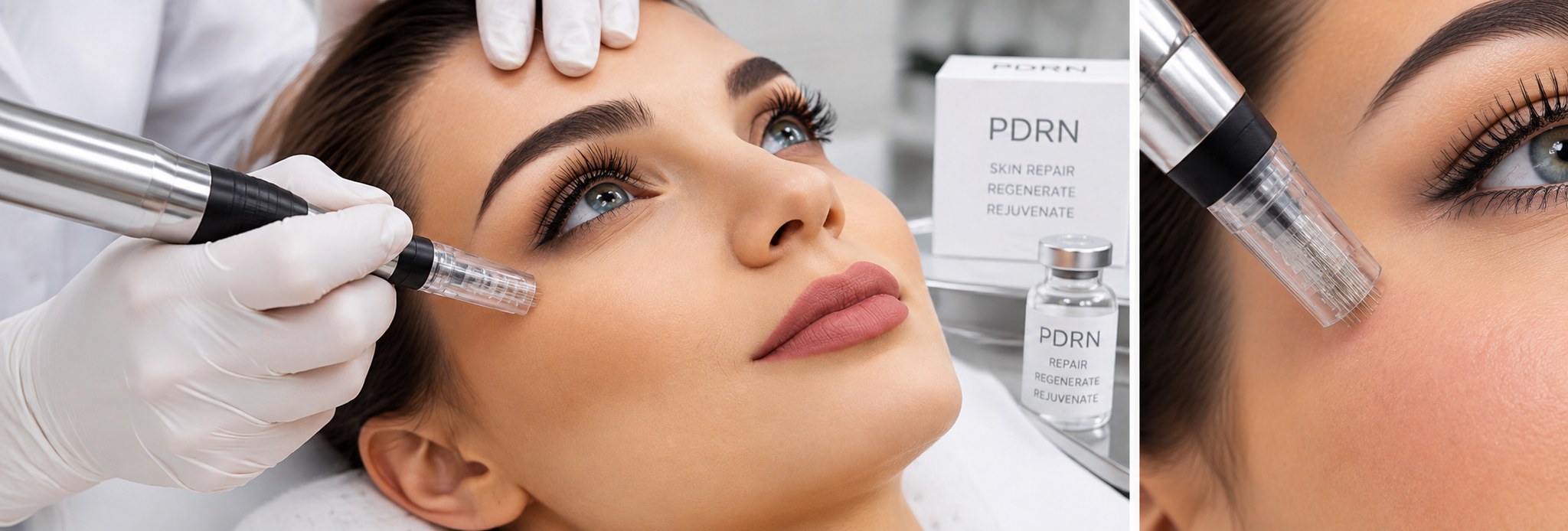
PDRN microneedling is an emerging aesthetic approach that combines traditional microneedling with products containing polydeoxyribonucleotides, commonly referred to as PDRN or salmon DNA.
These DNA derived compounds are being researched for possible applications in skin appearance and tissue repair. However, evidence specifically supporting PDRN combined with microneedling remains limited, and results depend on the product and treatment method.
At Skin Excellence Medispa in Aurora, Ontario, we believe that understanding treatment options, available scientific evidence, and potential risks is an important part of making informed skincare decisions.
This guide explains what PDRN is, how it relates to microneedling, and what people should know before considering products marketed for skin rejuvenation.
Our clinic is conveniently located at 14845 Yonge Street, Unit 301, Aurora, Ontario, and welcomes clients from Aurora, Newmarket, Richmond Hill, and surrounding York Region communities.
PDRN stands for polydeoxyribonucleotide, a mixture of DNA fragments being investigated for applications in tissue repair and aesthetic medicine.
Some PDRN formulations are derived from purified DNA obtained from salmon or trout, which is why the ingredient is sometimes marketed as salmon DNA.
Researchers are investigating how these compounds may influence processes associated with tissue repair, inflammation, and cellular activity.
However, the fact that PDRN participates in certain biological pathways does not mean every skincare product containing it produces measurable rejuvenation benefits.
Individual products can differ in concentration, formulation, manufacturing methods, and intended use.
At Skin Excellence Medispa in Aurora, we encourage clients to understand the available evidence and treatment considerations before exploring emerging aesthetic procedures.
PDRN has attracted attention in regenerative medicine because of its potential effects on biological pathways associated with tissue repair.
Research suggests that certain PDRN preparations may influence adenosine receptor signalling and processes involved in inflammation, cellular recovery, and tissue healing.
Some laboratory and clinical studies have reported promising findings.
However, biological mechanisms do not automatically translate into visible cosmetic improvements for every person or every product.
The effectiveness of PDRN depends on factors including the formulation, method of administration, treatment indication, and individual response.
Additional clinical research is needed to establish which products and procedures provide meaningful and lasting benefits.
A July 2026 systematic review included seven randomized trials involving 183 participants studying PDRN and polynucleotide treatments for skin rejuvenation, scar prevention, and wound healing. Read more about it here.
The authors found encouraging outcomes, particularly in wound healing, but emphasized that the studies were small and used different formulations and treatment protocols.
PDRN is primarily associated with activation of the adenosine A2A receptor pathway, which can influence:
In simple terms: PDRN helps create a more favorable environment for skin repair and regeneration.
PDRN and polynucleotides are related DNA based materials being investigated for medical and aesthetic applications.
PDRN generally refers to preparations containing shorter DNA fragments, while certain polynucleotide products contain longer molecular chains.
However, terminology and product formulations differ between manufacturers.
The two terms should not automatically be treated as interchangeable, and findings involving one formulation may not apply to another.
| Feature | PDRN | Polynucleotides |
|---|---|---|
| Full name | Polydeoxyribonucleotide | Polynucleotide |
| Composition | Generally shorter DNA fragments | May contain longer DNA polymer chains |
| Research focus | Tissue repair and skin applications | Skin quality and tissue applications |
| Formulation | Varies by manufacturer | Varies by manufacturer |
| Clinical evidence | Developing | Developing |
| Interchangeable | Not automatically | Not automatically |
| Feature | PRP | PDRN | Exosomes |
|---|---|---|---|
| Source | Patient’s own blood | DNA derived formulation | Extracellular vesicles |
| Primary research interest | Platelet growth factors | Tissue repair pathways | Cellular communication |
| Evidence with microneedling | Varies by indication | Limited direct evidence | Limited direct evidence |
| Product consistency | Preparation varies | Formulation varies | Preparation varies |
| Regulatory considerations | Procedure and blood processing | Product and intended use | Product and intended use |
| Established superiority | Not across all indications | Not established | Not established |
PRP, PDRN, and exosome based products represent different approaches to aesthetic treatment research.
Each has unique characteristics, possible risks, and evidence limitations.
The results associated with one approach should not automatically be applied to another.
A qualified professional should consider the specific product, procedure, available research, and individual suitability before recommending any treatment combination.
Traditional microneedling is an established aesthetic procedure studied for selected concerns involving acne scars, fine lines, and uneven skin texture.
It creates controlled punctures in the skin that stimulate the body’s natural wound healing response.
PDRN products are being investigated for possible applications involving skin quality and tissue repair.
However, research on adding PDRN specifically to microneedling remains limited.
Studies involving PDRN and polynucleotides have used different formulations, procedures, and methods of administration. Their results cannot automatically be applied to products used during cosmetic microneedling.
While some early findings are encouraging, further research is needed to determine whether the combination consistently provides additional benefits compared with microneedling alone.
Microneedling is a procedure that creates controlled punctures in the skin and requires appropriate training, hygiene practices, and individual assessment.
Temporary redness, swelling, dryness, tenderness, and sensitivity may occur after treatment.
Less common complications can include infection, changes in pigmentation, scarring, and reactivation of cold sores.
Combining microneedling with another product introduces additional considerations involving formulation, sterility, intended use, and possible adverse reactions.
Not every product marketed for skincare is suitable for application to skin that has recently undergone microneedling.
Clients with active skin infections, significant irritation, certain inflammatory conditions, relevant allergies, or conditions affecting wound healing may require additional assessment or postponement.
A qualified treatment professional should explain the procedure, potential risks, and treatment alternatives before proceeding.
Before considering microneedling, discuss your skin concerns, current skincare products, previous cosmetic procedures, and relevant medical history with your practitioner.
Inform the clinic about active skin conditions, allergies, recent sun exposure, prescription skincare products, and any treatments that may affect skin sensitivity or recovery.
Your practitioner can provide individualized preparation instructions after assessing your skin and the procedure being considered.
Temporary redness, tenderness, swelling, and sensitivity may occur following microneedling.
Recovery depends on the treatment settings, individual skin characteristics, and other factors.
Follow your provider’s instructions regarding cleansing, skincare products, sun exposure, makeup, and activities during the recovery period.
Avoid picking at irritated skin or introducing additional products that have not been approved for the recovery period.
If you experience increasing pain, unusual swelling, spreading redness, fever, or signs of infection, seek medical attention.
Any aftercare instructions involving a PDRN formulation must be based on the exact product and approved treatment protocol.
| Treatment | Price |
|---|---|
| Microneedling Face | $150 |
| Microneedling Face and Neck | $200 |
| PRP + Microneedling | $350 |
| PDRN / Salmon DNA + Microneedling | $500 |
PDRN microneedling pricing depends on the treatment area, product formulation, and individual treatment plan.
Before proceeding, our team explains the specific procedure, expected costs, potential risks, and available options.
PDRN / Salmon DNA + Microneedling: $500
Skin Excellence Medispa is a medical aesthetics clinic in Aurora, Ontario, owned by Zahra Erfan.
Our clinic offers professional skincare treatments, microneedling consultations, and other aesthetic services for clients throughout York Region.
We believe clients should understand their treatment options, realistic expectations, and possible risks before deciding on an aesthetic procedure.
Our team encourages personalized assessments and informed conversations about currently available treatments.
PDRN microneedling refers to combining traditional microneedling with a product containing polydeoxyribonucleotide. The suitability and evidence for this combination depend on the specific formulation and intended use.
Some PDRN formulations are made using purified DNA obtained from fish such as salmon or trout. This is why salmon DNA is a common marketing term, although product formulations can differ.
PDRN generally describes DNA fragment preparations, while certain PN products contain longer molecular chains. Their clinical uses, formulation, and supporting evidence may differ.
Traditional microneedling can stimulate collagen remodelling. Whether adding a particular PDRN product consistently improves collagen related outcomes remains uncertain.
There is insufficient evidence to conclude that PDRN is consistently better than PRP when used alongside microneedling. The methods, products, and clinical research differ.
Microneedling recovery varies depending on the procedure and individual skin response. Temporary redness, sensitivity, and mild swelling are possible. Any additional product may introduce further safety considerations.
Safety depends on the microneedling procedure, the exact PDRN product, its intended use, and individual medical factors. Professional assessment and appropriate product verification are important.
Skin Excellence Medispa provides microneedling consultations at 14845 Yonge Street, Unit 301, Aurora, Ontario. Contact the clinic at 647-979-5927 to learn about current services and appointments.
Explore more aesthetic treatments at Skin Excellence Medispa, including Microneedling, Sculptra, and other services.
Interested in learning more about microneedling and available skin rejuvenation treatments?
Visit Skin Excellence Medispa in Aurora to discuss your skin concerns, treatment suitability, expected recovery, and currently available options.
Our team can help you understand different procedures and their potential risks before making a treatment decision.
Contact us for appointment information and current treatment availability.
Clinic information reviewed by: Zahra Erfan, Owner of Skin Excellence Medispa
Medical information reviewed by: Zahra Erfan, Medical Aesthetician
Last medically reviewed: 10/15/2026
Medical information notice:
This page provides general information about aesthetic consultations and treatment options. It does not replace an individual medical assessment. Treatment suitability, potential risks, recovery, and expected results vary between individuals.