
Written by Skin Excellence Medispa Editorial Team
Clinic review by Zahra Erfan, Owner of Skin Excellence Medispa
Hair thinning is one of the most common concerns women bring to Skin Excellence Medispa, and it is also one of the most under-addressed. Research published on DermNet indicates that around 40% of women show signs of hair loss by age 50, and fewer than 45% reach age 80 with a full head of hair. Despite how widespread it is, women are often told to simply accept it, or handed a prescription for a treatment that was primarily studied in men. Platelet-rich plasma (PRP) and platelet-rich fibrin (PRF) therapies offer a different path: one that uses your own biology, not synthetic chemicals, to stimulate the scalp back toward healthier growth. If you are searching for PRP hair thinning women Aurora solutions, this guide is written specifically for you.
Table of Contents
- Quick Takeaways
- Understanding Female Hair Loss: It Is Not Just Genetics
- What Are PRP and PRF for Hair Thinning?
- What the Evidence Actually Says
- PRP vs. PRF vs. Combined Therapy: Which Is Right for You?
- The Treatment Process at a Medispa in Aurora
- Who Is a Good Candidate, and Who Should Wait?
- Frequently Asked Questions
- About the Author
- References
Quick Takeaways
| Key Insight | Explanation |
|---|---|
| Female hair thinning differs from male pattern baldness | Women typically experience diffuse thinning across the scalp rather than a receding hairline, and most cases involve normal hormone levels, not androgen excess. |
| PRP uses your own blood, not chemicals | A small blood sample is spun in a centrifuge to concentrate platelets, which are then injected into the scalp to stimulate dormant hair follicles. |
| PRF is a newer, slower-releasing option | Platelet-rich fibrin (PRF) forms a fibrin matrix that releases growth factors over a longer period, potentially offering more sustained follicle stimulation than PRP alone. |
| Multiple sessions are required for real results | Most protocols involve an initial series of three to four sessions spaced about four weeks apart, followed by maintenance sessions every four to six months. |
| Results appear gradually, not overnight | Increased density and thickness often become visible several weeks after treatment, with optimal results typically evident around five to seven months post-treatment. |
| Early treatment matters | PRP and PRF work best on follicles that are weakened but still present. Waiting until significant follicle loss has occurred reduces the likely benefit. |
| A thorough consultation is the first step | Understanding the underlying cause of your hair loss, whether hormonal, stress-related, nutritional, or genetic, shapes the treatment approach and sets realistic expectations. |
Understanding Female Hair Loss: It Is Not Just Genetics
When a woman notices her part widening or her ponytail thinning, the instinct is often to blame stress and move on. Stress does contribute, but female pattern hair loss (FPHL), also called androgenetic alopecia, is frequently a combination of genetic predisposition, hormonal shifts, nutritional gaps, and cumulative scalp health. What makes FPHL distinct from male pattern baldness is that it presents as a general thinning across the entire scalp, particularly at the crown, while usually preserving the frontal hairline.
One fact that surprises many women: research indicates that approximately 90% of women with androgenetic alopecia have normal androgen hormone levels. This means the hair loss is not simply a matter of “too much testosterone.” The follicle itself is more sensitive, and that sensitivity is influenced by genetics in ways that do not require abnormal hormone levels to trigger. This also explains why treatments targeting androgens alone often deliver incomplete results for women.
Other forms of hair loss common in women include telogen effluvium (diffuse shedding triggered by illness, major surgery, childbirth, or sustained psychological stress), and traction alopecia from repeated pulling. A proper consultation will help identify which category applies, because the treatment approach differs. PRP and PRF are most directly beneficial for androgenetic alopecia and telogen effluvium in women who still have viable but miniaturized follicles.
What Are PRP and PRF for Hair Thinning?
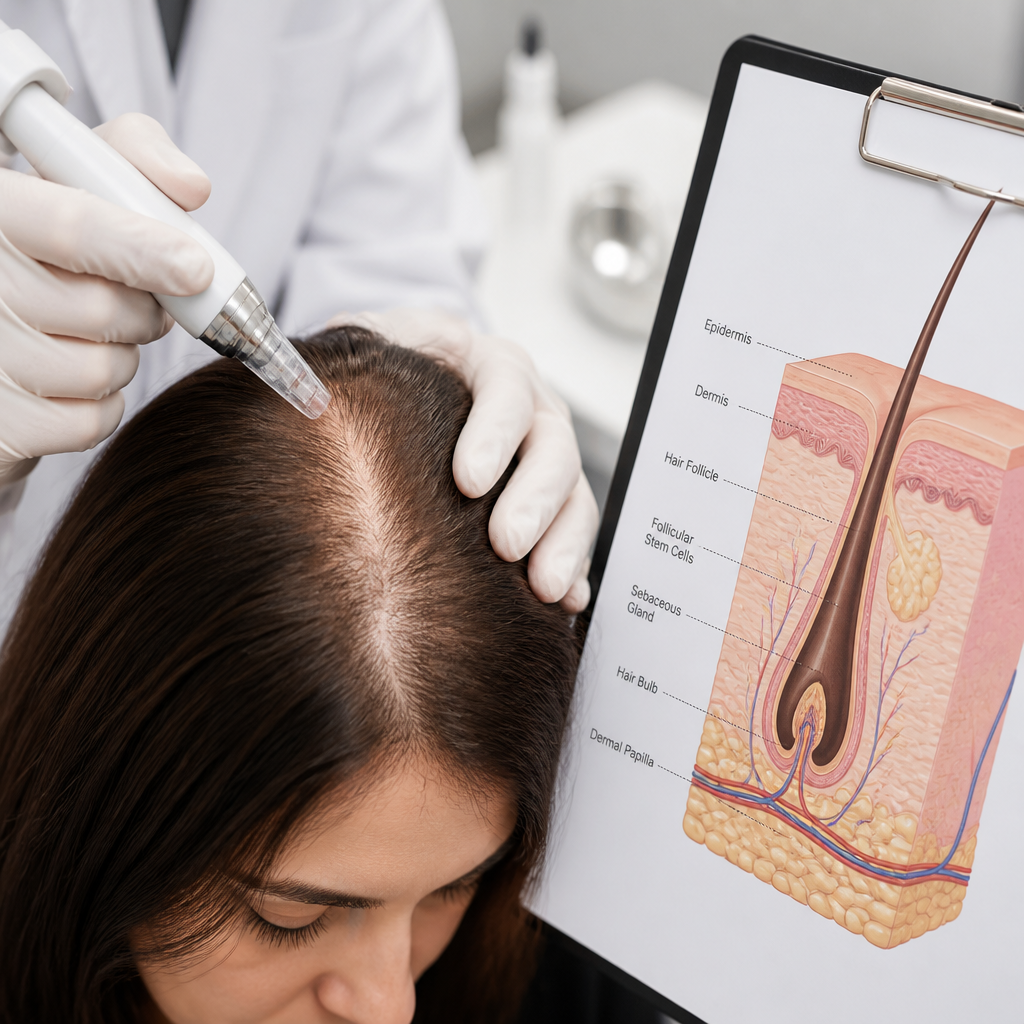
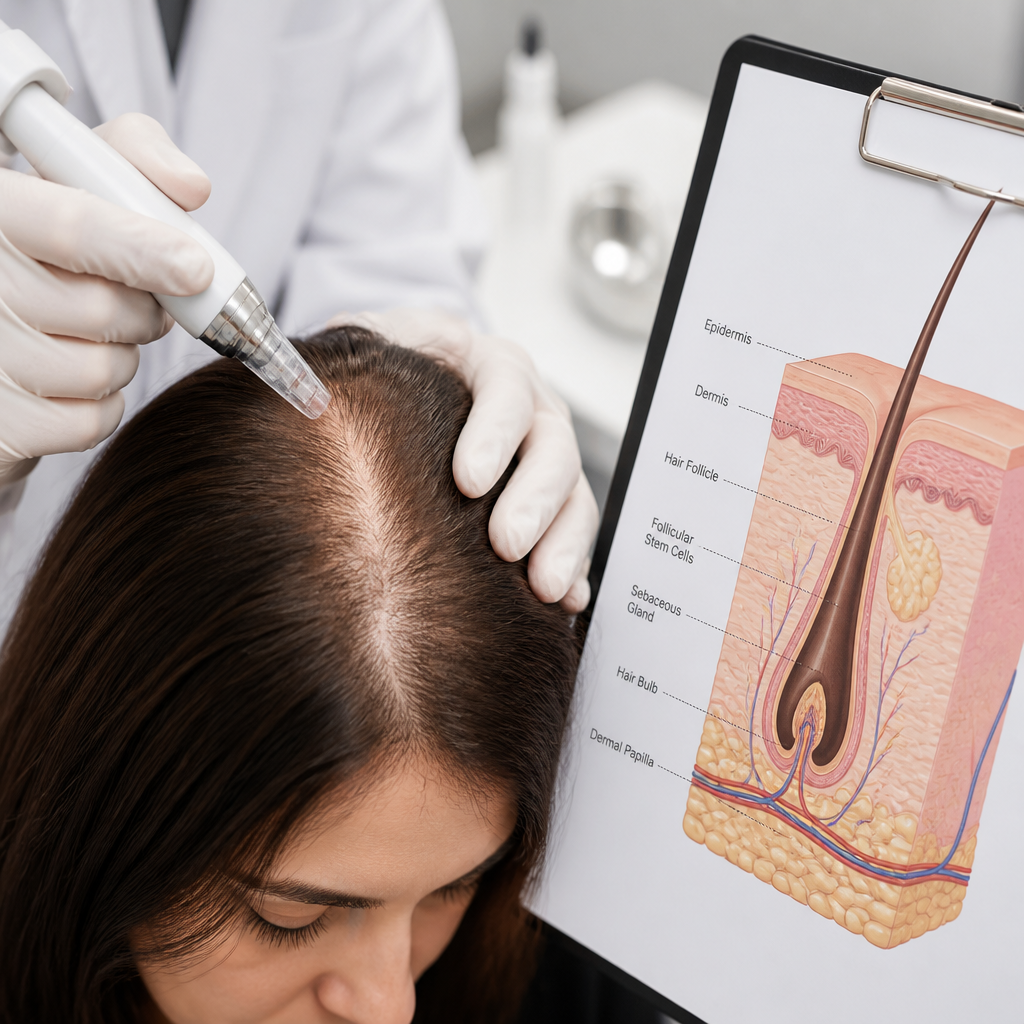
Both PRP and PRF are autologous treatments, meaning they are derived entirely from your own blood. Nothing synthetic is injected into your scalp. The difference between them lies in how the blood is processed and how the resulting solution behaves once injected.
How PRP Is Prepared
Platelet-rich plasma (PRP) is produced through a double-spin centrifugation process. A small volume of blood is drawn, placed in a specialized tube, and spun at high speed to separate the platelets from red blood cells. The resulting platelet-concentrated plasma is then drawn up and injected directly into the scalp at the level of the hair follicles. Platelets contain growth factors including platelet-derived growth factor (PDGF) and vascular endothelial growth factor (VEGF) that signal the follicle to move from a resting phase into an active growth phase.
How PRF Differs
Platelet-rich fibrin (PRF) is processed without anticoagulants, which allows the blood to begin clotting naturally during centrifugation. This creates a fibrin matrix that traps platelets and white blood cells within it. The key clinical advantage is that this matrix releases growth factors slowly and over a prolonged period, rather than all at once as with PRP. For hair follicle stimulation, that sustained release may translate into a more durable signal to the follicle. Injectable PRF (i-PRF), a liquid form of PRF, has been specifically studied for scalp application and is the version most commonly used in medispa settings for hair thinning.
Pro tip: Ask your provider whether they use injectable PRF or standard liquid PRF for hair treatments, as the centrifugation speed and tube type matter. The preparation protocol directly affects how many growth factors end up in the final product that reaches your scalp.
What the Evidence Actually Says
The research base for platelet-rich therapies in female hair loss has grown steadily. A review published in Dermatology Times found that PRP therapy demonstrates significant improvements in hair density and thickness with a minimal side effect profile, and highlighted its efficacy across conditions including androgenetic alopecia, telogen effluvium, and female pattern hair loss. The review also noted that extended treatment periods and adequate injection volumes are associated with stronger outcomes.
The evidence points clearly toward one conclusion: platelet-rich therapies work best when they are started early, administered consistently, and delivered with an adequate volume directly into the scalp. A single session treated as a one-time fix rarely delivers the density improvements women are hoping for.
A 2024 case series published in the Journal of Cosmetic Dermatology examined injectable PRF (i-PRF) for female pattern hair loss. Participants received three monthly intradermal injections, and results showed measurable improvement in the number of hair follicles containing hairs per unit area at both the three-month and six-month follow-up points. All participants showed improvement.
The important clinical takeaway from the current literature is that PRP and PRF are not experimental or unproven. They are supported by a growing body of peer-reviewed evidence. What is still being refined is the optimal protocol: the number of sessions, the volume per session, the centrifugation speed, and whether combining PRP with PRF provides additive benefit over either alone. At Skin Excellence Medispa, the treatment approach for each client is shaped by current evidence and the individual presentation, not a one-size-fits-all menu item.

PRP vs. PRF vs. Combined Therapy: Which Is Right for You?
When women ask which approach is better for female hair loss treatment Aurora clients typically care about, the honest answer is that “better” depends on the stage of your hair loss, your platelet health, and what your practitioner can verify through consultation. The table below outlines the practical distinctions.
| Approach | Key Characteristics | Best Suited For |
|---|---|---|
| PRP (Platelet-Rich Plasma) | Rapid release of growth factors; well-established protocol; processed with anticoagulant; clear liquid injected into scalp | Early to moderate female pattern hair loss; telogen effluvium; clients seeking an established, evidence-backed baseline treatment |
| Injectable PRF (i-PRF) | No anticoagulant; fibrin matrix releases growth factors slowly over time; higher platelet and white blood cell concentration than standard PRP in some preparations | Women seeking longer-lasting growth factor release; moderate FPHL; clients who have had PRP but want to progress to a next-generation option |
| Combined PRP + PRF | Both modalities delivered in the same session; immediate and sustained growth factor release; requires skilled preparation of two separate concentrates | Moderate to advanced hair thinning; clients who want to maximize the range of growth factors delivered; cases where a split-scalp comparison approach is used to track results |
A common mistake practitioners see is women choosing the most advanced option without understanding whether simpler protocols have been given a fair run. If you have never had any platelet-rich therapy on your scalp, starting with a consistent PRP series and tracking the response before adding PRF is a rational sequence, not a compromise.
Pro tip: Bring photos taken in consistent lighting from the same angle, ideally monthly, starting from before your first session. Hair density improvements are gradual and easy to underestimate without a documented baseline to compare against. Many clients who feel they are “not responding” are actually showing real improvement that only becomes obvious when early and later photos are placed side by side.
The Treatment Process at a Medispa in Aurora
Understanding what to expect makes the experience far less daunting. At a reputable medical aesthetics clinic, the process for platelet rich therapy hair GTA appointments is straightforward and typically completed within an hour.
Before the Session
Arrive well hydrated and avoid anti-inflammatory medications such as ibuprofen or aspirin for at least a few days prior to your session, as these can impair platelet function and reduce the quality of the concentrate. Alcohol should also be avoided in the 24 hours before treatment. Your practitioner will review your health history and any medications before proceeding.
During the Session
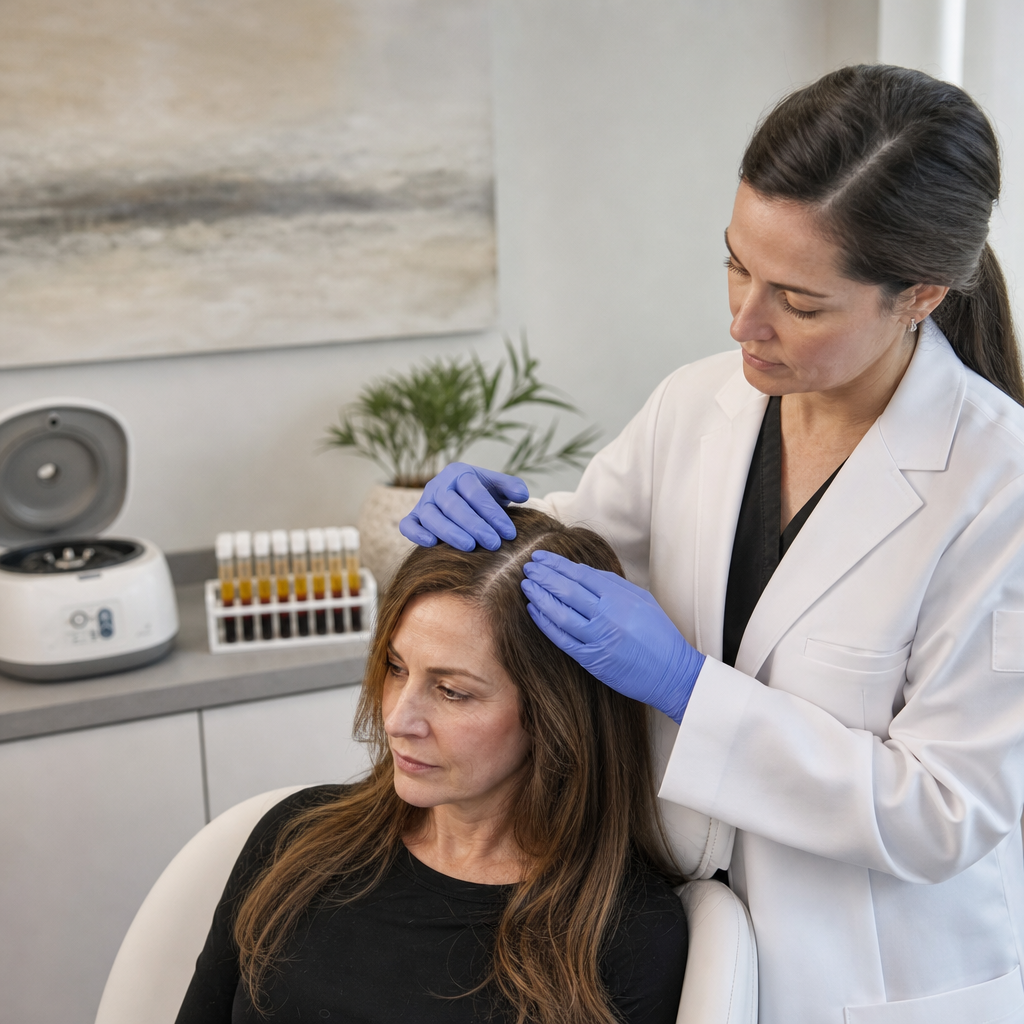
A small volume of blood is drawn from your arm, exactly as it would be for a routine blood test. The tube is placed in a centrifuge and spun to separate and concentrate the platelets. The scalp is cleansed and may be numbed with a topical anaesthetic or local nerve block, depending on the clinic’s protocol and your comfort level. The concentrate is then injected in a grid pattern across the areas of thinning using a fine needle. The process is precise, not painful, though some clients feel mild pressure or a brief sting at individual injection sites.
After the Session
Most women return to their normal activities the same day. Some temporary scalp tenderness, redness, or mild swelling at injection sites is normal and resolves within a day or two. Avoid vigorous scalp washing, intense heat, or heavy exercise for 24 hours. Do not apply topical minoxidil or chemical treatments to the scalp on the day of your session. Your practitioner will advise on the timing of your next appointment, typically four weeks later for the initial series.
Who Is a Good Candidate, and Who Should Wait?
The best candidates for PRP or PRF hair treatment are women who are in the early to moderate stages of hair thinning and still have functioning, even if miniaturized, follicles. If significant follicle loss has already occurred over a large area of the scalp, platelet-rich therapies are less likely to produce visible regrowth because there is less viable tissue to stimulate. Earlier is better. This is not a marketing line; it reflects the basic biology of how growth factors interact with follicle cells.
Women who tend to respond well include those experiencing gradual widening of the part, overall reduced hair volume and density, postpartum shedding that has not resolved naturally, or early-stage androgenetic alopecia confirmed by a practitioner.
Candidates who should discuss their situation carefully before proceeding include women who are pregnant or breastfeeding, those with active scalp infections or inflammatory scalp conditions in the treatment area, and individuals with certain blood disorders or those on blood-thinning medications. A thorough intake consultation at Skin Excellence Medispa will assess these factors before any treatment is scheduled. There is no pressure to proceed if the assessment suggests a different approach is more appropriate first.
For Aurora and GTA women considering medical aesthetics hair Aurora Ontario appointments, the realistic expectation is a treatment series rather than a single visit. Platelet-rich therapies are an investment in a biological process that takes time to unfold. The follicle does not respond to a single injection the way skin responds to a filler. Think in months, not days.
Frequently Asked Questions
How long does it take to see results from PRP for hair thinning?
Most women begin to notice reduced shedding within the first few weeks after starting their treatment series. Visible improvements in density and thickness typically become apparent several weeks after treatment, with optimal results often evident around five to seven months after the initial session. Patience is not optional with platelet-rich therapies; the biology of hair growth cycles means results cannot be rushed.
How many PRP sessions will I need for female hair loss?
The standard initial protocol involves three to four sessions spaced approximately four weeks apart. After this initial series, most clients move to maintenance sessions every four to six months to sustain the results. The exact number depends on the severity of your thinning, your individual platelet response, and how your scalp responds to the first series. Your practitioner will assess your progress at each visit and adjust the plan accordingly.
Is PRP or PRF better for women specifically?
Both are well-supported options. PRF’s fibrin matrix offers a slower, more sustained release of growth factors, which some practitioners and researchers consider advantageous for chronic conditions like female pattern hair loss. That said, PRP has a longer clinical track record and a larger body of published evidence specifically in women. For many clients, starting with PRP and progressing to PRF or a combined approach based on their individual response is the most logical path. This is exactly the kind of individualized decision that a proper consultation helps to clarify.
Is the treatment painful?
The injections involve multiple needle punctures to the scalp, but most clinics apply a topical numbing cream beforehand and many offer a local nerve block for clients who prefer maximum comfort. The sensation is typically described as mild pressure or brief stinging rather than sharp pain. Most women find it very manageable, especially after their first session when they know what to expect.
Can I combine PRP hair treatment with other hair loss strategies?
Yes, and in most cases a combination approach delivers better outcomes than any single intervention alone. PRP and PRF work well alongside nutritional support (particularly iron, vitamin D, and biotin if deficiencies are present), low-level laser therapy, and in some cases topical treatments prescribed by a physician. What matters is that all components of your plan are coordinated by your practitioner so they are not working against each other.
Will PRP work if I have been losing hair for many years?
It depends on how much follicle activity remains. Long-standing hair loss can result in follicle miniaturization or, in advanced cases, follicle death. Platelet-rich therapies stimulate existing follicles but cannot regenerate ones that have been lost entirely. This is why a scalp assessment is essential before committing to a treatment plan. If your follicles are still present but underactive, PRP or PRF can meaningfully improve your situation. If follicle loss is extensive, the conversation shifts toward other options.
How does Skin Excellence Medispa in Aurora approach hair thinning consultations?
The consultation at Skin Excellence Medispa begins with a detailed health history review, including your hormonal history, diet, stress levels, medications, and the pattern and timeline of your hair loss. The goal is to understand the likely cause before recommending any treatment. No one leaves the first appointment with a one-size-fits-all plan. The treatment approach is built around your specific presentation and goals, and realistic expectations are discussed openly from the start.
Have you tried a platelet-rich treatment for hair thinning, or are you just beginning to research your options? We would love to hear about your experience or answer any questions in the comments below.
About the Author
Zahra Erfan is the owner of Skin Excellence Medispa in Aurora, Ontario. She oversees the clinic’s client experience, treatment standards, and aesthetic services. Her work with Skin Excellence gives her firsthand insight into the questions clients commonly ask when considering aesthetic treatments in Aurora.
Skin Excellence Medispa is an independently operated medical aesthetics clinic in Aurora, Ontario, owned by Zahra Erfan.
Skin Excellence Medispa
14845 Yonge Street, Unit 301
Aurora, Ontario L4G 6H8
(647) 979-5927
marketing@skinexcellencemedispa.com
Serving clients in Aurora, Ontario and the surrounding Greater Toronto Area.
Considering a treatment in Aurora? Book a consultation with Skin Excellence Medispa to discuss your goals and determine whether it is appropriate for you.
This article is provided for general educational purposes and does not replace an individual medical consultation. Treatment suitability, risks and expected outcomes vary by patient and should be discussed with a qualified healthcare professional.
References
- PRP therapy outcomes for female hair loss: clinical review findings on density and side effect profile
- Injectable platelet-rich fibrin for treatment of female pattern hair loss: 2024 case series results
- Female pattern hair loss: clinical overview, prevalence, and presentation from DermNet
- Causes of women’s hair loss including androgenetic alopecia and hormonal factors
- Platelet-rich fibrin preparations and growth factor release: peer-reviewed comparative analysis