
Roughly 50% of men and 25% of women in Canada experience noticeable hair thinning by age 50, yet most GTA residents spend years cycling through shampoos and supplements before exploring clinical solutions. If you have been referred to Skin Excellence Medispa in Aurora or are simply doing your research, you deserve a straight answer: between PRP hair restoration Aurora and laser hair loss therapy, which treatment actually delivers results, and which one is better suited for your specific situation? This article breaks down both options without vague disclaimers.
Table of Contents
- Quick Takeaways
- What Causes Hair Loss: The Biology You Need to Understand First
- What Is PRP Hair Restoration and How Does It Work
- What Is Laser Hair Loss Treatment and How Does It Work
- PRP vs. Laser: A Direct Comparison
- Who Is a Good Candidate for Each Treatment
- PRP Hair Restoration in the GTA: What to Expect at a Medispa
- Cost and Commitment: What You Are Actually Signing Up For
- Frequently Asked Questions
- References
Quick Takeaways
| Key Insight | Explanation |
|---|---|
| PRP works best for early-to-mid-stage hair loss | Platelet-rich plasma stimulates dormant follicles, but follicles that are completely gone cannot be revived by any non-surgical method. |
| Low-level laser therapy (LLLT) is a maintenance tool, not a rescue treatment | LLLT improves cellular energy in hair follicles but produces modest regrowth compared to PRP, especially for androgenetic alopecia. |
| PRP requires a series of sessions, not a single appointment | Most clinical protocols call for 3 to 4 initial sessions spaced 4 weeks apart, followed by maintenance every 4 to 6 months. |
| Both treatments are non-surgical and carry low risk profiles | Neither PRP nor LLLT requires incisions, anesthesia, or significant downtime, making them accessible hair loss treatments in Ontario. |
| Combining PRP with microneedling amplifies results | Channels created by microneedling improve PRP absorption into the scalp, which is why many Aurora medispas offer them together. |
| Hair loss treatment GTA pricing varies significantly by clinic type | Medical spas staffed by regulated practitioners tend to use pharmaceutical-grade PRP kits, which affects both safety and outcome compared to budget providers. |
| PRP has stronger peer-reviewed backing for hair regrowth | Multiple randomized controlled trials published in journals like the Journal of Dermatological Treatment show statistically significant hair density improvements from PRP therapy Ontario protocols. |
What Causes Hair Loss: The Biology You Need to Understand First
Before comparing treatments, you need to understand what you are actually treating. The overwhelming majority of hair loss cases in adults, both male and female, are driven by androgenetic alopecia, a condition where dihydrotestosterone (DHT) progressively miniaturizes hair follicles until they stop producing visible hair.
Other causes include telogen effluvium (stress or illness-triggered shedding), nutritional deficiencies, autoimmune conditions like alopecia areata, and post-partum hormonal shifts. The treatment that works for androgenetic alopecia does not necessarily work for telogen effluvium. This distinction matters enormously when choosing between PRP and laser options.
In practice, clients who come into Skin Excellence Medispa after a referral from a friend are often already past the earliest stage of thinning. That is actually a useful window: early enough that follicles are still alive and responsive to biological stimulation, but noticeable enough that results will be visible and motivating.


What Is PRP Hair Restoration and How Does It Work
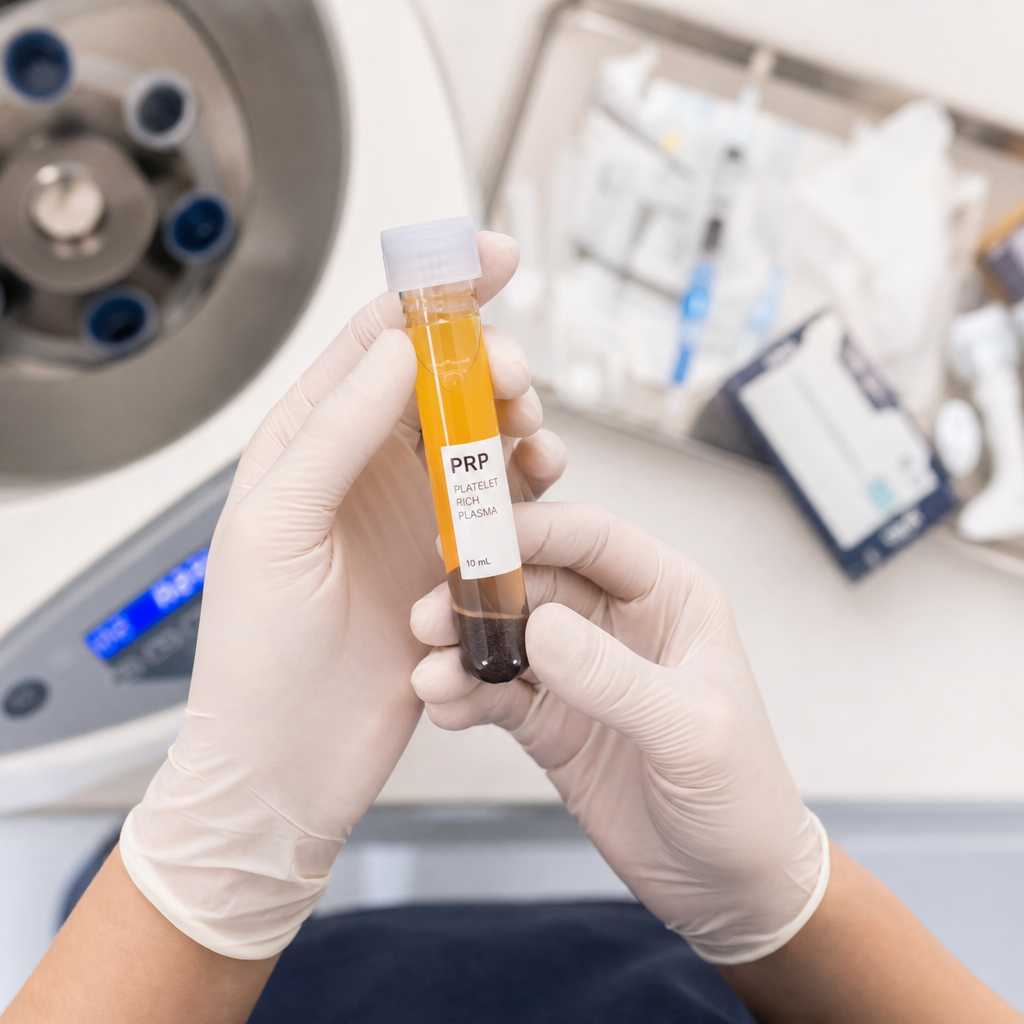
PRP (platelet-rich plasma) is derived from your own blood. A small sample is drawn, spun in a centrifuge to concentrate the platelets, and then injected directly into the scalp at the level of the hair follicles. Platelets release growth factors, including PDGF, VEGF, and EGF, that stimulate tissue repair, increase blood supply to the follicle, and push follicles from the resting (telogen) phase back into the active growth (anagen) phase.
Why the Growth Factor Mechanism Matters
PRP is not a drug or a foreign substance. It is a concentration of your own biology. This means the risk of allergic reaction or systemic side effects is essentially zero. What it does is create a localized environment of accelerated healing and cellular activity around each follicle, mimicking the conditions that promote hair growth at a biological level.
The data consistently shows that PRP produces meaningful improvements in hair density and shaft thickness in androgenetic alopecia patients. A 2019 meta-analysis published in the journal Dermatologic Surgery reviewed 19 controlled trials and found significant improvements in hair count, hair thickness, and the anagen-to-telogen ratio in PRP-treated subjects compared to controls.
PRP Combined with Microneedling at an Aurora Medispa
At clinics like Skin Excellence Medispa, PRP is often paired with microneedling for scalp treatments. The micro-channels created by the needling device improve the penetration and distribution of growth factors across a wider follicular surface area. This combination consistently outperforms PRP injections alone in clinical settings, and it is the approach recommended for clients who have moderate to significant thinning.
Pro tip: Ask your provider what centrifuge and PRP collection kit they use. Double-spin protocols with FDA-cleared systems produce platelet concentrations of 4x to 8x baseline, which is the therapeutic range. Single-spin budget kits may not reach this threshold and will produce inferior results.
What Is Laser Hair Loss Treatment and How Does It Work
Low-level laser therapy (LLLT), also called photobiomodulation or red light therapy for hair, uses specific wavelengths of light, typically 630 to 670 nanometers, to stimulate cellular energy production within the hair follicle. The theory is that these wavelengths are absorbed by mitochondria in follicular cells, increasing ATP production and reducing oxidative stress.
What LLLT Can and Cannot Do
LLLT is FDA-cleared in the United States for the treatment of androgenetic alopecia, which is a meaningful regulatory milestone. However, FDA clearance for safety and efficacy is not the same as having robust clinical evidence of dramatic regrowth. Most studies on LLLT show modest improvements in hair density and reduced shedding, with patient satisfaction scores that are generally lower than those reported in PRP trials.
LLLT works best as a maintenance and adjunct therapy, not as a standalone rescue treatment. It is particularly useful for patients who are not candidates for injectable treatments, who have needle aversion, or who are managing hair loss primarily through prevention rather than reversal.
In-Clinic vs. At-Home LLLT Devices
A common mistake is assuming that the laser cap you buy online delivers the same outcome as clinical-grade in-office LLLT. In-office devices like the HairMax Laser or clinical diode panels deliver higher fluence (energy dose) with greater precision. At-home devices are convenient but typically underpowered. If you are pursuing LLLT as a legitimate hair loss treatment in the GTA, an in-clinic protocol is more defensible than a consumer device used inconsistently.
“Low-level laser therapy is a reasonable adjunct for patients seeking to stabilize hair loss, but the evidence does not yet support it as a primary treatment for significant androgenetic alopecia.” – American Academy of Dermatology position summary on non-surgical hair loss interventions.
PRP vs. Laser: A Direct Comparison
The table below compares both treatments across the dimensions that matter most to adults seeking hair loss treatment in the GTA. This is not a hypothetical comparison: it reflects real clinical outcomes and patient profiles seen at medical aesthetic practices in Ontario.
| Factor | PRP Hair Restoration | Low-Level Laser Therapy (LLLT) |
|---|---|---|
| Primary mechanism | Growth factor stimulation via platelet concentration injected into scalp | Photobiomodulation to increase follicular ATP production |
| Evidence strength | Strong: multiple RCTs showing significant hair density and thickness improvements | Moderate: FDA-cleared, but trial results show modest improvements |
| Ideal candidate | Adults with early-to-mid androgenetic alopecia or telogen effluvium with active follicles | Adults with mild hair thinning or those using LLLT as a complement to other treatments |
| Session frequency | 3 to 4 sessions initially, then every 4 to 6 months for maintenance | 2 to 3 sessions per week ongoing, or as directed by device protocol |
| Downtime | Minimal: mild scalp tenderness for 24 to 48 hours | None |
| Pain level | Mild discomfort from injections, manageable with topical numbing | None, completely painless |
| Best use case | Primary treatment for measurable hair regrowth and density improvement | Maintenance, prevention, or adjunct to PRP or medical therapy |
Pro tip: The most effective hair restoration protocols in clinical practice combine both approaches. Starting with a PRP series to stimulate regrowth, then using LLLT sessions between PRP maintenance appointments, creates a continuous biological environment that supports long-term follicle health.
Who Is a Good Candidate for Each Treatment
Candidacy for hair loss treatment is not just about how much hair you have lost. It is about the condition of the follicles that remain, your overall health, and your realistic expectations about outcomes.
Ideal PRP Candidates
Adults with Norwood scale stages 1 through 4 for men, or Ludwig scale stages 1 and 2 for women, are generally the best candidates for PRP hair restoration in Aurora. Clients with visible scalp showing through thinning areas but no fully bald patches respond most predictably. Clients with active telogen effluvium triggered by stress, illness, or post-pregnancy hormonal shifts also respond well, often seeing shedding slow within 6 to 8 weeks of the first session.
PRP is not a good fit for clients on blood thinners, those with active scalp infections, or anyone with a platelet function disorder. A proper intake consultation at Skin Excellence Medispa will identify these factors before any treatment is planned.
Ideal LLLT Candidates
LLLT is particularly appropriate for clients who want a completely non-invasive option, who have very mild thinning, or who are using LLLT to complement a PRP series or a topical like minoxidil. It is also a reasonable standalone option for clients who cannot tolerate injections or who are in a watch-and-wait phase of their hair loss journey.

PRP Hair Restoration in the GTA: What to Expect at a Medispa
The GTA has no shortage of clinics advertising PRP, but the range in quality is significant. The difference between a result-oriented experience and a disappointing one often comes down to practitioner qualifications, PRP preparation protocols, and the depth of the consultation before any treatment begins.
At Skin Excellence Medispa in Aurora, PRP therapy Ontario clients receive a detailed scalp assessment before any protocol is designed. This matters because PRP for hair loss is not a one-size approach. The number of sessions, the concentration of platelets, the injection depth, and the scalp mapping all affect outcomes.
What Separates a Medical Spa from a Budget Clinic
A common complaint from clients who come to Skin Excellence Medispa after trying cheaper alternatives in the GTA is that they had no follow-up, no scalp baseline photography, and no protocol adjustment based on response. In practice, good PRP hair restoration requires tracking progress with standardized photographs at consistent lighting and angles so both the client and the practitioner can measure real change over time.
The Aurora and York Region area has seen rapid growth in aesthetic clinics since 2020. Not all of them employ regulated practitioners for injectable treatments. When choosing a PRP provider for hair loss treatment GTA, verify that the clinic employs a registered nurse, physician, or nurse practitioner, not a technician working under an unsupervised model.
Cost and Commitment: What You Are Actually Signing Up For
PRP hair restoration in Ontario typically runs between $500 and $900 per session, depending on the clinic, the PRP system used, and whether microneedling is included. A standard initial protocol of three sessions therefore represents a $1,500 to $2,700 investment before maintenance is factored in. This is not a trivial expense, but it is comparable to the cumulative cost of years of ineffective over-the-counter treatments.
LLLT in-office sessions are generally less expensive per session, ranging from $100 to $300, but the frequency requirement is higher and the results are more incremental. The ongoing time commitment of two to three sessions per week is a real barrier for busy GTA adults, which is why many practitioners recommend in-office LLLT primarily as a complement to a PRP series rather than as a primary treatment.
The honest framing is this: if you want a statistically defensible chance at measurable hair regrowth, PRP is the stronger investment. If you want a low-effort adjunct that may slow further shedding, LLLT has a role. Expecting LLLT alone to reverse moderate androgenetic alopecia is not supported by the available evidence.
Frequently Asked Questions
How many PRP hair restoration sessions are needed to see results in Aurora?
Most clients begin noticing reduced shedding after the second session, with visible improvements in hair density appearing at the 3 to 4 month mark after the initial series of three to four sessions. Results continue to improve for up to 6 months following the last session in the initial series. Maintenance sessions every 4 to 6 months are typically recommended to sustain the gains.
Is PRP hair restoration better than laser for women with hair loss?
For women experiencing androgenetic alopecia or post-partum hair loss, PRP therapy Ontario protocols consistently produce stronger results than LLLT alone. The growth factors in PRP directly address the follicular miniaturization process, while LLLT primarily supports cellular energy. Women with diffuse thinning across the crown and part line respond particularly well to PRP combined with scalp microneedling.
Can PRP and laser hair treatments be done at the same clinic in the GTA?
Yes, and combining them is often the most effective approach. A clinic like Skin Excellence Medispa in Aurora can provide PRP hair restoration as the primary treatment and incorporate LLLT or other adjunct therapies into the maintenance plan. Having both options at one clinic also ensures continuity of care and consistent progress tracking.
Are there side effects from PRP hair restoration I should know about?
PRP uses your own blood, so the risk of allergic reaction is essentially zero. The most common side effects are mild scalp tenderness, temporary redness, and occasional minor swelling at injection sites, all of which typically resolve within 24 to 48 hours. Serious adverse events from properly administered PRP hair treatment are rare when performed by a regulated practitioner using a sterile protocol.
Does hair loss treatment in the GTA require a doctor’s referral?
No referral is required to book a consultation at a medical spa for PRP hair restoration in Aurora or elsewhere in Ontario. However, if your hair loss is sudden, patchy, or associated with other symptoms such as fatigue or skin changes, it is worth seeing a physician first to rule out underlying medical causes before starting any aesthetic treatment.
How does PRP therapy Ontario pricing compare to surgical hair transplant options?
Surgical hair transplant procedures in Ontario typically start at $5,000 and can exceed $15,000 depending on graft count. PRP therapy is significantly less expensive and carries none of the surgical risks, making it the appropriate first-line clinical option for anyone who has not yet reached the stage of complete follicular loss. For clients who are not surgical candidates, PRP is often the most effective available non-surgical intervention.
If you are currently weighing your options for hair loss treatment in Aurora or anywhere in the GTA, we would genuinely like to hear what has and has not worked for you so far. Share your experience in the comments or reach out directly to the team at Skin Excellence Medispa to discuss which approach fits your hair loss pattern and goals.
We would love your feedback and any insights you would share with others. What perspective would you add?
References
- National Library of Medicine research database covering peer-reviewed studies on PRP therapy and androgenetic alopecia clinical outcomes
- American Academy of Dermatology clinical guidelines and position statements on hair loss treatment approaches including PRP and photobiomodulation
- Statista global and Canadian market data on hair loss treatment industry size, consumer spending, and treatment adoption trends
- Forbes Health coverage of non-surgical hair restoration treatments, costs, and what consumers should evaluate when choosing a provider
- Health Canada regulatory information on medical devices including laser therapy equipment used in hair loss treatment clinics across Ontario