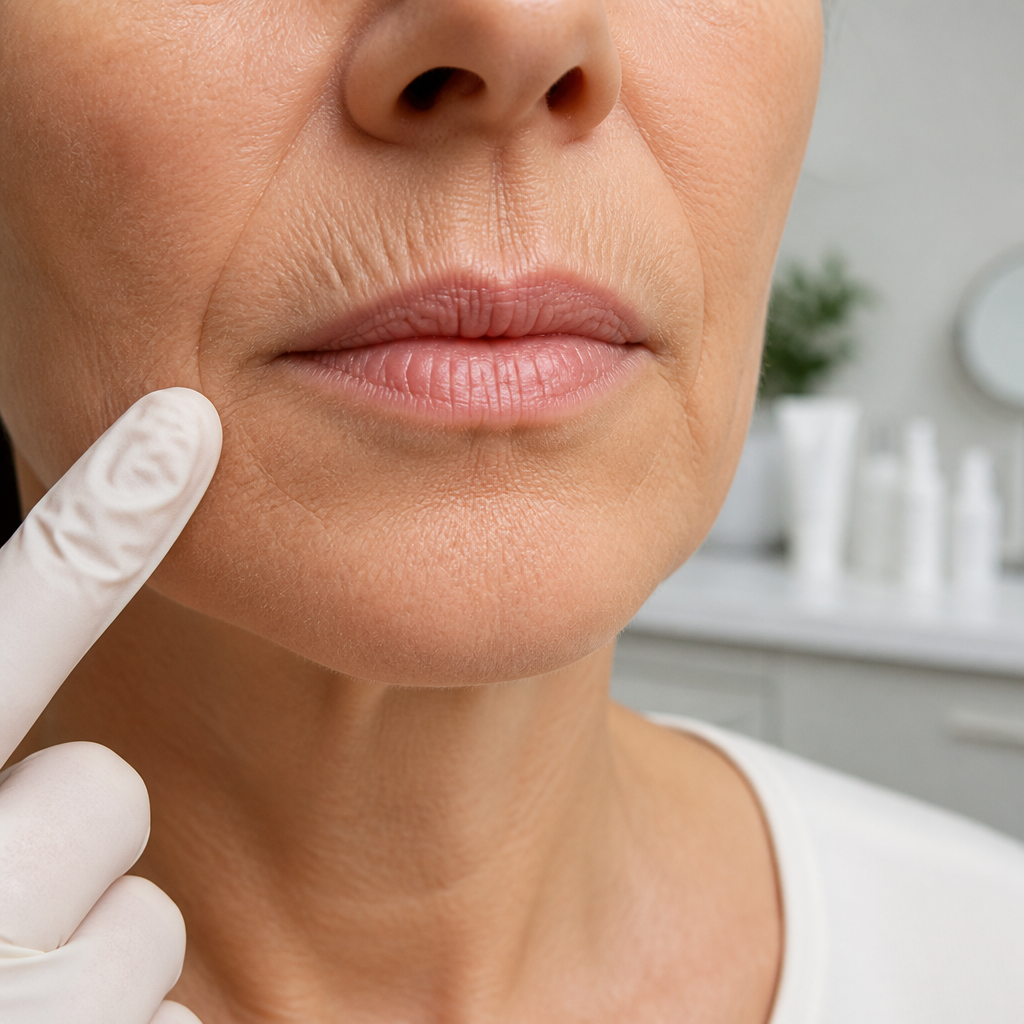
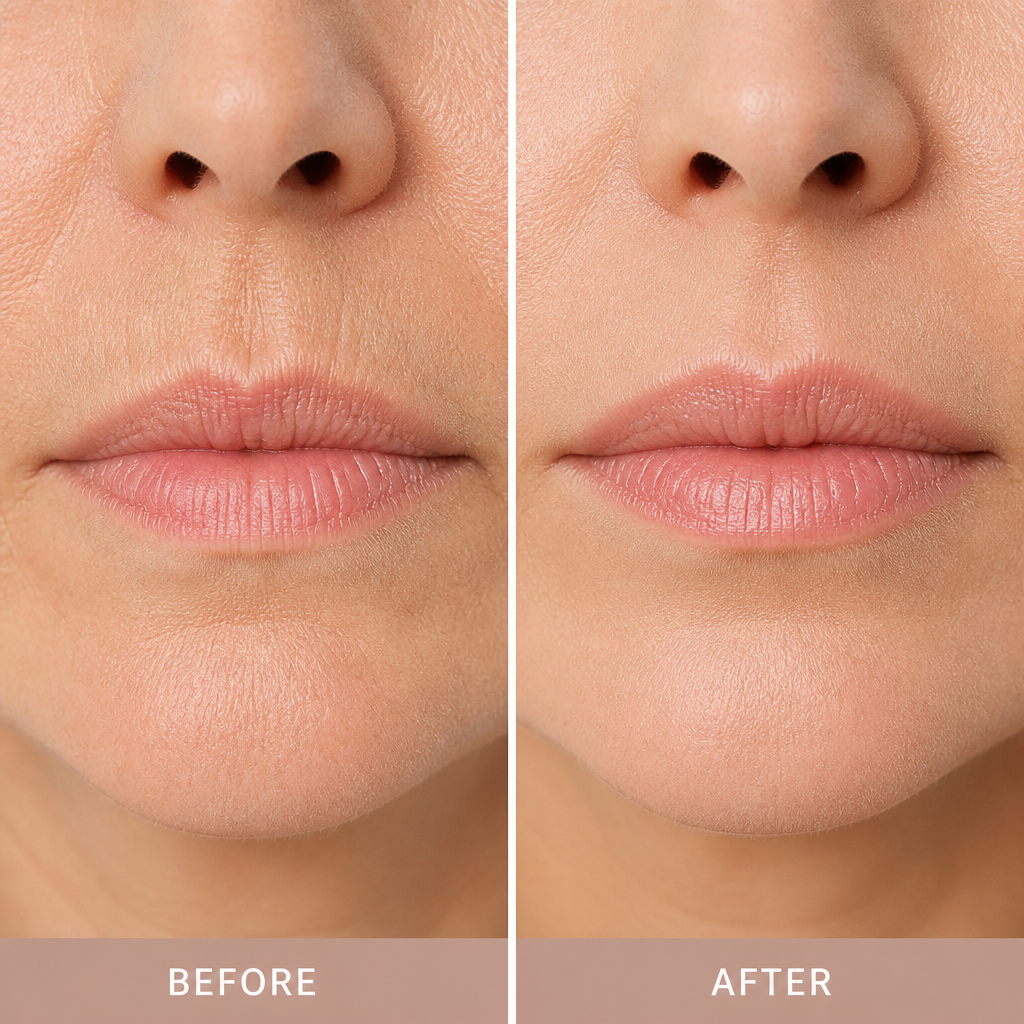
Perioral lines are one of the most complained-about features in our consultation room at Skin Excellence Medispa in Aurora, Ontario. Clients come in pointing at those fine vertical lines above and below the lips, frustrated that no amount of lip liner or moisturizer makes them disappear. They are not imagining the problem. Perioral lines treatment in Aurora has become one of the most requested services we offer, because these lines respond poorly to skincare alone but respond very well to the right combination of in-clinic treatments. This article breaks down exactly what causes perioral and smoker’s lines, which treatments work, which do not, and what a realistic treatment plan looks like for GTA residents considering a medspa visit.
Table of Contents
- What Are Perioral Lines and Why Do They Form?
- Quick Takeaways
- Botox for Perioral Lines and the Lip Flip
- Dermal Fillers for Lip Lines: Volume Where It Counts
- Micro-Needling and PRP/PRF for Texture and Collagen
- Sculptra for Deep Perioral Rejuvenation
- Treatment Comparison: Matching the Right Approach to Your Lines
- Why a Combination Approach Gets the Best Results
- What to Expect at a Perioral Lines Consultation in Aurora
- Frequently Asked Questions
- References
What Are Perioral Lines and Why Do They Form?
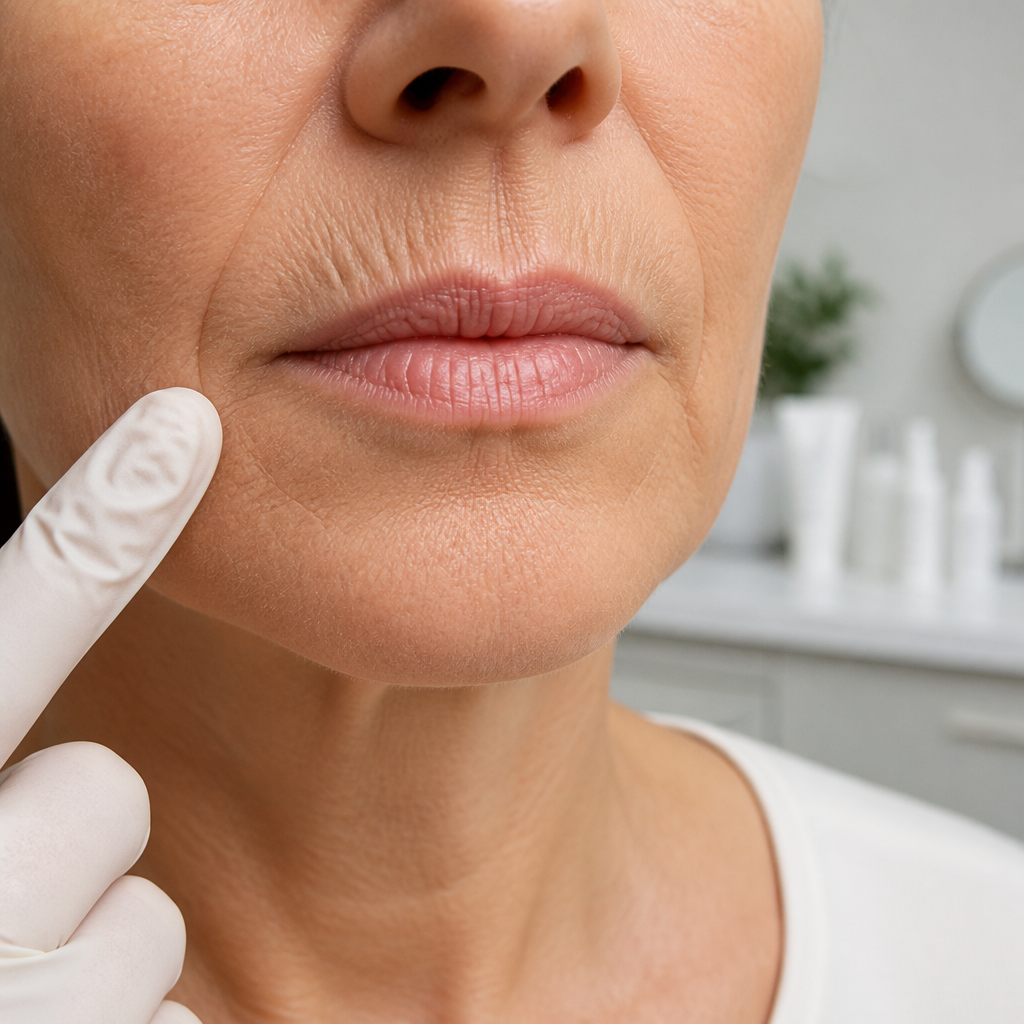
The term perioral lines refers to the fine-to-deep vertical lines that radiate outward from the edges of the lips, affecting both the upper and lower lip borders. They are sometimes called smoker’s lines, lipstick lines, or vertical lip lines. The name “smoker’s lines” is a misnomer in one important sense: you do not have to smoke to develop them, though smoking accelerates their appearance significantly.
The orbicularis oris muscle encircles the entire mouth. Every time you pucker, whistle, drink from a straw, speak, or kiss, that muscle contracts. Over years and decades, those repeated contractions etch vertical creases into the overlying skin, particularly along the vermilion border. Collagen and elastin loss from natural aging, sun exposure, and reduced skin hydration mean the skin becomes less able to “spring back” after each contraction.
The perioral area also loses structural fat with age. This volume loss causes the skin to fold more easily, deepening static lines that are visible even when your mouth is completely at rest. For many clients in the GTA, the problem is not one mechanism but two or three happening simultaneously, which is why single-treatment approaches often fall short.
The perioral region plays a crucial role in facial aesthetics and is uniquely susceptible to age-related changes because of its constant dynamic activity. Lines in this area often reflect both muscle movement and structural volume loss, requiring treatment strategies that address both components to achieve meaningful improvement.
Quick Takeaways
| Key Insight | Explanation |
|---|---|
| Dynamic vs. static lines require different treatments | Lines visible only when your lips move are dynamic and respond well to Botox. Lines visible at rest are static and require filler, micro-needling, or a collagen stimulator to improve. |
| Low Botox doses are intentional in the perioral area | The orbicularis oris controls speaking and eating. Practitioners use conservative dosing (typically 2 to 6 units total) to soften lines without impairing function. |
| The lip flip is a distinct technique from lip filler | A Botox lip flip relaxes the outer edge of the upper lip so it rolls slightly upward, reducing puckering lines and adding subtle upper lip definition without adding volume. |
| Micro-needling targets texture, not just depth | For fine crepey lines that are more about skin quality than volume, micro-needling with PRP or PRF rebuilds dermal collagen and significantly improves skin texture over a series of sessions. |
| Sculptra works gradually and lasts longer than HA fillers | Poly-L-lactic acid stimulates your own collagen production over two to three months. Results typically last up to two years, making it a strong option for comprehensive perioral rejuvenation. |
| Sun protection is non-negotiable post-treatment | UV exposure is a leading cause of collagen degradation around the lips. Consistent SPF use after treatment protects your investment and slows future line formation. |
| Combination protocols consistently outperform single-modality treatment | Most clients with moderate to deep perioral lines see the best results from a planned combination of Botox, filler, and either micro-needling or a collagen stimulator, phased appropriately. |
Botox for Perioral Lines and the Lip Flip
Botox (and its equivalents Dysport and Xeomin) works in the perioral area by relaxing the orbicularis oris muscle, reducing the repetitive contractions that engrave dynamic lines into the skin. The key word here is dynamic. If your lines are only visible when you purse or pucker your lips, Botox alone can produce a dramatic improvement. If they are etched in at rest, Botox softens but does not erase them.
Dosing and Safety in the Perioral Zone
The perioral area demands more precision than the forehead or crow’s feet. Total dosing for perioral Botox treatment typically falls between 2 and 6 units, distributed across 4 to 6 injection points along the upper and lower lip borders. Conservative starting doses in the range of 2 to 3 units total are often recommended for first-time perioral treatment. This matters because over-treating the orbicularis oris can affect the ability to drink through a straw, pronounce certain consonants, or move food in the mouth naturally. An experienced injector at a medical aesthetic clinic in Aurora will always start conservatively and adjust at a two-week follow-up rather than over-injecting on the first visit.
The Botox Lip Flip
The lip flip is a specific technique where a small amount of Botox is placed at the centre and corners of the upper lip border, causing the muscle to relax so the lip rolls slightly outward and upward. This creates a more defined vermilion border, reduces the deep puckering that creates smoker’s lines, and can make the upper lip appear fuller without adding a single drop of filler. It is particularly popular among clients who want a natural result without obvious lip augmentation. The effect lasts roughly 8 to 12 weeks, making it a good entry point for clients new to lip lines Botox in Aurora, Ontario.
Pro tip: If you are getting both a Botox lip flip and lip filler in the same appointment, ask your practitioner about sequencing. Many experienced injectors place the filler first to establish structure, then assess whether a small amount of Botox along the border adds the finishing refinement. Doing it the other way around can make the lip harder to shape accurately with filler.
Dermal Fillers for Lip Lines: Volume Where It Counts
When perioral lines are static, meaning visible at rest, filler is the more direct intervention. Hyaluronic acid (HA) fillers placed precisely along the vermilion border and into the body of the upper lip restore the structural scaffolding that has been lost to age. This reduces the depth of the creases and re-inflates the subtle volume that keeps the skin from collapsing inward with every expression.
How Filler Treats Lip Lines Differently Than Lip Augmentation
There is an important distinction between lip augmentation filler and perioral line filler. Lip augmentation adds volume to the body of the lip for fullness. Perioral line treatment uses very small amounts of a softer, more superficial filler placed directly into the lines themselves and along the lip border. The goal is effacement of the crease, not projection of the lip. Clients who want to avoid a “done” look respond particularly well to this subtle approach.
Injection into the vermilion border and the immediate perioral skin can also indirectly improve perioral line severity by restoring the gentle forward projection that a youthful lip naturally has. When that projection is lost, the surrounding skin folds downward, making existing lines look deeper than they are structurally.
Calcium Hydroxylapatite as an Alternative
Calcium hydroxylapatite (CaHA) used in a hyperdilute formulation is a newer approach to perioral rejuvenation. Published pilot data has shown that hyperdilute CaHA at a 1:3 ratio stimulates fibroblastic responses within the perioral skin, improving collagen density over time rather than simply filling the space acutely. This is particularly relevant for clients with diffuse fine lines across the entire perioral area where placing filler directly into each individual line would not be practical. Your practitioner can discuss whether this approach is appropriate for your anatomy during a consultation at our Aurora clinic.
Pro tip: Avoid eating anything that requires vigorous lip movement, including tough meats or crunchy raw vegetables, for 24 hours after perioral filler treatment. Excessive muscle activity in the first day can slightly displace filler that has not fully integrated into the tissue. Soft foods only for the rest of that day.
Micro-Needling and PRP/PRF for Texture and Collagen
Fine, crepey perioral lines that create a rough or puckered texture on the upper lip surface are a different problem from deep creases. They reflect poor skin quality: thin dermis, reduced collagen density, loss of elasticity. This is where micro-needling combined with PRP or PRF becomes the most targeted treatment available at a medspa serving the GTA.
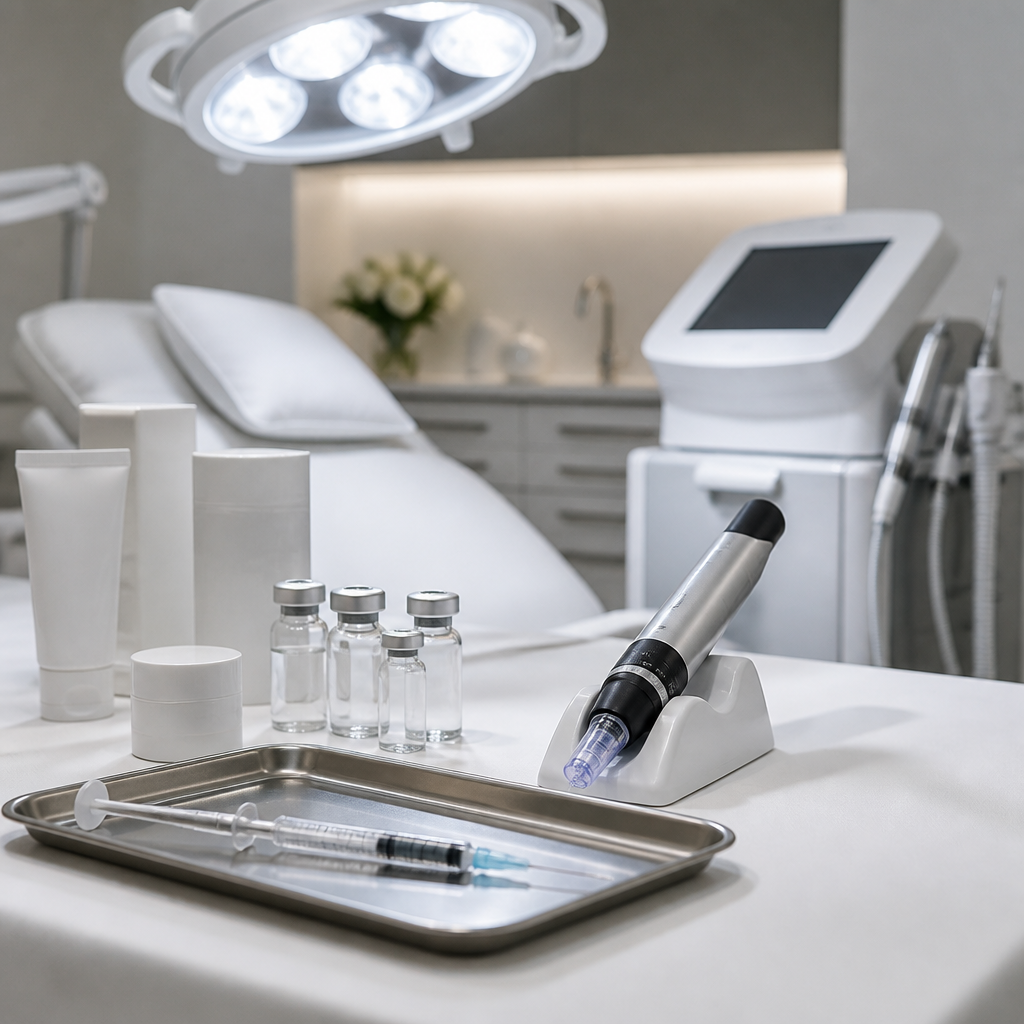
Micro-needling creates thousands of controlled micro-injuries in the perioral skin, triggering a healing response that deposits new collagen and elastin. Adding PRP (platelet-rich plasma) or PRF (platelet-rich fibrin) to the procedure amplifies this response significantly. PRP and PRF are derived from your own blood, concentrated, and applied topically or injected into the perioral dermis during the micro-needling session. The growth factors they deliver accelerate tissue remodelling and improve skin thickness over a series of treatments.
Most clients with moderate perioral skin laxity and fine line texture see meaningful improvement after a series of three sessions spaced four to six weeks apart. The perioral area responds particularly well because the skin here, though thin, has a robust blood supply that supports healing. One practical note: the perioral region can be more sensitive during micro-needling than the cheeks or forehead, so topical numbing cream is applied in advance at Skin Excellence Medispa to ensure client comfort throughout.
Sculptra for Deep Perioral Rejuvenation
Sculptra (poly-L-lactic acid, or PLLA) is a biostimulator rather than a traditional filler. It does not add immediate volume on injection day. Instead, the PLLA microparticles trigger a controlled foreign body response in the dermis, stimulating fibroblasts to produce new collagen over the following two to three months. The result builds gradually and, for most clients, lasts up to two years.
For perioral rejuvenation, Sculptra is most appropriate for clients who have overall volume deflation around the lower face that is contributing to perioral line depth. Rather than treating the lines in isolation, Sculptra addresses the broader structural context: restoring the lateral cheek volume and perioral soft tissue support that keeps the lower face looking full and the lips well-supported. It is complementary to Botox and HA filler rather than a replacement for them.
Clients at Skin Excellence Medispa in Aurora who are interested in Sculptra for smoker’s lines and lower face rejuvenation typically require two to three treatment sessions spaced six to eight weeks apart. The gradual timeline is actually an advantage: results look natural because they develop the way genuine collagen growth looks, not like a sudden injection of volume.
Treatment Comparison: Matching the Right Approach to Your Lines
| Treatment | Best For | Key Considerations for Perioral Lines |
|---|---|---|
| Botox / Lip Flip | Dynamic lines that appear with lip movement; puckering creases; upper lip border definition | Low dose essential (2 to 6 units); results last approximately 3 to 4 months; must preserve lip function; ideal entry point for new clients |
| Hyaluronic Acid Filler | Static lines visible at rest; volume loss along vermilion border; individual deep creases | Soft, low-viscosity product required for superficial perioral lines; results last 6 to 12 months depending on product; reversible with hyaluronidase |
| Micro-Needling with PRP/PRF | Fine crepey texture; diffuse surface lines; thin or lax perioral skin quality | Series of 3 sessions recommended; improves skin quality rather than filling individual lines; no downtime from swelling; some redness for 24 to 48 hours post-treatment |
| Sculptra (PLLA) | Significant perioral volume loss; clients wanting long-lasting collagen support; lower face rejuvenation | Results develop over 2 to 3 months; lasts up to 2 years; typically 2 to 3 sessions needed; best combined with Botox and/or HA filler for comprehensive results |
Why a Combination Approach Gets the Best Results
No single treatment for perioral lines works in isolation as well as a thoughtfully sequenced combination. This is not a sales pitch for more services. It reflects the anatomy of the problem. Perioral lines exist because of at least two simultaneous processes: dynamic muscle activity and structural volume loss. Add skin quality decline and you have three independent contributors. Treating only one while ignoring the others produces partial results at best.
A common combination protocol for moderate perioral lines at Skin Excellence Medispa looks like this. A first appointment addresses the dynamic component with Botox at the lip border or a lip flip, while a small amount of HA filler is placed along the most prominent static creases. Two to four weeks later, a micro-needling session with PRP or PRF begins improving skin quality and collagen density. For clients with more significant volume deflation, Sculptra is introduced during a subsequent appointment to rebuild the structural foundation over the following months.
The sequence matters. Placing filler into a perioral area that has not yet had its muscle activity modulated by Botox means the filler is working against the constant pressure of the orbicularis oris contraction. Treating the muscle first, or simultaneously, means the filler sits in a more stable environment and tends to integrate better and last longer. Experienced practitioners at GTA medical spas who specialize in perioral work plan this sequence deliberately.
Pro tip: Commit to at least SPF 30 every single morning as part of your perioral treatment maintenance plan. UV radiation breaks down collagen and HA filler faster than almost any other environmental factor. Clients who are consistent with sun protection between treatments reliably get more longevity from their results than those who are not.
What to Expect at a Perioral Lines Consultation in Aurora
A thorough consultation for smoker’s lines medspa GTA treatment is not a quick look in the mirror and a syringe recommendation. At Skin Excellence Medispa, the consultation begins with understanding your concern in detail: which lines bother you most, whether they are dynamic or static, how long they have been present, and what your lifestyle factors are, including sun exposure, smoking history, and any previous treatments.
Assessment of the Perioral Region
Your practitioner will assess your lip anatomy at rest and in motion, observe how your orbicularis oris contracts when you speak, and evaluate the surrounding structural support from your cheeks and lower face. This matters because perioral lines do not exist in isolation. A client with significant mid-face volume loss will have far more lip line depth than their chronological age would suggest, and treating the lip lines alone without addressing the mid-face will produce a limited outcome.
Realistic Expectations and Honest Timelines
Perioral lines that have been present for many years and are deep at rest will not be completely eliminated in a single session. A good consultation sets honest expectations: significant softening is achievable, complete erasure of deep static lines at rest is not always realistic with non-surgical treatment. The goal is meaningful, natural-looking improvement that does not interfere with your expressions, speech, or ability to eat and drink normally.
Clients in Aurora and across the Greater Toronto Area who have realistic expectations and commit to an appropriate phased treatment plan consistently report high satisfaction with perioral line results. The combination of the right treatments, done in the right order, by a practitioner who understands the perioral anatomy, is what separates a result that looks refreshed from one that looks overdone or, worse, unchanged.
Frequently Asked Questions
Do I have to be a smoker to develop smoker’s lines?
No. Smoker’s lines is a commonly used name for perioral vertical lines, but they develop in non-smokers as well. Any repeated lip movement, including drinking from bottles or straws, speaking, and natural expressions, causes the orbicularis oris to contract over time and etch those creases into the overlying skin. Smoking accelerates the process considerably due to the repetitive puckering motion and the direct effect of tobacco smoke on skin collagen, but non-smokers develop these lines with age regardless.
How many Botox units are typically needed for perioral lines?
The perioral area is treated with conservative dosing compared to other facial zones. Total dosing typically falls between 2 and 6 units distributed across 4 to 6 injection points along the upper and lower lip borders. Starting at the lower end of that range is standard practice for new clients, with adjustment at the two-week follow-up appointment if needed. Precise dosing is critical here because over-treating the orbicularis oris can temporarily affect speaking and eating.
Will lip filler make my lips look unnatural or overdone?
Not when the goal and technique are right for perioral line treatment specifically. Treating smoker’s lines with filler is not the same as aggressive lip augmentation. A soft, low-viscosity HA filler placed precisely into the lines and along the vermilion border adds structural support without obvious volume. The objective is to restore what has been lost, not to add what was never there. At Skin Excellence Medispa, every filler treatment is guided by your natural anatomy and your aesthetic goals, not a one-size volume target.
How many micro-needling sessions are needed to see improvement in perioral texture?
Most clients with fine crepey perioral lines and texture concerns see meaningful improvement after a series of three micro-needling sessions spaced four to six weeks apart. Some visible improvement in skin quality can appear after the first session, but the cumulative collagen-building effect of a full series produces the most significant change. Adding PRP or PRF amplifies results, particularly for clients with noticeably thin or sun-damaged perioral skin.
Can perioral line treatments be combined in the same appointment?
Some combinations are appropriate in a single appointment, and some are better sequenced across separate visits. Botox and HA filler can often be done in the same session with appropriate planning and sequencing. Micro-needling, however, is typically scheduled separately because the skin needs to be intact and free of active inflammation from injections. Your practitioner at Skin Excellence Medispa will map out a treatment sequence during your consultation that is both safe and efficient for your specific situation.
Is perioral line treatment painful?
Discomfort is minimal with proper preparation. The perioral area can be more sensitive than the forehead or cheeks, particularly around the lip border. Topical numbing cream is applied before injection and micro-needling treatments at our Aurora clinic, and most clients report the experience as quite tolerable. Some clients experience mild soreness or sensitivity in the lip area for 24 to 48 hours after treatment, which resolves on its own without intervention.
How long do results from perioral line treatments last?
Duration varies by treatment type. Botox in the perioral area typically lasts 3 to 4 months. HA filler in the perioral zone generally lasts 6 to 12 months depending on the specific product used and individual metabolism. Micro-needling results continue to improve for up to 3 to 6 months after a series and can be maintained with annual top-up sessions. Sculptra results, building gradually through collagen stimulation, typically last up to two years. A combination approach means you are managing different components on different schedules, which your practitioner can help you plan.
We would love to hear from you. Have you tried perioral line treatment before, or are you just beginning to explore your options? Share your experience or questions in the comments below and our team at Skin Excellence Medispa will be happy to respond.
References
- Clinical guidance on Botox dosing and injection technique for perioral lines
- Pilot study on hyperdilute calcium hydroxylapatite for perioral rhytid treatment (PubMed Central)
- Overview of neurotoxin and dermal filler approaches for vertical lip lines
- How lip fillers and collagen stimulators address perioral wrinkles