Written by Skin Excellence Medispa Editorial Team.
Clinic review by Zahra Erfan, Owner of Skin Excellence Medispa.
If you have stood in a skincare aisle wondering why one bottle costs several times more than another, you are asking the right question. Many adults in Aurora and across the GTA arrive at a clinic with a shelf full of over-the-counter serums and a sense that nothing is working. Medical-grade skincare in Aurora is often presented as the answer, but the label alone tells you very little. This guide explains what the term really means, where drugstore products still earn their place, and how to decide what belongs in your routine before or after a treatment.
Table of Contents
- Quick Takeaways
- What medical-grade means in practice
- Concentration and penetration: the claims to test
- Where over-the-counter products still earn their place
- Why a professional assessment changes the regimen
- Skincare after Botox, fillers, Sculptra and micro-needling
- Questions to ask before you buy in Aurora
- How the three options compare
- Frequently Asked Questions
- References
Quick Takeaways
| Key Insight | Explanation |
|---|---|
| Medical-grade describes a tier, not a guarantee | The term refers to how a product is developed and recommended. It does not promise stronger results on its own. |
| Concentration matters, but so does the full formula | Higher active levels can help, yet a well-built drugstore product can outperform a poorly designed clinic product. |
| A basic routine rarely needs a clinic product | A gentle cleanser, a suitable moisturizer and daily sunscreen cover most people’s everyday needs. |
| Treatments change what your skin can handle | After micro-needling or injectables, your skin may tolerate only certain products for a set period. |
| Ask for the ingredient and strength, not just the brand | Write down the active ingredients and levels your practitioner recommends so you can compare options fairly. |
| Introduce strong actives one at a time | Retinoids, acids and vitamin C can irritate skin when stacked together without a plan. |
| Get an assessment before buying bundles | A short consultation can prevent months of products that do not match your skin type or your treatment schedule. |
What medical-grade means in practice
Medical-grade is not a regulated category you can look up in a database. It describes how a product is developed, who recommends it, and how it is meant to be used. In a dermatology or medspa setting, that usually means a formula built around specific actives, developed with clinical research, and suggested after a professional has looked at your skin.
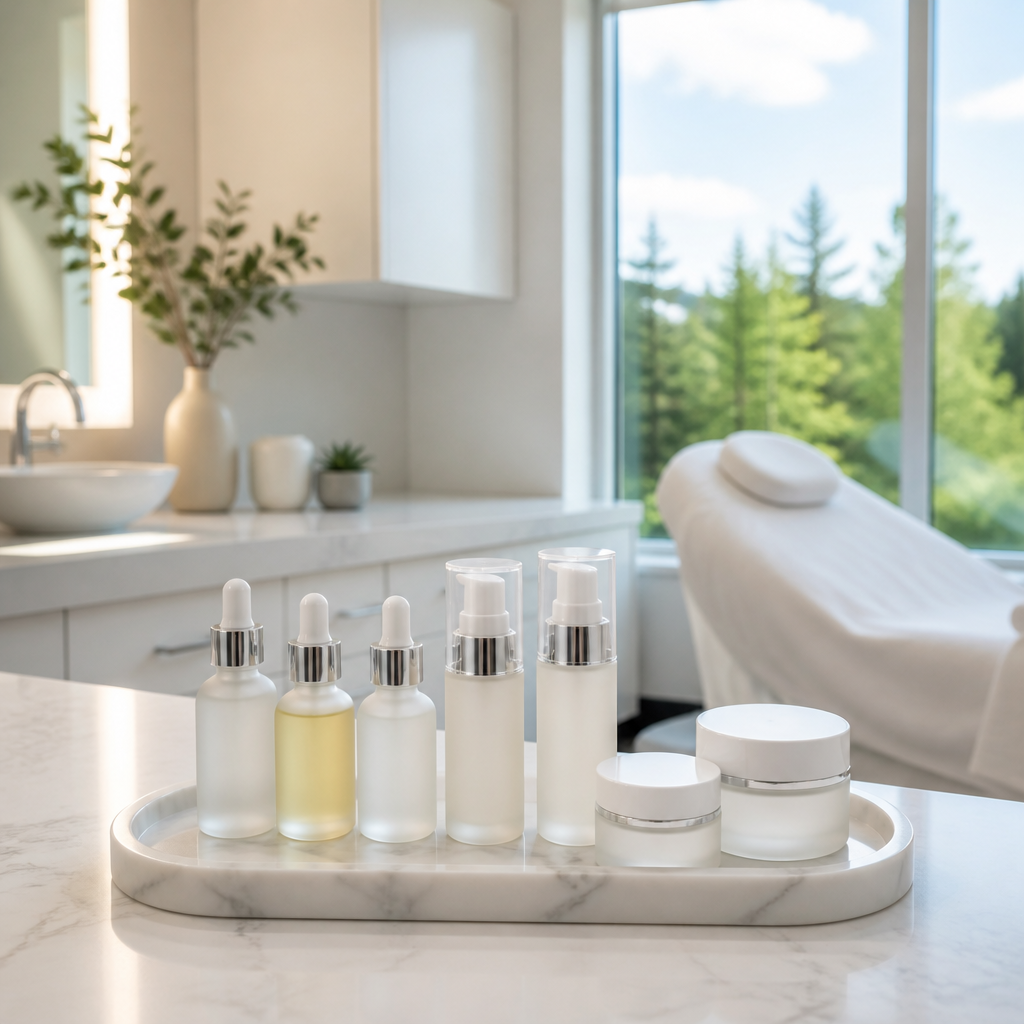
Over-the-counter products are designed for a broad population. They are sold in drugstores, beauty retailers and online, and they usually contain lower concentrations of active ingredients so that people can use them without supervision. That design is sensible. It is also why an OTC cleanser and a clinic-recommended treatment can feel so different on the skin.
Some of the marketing around medical-grade is overstated. Prevention has pointed out that the idea of medical-grade products being more potent than drugstore products is not necessarily true. Some drugstore formulas are well built and effective. The distinction that matters most is the purpose of the formula and the guidance that comes with it.
In practice, the clients who get the most from clinic-recommended products understand this. They treat the product as one part of a plan, not a jar that works on its own.
A product labeled medical-grade is only as useful as the assessment and instructions that come with it.
Concentration and penetration: the claims to test
Two claims come up again and again in medical-grade marketing: higher concentration and deeper penetration. Dallas Associates Dermatology describes medical-grade formulas as typically containing higher concentrations of active ingredients, designed to penetrate deeper and address specific concerns more directly. That is a useful general pattern, but it is not a promise about any single bottle.
Byrdie makes a similar point, noting that medical-grade products tend to use higher-quality ingredients with increased absorption mechanisms that can lead to potentially better results. The word “potentially” matters. Absorption depends on the active, the base formula, the strength and how the product is used, so the label cannot settle the question for you.
Why percentages alone mislead
A strength number tells you how much of one ingredient is in the jar. It does not tell you whether that ingredient is stable, whether it is in a form the skin can use, or whether it works well alongside the rest of the formula. A high percentage of an unstable ingredient can lose potency sitting on a shelf.
Ask for the active ingredient and its strength, then ask what the rest of the formula is doing. A simple, well-tested formula often beats a crowded one.
Delivery systems and stability
Packaging is part of the formula. Light- and air-sensitive ingredients such as vitamin C and some retinoids can degrade when packaging lets in air or light, so opaque, airtight packaging matters. If a product has sat open on a bathroom counter for months, its label may be promising more than the bottle still delivers.
Claims you should question
Be wary of phrases like “clinically proven” with no study named, or “dermatologist-grade” with no dermatologist involved. Ask what was tested, in whom, and for how long. If the answer is vague, treat the claim as marketing. A good clinic will tell you what is known and what is not.
Where over-the-counter products still earn their place
Over-the-counter skincare is not the enemy. Dallas Associates Dermatology notes that OTC products can help support everyday skin health and are often a starting point for people building a basic routine. For many adults, that is exactly the right level of care.
The OTC products that do the most for most people are the unglamorous ones: a gentle cleanser, a moisturizer that suits your skin type, and a daily sunscreen. None of these need to be medical-grade to be effective. A common mistake is spending heavily on a clinic serum while skipping sunscreen altogether.
Building a basic routine from the drugstore
Start with a cleanser that does not leave your face feeling tight, a moisturizer that keeps your skin barrier comfortable, and sunscreen every morning. Introduce one new product at a time and wait before adding another. That gives you a clear view of what your skin tolerates.
Sunscreen is not a place to save
Daily sunscreen is one of the few products almost everyone benefits from. Choose a broad-spectrum formula you will actually wear, apply it every morning, and reapply during extended time outdoors. No serum can undo the cumulative effects of daily sun exposure, so this is the one step not to cut.
When over-the-counter stops being enough
OTC products tend to hit a ceiling when you have a specific concern, such as texture that will not improve, pigmentation that is not responding, or lines that need more active treatment. At that point, a consultation can tell you whether a stronger formula, an in-clinic treatment, or a prescription is the right next step.
Why a professional assessment changes the regimen
Dallas Associates Dermatology notes that medical-grade products are typically recommended by a medical professional who can evaluate a patient’s skin type and concerns. That step is the real difference. The formula matters less than the decision about whether it belongs on your face, and when.
Before recommending anything, a practitioner should ask about your history, current products, medications, sensitivities and what you want to change. Those answers shape the plan far more than a brand name does.
What a skin assessment should cover
A useful assessment looks at your skin type, existing irritation, pigmentation, texture, and how your skin reacts to heat, sun and fragrance. It also asks about your daily life, because a routine with five steps every night is not realistic for everyone.
Why the same product fails on two people
A retinoid that clears one person’s breakouts can leave another person’s skin raw. The difference is often barrier health, existing irritation, or what else is already on the face. That is why starting slowly and reviewing results at a follow-up is more reliable than judging a product after two weeks.
Red flags in a generic recommendation
Be cautious if someone recommends a full bundle without asking about your skin, promises results without a timeline, or pushes you to combine several strong actives on day one. A good recommendation is specific, explained, and easy to adjust as your skin responds.
Skincare after Botox, fillers, Sculptra and micro-needling
Many people in Aurora come in for Botox, dermal fillers, Sculptra, micro-needling or medical facials, and then ask what to use at home. The answer depends on the treatment, and the aftercare instructions from your provider take priority over any general advice, including what is written here.
Some treatments temporarily change how your skin handles products. During those windows, a gentle routine usually works better than an aggressive one. Your practitioner should tell you what to pause and when to restart.
Micro-needling and the first days after
Micro-needling creates controlled micro-channels in the skin, which can leave it more sensitive for a short period. Many practitioners ask clients to avoid exfoliating acids, retinoids and fragranced products during that window, and to rely on a simple barrier-supporting moisturizer and a mineral sunscreen instead.
Injectables and your routine
Neurotoxin and filler treatments generally call for less product disruption, but you should still follow the instructions you are given, especially about touching the treated area, massage, heat and makeup. Ask specifically about facials, lasers or peels scheduled close to an injectable appointment.
Timing your actives
Once your practitioner clears you, reintroduce actives gradually. Start with a low frequency, observe how your skin responds for at least a week or two, and only then increase use. Rushing this step is one of the quickest ways to turn a good treatment result into a flare.
Questions to ask before you buy in Aurora
Whether you are buying from a clinic, a pharmacy or online, the questions you ask decide whether a product is a good fit. A clear answer is a good sign. A vague answer or a sales script is not.
Which active ingredients are in it, and at what level
Ask for the full ingredient list and the strength of the main actives. Write them down, then compare them with what your practitioner recommended so you can judge whether a cheaper alternative is truly equivalent.
Who should I use it with, and when should I stop
Ask which products it can be combined with, which should be avoided, and what signs mean you should pause. Redness that lingers, stinging that does not settle, or new breakouts are signals to call and ask rather than push through.
What does a realistic result look like
Ask for a realistic timeline and what improvement should look like at each stage. Skin concerns change slowly, and a good plan sets expectations in weeks and months rather than promising overnight change.
Pro tip: Photograph your skin in the same light once a week and keep notes on any new products. You will judge progress more fairly than relying on memory.
How the three options compare
Most people are choosing between three kinds of product, and the differences matter more than the labels on the box. The table below compares them by what they usually contain, what they do well, and who should guide the decision.

| Option | What it usually contains | Best fit |
|---|---|---|
| Over-the-counter drugstore products | Widely available formulas with lower active levels, designed for broad use without supervision | Daily cleansing, basic moisturizing and sunscreen |
| Medical-grade products recommended through a clinic | Formulas that often contain higher active levels, chosen after a skin assessment and often paired with treatments | Targeted concerns, post-treatment routines and plans built with a practitioner |
| Prescription topical medications | Treatments prescribed by a physician for specific conditions, with dosing and monitoring set by the prescriber | Conditions that need medical treatment and ongoing oversight |
Read the table as a map, not a ranking. A drugstore cleanser is not a failed medical-grade product, and a prescription is not simply a stronger version of a serum. Each category has a job.
Where people go wrong is mixing categories without a plan. A prescription retinoid, a clinic peel and a drugstore exfoliant on the same night can overwhelm the skin. Use the table to decide which category your concern belongs to, then ask your practitioner how the categories fit together.
Pro tip: Keep one written routine on your phone with each product, its strength and its start date. If something irritates you, you will know exactly which change caused it.
Frequently Asked Questions
Is medical-grade skincare always better than over-the-counter?
No. Medical-grade describes how a product is developed and recommended, and it often means higher active levels. A well-built drugstore product can still be the better choice for a simple routine, and a poorly chosen clinic product can underperform.
Do I need a consultation before buying medical-grade products?
For most people, yes, at least for the first product. An assessment helps match the formula to your skin, check for conflicts with your current products, and set a realistic timeline.
How long does it take to see results from a medical-grade routine?
It depends on the concern and the product. Ask your practitioner for a timeline specific to your plan, and judge progress at follow-up rather than after a few days.
Can I use medical-grade products after Botox or dermal fillers?
Often, but not always right away. Follow the aftercare your injector gives you, and ask which products to pause and for how long before restarting any actives.
Do I need a prescription for medical-grade skincare?
Many medical-grade skincare products are sold without a prescription, but some topical treatments require one from a physician. Your practitioner can explain which category a given product falls into.
How do I book a consultation in Aurora?
Visit skinexcellencemedispa.com or call (647) 979-5927 to discuss your goals.
We would welcome your feedback on whether moving from drugstore products to a clinic-recommended routine changed your skin, and what you noticed along the way.
About Zahra Erfan
Zahra Erfan is the owner of Skin Excellence Medispa in Aurora, Ontario. She oversees the clinic’s client experience, treatment standards, and aesthetic services. Her work with Skin Excellence gives her firsthand insight into the questions clients commonly ask when considering aesthetic treatments in Aurora.
Skin Excellence Medispa is an independently operated medical aesthetics clinic in Aurora, Ontario, owned by Zahra Erfan.
Skin Excellence Medispa
14845 Yonge Street, Unit 301
Aurora, Ontario L4G 6H8
Aurora, Ontario
This article is provided for general educational purposes and does not replace an individual medical consultation. Treatment suitability, risks and expected outcomes vary by patient and should be discussed with a qualified healthcare professional.
Considering a treatment in Aurora? Book a consultation with Skin Excellence Medispa to discuss your goals and determine whether it is appropriate for you.