Most people have spent money on a high-end at-home facial kit and felt genuinely hopeful about it. Then six weeks later, nothing changed. The skin looked the same, the texture was still uneven, and the dark spots were exactly where they started. This is not a personal failure. It is the predictable result of using tools designed for maintenance on skin that needs clinical-level correction. If you are searching for medical facials Aurora residents actually trust, the gap between what a spa-grade machine does versus what you can buy at Sephora is not a marketing claim. It is measurable, biological, and worth understanding before you spend another dollar on either.
Table of Contents
- Quick Takeaways
- What Separates a Medical Facial from a DIY Facial
- The Ingredient Gap: Professional Concentrations vs. Over-the-Counter Formulas
- Technology at Play: The Devices Your Bathroom Cabinet Does Not Have
- Side-by-Side Comparison: At-Home, Spa, and Medical Facial
- Who Benefits Most from Professional Skin Treatments in Aurora
- What to Expect at Skin Excellence Medispa
- Frequently Asked Questions
- References
Quick Takeaways
| Key Insight | Explanation |
|---|---|
| Clinical-grade actives penetrate deeper | Medical facials use pharmaceutical-grade retinoids, acids, and peptides at concentrations not available in retail products, reaching the dermis rather than sitting on the epidermis. |
| Professional assessment prevents skin damage | A trained practitioner identifies your Fitzpatrick skin type and adjusts treatment accordingly. Using the wrong peel strength at home is one of the most common causes of post-inflammatory hyperpigmentation. |
| Medical devices deliver energy retail tools cannot replicate | Devices like medical-grade microcurrent, radio frequency, and fractional laser systems operate at energy levels that trigger actual collagen remodeling, not just surface hydration. |
| Results compound over a treatment series | A single professional facial GTA residents receive typically outperforms three months of daily at-home routine for conditions like melasma, acne scarring, or significant laxity. |
| Aurora-area clients save money long-term | The average GTA resident spends over $600 per year on at-home skincare products. A targeted medical facial series often delivers faster, more durable results at a comparable or lower total cost. |
| Combination protocols multiply outcomes | At Skin Excellence Medispa, medical facials are frequently paired with micro-needling or PRP therapy for skin concerns that require both surface renewal and deeper structural support. |
| Downtime is predictable and minimal | Unlike harsh at-home peel mishaps, medical facials administered by trained practitioners carry predictable, brief recovery windows because protocols are calibrated to each client. |
What Separates a Medical Facial from a DIY Facial
The word “facial” covers a wide spectrum. At one end is a warm towel, some steam, and a moisturizer your esthetician likes. At the other end is a clinically supervised procedure that uses prescription-strength chemistry and FDA-cleared devices to produce measurable changes in skin architecture. A medical facial in Aurora sits firmly at that clinical end of the spectrum.
In practice, the defining difference is who is delivering the treatment and what tools they have access to. A nurse or licensed medical aesthetician operating under physician oversight can apply concentrations of glycolic acid, salicylic acid, lactic acid, and retinol that would be illegal to sell over the counter in Canada. These concentrations are higher not because clinics want to be aggressive, but because the dermis simply does not respond to surface-level stimulation the way the epidermis does.
A common mistake is assuming that a more expensive at-home product closes this gap. It does not. Health Canada and the FDA regulate the active percentages in consumer products for safety reasons. A 10% glycolic acid serum from a luxury brand still cannot legally match what a clinic applies under controlled conditions with post-treatment monitoring in place.
The Supervision Factor
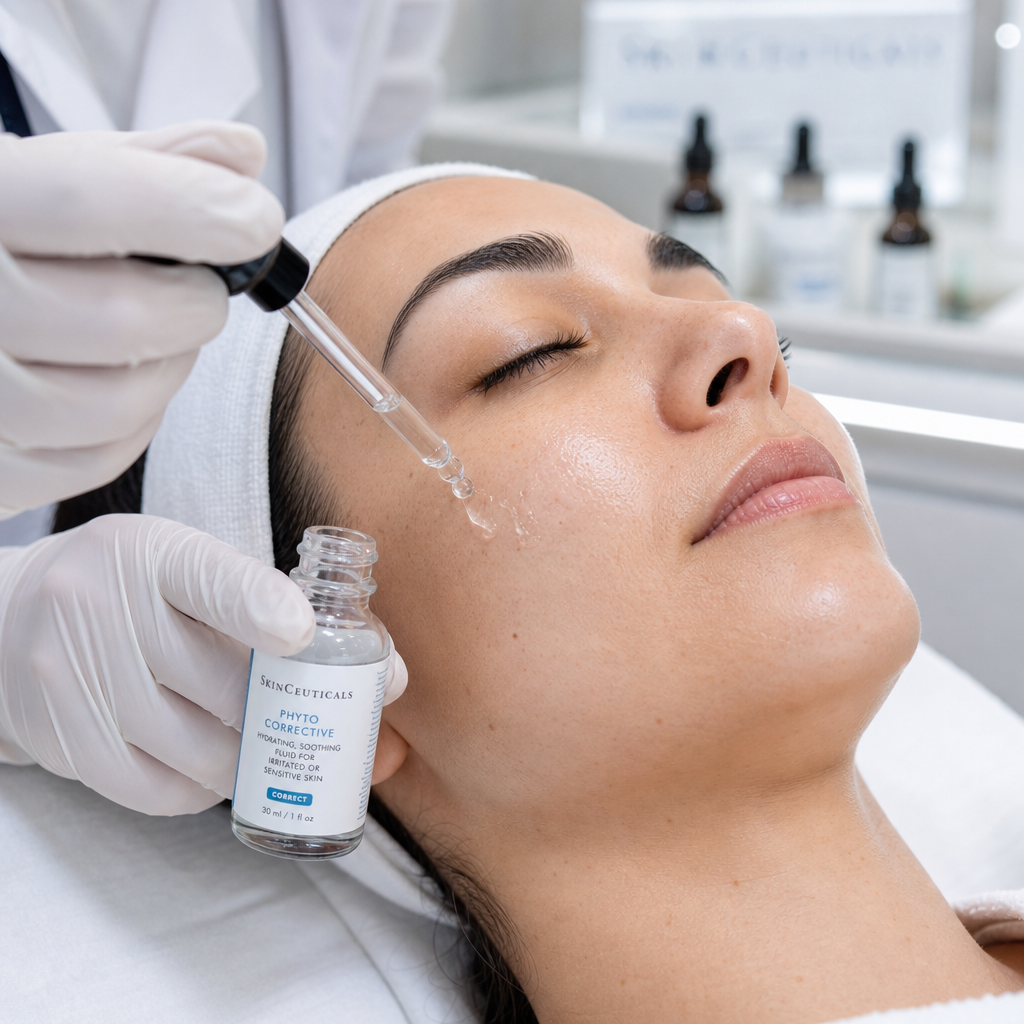
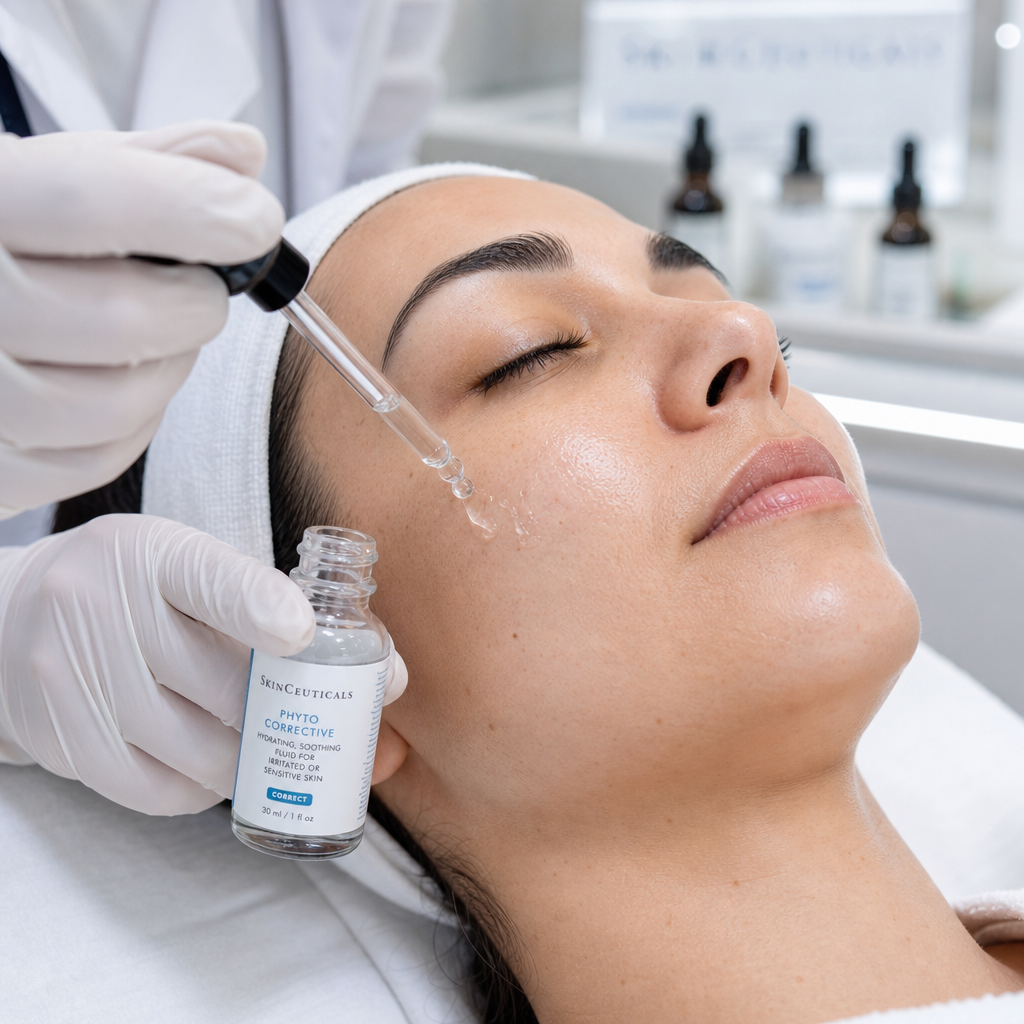
Supervision changes the risk profile of every active ingredient used. When a practitioner monitors your skin response in real time, they can stop a peel at the right endpoint, neutralize an acid before it goes too deep, and prescribe a post-treatment protocol that locks in results. At-home users are guessing at all three steps.
The data consistently shows that adverse events from chemical peels happen almost exclusively in unsupervised settings. A 2020 review published through the Canadian Dermatology Association found that the majority of peel-related complications were reported from self-administered or aesthetically unsupervised treatments, not from clinical procedures.
Pro tip: Before booking any facial treatment in Aurora, ask the clinic whether a licensed medical professional will be present during your treatment and whether a skin assessment is conducted before the protocol is selected. If the answer to either is no, walk away.
The Ingredient Gap: Professional Concentrations vs. Over-the-Counter Formulas
Understanding why medical-grade ingredients outperform retail versions requires a quick look at how actives work. Most skin concerns, including fine lines, hyperpigmentation, acne scarring, and loss of elasticity, originate in the dermis, the layer beneath the visible surface. To change the dermis, ingredients need to get there.
The stratum corneum, the outermost layer of skin, is extraordinarily effective at blocking foreign substances. It evolved to do exactly that. Consumer products are formulated to be safe if a small child accidentally ingests them, safe if they contact the eyes, and safe without any professional follow-up. Those safety constraints limit penetration depth by design.
Prescription-Grade Retinoids vs. Retail Retinol
Retinol is the most widely marketed anti-aging ingredient on the market. It is also a weaker precursor to retinoic acid, which is the molecule that actually binds to skin receptors and initiates collagen production. Every step of conversion from retinol to retinaldehyde to retinoic acid loses potency. A medical facial at Skin Excellence Medispa can incorporate retinoic acid directly, bypassing those conversion steps entirely.
The practical result is that a single professionally applied retinoid treatment can stimulate collagen synthesis at a rate that months of retail retinol application struggles to match. For Aurora clients dealing with post-pregnancy skin changes, perimenopausal skin laxity, or sun damage accumulated over years of outdoor life in the GTA, this difference matters enormously.
Chemical Peels at Clinical Depth
Retail peels marketed as “at-home chemical peels” typically contain 5 to 10 percent glycolic acid. A superficial medical peel starts at 20 to 30 percent, with medium-depth peels reaching 35 to 50 percent. A medium-depth peel reaches the papillary dermis. A retail peel does not leave the epidermis.
This is not a trivial distinction. Reaching the papillary dermis triggers a wound-healing response that produces new collagen and elastin. Staying in the epidermis produces temporary brightness and surface hydration. Both have their place, but they are different treatments serving different goals.
Pro tip: If you have been using at-home retinol or peels for more than six months without visible improvement in your skin concern, this is a clear signal that you have reached the ceiling of what consumer-grade products can do. A professional assessment at a clinic like Skin Excellence Medispa will identify whether a medical facial series, micro-needling, or a combination approach is the appropriate next step.
Technology at Play: The Devices Your Bathroom Cabinet Does Not Have
Ingredient chemistry is only half the story. The devices used during a professional facial GTA clinics invest in represent a category of technology that is simply not available for home purchase, at least not at therapeutic energy levels.
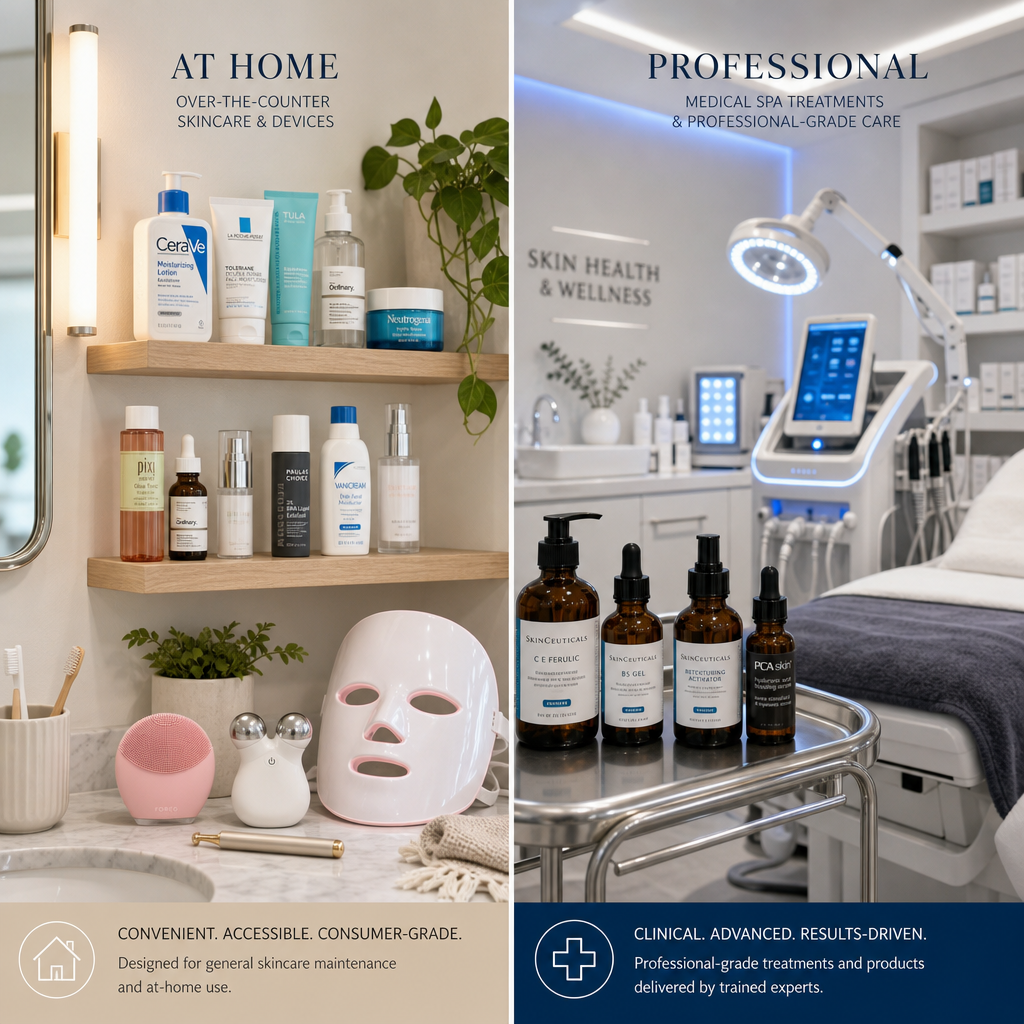
Consumer microcurrent devices, LED masks, and ultrasonic cleansers have flooded the market. They are not without value for maintenance. But the energy output of a retail device is governed by the same safety constraints that govern skincare chemistry. A home microcurrent device outputs a fraction of the microamperage of a clinical system. A home LED mask delivers a fraction of the joules per centimeter squared of a medical-grade panel.
Hydrodermabrasion and Vacuum Extraction
Medical hydrodermabrasion systems combine pressurized water, suction, and simultaneous infusion of serums into the skin at a depth and pressure no home device replicates. The suction creates a controlled trauma that increases circulation, while the infusion delivers actives into a channel that the mechanical exfoliation has just opened. This is the mechanism behind treatments like HydraFacial, which has strong clinical evidence behind its efficacy for congested skin, uneven texture, and dehydration.
Ultrasound and Electroporation for Deeper Delivery
Some medical facial protocols at clinics in the Aurora area incorporate ultrasound or electroporation to temporarily increase the permeability of the stratum corneum. This allows active serums to penetrate to a depth that topical application alone cannot achieve. The effect is temporary and reversible, which is what makes it safe, but it fundamentally changes what a serum can accomplish in a single treatment session.
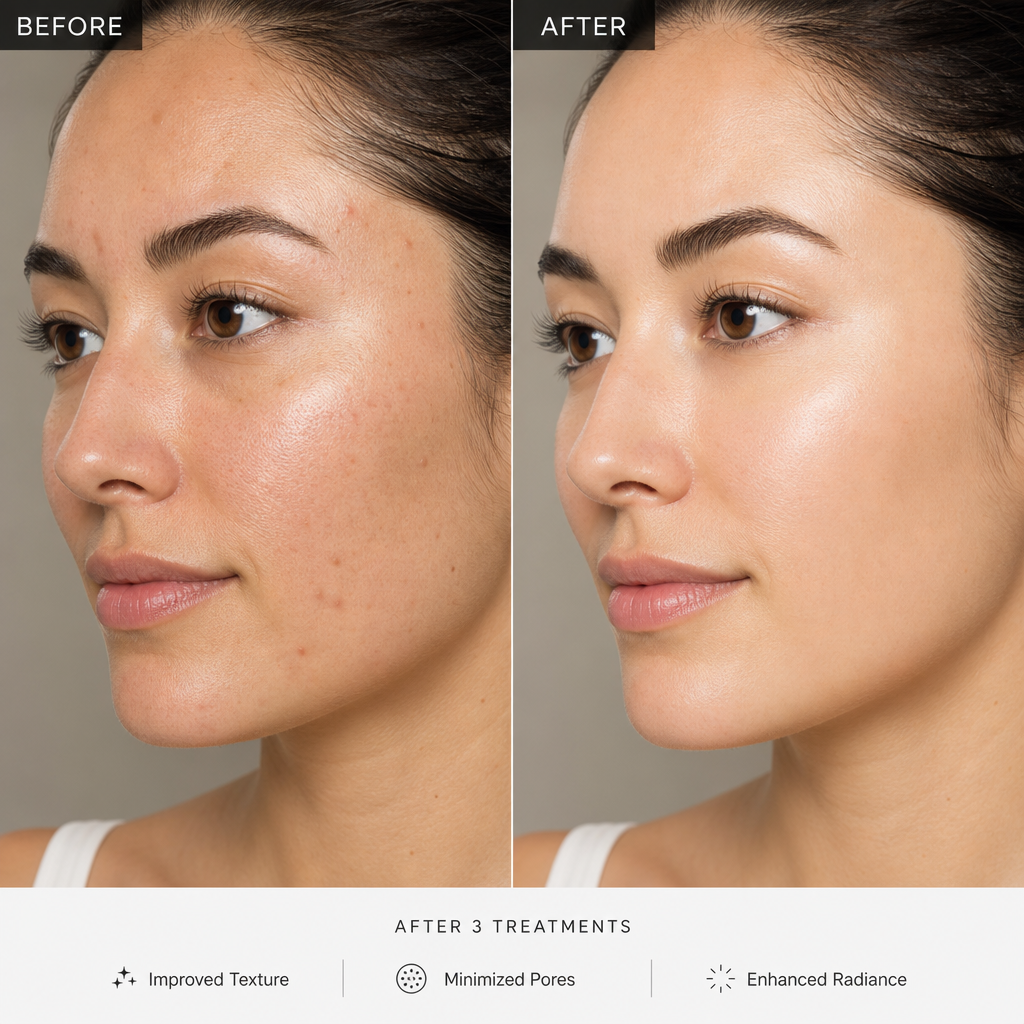
Side-by-Side Comparison: At-Home, Spa, and Medical Facial
Not every skin concern requires the highest level of intervention. The table below breaks down what each category of facial treatment realistically delivers so Aurora residents can make an informed decision based on their specific goal.
| Feature | At-Home Facial | Non-Medical Spa Facial | Medical Facial (Skin Excellence Medispa) |
|---|---|---|---|
| Active ingredient concentration | Consumer-grade, Health Canada regulated ceiling | Mid-range, esthetician-grade products | Pharmaceutical-grade, clinical concentrations |
| Penetration depth | Epidermis only | Epidermis to shallow dermis | Epidermis through papillary dermis |
| Device technology | Consumer microcurrent, LED masks | Esthetician-grade tools, basic extractions | Medical-grade hydrodermabrasion, ultrasound, electroporation |
| Skin assessment | Self-assessed | Visual esthetician assessment | Clinical Fitzpatrick typing, medical history review |
| Conditions treated effectively | Dryness, mild dullness | Surface congestion, mild uneven tone | Melasma, acne scarring, laxity, hyperpigmentation, rosacea |
| Suitable for combination with injectables | No | No | Yes, protocols coordinated with Botox, fillers, PRP |
| Cost per session (approximate) | $20 to $100 in products | $80 to $150 per session | $150 to $350 per session, fewer sessions needed |
“The difference between a medical facial and a spa facial is not about luxury. It is about whether the treatment is capable of reaching the tissue layer where your skin concern actually lives.” — Position held by clinical practitioners at physician-supervised medical spas across Ontario.
Who Benefits Most from Professional Skin Treatments in Aurora
This is worth being direct about. Not every Aurora resident needs a medical facial series. If your skin is generally healthy and your goal is relaxation and maintenance, a monthly spa facial is a legitimate choice. Medical facials are the right tool when you have a specific, persistent skin concern that consumer products have failed to resolve.
The clients who consistently see the most dramatic results from skin treatment Aurora Ontario clinics offer are those dealing with post-acne scarring, hormonally driven melasma, perimenopausal skin thinning, and sun damage accumulated from years spent outdoors in the GTA climate. These are structural issues. They live in the dermis. And they require dermal-level treatment.
Perimenopausal and Post-Pregnancy Skin Changes
Estrogen decline accelerates collagen loss at a rate of approximately 30 percent in the first five years of perimenopause, according to research cited by the American Academy of Dermatology. This is not a gradual process. Clients who felt their skin was fine at 42 often notice a sudden change by 46. Medical facials incorporating peptide infusions, collagen-stimulating peels, and radio frequency technology address this decline at the biological level rather than masking it with moisturizer.
Post-pregnancy skin presents its own set of concerns. Melasma triggered by pregnancy hormones, changes in skin texture from fluctuating weight, and decreased elasticity all respond to clinical intervention. The combination of a medical facial series with PRP therapy, a service available at Skin Excellence Medispa, produces outcomes that no retail routine achieves.
Adults with Active or Post-Acne Skin
Active acne and post-acne scarring are two of the most common reasons Aurora-area adults seek out professional treatments. Salicylic acid peels at clinical concentrations, mandelic acid protocols, and azelaic acid treatments delivered under medical supervision consistently outperform even the most disciplined at-home routine. For pitted or atrophic scarring specifically, micro-needling at Skin Excellence Medispa is frequently combined with a medical facial series for surface preparation and post-treatment healing support.
What to Expect at Skin Excellence Medispa
Skin Excellence Medispa is located in Aurora and serves clients across the Greater Toronto Area, including residents from Newmarket, Richmond Hill, Barrie, and the northern York Region who want clinical-quality care without driving downtown. The clinic’s approach to medical facials begins before you even arrive for your first appointment.
The intake process involves a detailed skin history, current product inventory review, and a clinical assessment of your skin type and concern. This is not a formality. What you are currently using on your skin determines how your skin will respond to clinical actives. Clients who are over-exfoliating at home, which is more common than most people realize, need a different pre-treatment protocol than those whose skin is compromised by barrier damage from harsh cleansers.
How Medical Facials Complement Injectable Treatments
One of the most important advantages of working with a medispa rather than a standalone facial clinic is the ability to coordinate medical facials with injectable treatments like Botox and dermal fillers. Skin Excellent Medispa practitioners understand the timing windows that allow facial treatments to happen safely around injectable appointments. A medical facial performed too close to a Botox injection can affect product migration. Done with the right timing, it enhances the overall aesthetic result by improving the skin surface that the Botox is relaxing beneath.
Sculptra and Belkyra clients at the clinic frequently incorporate medical facial series into their treatment plans because the combination addresses both volume and surface quality simultaneously, which neither treatment alone fully achieves.
Pro tip: When booking a medical facial in Aurora, mention any injectable treatments you have received or are planning within the next four to six weeks. A qualified clinic will schedule your facial treatment with those appointments in mind to protect your results.
Frequently Asked Questions
How often should I get a medical facial at a clinic in Aurora?
For active skin concerns like melasma, acne scarring, or significant laxity, most practitioners recommend a series of four to six treatments spaced three to four weeks apart, followed by a maintenance schedule of once every six to eight weeks. Skin cellular turnover runs on a roughly 28-day cycle, so spacing treatments too closely does not allow the skin to complete its healing response between sessions.
Is a medical facial safe for darker skin tones?
Yes, when administered by a trained practitioner who has assessed your Fitzpatrick skin type. The risk for darker skin tones is primarily post-inflammatory hyperpigmentation from overly aggressive treatments. A clinical setting manages this risk by selecting appropriate peel depths, avoiding protocols with high heat on melanin-rich skin, and using pre-treatment brightening agents when indicated. This is precisely why professional supervision matters more, not less, for clients with deeper complexions.
What is the difference between a medical facial and micro-needling?
A medical facial primarily uses topical chemistry and technology to resurface, hydrate, and treat the skin from the outside. Micro-needling creates controlled micro-injuries to stimulate the skin’s internal healing response and collagen production. The two are complementary rather than interchangeable. At Skin Excellence Medispa, they are frequently combined in treatment plans where surface treatment and structural remodeling are both needed.
Can I wear makeup immediately after a medical facial?
This depends entirely on the protocol used. After a mild enzyme facial or hydrodermabrasion, most clients can apply mineral makeup within a few hours. After a medium-depth chemical peel or a treatment incorporating strong retinoids, the skin will need 24 to 72 hours of bare recovery time. Your practitioner will give you specific post-treatment instructions before you leave the clinic, and following them exactly determines how much of your result you actually keep.
How do professional facials in the GTA compare in price to building an at-home routine?
A comprehensive at-home anti-aging routine including a vitamin C serum, retinol, peptide moisturizer, and SPF from reputable brands costs between $400 and $800 per year to maintain. A medical facial series of six treatments at a clinic like Skin Excellence Medispa runs approximately $900 to $1,800 depending on the protocol. The medical facial series, however, produces measurable structural change. The at-home routine maintains what the skin already has. For Aurora residents with specific concerns, the clinical investment typically delivers a higher return than the same dollars spent on retail products.
Do I need a referral from a doctor to get a medical facial in Aurora?
No referral is required to book a medical facial at Skin Excellence Medispa. You can contact the clinic directly to schedule a consultation. During that consultation, the practitioner will review your skin history and recommend the appropriate protocol. If your skin concern has a potential medical component, such as rosacea or seborrheic dermatitis, the team will advise whether a dermatologist consultation should happen alongside your aesthetic treatment plan.
Have you made the switch from at-home facials to professional treatments, or are you still weighing the decision? Share what has worked or not worked for your skin in Aurora or the GTA.
References
- American Academy of Dermatology: Research and clinical guidelines on skin aging, collagen loss, and professional skin treatments
- Statista: Global and Canadian consumer spending data on skincare and beauty products
- National Institutes of Health: Peer-reviewed research on chemical peel efficacy, retinoid mechanisms, and dermal penetration of cosmetic actives
- Health Canada: Regulations governing cosmetic ingredient concentrations and safety standards for consumer and professional skin products
- Forbes: Consumer and industry reporting on the medical aesthetics market and professional skincare trends in North America