
Most people who come in for Botox at Skin Excellence Medispa have one thing on their mind the moment they leave the treatment room: what happens next? The anxiety about swelling, bruising, and how long it takes to actually see results is real, and it deserves a straight answer. Botox recovery in Aurora is generally minimal, but “minimal” does not mean zero. Knowing exactly what your skin, muscles, and appearance will do in the 14 days following treatment helps you plan your schedule, manage expectations, and get the best possible outcome from your investment.
Table of Contents
- Quick Takeaways
- What Happens in the First Hours After Botox
- Day-by-Day Botox Recovery Timeline
- After Botox Care Rules That Actually Matter
- Comparison: Botox Recovery vs. Other Common Treatments at Skin Excellence Medispa
- When Results Peak and How Long They Last
- Red Flags vs. Normal Side Effects
- Frequently Asked Questions
- References
Quick Takeaways
| Key Insight | Explanation |
|---|---|
| Results are not immediate | Botox begins working within 3 to 5 days but full effect takes up to 14 days. Do not judge your results at 48 hours. |
| Swelling and redness are normal in the first 24 hours | Small bumps at injection sites resolve on their own. They do not indicate a problem or a poor technique. |
| Avoid lying down for 4 hours post-treatment | Staying upright reduces the risk of product migration to unintended muscle groups. |
| No intense exercise for 24 hours | Elevated heart rate and flushing can increase bruising and potentially shift product placement. |
| Bruising is possible but not guaranteed | Thin-skinned areas like under the eyes or the forehead carry higher bruising risk. Arnica gel applied beforehand can help reduce this. |
| Touch-ups are a normal part of the process | A two-week follow-up appointment lets your practitioner assess symmetry and correct any areas that need adjusting. |
| Alcohol and blood thinners affect recovery | Avoiding alcohol 24 hours before and after Botox significantly reduces bruising risk, according to dermatology practice guidelines. |
What Happens in the First Hours After Botox
The first few hours after leaving your Botox appointment are the period where clients most often second-guess themselves. You may notice small raised bumps at each injection site, some mild redness, and possibly a slight headache if the forehead or glabellar area was treated. These are all expected.
In practice, the injection sites look far more alarming up close than they appear to others. A pin-dot bump resolves within 20 to 30 minutes in most cases. What persists longer is the tenderness at the injection point, which can last several hours.
The product itself begins binding to the neuromuscular junction almost immediately, but the visible softening of muscle movement does not follow that quickly. Think of it like a mechanism that has been triggered but has not yet completed its action. The first 24 hours are truly a waiting period, not a recovery period in any dramatic sense.
Pro tip: Apply a cold pack wrapped in a clean cloth to injection sites for 10-minute intervals in the first two hours. This reduces swelling and minimizes bruising, especially if you had treatment near the eyes or brow area.
Day-by-Day Botox Recovery Timeline
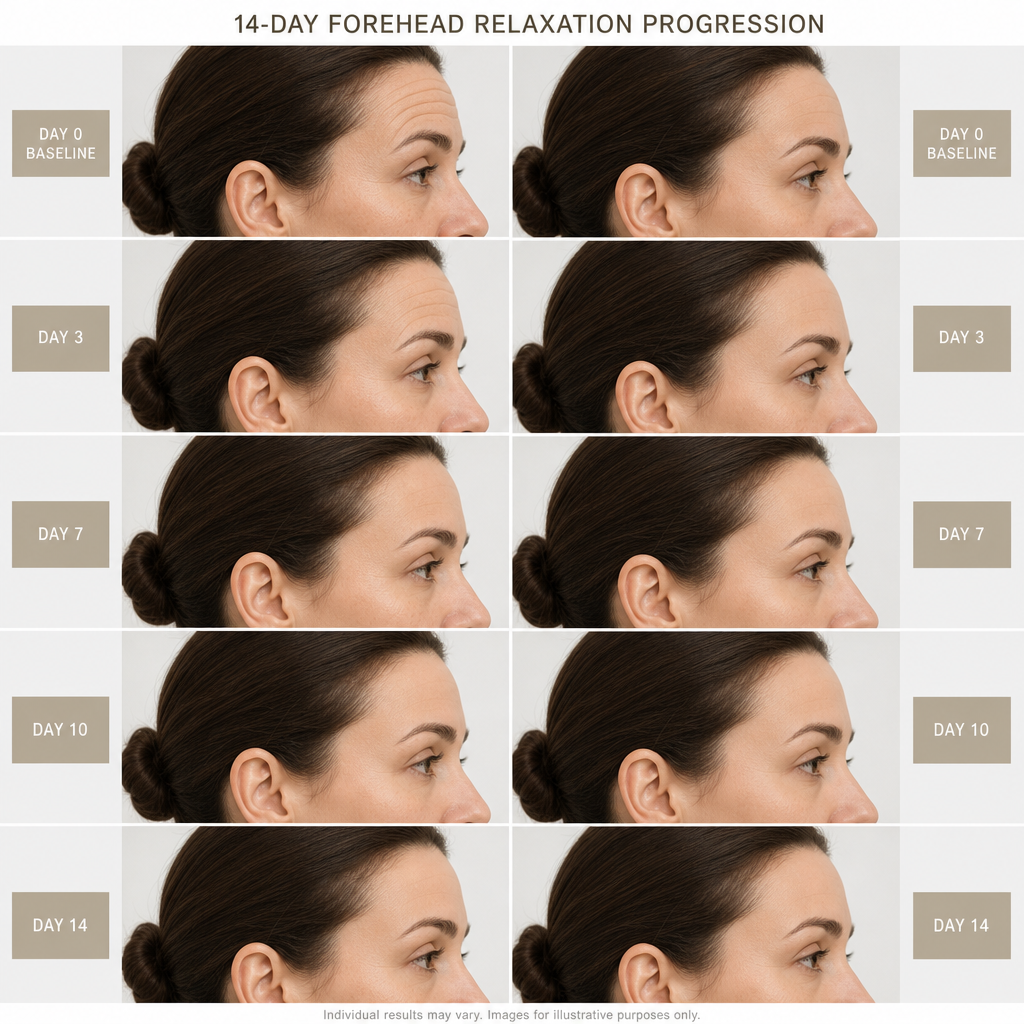
Understanding what is happening inside your skin on each day gives you a realistic picture of the process. The Botox results timeline follows a predictable pattern, though individual variation exists based on muscle mass, injection depth, and metabolism.
Day 1: Injection Sites and Mild Swelling
On day one, most clients experience minor redness, localized swelling at injection sites, and possible small bruises. Makeup can be applied gently around the treated areas after a few hours, though pressing or rubbing should be avoided. Full movement of the targeted muscles still feels normal because the neurotoxin has not yet fully blocked nerve signals.
Days 2 to 3: The First Signs of Effect
By day two or three, clients begin to notice that the treated muscles feel slightly stiffer or harder to contract fully. Frown lines may appear a little softer when you look in the mirror at rest. This is the very beginning of the visible effect, and it is subtle. Some clients at this stage worry that nothing is happening. That concern is almost always premature.
Bruising, if it appeared, is typically at its most visible around day two to three. It fades in the following days and can be concealed with mineral-based makeup.
Days 4 to 5: Noticeable Muscle Relaxation Begins
This is where the real change becomes visible to the client. The forehead feels smoother, crow’s feet soften, and the glabella (the area between the brows) shows a reduction in dynamic lines. Clients who have had Botox before often recognize this stage immediately. First-timers sometimes feel surprised by how natural the movement still looks, which is the goal of skilled injection technique.
Days 6 to 10: Progressive Softening
The muscle relaxation deepens across this window. Static lines (the ones visible even at rest) begin to fade as the underlying muscle stops pulling on the skin. This is the phase that rewards patience. Clients who assess their results at day four and feel underwhelmed consistently report satisfaction by day ten.
Days 11 to 14: Full Results Visible
By the end of the second week, the full effect of the treatment is visible. This is the correct moment to evaluate whether a touch-up is needed. At Skin Excellence Medispa, a two-week follow-up is recommended for first-time clients or anyone who had a new area treated. At this appointment, your practitioner can assess symmetry and add product to any areas that did not respond as expected.
“Botulinum toxin type A typically reaches peak neuromuscular effect within 10 to 14 days of injection, with individual variation influenced by muscle mass and injection volume.” – American Society of Plastic Surgeons, clinical guidance on neuromodulator treatments.
After Botox Care Rules That Actually Matter
There is a lot of noise online about post-Botox restrictions. Some of it is outdated. Some of it is exaggerated. Here is what the evidence and clinical practice actually support as meaningful after Botox care instructions.
What You Must Avoid for 24 Hours
Do not lie flat or bend forward extensively for at least 4 hours post-treatment. Avoid strenuous exercise, saunas, hot tubs, and steam rooms for 24 hours. Skip alcohol for at least 24 hours before and after. These restrictions are not arbitrary. Increased blood flow and pressure changes in the face during this window create genuine risks for bruising and product displacement.
What You Can Do Immediately
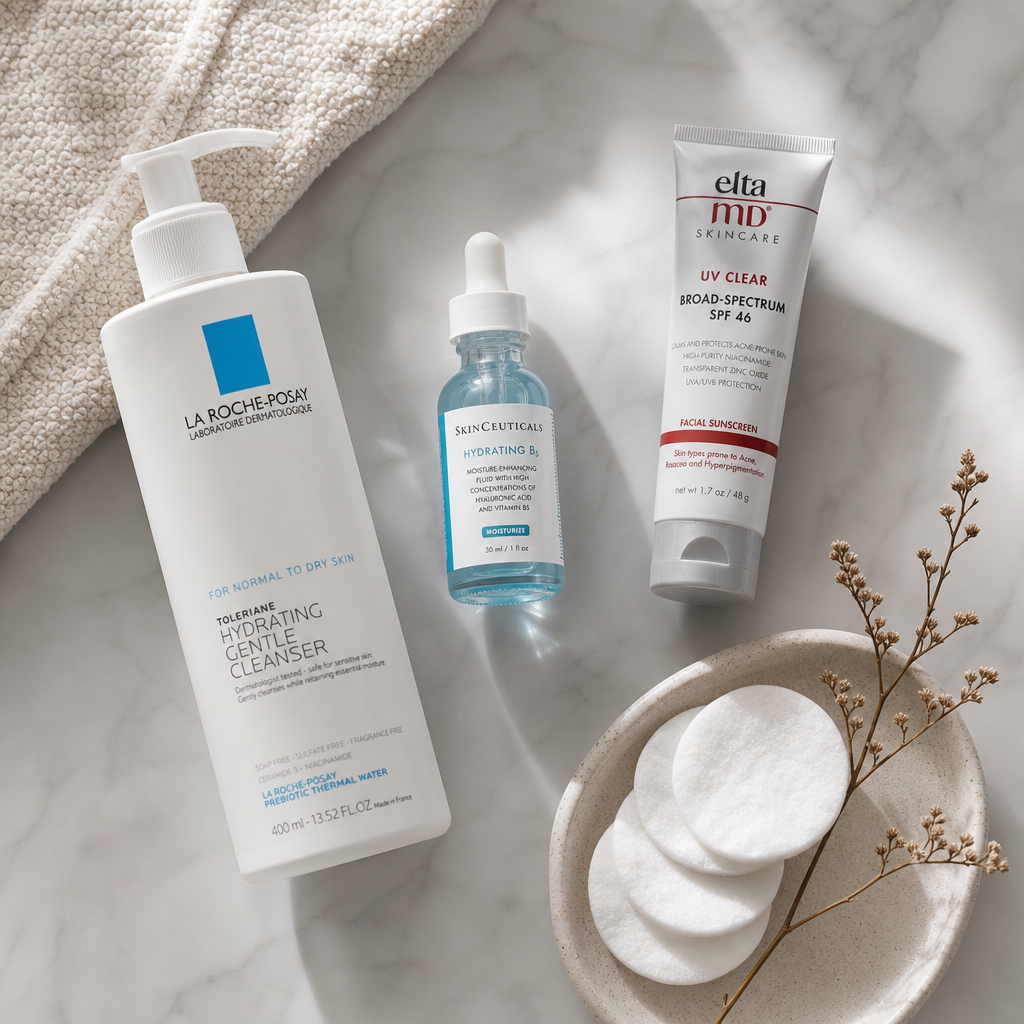
You can return to work, drive, and resume most daily activities the same day. Light makeup can be applied a few hours after treatment. Gentle cleansing and moisturizing of the face is fine, but avoid vigorous massage or facial pressure over treated areas for 24 to 48 hours.
Facial Exercises: The Old Advice vs. Current Practice
Older guidance told clients to repeatedly raise their brows and frown for 30 minutes after Botox. Current clinical evidence does not support this as meaningfully beneficial. Some practitioners still recommend it because it causes no harm and keeps clients engaged, but it is not a necessary step. What matters far more is avoiding the physical activities listed above.
Pro tip: If you bruise easily or take supplements like fish oil, vitamin E, or omega-3s, stop them 5 to 7 days before your appointment and resume 48 hours after. This small change makes a measurable difference in post-treatment bruising, particularly around the eye area.
Comparison: Botox Recovery vs. Other Common Treatments at Skin Excellence Medispa
Clients who come in from a friend’s referral often ask how Botox compares to other treatments they have heard about. The table below gives a clear picture of recovery expectations across the most popular options at Skin Excellence Medispa.
| Treatment | Typical Recovery Window | Time to Visible Results |
|---|---|---|
| Botox | 24 to 48 hours of minor swelling or bruising; no downtime from daily activities | 3 to 5 days for initial effect; full results at 10 to 14 days |
| Dermal Fillers (e.g., lip, cheek, nasolabial) | 2 to 7 days of swelling; bruising more common than with Botox; some clients experience firmness at the site for 1 to 2 weeks | Immediate volume, with final appearance visible after swelling resolves at approximately day 7 to 14 |
| Micro-Needling with PRP/PRF | 2 to 4 days of redness and mild peeling; skin sensitivity for up to 5 days; considered moderate downtime | Initial glow within 1 week; collagen remodeling results visible over 4 to 8 weeks with continued improvement over 3 to 6 months |
Botox consistently has the shortest functional recovery of any injectable or resurfacing treatment. That is one reason it remains the most performed cosmetic procedure in North America, according to the American Society of Plastic Surgeons’ annual statistics report.
When Results Peak and How Long They Last
Results peak at approximately two weeks post-injection and remain stable for the following weeks. The total duration of effect depends on several factors: the area treated, the dose used, the client’s muscle mass and activity level, and how their individual metabolism processes the product.
For most clients, Botox results last 3 to 4 months in high-movement areas like the forehead and crow’s feet. The glabella and areas with less repetitive movement may hold results for up to 5 months in some clients. A common mistake clients make is waiting until the lines are fully back before returning. Coming in at the 3-month mark, when movement is returning but the muscle has not fully reactivated, often means needing a slightly lower dose to maintain the result, which is both more cost-effective and more comfortable over time.
The data consistently shows that clients who maintain regular Botox appointments over 2 to 3 years often report needing less product over time. This is because sustained muscle relaxation prevents the deepening of static lines and, in some cases, allows existing static lines to partially fill in as the skin is no longer being repeatedly folded.
Red Flags vs. Normal Side Effects
This section matters. Knowing what is a normal part of recovery versus what requires a phone call to your clinic is important information that clients should have before they leave the treatment room.
Normal and Expected
Small lumps or bumps at injection sites that resolve within an hour. Mild redness lasting a few hours. Tenderness or sensitivity at injection sites lasting up to 48 hours. Minor bruising that fades within 5 to 10 days. A feeling of tightness or heaviness in the forehead in the first week as the muscles begin to relax.
Contact Your Clinic If You Experience These
Ptosis (drooping of an eyelid or brow) that appears within the first week. This is rare but can occur if product migrates or is placed incorrectly. It is temporary and resolves as the product wears off, but your practitioner should know about it. Asymmetry that does not correct itself by week two. Difficulty swallowing, speaking, or breathing, which are extremely rare but constitute a medical emergency requiring immediate attention.
A common mistake clients make is assuming that any asymmetry at day five is permanent. At Skin Excellence Medispa, clients are encouraged to wait until the full two-week mark before evaluating symmetry, because the muscles relax at slightly different rates and the result at five days is not the final picture.
If you were referred by a friend who has been getting Botox in Aurora for a while, they likely told you that the first treatment involves the most uncertainty and that subsequent appointments feel far more predictable. That experience is consistent with what we see in practice. Once you know how your face responds to the product, the timeline and outcome become very reliable.
Frequently Asked Questions
How soon after Botox can I wash my face?
You can gently wash your face a few hours after your Botox appointment using a mild cleanser. Avoid rubbing or applying firm pressure over the treated areas for at least 24 hours. Pat dry rather than rubbing with a towel.
Is it normal to feel nothing for the first few days after Botox?
Yes, this is completely normal. The neurotoxin takes 3 to 5 days to begin visibly relaxing the muscle. Some clients with stronger muscles or a higher baseline muscle tone may not notice any visible change until days 5 to 7. The full result takes 10 to 14 days.
Can I sleep on my side after Botox?
For the first 4 hours after treatment, avoid lying flat in any position. After that initial window, sleeping on your side is generally fine. Some practitioners recommend sleeping on your back for the first night as an extra precaution, but the risk after the first 4 hours is very low for most injection sites.
Why does my forehead feel heavy after Botox?
A feeling of heaviness or tightness in the forehead is one of the most commonly reported sensations in the first 7 to 10 days after treatment. It occurs because the frontalis muscle, which is responsible for lifting the brow, is being relaxed. This sensation is temporary and resolves as your body adjusts. It does not indicate that too much product was used, though it is worth mentioning at your follow-up appointment.
When should I book my next Botox appointment?
Most clients return every 3 to 4 months. A good rule of thumb is to book your next appointment when you notice that your full range of muscle movement is returning, typically around the 12-week mark. Booking proactively rather than waiting until the lines are fully re-established tends to produce a more consistent long-term result.
Can I exercise the day after Botox?
Light activity like walking is generally fine after the first 24 hours. High-intensity exercise, hot yoga, and anything that significantly elevates your heart rate and body temperature should be avoided for the first 24 hours post-treatment. After that window, normal exercise routines can resume without restriction.
Does Botox recovery look different the first time compared to subsequent treatments?
First-time Botox clients often notice more pronounced redness and swelling at injection sites compared to clients who have had multiple treatments. This is partly because practitioners may use a slightly higher dose to establish a baseline effect, and partly because the skin and muscle are responding to the product for the first time. Subsequent treatments typically involve less visible recovery and more predictable results.
If you have recently had Botox in Aurora or are preparing for your first treatment, we would love to hear what part of the recovery process surprised you most or what questions you still have.
We would love your feedback and any insights you would share with others. What perspective would you add?
References
- American Society of Plastic Surgeons: annual statistics and clinical guidance on neuromodulator treatments and cosmetic procedure recovery
- U.S. Food and Drug Administration: official prescribing information and safety data for botulinum toxin type A products
- National Institutes of Health National Library of Medicine: peer-reviewed research on botulinum toxin pharmacokinetics, onset of action, and duration of effect
- American Academy of Dermatology: patient-facing clinical recommendations for injectable cosmetic treatments and post-procedure care
- Statista: market data and consumer statistics on cosmetic procedure trends in North America including Botox treatment volumes