If you have been chasing smoother, firmer skin and every serum on the market has left you underwhelmed, it is worth understanding why microneedling with PRP in Aurora is drawing so much attention from GTA residents right now. This combination treatment pairs two clinically supported mechanisms in a single session: controlled micro-injury that triggers your skin’s own repair cascade, and a concentrated dose of your own growth factors delivered precisely where the work is happening. The result is a level of collagen stimulation that neither approach achieves on its own, making it one of the most efficient options for PRP skin resurfacing in the GTA.
Table of Contents
- Quick Takeaways
- What Is Microneedling with PRP and Why Does the Combo Matter
- How the Treatment Works: From Blood Draw to Skin Renewal
- What Microneedling with PRP Actually Treats
- Microneedling with PRP vs. Other Resurfacing Options: A Direct Comparison
- Who Is a Good Candidate and Who Should Wait
- What to Expect: Before, During, and After Your Session
- How Many Sessions You Need and When to Maintain
- Choosing a Provider for Microneedling with PRP in Aurora
- Frequently Asked Questions
- References
Quick Takeaways
| Key Insight | Explanation |
|---|---|
| Combination beats each treatment alone | Clinical research shows microneedling with PRP improves acne scars significantly more than microneedling with a neutral solution alone, because growth factors accelerate collagen induction. |
| Your own blood is the active ingredient | PRP is derived from a small sample of the patient’s own blood, centrifuged to concentrate platelets and growth factors. There are no synthetic additives introduced to the skin. |
| All skin types are eligible | Unlike some laser resurfacing options, microneedling with PRP is suitable across the full range of skin tones and types, making it broadly accessible to GTA’s diverse population. |
| Expect 3 to 6 sessions for best results | Most people need a series of three to six sessions spaced roughly one month apart. A single session produces visible improvement, but the cumulative effect is significantly greater. |
| Downtime is real but short | Redness resembling a moderate sunburn is normal for 24 to 72 hours. Most clients in Aurora return to normal activity within two to three days. |
| The vampire facial label is marketing, not science | “Vampire facial” is simply a popular nickname for PRP microneedling. Understanding the actual mechanism helps you set realistic expectations rather than being swayed by dramatic branding. |
| Aftercare directly affects your results | Skipping sun protection or using active ingredients like retinol too soon after treatment can disrupt healing. Strict adherence to aftercare in the first 72 hours is not optional. |
What Is Microneedling with PRP and Why Does the Combo Matter
Microneedling on its own is a well-established skin resurfacing technique. A device fitted with fine needles creates hundreds of controlled micro-channels in the skin surface, triggering the body’s wound-healing response. That response includes a surge in collagen and elastin production, which over several weeks gradually fills in scars, tightens lax skin, and smooths uneven texture.
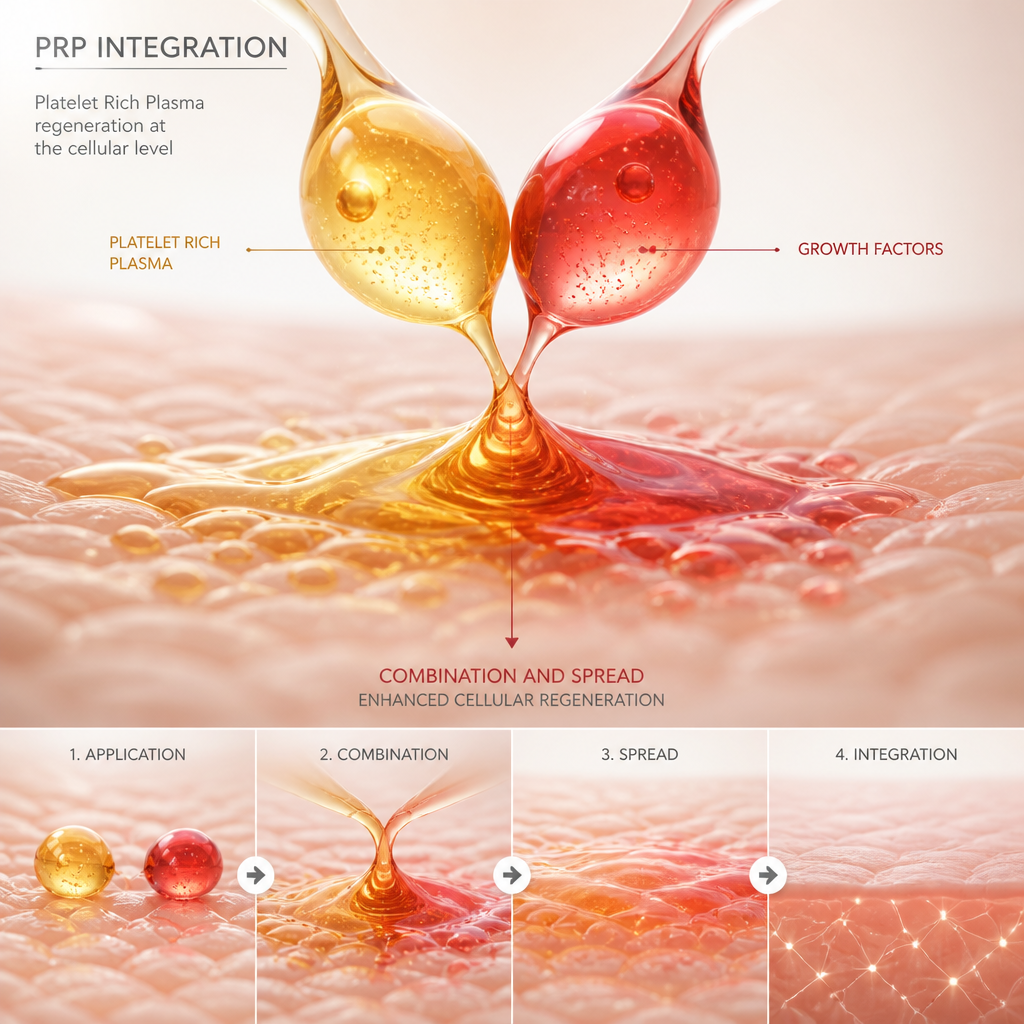
Platelet-rich plasma (PRP) takes a different route to the same destination. A small amount of the patient’s own blood is drawn and placed in a centrifuge. The spinning process separates the plasma layer, which is rich in platelets and the growth factors they carry. When applied topically or injected into the skin, those growth factors signal tissue repair at the cellular level.
The combination works because microneedling creates the delivery system. The micro-channels open pathways through the epidermal barrier that would otherwise block topically applied PRP from reaching the dermis. Once the growth factors reach the dermal layer, they enhance and prolong the collagen-induction process that microneedling started. The two mechanisms reinforce each other rather than simply adding together.
Pro tip: Ask your provider whether they apply the PRP during microneedling, after, or both. The timing of PRP application relative to needle depth matters clinically and varies between practitioners. A provider who can explain their protocol with specifics is a provider who has thought carefully about outcomes.
How the Treatment Works: From Blood Draw to Skin Renewal
A typical microneedling with PRP session at a qualified Aurora medispa runs roughly 60 to 90 minutes from start to finish. Understanding each step removes a lot of the anxiety that first-time clients bring into the room.
Step 1: Blood Draw and Centrifugation
A small blood sample, typically around 10 to 30 mL drawn from the arm, is placed in a centrifuge. The centrifuge separates the blood into its components. The platelet-rich plasma layer is then extracted and prepared for application. The entire process takes roughly 15 to 20 minutes and happens while a topical numbing cream is working on your face.
Step 2: Topical Numbing
A numbing cream is applied to the treatment area and left on for 20 to 30 minutes before any needling begins. Most clients describe the sensation during microneedling as a mild scratching or warmth rather than sharp pain. Without proper numbing, deeper needle passes are considerably more uncomfortable.
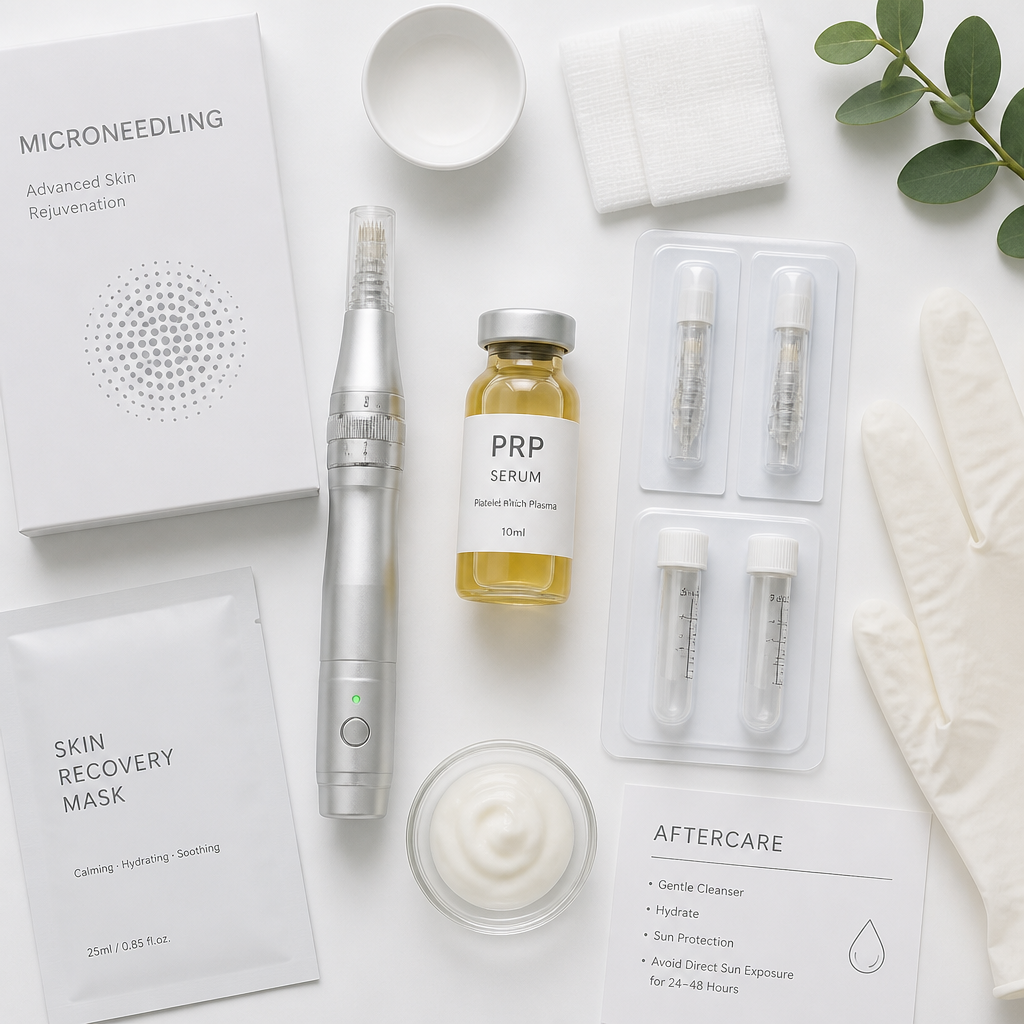
Step 3: Microneedling with PRP Application
The practitioner moves an automated microneedling device across the treatment area in overlapping passes. Needle depth is adjusted by zone because the skin over the forehead, cheeks, and under-eye area all have different thickness. The prepared PRP is applied to the skin during or immediately after needling, allowing the growth factors to enter through the open micro-channels. At facial depths used in aesthetic treatments, the stratum corneum is disrupted but not removed, which is why scarring is not a concern at appropriate settings.
Step 4: Immediate Post-Treatment Care
Right after the session, the skin is typically red, warm, and slightly swollen, similar in appearance to a moderate sunburn. A cooling mask or calming serum is often applied before the client leaves. You should avoid washing your face for at least four to six hours to allow the PRP to continue absorbing.
The micro-channels created during needling do not just allow PRP to reach the dermis. They trigger a healing cascade that the growth factors in PRP are uniquely suited to amplify. The synergy is structural, not cosmetic.
What Microneedling with PRP Actually Treats
This treatment is not a one-problem solution, which is part of why it has become a staple at clinics offering comprehensive skin resurfacing in the GTA. The combination addresses several concerns simultaneously, which matters when most clients are dealing with more than one issue at once.
The most well-documented application is acne scarring. Clinical trial data comparing microneedling alone to microneedling with PRP has consistently shown that the combination produces greater improvement in scar depth and texture. Studies have reported improvement rates for acne scars in the range of 60 to 70 percent with the combined approach versus roughly 45 percent with microneedling alone. Fine lines and wrinkles, particularly around the eyes and mouth, respond well because collagen induction directly plumps and tightens the surrounding tissue.
Sun damage and uneven skin tone are also strong indications. PRP’s growth factors stimulate cellular turnover and new blood vessel formation, which together improve complexion clarity and reduce the flat discolouration that cumulative UV exposure leaves behind. Large pores, overall skin laxity, and dull, tired-looking skin also respond, though these tend to be secondary benefits noticed after the primary concern improves.
Pro tip: If your main concern is pigmentation from melasma, discuss this specifically with your provider before booking. Microneedling can sometimes worsen melasma if the inflammatory response isn’t well-managed. A practitioner who spots this nuance and adjusts protocol accordingly, or recommends an alternative, is worth trusting with your face.
Microneedling with PRP vs. Other Resurfacing Options: A Direct Comparison
Clients who come to Skin Excellence Medispa in Aurora after researching their options often arrive having looked at chemical peels, laser resurfacing, or standalone microneedling. Each has a real use case. The comparison below is not about declaring a winner across the board but about helping you understand which treatment fits which goal.
| Treatment | Best For | Key Limitations |
|---|---|---|
| Microneedling with PRP | Acne scars, fine lines, overall skin texture, uneven tone, mild laxity. Works across all skin types and tones. | Multiple sessions needed for full results. Not ideal for active inflammatory acne. Requires downtime of 2 to 3 days. |
| Microneedling alone | Mild texture concerns, early fine lines, maintenance after a completed PRP series. Lower cost per session. | Clinical data shows consistently less improvement in acne scars and skin renewal compared to the PRP-enhanced version. Growth factor amplification is absent. |
| Chemical Peel | Surface discolouration, fine lines, overall brightness, acne-prone skin. Faster single-session results for pigmentation. | Does not address structural concerns like pitted scars. Deeper peels carry more downtime and higher risk on darker skin tones. No collagen induction at the dermal level. |
The practical takeaway here is that chemical peels work from the outside in, removing damaged surface skin, while microneedling with PRP works from the inside out, building new structural tissue. For clients dealing with atrophic acne scars or visible skin laxity, the inside-out approach is almost always the stronger choice.
Who Is a Good Candidate and Who Should Wait
One of the genuinely appealing things about this treatment is how inclusive the candidate profile is. Because microneedling does not use heat or UV energy to create its effect, the risk of post-inflammatory hyperpigmentation that can follow certain laser treatments is much lower. This makes microneedling with PRP one of the more equitable options in the resurfacing toolkit for GTA clients across all skin tones.
Strong candidates include adults dealing with acne scarring, fine lines, general skin dullness, enlarged pores, or mild skin laxity. People who have had previous aesthetic treatments and want to maintain or enhance those results also benefit. The treatment works well alongside other services offered at Skin Excellence Medispa, including Sculptra for volume and dermal fillers, as part of a broader skin health plan.
Certain conditions and circumstances rule out treatment, at least temporarily. These include pregnancy, active use of Accutane (isotretinoin), active breakouts or open skin lesions in the treatment area, blood clotting disorders, and a history of keloid scarring. Anyone with an active skin infection or a suppressed immune system should also wait until those conditions are resolved or managed before proceeding.
What to Expect: Before, During, and After Your Session
Before Your Appointment
Most providers will ask you to stop using retinoids, exfoliating acids (AHAs, BHAs), and vitamin C serums for a few days before treatment to reduce baseline skin sensitivity. Avoiding sun exposure and self-tanning products in the week before your appointment is also standard advice. Arrive with clean, product-free skin and stay well hydrated. PRP quality is influenced by overall hydration, so this is one pre-treatment step that has a direct clinical rationale.
During the Session
With numbing cream properly applied, most clients describe the sensation as mild to moderate during passes over bony areas like the forehead and chin. The cheeks and lower face are typically more comfortable. The entire needling portion of the session usually takes 20 to 30 minutes. Your provider should walk you through what they are doing, including the needle depth settings they are using and why.
After the Session: The First 72 Hours
Redness and a feeling of skin tightness are expected for 24 to 72 hours. Avoid touching the treatment area unnecessarily, skip makeup for at least 24 hours, and do not expose the skin to direct sun without broad-spectrum SPF 30 or higher. Avoid intense heat sources including saunas, hot showers, and exercise-induced sweating for 24 to 48 hours. Do not apply retinoids, exfoliants, or fragrance-containing products until the skin has fully settled, typically around day four or five.
How Many Sessions You Need and When to Maintain
The honest answer is that a single session of microneedling with PRP will produce visible improvement for many clients, particularly in skin brightness and texture. But a single session is not a complete treatment plan for moderate acne scarring or more pronounced skin laxity. These concerns require a series.
Most clients start with a series of three to six sessions spaced approximately four weeks apart. The interval matters because collagen remodeling takes time and the next session builds on results already in progress rather than starting from zero. Trying to compress sessions into two-week intervals to speed things up is a common mistake that can actually impair the healing cycle rather than accelerate it.
After completing an initial series, maintenance sessions every six to twelve months are typically sufficient to preserve results and continue gradual improvement. Some clients at medispas in Aurora and across the GTA combine maintenance microneedling with PRP with seasonal skin treatments like medical facials or boosters. This approach keeps the skin in an active state of renewal rather than waiting for visible decline to return for treatment.
Choosing a Provider for Microneedling with PRP in Aurora
Not all microneedling with PRP services in the GTA are delivered to the same standard. The outcome depends heavily on two variables: the quality of the PRP preparation process and the expertise of the practitioner adjusting needle depth and passes for each client’s skin.
When evaluating a provider, ask how they prepare the PRP, which centrifuge system they use, what needle depths they typically work with for different concerns, and how they customize treatment for different skin tones. A provider who answers these questions with fluency and specificity is demonstrating clinical knowledge. One who redirects to before-and-after photos without engaging the question is not necessarily experienced in the technical aspects that determine outcomes.
Skin Excellence Medispa at 14845 Yonge Street, Unit 301 in Aurora serves clients from across the York Region and the broader GTA, offering microneedling alongside PRP and PRF therapies as part of a full suite of medical aesthetic treatments. The clinic’s practitioners bring experience with diverse skin types, which is directly relevant in a region as demographically varied as the GTA. For clients who were referred by a friend, the experience of someone you trust is a strong signal. It also means you can ask that person directly what their sessions were like, what questions they asked, and what results they saw.
Pro tip: When you book a consultation, bring photos of your skin concerns taken in natural light. Before-and-after comparisons in clinic are far more useful when your provider has a clear reference point from your actual starting condition rather than a memory of what your skin looked like during the appointment.
Frequently Asked Questions
Is microneedling with PRP the same as the vampire facial?
Yes, the vampire facial is a popular nickname for microneedling combined with platelet-rich plasma. The term was widely used in celebrity and beauty media and stuck in public usage. The clinical procedure behind both names is identical: microneedling to create micro-channels followed by the application of PRP derived from the patient’s own blood. The nickname is marketing language, not a distinct treatment protocol.
How long before I see results from microneedling with PRP in Aurora?
Initial improvements in skin brightness and texture are often noticeable within a week to two weeks after a session, as surface skin turnover picks up speed. Deeper improvements in scar texture, pore size, and skin firmness emerge over six to eight weeks as the new collagen your body produced during the healing process matures and remodels. Results continue to develop for up to three months after each session, which is why the timeline for a full series extends several months from start to finish.
Does PRP skin resurfacing hurt?
With a properly applied topical numbing cream, most clients describe the sensation as mild pressure or warmth rather than sharp pain. Areas with thinner skin or close proximity to bone, such as the forehead, nose, and upper lip, tend to be more sensitive. The discomfort is manageable for the large majority of clients. If you have a low pain threshold, let your provider know in advance so they can ensure the numbing cream has adequate time to work before starting.
Can I combine microneedling with PRP with other treatments at the same clinic?
In many cases, yes, but the combination and timing depend on the treatments involved. Microneedling with PRP pairs well as part of a broader skin health plan that might include Botox for dynamic wrinkles, Sculptra for volume loss, or medical facials for surface maintenance. These are not typically done at the same session but are scheduled in a sequence that allows the skin to recover and each treatment to produce its effect without interference. A qualified practitioner at a full-service medispa like Skin Excellence in Aurora can map out a realistic treatment plan that addresses multiple concerns over time.
How is PRF different from PRP in microneedling treatments?
Platelet-rich fibrin (PRF) is a second-generation version of the PRP concept. The blood is centrifuged at a lower speed without anticoagulants, which produces a fibrin matrix that releases growth factors more slowly and over a longer period than standard PRP. Some practitioners and clients prefer PRF for this sustained-release quality, as the growth factors remain active in the skin for a longer window after treatment. Both PRP and PRF are drawn from the patient’s own blood and both are used in combination with microneedling at advanced medispas in the GTA.
What should I avoid after a microneedling with PRP session?
For the first 24 to 48 hours, avoid all active skincare ingredients including retinoids, alpha-hydroxy acids, and vitamin C. Skip makeup for at least 24 hours, avoid saunas, steam rooms, and sweaty workouts, and stay out of direct sun. After 72 hours, you can resume most of your regular routine, but broad-spectrum SPF should become a non-negotiable daily step for the duration of your treatment series. The micro-channels created during needling temporarily increase UV sensitivity, and unprotected sun exposure can compromise both healing and your final results.
If you have had microneedling with PRP or the vampire facial in Aurora or elsewhere in the GTA, we would love to hear what your experience was like and what results surprised you most.
References
- Medical News Today overview of microneedling with PRP: how it works and what conditions it treats
- Peer-reviewed comprehensive review of microneedling mechanisms, techniques, and clinical applications in skin rejuvenation
- PubMed Central study on PRP combined with microneedling for collagen induction and acne scar improvement
- Geisinger Health explainer on PRP microneedling candidacy, session protocol, and maintenance schedule