
More than 9 million Botox procedures and over 5 million dermal filler treatments are performed in North America every year, yet a surprisingly large number of people walk into a consultation unsure which one they actually need. If a friend referred you to Skin Excellence Medispa in Aurora, Ontario, you probably have a specific concern in mind, whether it is crow’s feet, hollowed cheeks, or deep nasolabial folds. The problem is that Botox and dermal fillers treat fundamentally different aging processes. Choosing the wrong one does not just waste money; it delays the results you actually want. This guide breaks down exactly what each treatment does, where it works best, and how to decide with confidence.
Table of Contents
- Quick Takeaways
- What Is Botox and How Does It Work
- What Are Dermal Fillers and How Do They Work
- Key Differences Between Botox and Dermal Fillers
- Side-by-Side Comparison
- Which Treatment Targets Which Areas
- When Combining Both Treatments Makes Sense
- Choosing the Right Clinic in Aurora and the GTA
- Frequently Asked Questions
- References
Quick Takeaways
| Key Insight | Explanation |
|---|---|
| Botox relaxes muscles; fillers restore volume | Botox blocks nerve signals that cause muscle contractions, while fillers physically add structure and fullness to soft tissue. |
| Dynamic wrinkles respond best to Botox | Lines that appear only when you smile, squint, or frown are dynamic wrinkles. Botox is the correct first-line treatment, not filler. |
| Static wrinkles and volume loss call for fillers | Lines visible at rest, sunken cheeks, and thinning lips indicate volume depletion. Hyaluronic acid fillers like Juvederm or Restylane address this directly. |
| Results timelines differ significantly | Botox results appear within 3 to 7 days and last 3 to 4 months. Most fillers show immediate results and last 9 to 18 months depending on product and placement. |
| Combining both is extremely common | Practitioners at Skin Excellence Medispa frequently recommend a combination approach because most faces show both muscle-driven and volume-driven aging simultaneously. |
| Technique and injector experience matter more than brand | The same filler product in inexperienced hands produces very different results. Selecting a qualified injector in Aurora is the single highest-impact decision you can make. |
| Cost per unit is not the right metric to compare clinics | A lower price per unit of Botox Aurora Ontario sometimes reflects fewer units injected or a less experienced injector. Ask about total treatment cost and expected outcome instead. |
What Is Botox and How Does It Work
Botox is the brand name for botulinum toxin type A, a purified protein that temporarily blocks the chemical signals from nerves to muscles. When injected in precise, small doses into targeted facial muscles, it prevents those muscles from contracting fully. The result is a softening of the overlying skin, which reduces the appearance of the wrinkles those contractions create.
In practice, the treatment itself takes about 10 to 15 minutes. A trained injector uses a very fine needle to deposit small amounts of the toxin into specific muscle groups. There is minimal discomfort, no downtime, and clients typically return to normal activity the same day. Results begin to appear within 3 to 7 days and reach full effect around day 14.
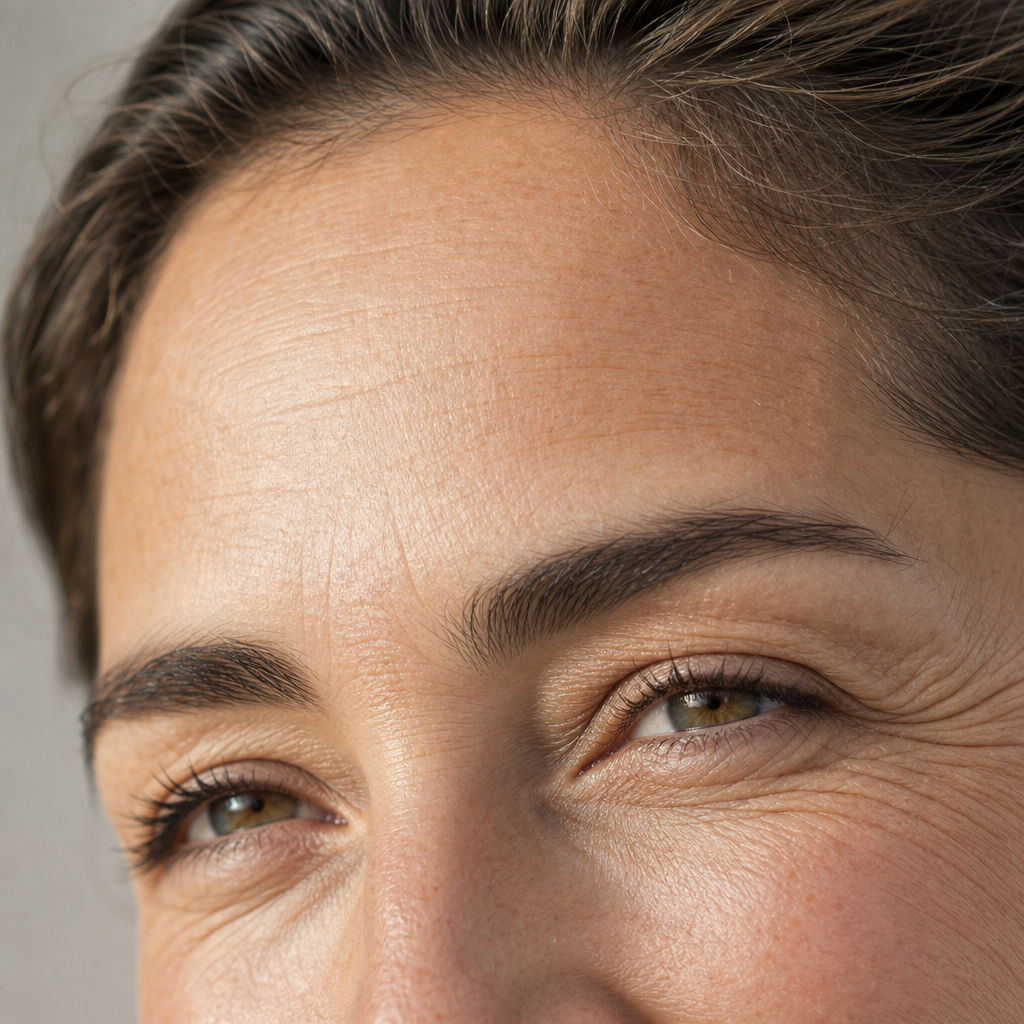
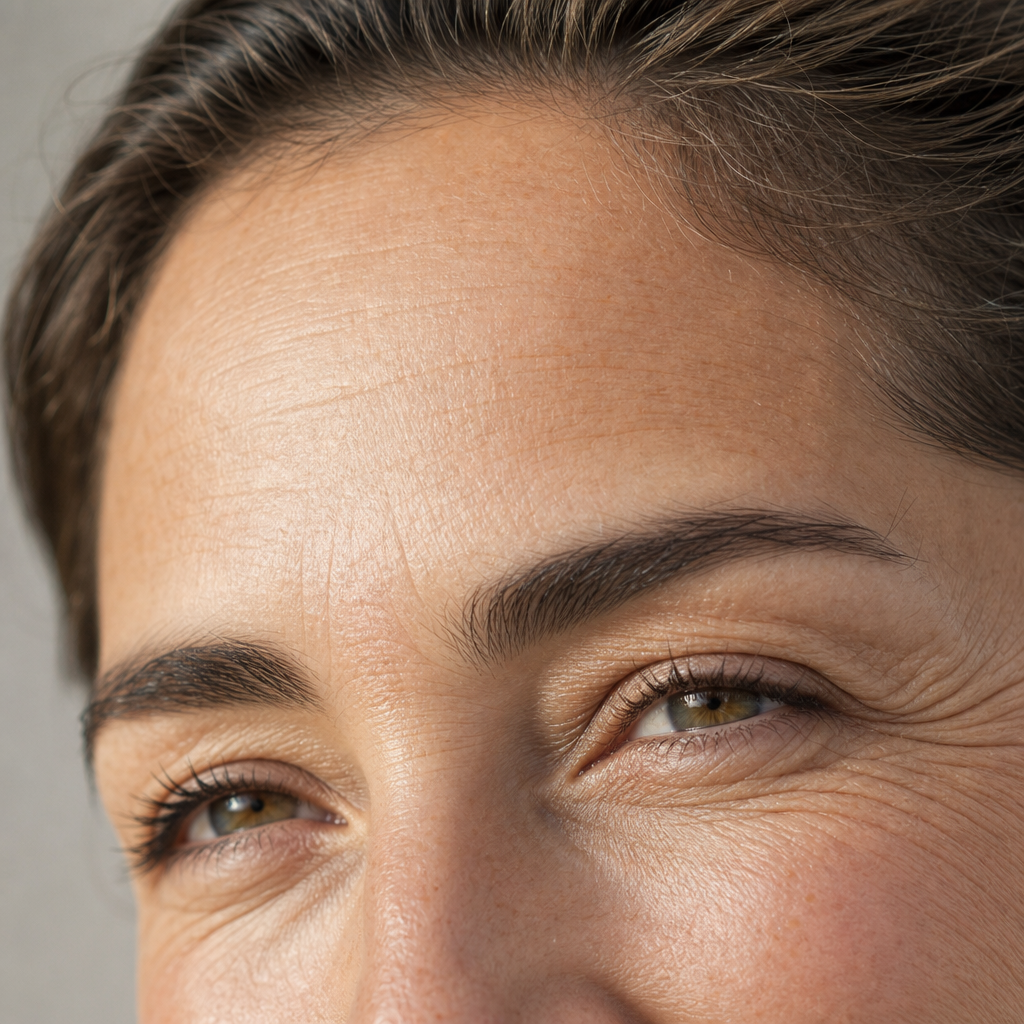
Botox Aurora Ontario clients most commonly request treatment for forehead lines, the glabellar lines between the brows (often called the “11 lines”), and crow’s feet around the eyes. These are textbook dynamic wrinkle locations because the muscles there contract hundreds of times daily. Botox is also used for a brow lift effect, to reduce a gummy smile, and to address neck bands.
Pro tip: If you are new to Botox, start conservatively. A skilled injector will suggest a modest dose to see how your muscles respond, then adjust at a two-week follow-up. Over-treatment on a first visit is the most common patient regret in any aesthetic clinic.
What Are Dermal Fillers and How Do They Work
Dermal fillers are injectable gels, most commonly made from hyaluronic acid (HA), a substance that occurs naturally in the body and attracts and retains water. When injected beneath the skin, fillers restore lost volume, smooth deep lines, and contour facial features. Unlike Botox, they do not affect muscle function at all.
The range of filler products available at a clinic like Skin Excellence Medispa includes options with different thicknesses (called rheology) designed for specific areas. A thicker filler is appropriate for cheek augmentation or jawline definition. A softer, more pliable filler suits the lips or fine lines around the mouth. Selecting the right product for the right location is a clinical decision, not a branding preference.
How Long Do Dermal Fillers Last
Most hyaluronic acid fillers last between 9 and 18 months, with lip fillers typically on the shorter end of that range because the lips move constantly. Cheek and jawline fillers often persist closer to 12 to 18 months. Sculptra, a poly-L-lactic acid stimulator also offered at Skin Excellence Medispa, works differently by stimulating your own collagen production and can last up to two years.
One major advantage of HA fillers specifically is reversibility. An enzyme called hyaluronidase can dissolve HA filler quickly if a client is unhappy with the result or if a complication occurs. This built-in safety net does not exist for all filler types, which is one reason HA fillers dominate the medical aesthetic market.
Pro tip: Ask your injector specifically which filler brand and viscosity they plan to use, and why. The answer tells you immediately whether they are customizing to your anatomy or following a one-size approach.
Key Differences Between Botox and Dermal Fillers
The single most important distinction is this: Botox treats what muscles do, and fillers treat what volume loss does. These are separate biological processes, and confusing them leads to mismatched treatments and disappointing results.
A 40-year-old woman with deep forehead lines but full cheeks needs primarily Botox. A 52-year-old man with relatively smooth skin but hollow temples and a deflated midface needs primarily filler. Many people in their mid-40s need both, because aging simultaneously depletes volume and etches in muscle-driven lines over years of repeated expression.
Safety Profiles of Each Treatment
Both treatments have well-established safety records when performed by qualified practitioners. According to the American Society of Plastic Surgeons, botulinum toxin injections have been performed clinically for over 30 years with a strong track record. Common side effects for Botox include minor bruising, temporary headache, and rarely a short-lived drooping of an eyelid or brow if the toxin migrates. These resolve fully as the product metabolizes.
For dermal fillers, bruising and swelling at the injection site are the most common side effects. More serious but rare complications involve vascular occlusion, which is why treatment must only be performed by someone with thorough knowledge of facial anatomy. This is not a treatment to seek from a non-medical aesthetician or in a non-clinical setting.
“The best anti-aging outcome comes from treating the right problem with the right tool. Injecting filler into a dynamic wrinkle is like painting over a crack in a wall. Relaxing the muscle that creates the crack is the actual solution.” – Commonly cited principle in medical aesthetic training, referenced in the Journal of Drugs in Dermatology.
Side-by-Side Comparison
The table below compares Botox and two of the most common dermal filler categories used at medical aesthetic clinics like Skin Excellence Medispa. Use this to orient your thinking before your consultation.
| Feature | Botox (Botulinum Toxin A) | Hyaluronic Acid Fillers (e.g., Juvederm, Restylane) |
|---|---|---|
| Primary mechanism | Relaxes targeted facial muscles | Adds physical volume and hydration to tissue |
| Best for | Forehead lines, crow’s feet, glabellar lines, brow lift | Lip augmentation, cheek volume, nasolabial folds, jawline, tear troughs |
| Onset of results | 3 to 7 days, full effect at 14 days | Immediate, with final result after swelling resolves (5 to 7 days) |
| Duration | 3 to 4 months on average | 9 to 18 months depending on product and area |
| Reversible | No, but effects wear off naturally | Yes, hyaluronidase can dissolve HA fillers |
| Downtime | Minimal to none | Minimal, some swelling and bruising for a few days |
| Average cost in GTA (CAD) | $10 to $15 per unit, typically 20 to 60 units per session | $600 to $900+ per syringe depending on product and area |
Which Treatment Targets Which Areas
One of the most common mistakes people make when researching anti-aging treatment in the GTA is assuming that the treatment they have heard the most about is the one they need. Botox is the most well-known, but it is not universally applicable. Here is how to think about facial zones.
Upper Face: Botox Dominates
The upper third of the face, covering the forehead, brow area, and around the eyes, is where Botox Aurora Ontario practitioners spend most of their time. This zone is driven by repetitive muscle movement. Horizontal forehead lines, the vertical lines between the brows, and crow’s feet are almost always best addressed with Botox as the primary treatment.
Adding filler to deep forehead lines without first relaxing the underlying muscle is a technique that rarely produces lasting results. The muscle keeps moving, and the filler migrates or wears out prematurely.
Midface and Cheeks: Fillers Lead
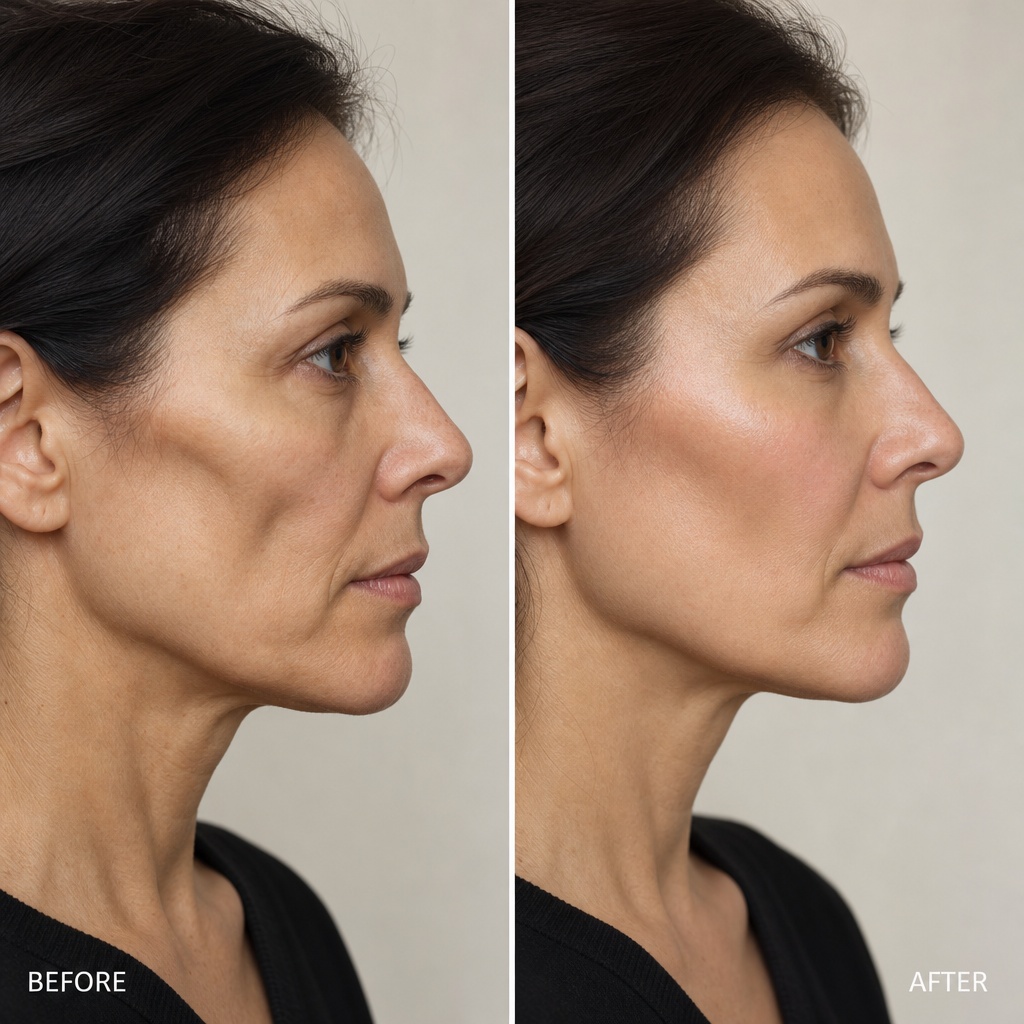
Volume loss in the midface is one of the earliest structural signs of aging, often beginning in the mid-30s. The fat pads that give the face its youthful roundness shift downward and shrink. Hyaluronic acid fillers placed in the cheek area restore that lift and fullness, which also indirectly improves the appearance of nasolabial folds by repositioning the tissue above them.
Lower Face and Lips: Primarily Fillers
The lips thin and lose their defined border with age. Marionette lines and chin dimpling also become more pronounced. Dermal filler is the correct tool for lip augmentation and border definition. Small amounts of Botox are sometimes used in the lower face to relax lip lines or reduce chin dimpling, but filler does the structural work in this zone.
Jawline and chin contouring with filler has grown significantly in popularity among GTA clients seeking a non-surgical alternative to facial reshaping. A well-placed filler along the mandible can create a sharper, more defined profile without any recovery time.
When Combining Both Treatments Makes Sense
The data consistently shows that combination treatment produces more satisfying outcomes than either Botox or filler alone for clients over 40. A 2020 study published in Aesthetic Surgery Journal found that combination injectable treatment resulted in significantly higher patient satisfaction scores compared to single-modality treatment in the same age group.
At Skin Excellence Medispa, practitioners evaluate the whole face rather than treating isolated concerns. A client who comes in asking specifically about lip filler may also benefit from a small amount of Botox to the perioral area to prevent lip lines from deepening further. A client focused on forehead lines may have early midface volume loss that, if addressed, reduces the overall appearance of tiredness more effectively than Botox alone.
This is not upselling. It is the clinical reality of how facial aging works across multiple tissue layers simultaneously. A good practitioner will walk you through the reasoning and let you decide which concerns to address first based on your priorities and budget.
Botox vs dermal filler is ultimately not a competition. They are complementary tools, each doing something the other cannot.
Choosing the Right Clinic in Aurora and the GTA
If a friend referred you to Skin Excellence Medispa, you already have social proof from someone whose results you can evaluate in person. That is worth a great deal. However, it is still worth understanding what separates a high-quality medical aesthetic clinic from a discount injection bar.
Credentials That Actually Matter
In Ontario, injectable treatments should be performed by or under the supervision of a regulated health professional, such as a physician, nurse practitioner, or registered nurse with specific aesthetic training. Ask directly who will be performing your treatment and what their credentials are. A legitimate clinic will answer this without hesitation.
Skin Excellence Medispa operates as a medical aesthetic clinic, not a general beauty salon. The distinction matters for both safety and outcome quality. Practitioners here work with a clinical understanding of facial anatomy, product pharmacology, and complication management.
What a Good Consultation Looks Like
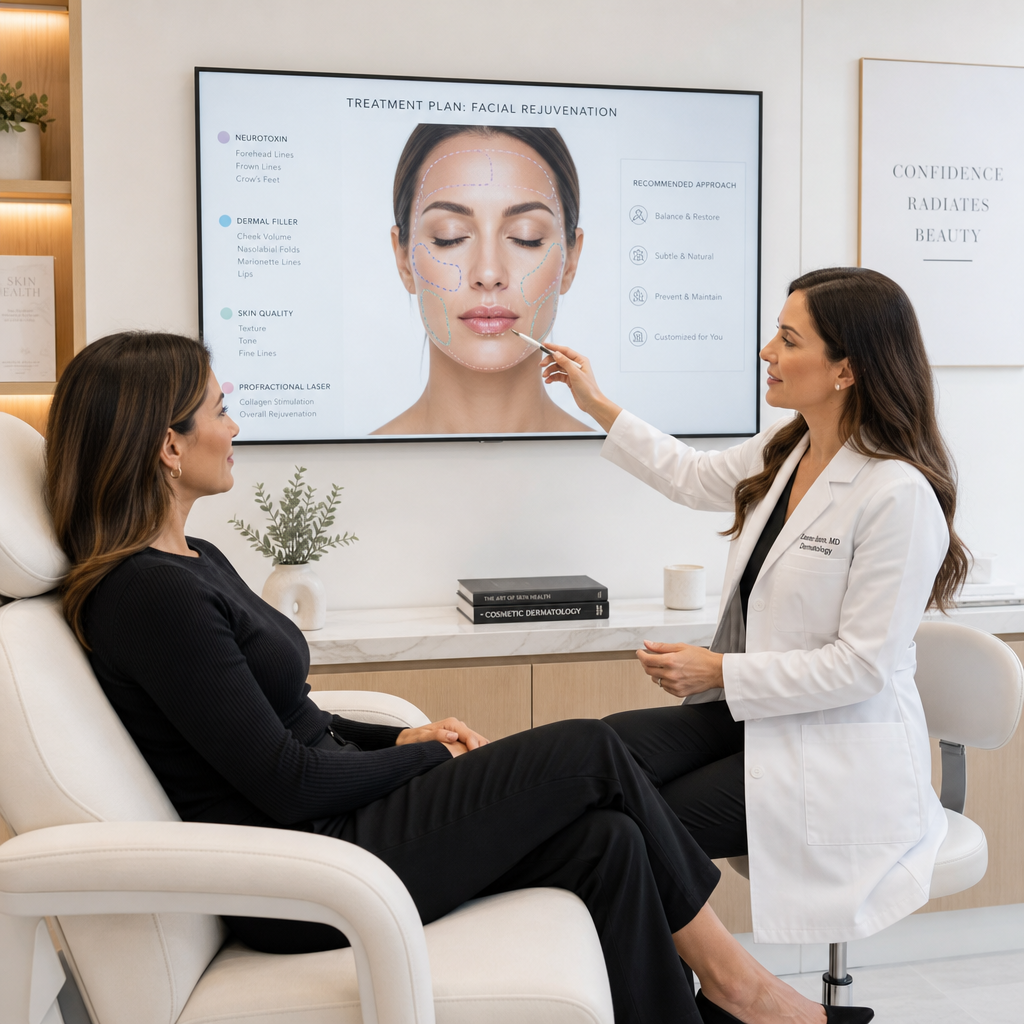
A quality consultation for anti-aging treatment GTA involves the practitioner assessing your full face, asking about your goals and medical history, and recommending a plan based on your anatomy rather than a standard package. Red flags include any provider who quotes a price immediately without examining you, or who pushes a specific product without explaining why it suits your situation.
At Skin Excellence Medispa, consultations are designed to be educational. If you leave without booking a treatment, you should still leave with a clearer understanding of your options than when you arrived.
If you are comparing clinics in the Aurora area, consider asking each one about their approach to facial assessment, their process if a complication occurs, and what products they stock. Clinics that carry multiple filler brands and can justify their product selection are generally operating at a higher clinical level than those offering only one option.
Frequently Asked Questions
How do I know if I need Botox or dermal filler?
The clearest way to determine this is to look at your face at rest versus in motion. If the lines you are concerned about disappear or significantly soften when your face is relaxed, those are dynamic wrinkles and Botox is likely the right treatment. If the lines or hollowness remain visible even when you are completely expressionless, volume loss is the primary issue and dermal filler is the better starting point. A consultation with an experienced injector will confirm this and may identify concerns you had not considered.
Is Botox in Aurora Ontario the same product used everywhere else?
Yes. Botox is a registered pharmaceutical product (manufactured by Allergan, now AbbVie) subject to Health Canada regulations. The product itself is identical whether you receive it in Aurora, Toronto, or Vancouver. What varies is the skill of the injector, the number of units used, and the precision of placement, which is why choosing a reputable clinic matters far more than the geographic location.
Can dermal fillers fix wrinkles the same way Botox does?
No. Dermal fillers and Botox work through completely different mechanisms. Filler adds physical volume beneath a wrinkle to push it outward. Botox prevents the muscle movement that creates the wrinkle in the first place. Placing filler into a dynamic wrinkle without addressing the underlying muscle movement is a temporary and often unsatisfying fix. For dynamic wrinkles, Botox is the correct primary treatment.
How often do I need to come back for treatments?
Botox typically requires maintenance every 3 to 4 months. Some clients who have been receiving regular Botox for several years find they can extend intervals to 4 to 5 months as the muscles gradually lose some of their mass from underuse. Dermal fillers last longer, with most HA fillers requiring touch-ups every 9 to 18 months. A structured maintenance schedule with your injector at Skin Excellence Medispa helps maintain consistent results and often reduces the amount of product needed per session over time.
Is there an age that is too young or too old for these treatments?
There is no single correct age, but context matters. Preventative Botox in the late 20s and early 30s has gained traction as a way to slow the formation of deep dynamic wrinkles before they become etched into the skin. This is a clinically reasonable approach when done conservatively. On the older end, there is no upper age limit. A 65-year-old with significant volume loss can benefit substantially from dermal fillers as long as overall skin quality and health are appropriate. The best approach is always an individualized assessment rather than an age-based rule.
What is the difference between Sculptra and regular dermal fillers?
Sculptra is a poly-L-lactic acid (PLLA) biostimulator rather than a volumizer in the traditional sense. It works by stimulating your body’s own collagen production over a series of treatments, with gradual improvement visible over 3 to 6 months. Results can last up to 2 years. Traditional HA fillers add immediate volume. Sculptra is particularly effective for clients with diffuse volume loss across large facial areas rather than focal concerns, and it is available at Skin Excellence Medispa as part of a comprehensive anti-aging treatment plan.
Are these treatments covered by insurance in Ontario?
In almost all cases, no. Botox and dermal fillers for cosmetic purposes are not covered by OHIP or most private insurance plans in Ontario. There is a narrow exception for Botox used medically for conditions like hyperhidrosis or chronic migraine, which may be partially covered depending on your plan. Any clinic claiming cosmetic injectable coverage should be approached with caution. Skin Excellence Medispa provides transparent pricing and can walk you through what to expect financially during your consultation.
What has your experience been with Botox or dermal fillers, and did the treatment match what you expected going in? Share your thoughts in the comments or bring your questions to your next consultation.
References
- American Society of Plastic Surgeons, statistics and clinical guidance on injectable cosmetic procedures
- National Institutes of Health PubMed database, peer-reviewed research on botulinum toxin and hyaluronic acid fillers
- Statista, market data and statistics on the global medical aesthetics and injectable treatments industry
- Health Canada, regulatory information on approved injectable cosmetic products in Canada
- Forbes Health, consumer reporting on trends and considerations in the medical aesthetics and anti-aging sector