Roughly 40 percent of laser hair removal complaints documented in Canadian aesthetic practice reviews involve clients who were told, incorrectly, that their skin tone was too dark to be treated safely. If you live in Aurora or anywhere across the Greater Toronto Area, that misinformation is worth correcting before it costs you another season of waxing, threading, or shaving. Laser hair removal skin tones Aurora is not a niche specialty reserved for light-skinned clients. The technology, the protocols, and the practitioner knowledge have advanced far beyond the equipment marketed in the 1990s, and the GTA’s diverse population deserves access to that progress.
Table of Contents
- Quick Takeaways
- Why Skin Tone Matters in Laser Hair Removal
- The Fitzpatrick Scale Explained for GTA Residents
- Laser Technologies Matched to Skin Tone
- Real Risks for Darker Skin Tones and How They Are Prevented
- Comparison of Laser Types for Diverse Skin
- How to Prepare for Your Treatment Regardless of Skin Tone
- What to Expect at Skin Excellence Medispa in Aurora
- Frequently Asked Questions
- References
Quick Takeaways
| Key Insight | Explanation |
|---|---|
| Nd:YAG lasers are the safest option for Fitzpatrick Types V and VI | The 1064 nm wavelength bypasses melanin in the epidermis and targets the follicle directly, reducing burn and hyperpigmentation risk for deep brown and black skin tones. |
| Diode lasers are the workhorse for medium skin tones (Types III and IV) | The 810 nm wavelength offers a strong balance of efficacy and safety for South Asian, East Asian, Middle Eastern, and light to medium Hispanic skin tones common across the GTA. |
| IPL is not a laser and is not recommended for Types IV through VI | Intense pulsed light scatters across multiple wavelengths and cannot be precisely targeted, making burns and post-inflammatory hyperpigmentation significantly more likely on darker skin. |
| Sun exposure before treatment raises your risk regardless of skin tone | Even one week of unprotected sun exposure tans the skin enough to shift your effective Fitzpatrick type upward, requiring lower energy settings and reducing results. |
| Multiple sessions are non-negotiable for all skin tones | Hair grows in cycles. Laser energy only destroys follicles in the active growth phase. Most clients across all skin tones require six to eight sessions spaced four to eight weeks apart. |
| Patch testing is a professional standard, not optional extra care | A reputable clinic will always perform a test patch on a small area 24 to 48 hours before the first full treatment session, regardless of your skin type. |
| Hair colour matters as much as skin tone | Laser energy targets pigment (melanin) in the hair shaft. Grey, white, blonde, and light red hair contains minimal pigment and does not respond well to laser regardless of skin colour. |
Why Skin Tone Matters in Laser Hair Removal
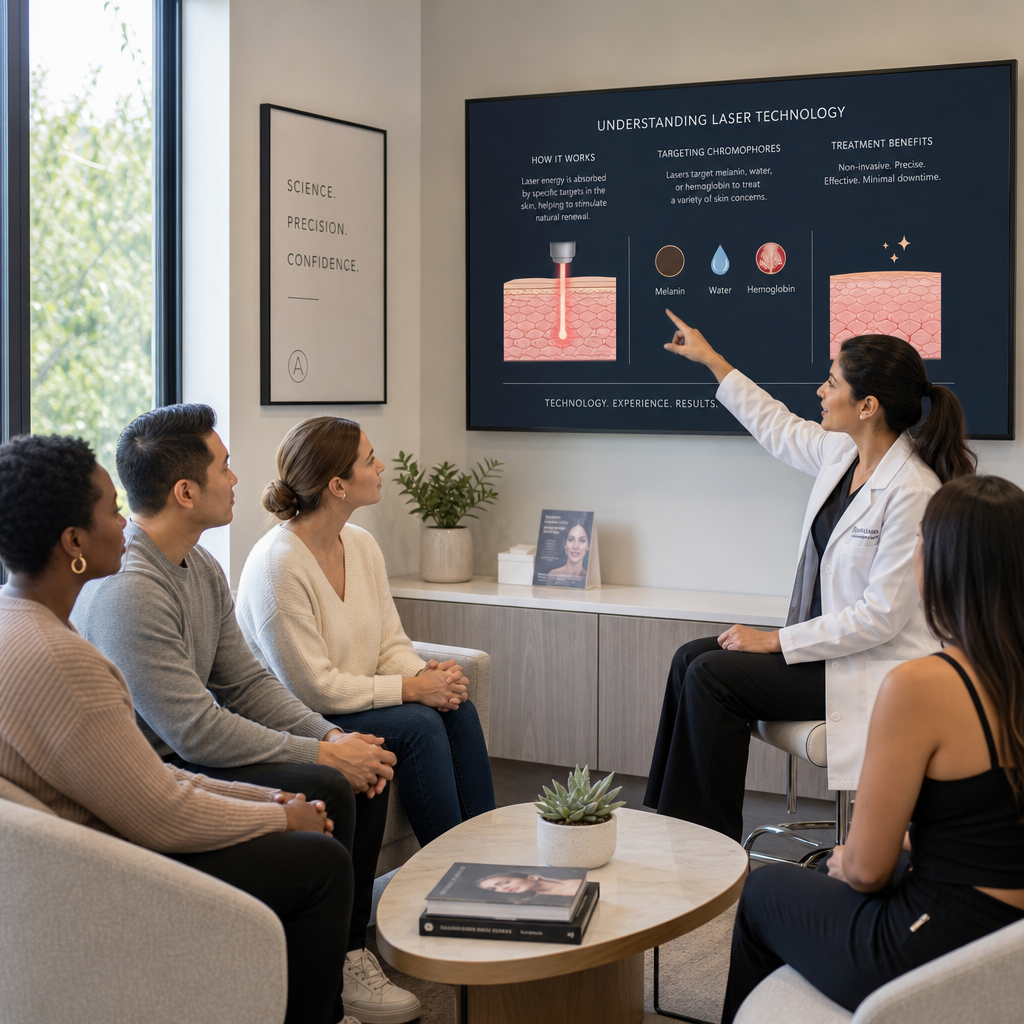
Laser hair removal works through a principle called selective photothermolysis. A laser emits a specific wavelength of light that is preferentially absorbed by melanin, the pigment found in hair follicles. The absorbed energy converts to heat and destroys the follicle without, ideally, damaging the surrounding skin tissue.
The complication for people with darker skin is straightforward: melanin also lives in the epidermis, not just in the hair. Older laser systems and undertrained practitioners using the wrong settings cannot distinguish well between epidermal melanin and follicular melanin. The result is burns, blistering, and post-inflammatory hyperpigmentation (PIH), which leaves dark spots that can take months to fade.
This is not an inherent limitation of laser technology. It is a limitation of using the wrong laser at the wrong settings delivered by someone without adequate training in treating diverse skin. In practice, the GTA’s large South Asian, Black, East Asian, Middle Eastern, and mixed-heritage communities are routinely undertreated or turned away by clinics that have not invested in the right equipment or education. That gap is precisely why the conversation about laser hair removal diverse skin GTA matters so much.
The Fitzpatrick Scale Explained for GTA Residents
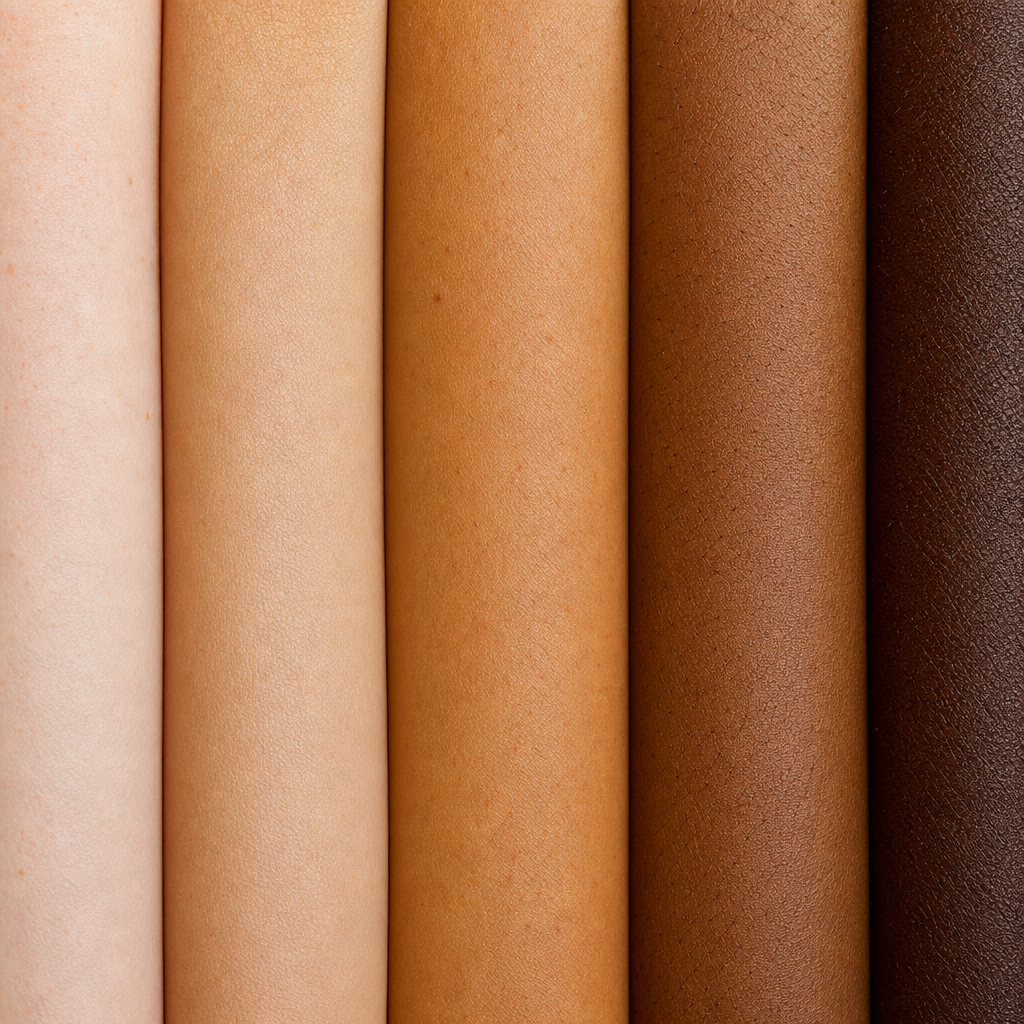
The Fitzpatrick Skin Type scale, developed by dermatologist Thomas Fitzpatrick at Harvard Medical School in 1975, classifies skin into six types based on its melanin content and its typical response to ultraviolet radiation. It remains the clinical standard used to guide laser settings worldwide.
Types I and II: Very Fair to Fair Skin
Type I skin always burns and never tans. Type II burns easily and tans minimally. These clients typically have Northern European ancestry, light blonde or red hair, and blue or green eyes. Laser treatment is straightforward because there is minimal competition from epidermal melanin. Almost any wavelength works effectively at appropriate settings.
Types III and IV: Medium to Olive Skin
Type III skin sometimes burns and gradually tans. Type IV rarely burns and tans easily. This range covers a huge portion of Aurora and GTA residents, including many Southern European, East Asian, South American, and lighter South Asian skin tones. Diode lasers and Alexandrite lasers with appropriate cooling work well here, though settings must be calibrated carefully.
Types V and VI: Brown to Very Dark Skin
Type V skin rarely burns and tans very deeply. Type VI skin never burns and has a deeply pigmented complexion. This includes most people of Black African, South Indian, and darker South Asian heritage. The Nd:YAG 1064 nm laser is the clinical gold standard here. Its longer wavelength penetrates deeper and is absorbed far less by the epidermis, reducing thermal injury risk significantly.
Pro tip: Ask any clinic you consult with to tell you exactly which laser they plan to use and why it is appropriate for your Fitzpatrick type. If the practitioner cannot answer that question clearly, walk out.
Laser Technologies Matched to Skin Tone
Not every laser is appropriate for every client. This is the single most important piece of information Aurora residents from diverse backgrounds need to know before booking a consultation. The laser type, its wavelength, pulse duration, fluence (energy level), and the cooling method used all interact with your skin’s biology.
Alexandrite Laser (755 nm)
Highly effective for Fitzpatrick Types I through III, occasionally used carefully on Type IV with robust cooling. The wavelength is strongly absorbed by melanin, making it very efficient on lighter skin tones with dark hair. It is not appropriate for Types V or VI. In practice, this laser is often the go-to in clinics that cater primarily to lighter-skinned clientele.
Diode Laser (810 nm)
The most versatile laser for the GTA’s diverse population. It safely treats Fitzpatrick Types I through V when used with proper cooling, appropriate pulse durations, and well-calibrated energy settings. Many modern diode systems include integrated contact cooling that protects the epidermis while targeting the follicle. This is a strong choice for South Asian, East Asian, and lighter-complexioned Black and Middle Eastern clients.
Nd:YAG Laser (1064 nm)
The non-negotiable choice for Fitzpatrick Types V and VI. The longer wavelength is less absorbed by epidermal melanin, penetrates deeper into the dermis where follicles live, and carries significantly less risk of surface burns and PIH. It is slightly less effective per session than the diode or Alexandrite for lighter skin tones, but it is the safest option available for deep brown and black skin. Any clinic serving Aurora’s diverse population that does not own and operate an Nd:YAG system is not fully equipped.
IPL (Intense Pulsed Light)
IPL is frequently marketed alongside laser treatments, but it is not a laser. It emits a broad spectrum of wavelengths rather than a single focused beam. This broad scatter means energy is not selectively targeted, making it significantly less precise and considerably more risky for Types IV through VI. For safe laser hair removal Ontario across diverse skin tones, IPL is not the right tool.
Real Risks for Darker Skin Tones and How They Are Prevented
Acknowledging the risks honestly is not meant to discourage treatment. It is meant to help you select the right clinic and the right technology. The risks are real but highly preventable with proper protocol.
Post-Inflammatory Hyperpigmentation (PIH)
PIH occurs when thermal damage triggers melanin overproduction in the skin. It appears as darkening of the treated area and is most common when incorrect wavelengths or excessive energy settings are used. A properly equipped clinic using Nd:YAG with aggressive cooling and conservative starting settings can reduce this risk dramatically.
Burns and Blistering
Surface burns happen when the epidermis absorbs too much laser energy. This is almost always a result of the wrong laser type, excessive fluence, inadequate cooling, or treating recently tanned skin. A common mistake is treating a client who has had sun exposure within two weeks before their session without adjusting settings downward accordingly.
Hypopigmentation
Less discussed but equally serious, hypopigmentation is the loss of pigment in the treated area, leaving lighter patches. It can occur when excessive heat destroys melanocytes in the epidermis alongside the follicle. This is particularly visible and distressing on darker skin tones. Correct wavelength selection and conservative energy levels prevent it.
Pro tip: If a clinic quotes you a standard package price without first assessing your Fitzpatrick type, reviewing your medical history, or discussing any recent sun exposure or skin treatments, that is a red flag. Proper treatment planning is individualized, not templated.
“The most common error we see in referrals from clients who have had adverse reactions is that they were treated with IPL or Alexandrite laser on Fitzpatrick Type V or VI skin at settings designed for lighter skin. These are preventable injuries when the right equipment and training are in place.” – Dr. Seemal Desai, past president of the Skin of Color Society, speaking at a dermatology conference on laser safety for diverse populations.
Comparison of Laser Types for Diverse Skin
| Laser Type | Best Fitzpatrick Types | Key Consideration for Diverse GTA Clients |
|---|---|---|
| Alexandrite (755 nm) | I, II, III (with care on IV) | High efficacy on light skin with dark hair. Not safe for Types V or VI. Common in many Toronto-area clinics but limited in scope for diverse populations. |
| Diode (810 nm) | I through V (with proper cooling) | The most inclusive option available. Handles the majority of the GTA’s diverse demographic when operated by a skilled practitioner with a modern system. Requires cooling and calibrated settings for Types IV and V. |
| Nd:YAG (1064 nm) | III through VI | The only recommended choice for the darkest skin tones. Slightly more sessions may be needed compared to diode on medium skin tones, but safety comes first. Any medispa in Aurora claiming to serve all skin tones must have this laser on-site. |
How to Prepare for Your Treatment Regardless of Skin Tone
Preparation is where many clients shortchange themselves. What you do in the two to four weeks before each session directly influences both the safety and the outcome of your treatment.
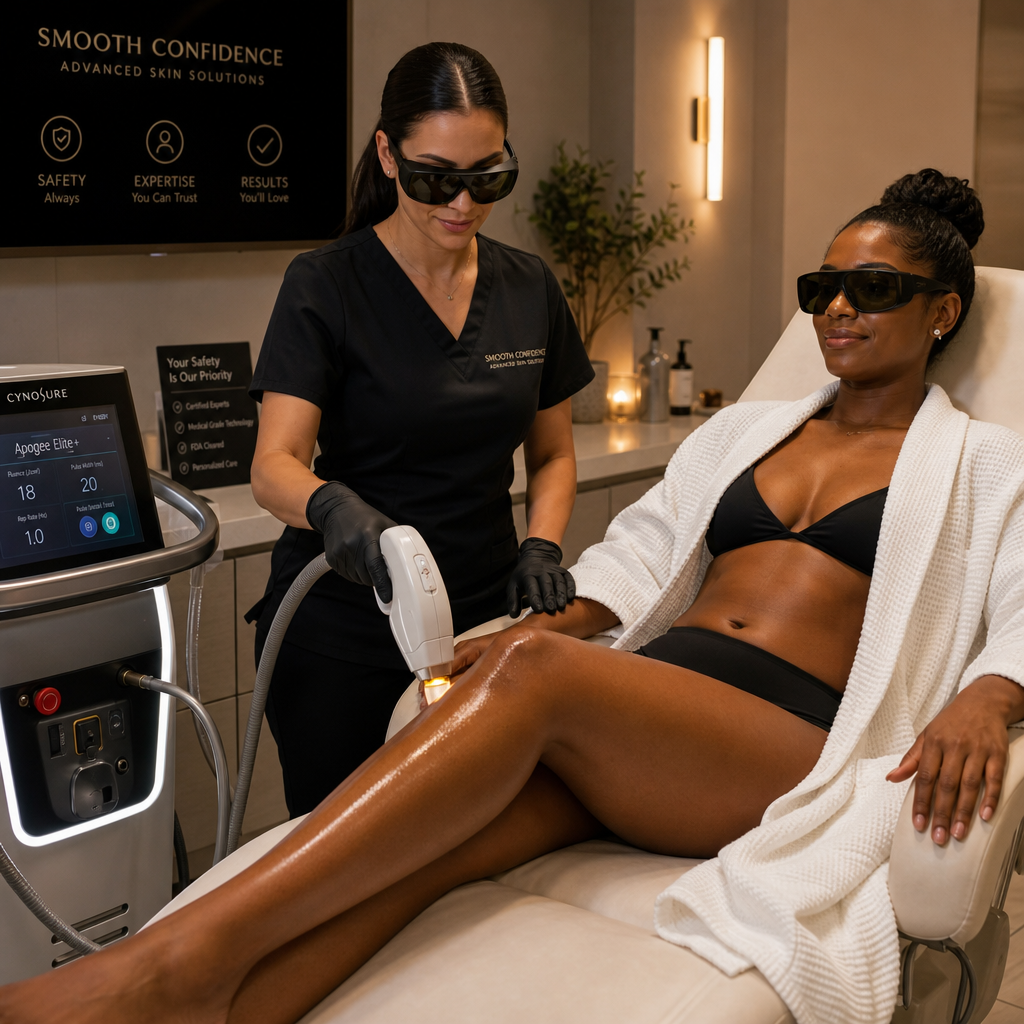
Sun Protection Is Non-Negotiable
Avoid direct sun exposure on the treatment area for at least four weeks before your session. Use SPF 30 or higher daily. Sun exposure activates melanocytes and increases epidermal pigment, which raises the risk of surface damage regardless of which laser is used. This applies equally to clients with lighter and darker skin tones.
Stop Other Hair Removal Methods
Do not wax, thread, epilate, or use depilatory creams for at least four weeks before treatment. These methods remove the hair from the follicle, and there must be pigmented hair in the follicle for the laser to target. Shaving is fine and is actually encouraged the day before or on the day of your appointment.
Disclose All Topical Products and Medications
Retinoids, certain antibiotics, and some acne medications increase photosensitivity. Inform your practitioner about everything you apply to your skin and every medication you take. This is especially important for clients using prescription skin-lightening creams, which are more commonly used by clients with Fitzpatrick Types IV through VI and can affect how the skin responds to laser energy.
Avoid Fake Tan and Self-Tanning Products
Self-tanning products deposit a brown pigment on the skin surface that mimics melanin. Laser systems cannot distinguish this from natural epidermal melanin and will respond to it accordingly, raising burn risk. Stop all self-tanning products at least two weeks before treatment.
What to Expect at Skin Excellence Medispa in Aurora
Skin Excellence Medispa treats clients from across Aurora, Newmarket, Richmond Hill, Markham, and the broader GTA. The clinic’s patient base reflects the full demographic diversity of York Region, including large South Asian, East Asian, Middle Eastern, Black, and mixed-heritage communities.
The initial consultation at Skin Excellence begins with a Fitzpatrick skin typing assessment. This is not a visual guess. The practitioner reviews your skin history, your response to sun exposure, your heritage, and any previous skin treatments. They discuss which laser technology is appropriate for you specifically, not for a generic client profile.
Patch testing is performed before the first full session. The treated patch is reviewed at a follow-up visit to confirm the skin’s response before proceeding with full treatment. This step is standard practice, not an upsell.
For clients with Fitzpatrick Types V and VI, the clinic uses conservative starting energy settings with reassessment between sessions. Progress is documented to track both hair reduction and skin response. Clients are never rushed through a package at uniform settings across sessions because skin response can evolve, especially in the first two sessions.
The clinic also offers complementary treatments that support laser outcomes. Micro-needling and medical facials can help address any PIH that has occurred from previous treatments elsewhere. PRP and PRF therapies support skin healing and regeneration. These services work together rather than in isolation, which is one clear distinction from clinics that offer only a single modality.
If you were referred by a friend who had a positive experience at Skin Excellence Medispa, their outcome was not accidental. Consistent results across diverse skin tones come from consistent protocols, the right technology, and practitioners who treat each client’s skin type as a specific clinical variable rather than an afterthought.
Frequently Asked Questions
Is laser hair removal safe for Black skin?
Yes, when performed with an Nd:YAG 1064 nm laser by a trained practitioner using conservative energy settings and appropriate cooling. The risk comes from using the wrong laser type or incorrect settings, not from the skin tone itself. Always confirm that the clinic you choose owns and regularly uses Nd:YAG technology before booking.
How many sessions will I need if I have a darker skin tone?
Most clients with Fitzpatrick Types V and VI require six to eight sessions, sometimes up to ten. Because Nd:YAG is used with conservative settings to protect the skin surface, individual sessions may target fewer follicles per pass than higher-energy settings used on lighter skin. The trade-off is worth it. Safe, gradual reduction is far preferable to faster results achieved at the cost of burns or hyperpigmentation.
What is the difference between laser hair removal and IPL for darker skin tones?
IPL emits a broad, scattered light spectrum across multiple wavelengths and cannot be precisely controlled in the way a single-wavelength laser can. For darker skin tones, this lack of precision significantly raises the risk of surface burns and post-inflammatory hyperpigmentation. Laser hair removal with the correct wavelength is always the safer and more effective option for Types IV through VI.
Can I get laser hair removal if I have recently tanned skin?
No. A tan increases melanin in the epidermis, which competes with the follicular melanin the laser needs to target. Treating tanned skin increases the risk of burns and PIH regardless of your baseline skin tone. You should wait at least four weeks after significant sun exposure before your treatment session, and you must use SPF consistently throughout your treatment course.
Does laser hair removal hurt more on darker skin?
The sensation varies more by body area and hair coarseness than by skin tone. Nd:YAG lasers used on darker skin typically require slightly longer pulse durations, which some clients find feel different from shorter-pulse systems. Most clinics use topical numbing cream and contact cooling to minimize discomfort. The treatment is uncomfortable for most people but not typically described as severe pain when proper protocols are followed.
I have South Asian skin (Fitzpatrick Type IV to V). Which laser is right for me?
A diode laser (810 nm) with robust contact cooling is often effective and appropriate for lighter Fitzpatrick Type IV South Asian skin. For deeper Type V tones, the Nd:YAG is the safer choice. A qualified practitioner will assess your individual skin tone, recent sun history, and hair characteristics before recommending a specific device and settings. This is not a one-size-fits-all decision.
How do I find a clinic in Aurora or the GTA that is genuinely equipped for diverse skin tones?
Ask directly whether the clinic owns an Nd:YAG laser. Ask how the practitioner determines settings for Fitzpatrick Types V and VI. Ask whether a patch test is included before the first full session. If a clinic cannot answer these questions clearly or claims that any laser works on any skin type, look elsewhere. Skin Excellence Medispa in Aurora serves the full spectrum of the GTA’s diverse population and can walk you through your specific treatment plan at a consultation.
If you have had a laser hair removal experience at Skin Excellence Medispa or elsewhere in Aurora and want to share what worked or what you wish you had known beforehand, leave a comment below and help other readers from the GTA community make a more informed decision.
We would love your feedback and any insights you would share with others. What perspective would you add?
References
- American Academy of Dermatology: Clinical guidance on laser safety and skin of color from a leading dermatology professional organization
- National Institutes of Health PubMed: Peer-reviewed research on selective photothermolysis and laser outcomes across Fitzpatrick skin types
- Statista: Market and consumer data on cosmetic laser treatment trends and demographic usage in North America
- Forbes Health: Consumer-facing reporting on medical aesthetics, safety standards, and what to look for when choosing a laser clinic
- Health Canada: Federal regulatory information on medical devices including laser equipment approved for use in Canadian aesthetic clinics