Most people walk into a Botox consultation knowing roughly what bothers them: horizontal lines across the forehead, the crinkle at the outer corners of the eyes, or that stubborn furrow between the brows. What many don’t realize is that these three concerns require meaningfully different injection strategies, different unit counts, and in some cases, different expectations about longevity. Treating them identically is one of the most common mistakes in aesthetic practice. If you’re exploring Botox forehead Aurora options or wondering why a friend’s crow’s feet treatment looked different from yours, the answer almost always comes down to how well the approach was matched to the specific anatomy and muscle behavior involved.
Table of Contents
- Why One Size Does Not Fit All With Botox
- Quick Takeaways
- Forehead Lines: The Balancing Act You Cannot Afford to Get Wrong
- Crow’s Feet: Why This Area Rewards a Lighter Touch
- Frown Lines: The Most Structurally Complex of the Three
- Comparing Botox Approaches Across the Three Zones
- What to Expect at a Medispa Consultation in Aurora
- Frequently Asked Questions
- References
Why One Size Does Not Fit All With Botox
Quick Takeaways
| Key Insight | Explanation |
|---|---|
| Forehead Botox requires frontier muscle assessment | Over-treating the frontalis muscle without accounting for brow position can cause visible brow ptosis. Dosing must account for baseline brow height. |
| Crow’s feet respond well to lower unit counts | The orbicularis oculi muscle around the eye is thin and superficial. Injecting too deeply or using excessive units flattens natural smile expression. |
| Frown lines (glabellar complex) involve multiple muscles | The procerus, corrugator supercilii, and depressor supercilii all contribute to the 11s. Treating only one muscle leaves residual movement. |
| Longevity differs by treatment zone | Frown line results typically last 3-4 months; crow’s feet results can fade faster due to constant micro-movement from blinking and squinting. |
| Combination zone treatment changes unit strategy | Treating forehead and glabellar lines together allows lower forehead units because the brow no longer needs to compensate for downward pull. |
| GTA sun exposure accelerates crow’s feet recurrence | Ontario’s seasonal variation means patients who spend summer months outdoors squinting will notice faster breakdown of crow’s feet results than those who do not. |
| Skin quality affects visible outcome | Patients with significant photodamage or thinner skin may see less dramatic smoothing from Botox alone and benefit from pairing treatment with medical-grade skincare or PRP. |
Botox, technically botulinum toxin type A, works by blocking the nerve signal that causes a targeted muscle to contract. The treatment itself is consistent across zones. What changes is which muscles you target, how many units you use, how superficially or deeply you inject, and how you account for the relationship between adjacent muscles. In practice, the forehead, crow’s feet, and glabellar regions behave as an interconnected system, not three isolated patches of skin. A practitioner who treats them in isolation, without understanding how relaxing one area affects tension in another, will produce results that look off even when the technique is technically sound.
According to the American Society of Plastic Surgeons, botulinum toxin injections have ranked as the top minimally invasive cosmetic procedure in North America for over a decade, with millions of treatments performed annually. The volume of procedures is not what ensures good outcomes. Individualized assessment is.
Forehead Lines: The Balancing Act You Cannot Afford to Get Wrong
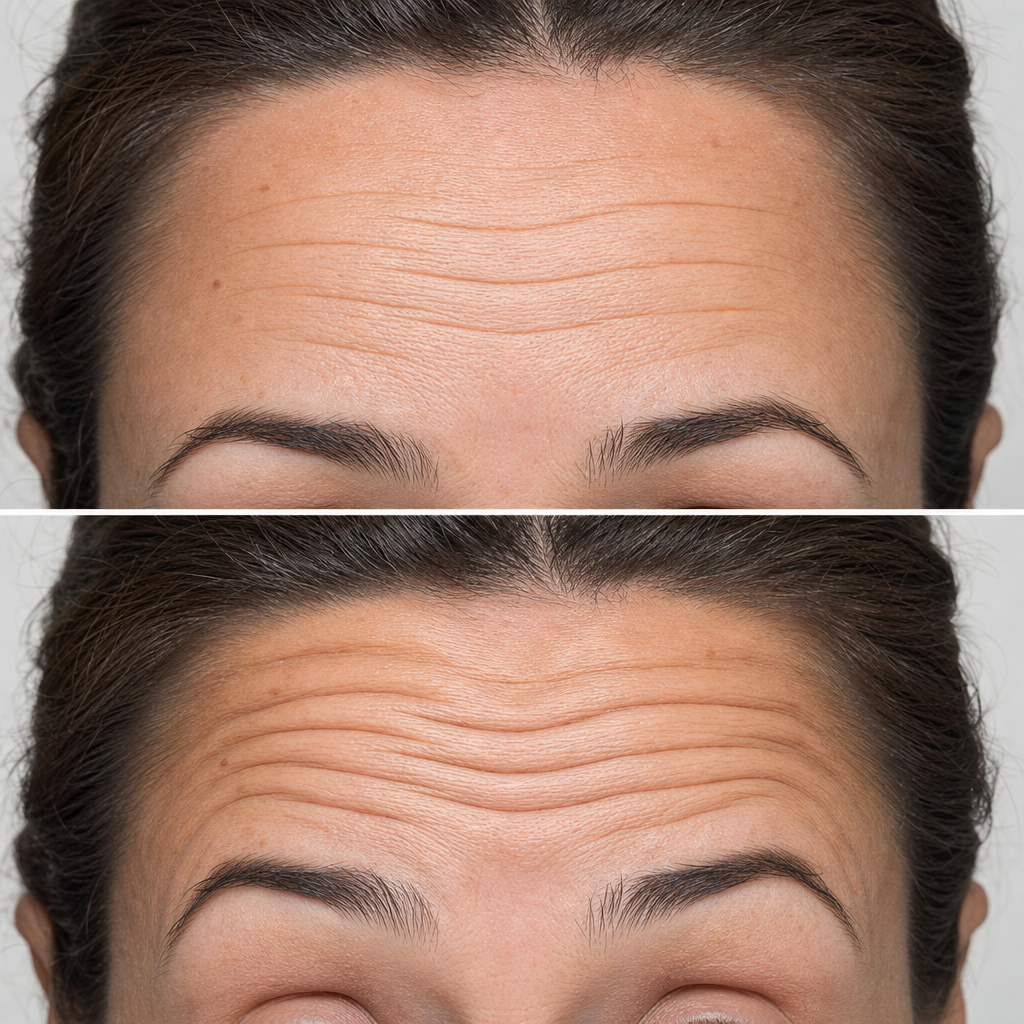
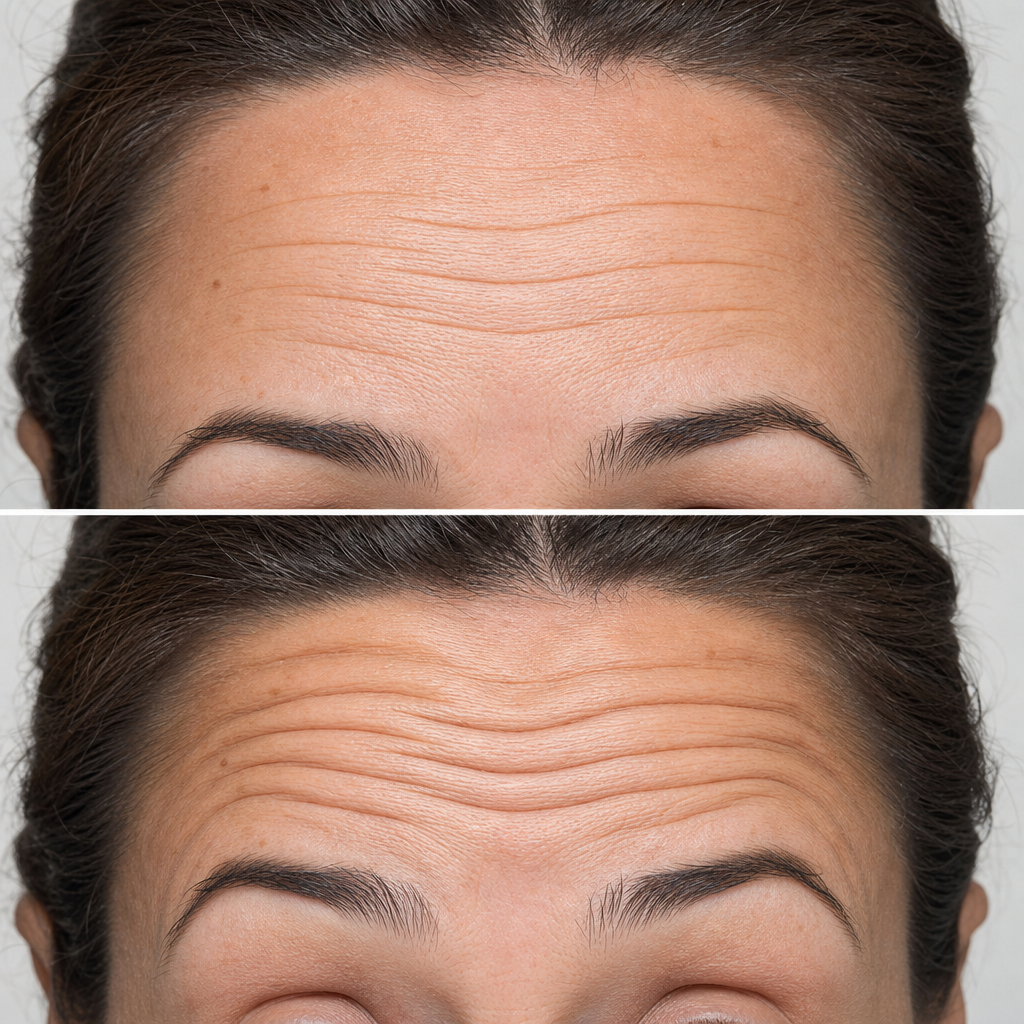
Horizontal forehead lines are caused by the frontalis muscle, the only elevator of the brow. This distinction matters enormously. When you relax the frontalis aggressively to smooth lines, you also reduce its ability to lift. The result, in patients who rely heavily on frontalis activity to keep their brows in a comfortable position, is brow heaviness or a subtle hooded appearance that patients describe as feeling tired. This is not a botched treatment in the dramatic sense. It is a dosing and placement miscalculation that a skilled injector avoids by assessing baseline brow position before touching a syringe.
How Brow Position Changes the Dosing Decision
Patients with naturally low-set brows or significant upper eyelid skin laxity need conservative frontalis dosing, typically fewer units placed higher on the forehead, leaving the lower frontalis partially active to preserve brow lift. Patients with high, well-supported brows can tolerate more complete relaxation across the full muscle belly. In practice, this means two patients presenting with identical-looking forehead lines may receive meaningfully different treatment plans at a clinic like Skin Excellence Medispa, where practitioners evaluate the full upper face before determining placement.
Typical Unit Range and Placement Pattern
Most patients require between 10 and 20 units in the frontalis for effective forehead line smoothing. The injection pattern typically involves four to six points spread horizontally across the mid and upper forehead. Placing all units in a single horizontal row creates an unnatural flat appearance. Staggering the injection points allows for more natural movement preservation. A common mistake is treating only the central forehead, which leaves active lateral lines and creates a band effect.
Pro tip: If you are coming in for a forehead Botox consultation in Aurora and have been told previously that you need the maximum unit count, ask specifically whether the injector assessed your brow resting position first. That assessment changes everything about the dosing decision.
Crow’s Feet: Why This Area Rewards a Lighter Touch
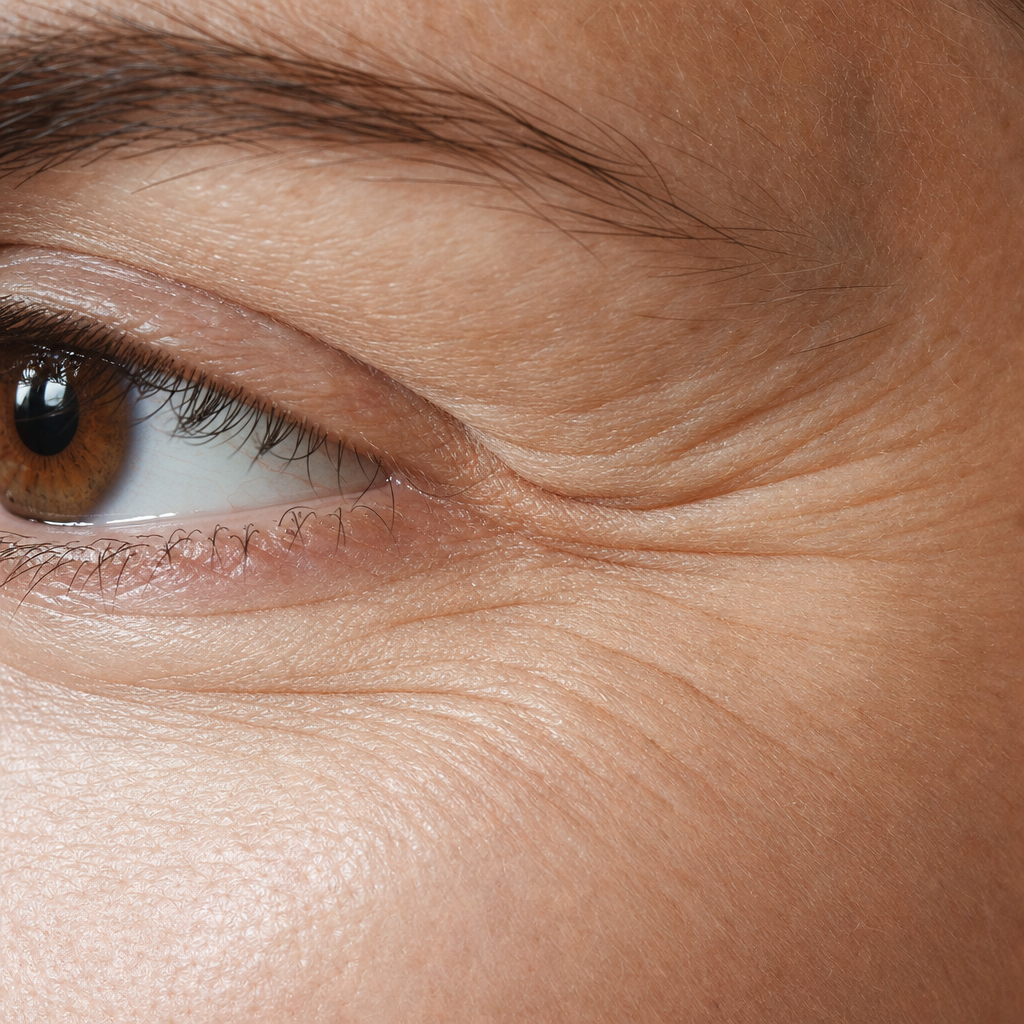
Crow’s feet are dynamic lines at the outer corners of the eyes, formed by repeated contraction of the orbicularis oculi muscle. This muscle is a circular sphincter that encircles the eye, and it contracts every time you smile, squint, blink, or laugh. Because it activates with virtually every facial expression, it is one of the most consistently active muscles in the face, which explains why crow’s feet tend to appear earlier and deepen faster than lines in less-active zones.
The Risk of Over-Treating the Outer Eye Area
Because the orbicularis oculi is superficial and surrounds a mobile structure, over-injection carries specific risks. Placing too many units or injecting too close to the orbital rim can spread toxin to the zygomaticus major, which controls the outer corner of the mouth during smiling. Patients who experience this notice their smile looks asymmetric or their upper lip appears thinner on one side. This side effect is temporary, resolving as the toxin wears off, but it is entirely avoidable with precise placement and appropriate dosing.
Injection Depth and Placement for Crow’s Feet
Crow’s feet injections should be placed superficially, into the muscle just beneath the skin, not deep into the tissue. Most patients need two to four injection points per side, typically fanned outward from the orbital rim. Placing injections at least one centimeter from the bone of the orbit reduces diffusion risk. Standard dosing is 6 to 15 units per side depending on muscle bulk and the degree of lines at rest versus in motion.
For GTA residents who spend Ontario summers outdoors, crow’s feet often recur faster than forehead or glabellar results. Consistent squinting against bright light and outdoor UV exposure accelerates both muscle reactivation and underlying skin damage. Pairing crow’s feet Botox with a good SPF and potentially a skin resurfacing treatment is a more durable approach than relying on toxin alone.
“The lateral orbital area is unforgiving of imprecise placement. The difference between a crow’s feet result that looks natural and one that distorts the smile comes down to millimeters and units.” – Clinical observation consistent with guidance from the American Academy of Dermatology on periocular Botox technique.
Frown Lines: The Most Structurally Complex of the Three
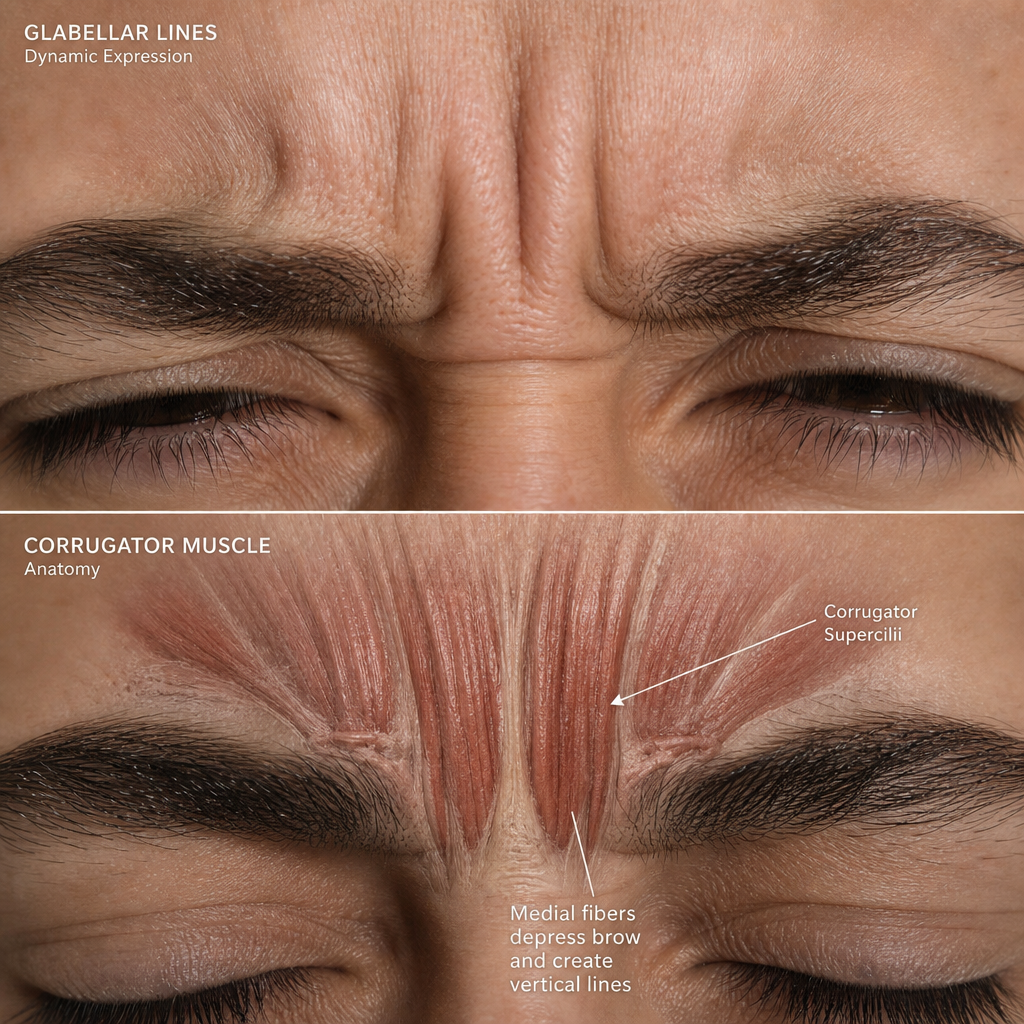
Frown lines, also called glabellar lines or the “11s”, are vertical creases between the brows. They are formed by contraction of the glabellar muscle complex, which includes the procerus (creates the horizontal crease at the nose bridge), the paired corrugator supercilii (creates the vertical 11s), and the depressor supercilii (pulls the brow downward medially). Treating only the procerus or only the corrugators leaves residual movement that creates asymmetric or incomplete results. Every muscle in this complex must be assessed and addressed proportionally.
Why Glabellar Botox Requires More Injection Points
Because multiple muscles contribute to glabellar frowning, effective treatment typically requires five injection points: one in the procerus at the nose bridge and two per side into the corrugator supercilii bodies. Some patients with a strong or broad corrugator will need an additional lateral injection point. Typical dosing ranges from 20 to 30 units for the full glabellar complex, making it the highest unit area of the three zones discussed here.
How Treating Frown Lines Affects the Forehead
This is the interaction most patients are not told about. The corrugators pull the brows downward and medially during frowning. When you relax them, the medial brow can lift slightly, producing a subtle brow arch improvement. More importantly, when the downward pull from the glabellar complex is removed, the frontalis does not need to compensate as hard to keep the brow elevated. This allows for more conservative forehead dosing when the two zones are treated together, which preserves more natural forehead movement while still smoothing lines. Treating the forehead in isolation, without addressing the glabellar complex, consistently under-delivers results and often requires patients to return for touch-up sooner.
Pro tip: If your primary concern is frown lines but you have also been told you need forehead Botox, ask your injector to explain how treating both areas simultaneously allows them to use fewer total units in the forehead. A good answer to that question tells you immediately how well they understand upper face anatomy.
Comparing Botox Approaches Across the Three Zones
Understanding how these three treatment areas differ in terms of technique, dosing, and expected outcomes helps patients ask better questions and set realistic expectations before their appointment. The table below reflects standard clinical practice for most adult patients at a medical aesthetic clinic in Aurora and the broader GTA.
| Treatment Zone | Typical Unit Range | Key Technical Consideration |
|---|---|---|
| Forehead Lines (Frontalis) | 10 to 20 units | Brow resting position must be assessed first. Low brows require upper placement and reduced units to prevent ptosis. Natural movement preservation is prioritized. |
| Crow’s Feet (Orbicularis Oculi) | 6 to 15 units per side | Superficial injection only. Minimum 1 cm from orbital rim. Risk of diffusion to zygomaticus if placed too inferiorly. Faster recurrence in sun-exposed patients. |
| Frown Lines (Glabellar Complex) | 20 to 30 units | Five or more injection points targeting procerus and bilateral corrugators. Combined treatment with forehead allows reduced frontalis dosing. Strongest and most consistent results of the three zones. |
What to Expect at a Medispa Consultation in Aurora
A genuine medical aesthetic consultation for Botox in Aurora should not feel like a transaction. At Skin Excellence Medispa, the consultation process begins with a full upper face assessment, not a menu of unit prices. The practitioner evaluates your facial symmetry, muscle strength and bulk, baseline brow and lid position, and whether any static lines, meaning lines present even at rest, have developed to a point where Botox alone will smooth them or whether a complementary treatment like microneedling, PRP, or a medical facial would produce better overall skin quality.
Patients who come in through friend referrals often arrive with a specific concern in mind but leave with a clearer picture of how the zones interact. That is a meaningful part of the consultation value. Someone who heard from a friend that Botox crow’s feet GTA results are subtle might be surprised to learn that their own results will be more pronounced because their lines are primarily dynamic, not yet etched into resting skin. Someone whose frown lines are already visible at rest might learn that pairing Botox with a skin resurfacing treatment will accelerate their results in a way that toxin alone cannot match.
The clinic serves Aurora and surrounding GTA communities including Newmarket, Richmond Hill, and Barrie-area patients who travel south for the level of clinical detail they want. The expectation for practitioners at this level is not just technical competence, it is the ability to explain clearly why a particular approach is right for a specific face at a specific point in time.
Pro tip: Before your first Botox appointment, spend two or three days paying attention to which facial movements create which lines on your face. Knowing whether your frown lines deepen when you concentrate versus when you are angry tells your injector something useful about which muscles are dominant. That kind of preparation leads to a more productive consultation.
Frequently Asked Questions
How many units of Botox does a forehead treatment in Aurora typically require?
Most patients need between 10 and 20 units for the frontalis muscle. The exact number depends on muscle mass, brow resting position, and whether the glabellar complex is being treated at the same appointment. Patients with low-set brows typically receive fewer units placed higher on the forehead to avoid brow heaviness. Your practitioner at Skin Excellence Medispa will assess these factors before determining your specific dosing plan.
Will Botox for crow’s feet affect my smile?
It should not, if injected correctly. The risk of smile distortion arises when toxin is placed too close to the zygomaticus major muscle at the cheek. Proper technique keeps injections at least one centimeter from the orbital rim and places them superficially. At a well-run medical aesthetic clinic in the GTA, this complication is rare and when it does occur, it resolves completely as the Botox wears off over 10 to 12 weeks.
How long do frown line results last compared to crow’s feet?
Frown line results tend to last three to four months for most patients and are often the most consistent and durable of the three zones. Crow’s feet results can fade faster, particularly for patients who spend significant time outdoors squinting or who have thinner periorbital skin. Forehead results fall somewhere in between. Individual metabolism, muscle activity level, and sun exposure habits all influence longevity.
Can I treat all three zones in one appointment?
Yes, and in many cases treating all three zones together produces better results than treating them separately. The glabellar and forehead zones in particular benefit from being treated simultaneously because relaxing the frown muscles reduces the compensatory lift the frontalis needs to perform, which allows for more conservative forehead dosing. Treating all three zones in one visit also means your recovery period is consolidated and your total facial result looks balanced rather than addressed in mismatched stages.
I have deep frown lines that are visible even when I’m not frowning. Will Botox fix them?
Botox will prevent the lines from deepening further by stopping the muscle contractions that create them. For lines that are already etched into resting skin, Botox alone produces partial improvement. Many patients with static frown lines see meaningful softening within the first two or three treatment cycles as the muscle atrophies slightly and the skin gets a sustained rest from repeated creasing. For deeper static lines, combining Botox with a small amount of hyaluronic acid filler or a skin resurfacing treatment accelerates the visible result significantly.
Is there a difference between treating crow’s feet in summer versus winter in Ontario?
There is a practical difference worth noting. Ontario patients who spend summer months outdoors squinting in bright light tend to see crow’s feet results fade faster than their winter treatments. This is not a product quality issue. It is a frequency-of-muscle-use issue combined with UV-driven collagen breakdown in the thin periorbital skin. Scheduling a touch-up appointment before peak summer season and using consistent broad-spectrum SPF around the eyes helps extend results for GTA residents managing this concern year-round.
What should I look for when choosing a Botox provider in Aurora or the GTA?
Look for a clinic where the consultation involves a physical assessment of your face in motion, not just a photo and a unit quote. Your injector should be able to explain why they are recommending a specific number of units and placement pattern for your anatomy specifically. At Skin Excellence Medispa in Aurora, consultations are structured around this kind of individualized planning. Ask about their approach to forehead and glabellar zones together, because the answer tells you quickly whether they understand upper face anatomy as an integrated system.
If you have had Botox before or are weighing your first appointment, we would love to hear what questions or hesitations shaped your experience. Share your thoughts and help others in the Aurora and GTA community make more informed decisions about their treatment.
We would love your feedback and any insights you would share with others. What perspective would you add?
References
- American Society of Plastic Surgeons: annual statistics on minimally invasive cosmetic procedures including botulinum toxin treatments
- American Academy of Dermatology: clinical guidance on botulinum toxin injection techniques for facial rejuvenation
- National Institutes of Health PubMed: peer-reviewed research on glabellar and periorbital botulinum toxin dosing and outcomes
- Statista: market data on cosmetic injectable procedures and consumer trends in North America
- Forbes Health: reporting on medical aesthetic treatment growth and patient decision-making in cosmetic clinics