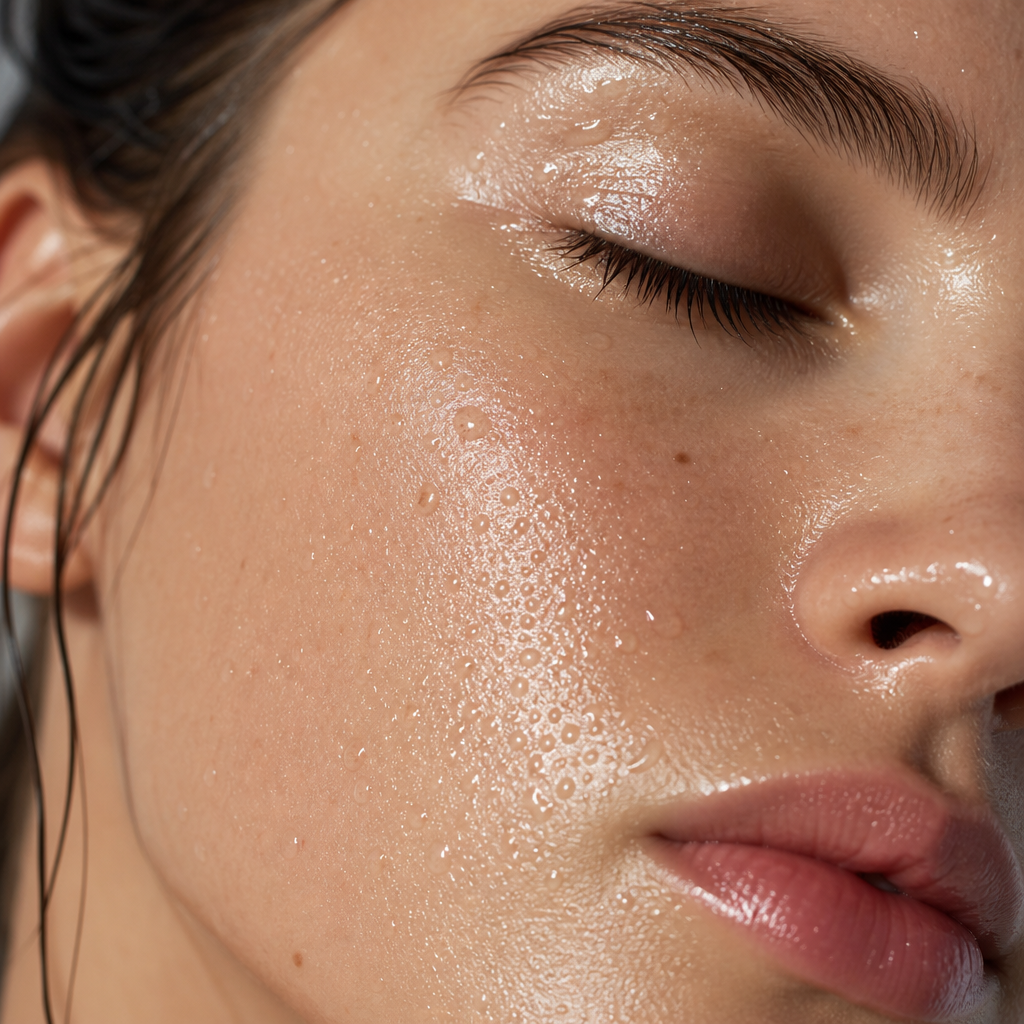
Most people chasing plumper, more radiant skin are spending money on serums that simply cannot penetrate deep enough to matter. Skin booster injections Aurora clients are discovering offer something fundamentally different: hyaluronic acid delivered directly into the dermis, where it attracts and holds water at a cellular level. The results are not about dramatic volume or frozen expressions. They are about skin that looks genuinely healthy from the inside out. If a friend referred you here because their skin suddenly looked luminous and you could not figure out why, this is almost certainly why.
Table of Contents
- Quick Takeaways
- What Are Skin Booster Injections
- How Skin Boosters Differ From Dermal Fillers
- Who Is the Ideal Candidate
- The Treatment Experience at Skin Excellence Medispa
- Comparing Skin Booster Options
- Results Timeline and Maintenance
- Combining Skin Boosters With Other Treatments
- Frequently Asked Questions
- References
Quick Takeaways
| Key Insight | Explanation |
|---|---|
| Skin boosters work below the surface | Hyaluronic acid is injected into the mid-dermis, not applied topically, so it actually reaches the tissue layers where hydration makes a visible difference. |
| They are not the same as fillers | Skin boosters use a low-viscosity, non-cross-linked or lightly cross-linked HA that spreads through tissue rather than adding structural volume. |
| Results build over a series | Most Aurora clients see optimal results after two to three sessions spaced four weeks apart, with improvements continuing to develop between visits. |
| The skin produces more collagen in response | HA injected into the dermis stimulates fibroblast activity, meaning you get a collagen-building benefit alongside the hydration boost. |
| Downtime is minimal | Mild redness and small injection bumps typically resolve within 24 to 48 hours, making this a realistic option for working professionals. |
| Maintenance keeps results going | After the initial series, a single top-up session every four to six months preserves the glow and skin quality improvements. |
| Multiple areas can be treated | Face, neck, decolletage, and hands all respond well, which is why many GTA clients treat more than one area per appointment. |
What Are Skin Booster Injections
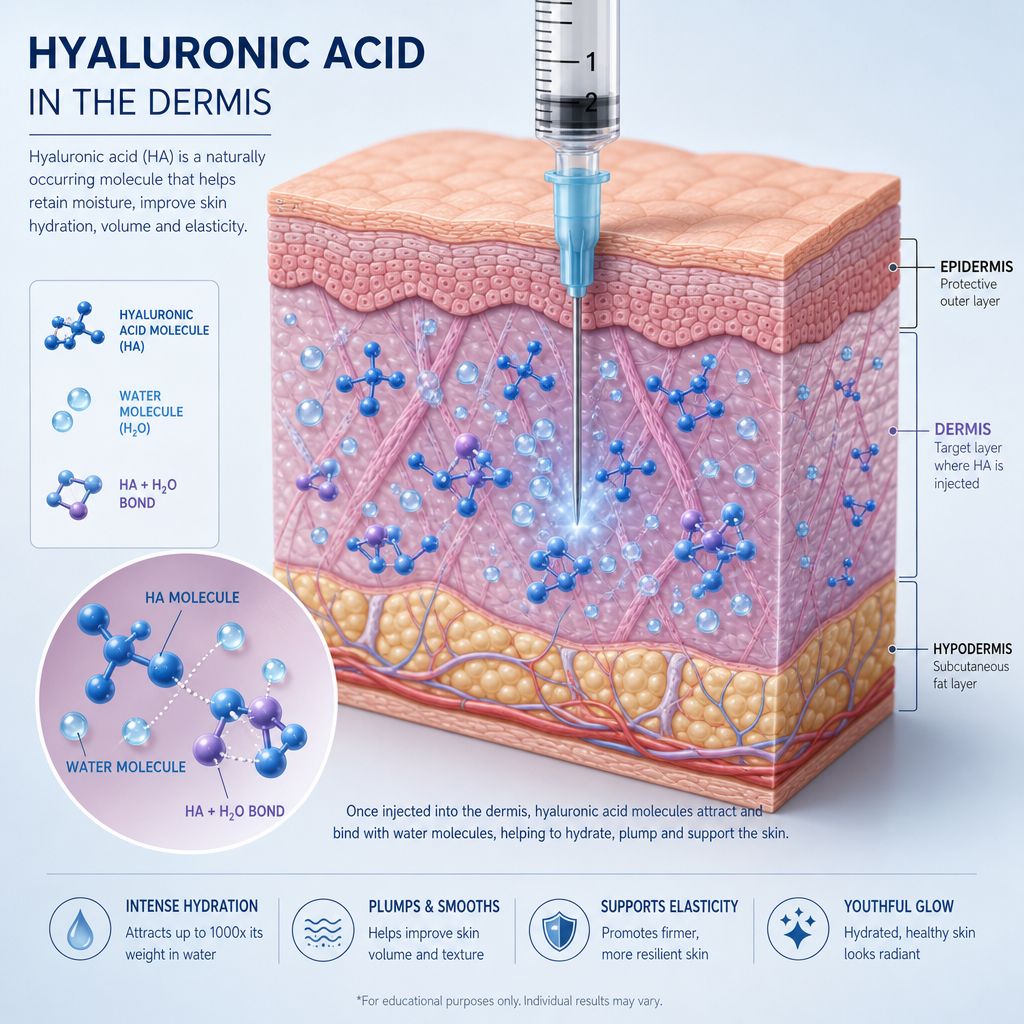
Skin booster injections are a category of hyaluronic acid skin treatment designed to rehydrate and rejuvenate skin from within, rather than reshape or volumize it. The most established products in this category include Restylane Skinboosters, Juvederm Volite, and Profhilo, each with slightly different formulations but the same core goal: deposit moisture-attracting HA molecules deep in the dermis where they can actually do something meaningful.
HA is a naturally occurring molecule in human skin. A healthy 20-year-old has abundant HA in their dermis. By age 40, levels have dropped significantly, which is one reason mature skin looks dull and feels tight even when well moisturized. Injecting HA bypasses the barrier function of the skin entirely, which is why the results are so different from anything you can achieve with a topical product, no matter how premium the formula.
In practice, what clients notice first is not a dramatic change but a quality shift. Skin looks less tired. Foundation applies more smoothly. Fine lines soften not because anything was filled but because properly hydrated skin simply does not crease the same way. It is a foundational improvement rather than a cosmetic overlay.
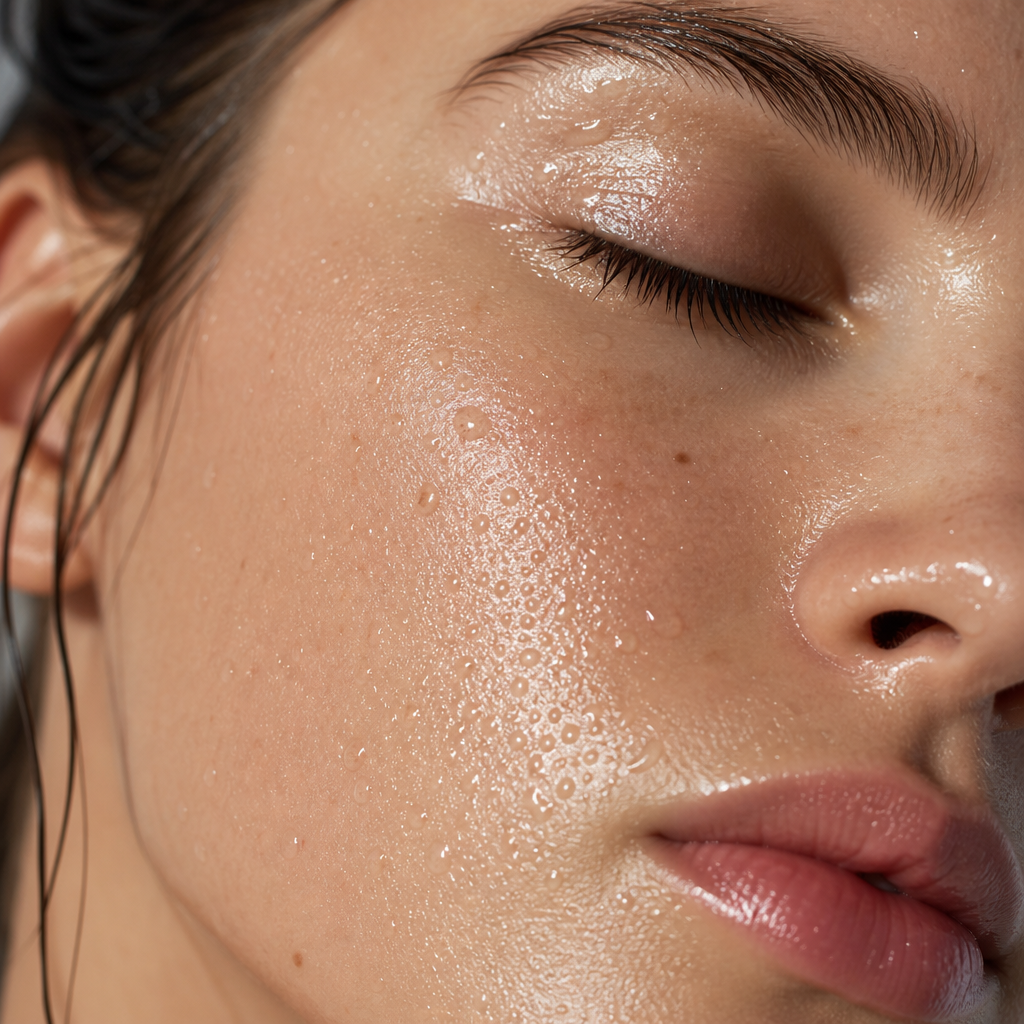
How Skin Boosters Differ From Dermal Fillers
This is the question every new client asks, and it is a fair one. Both involve injecting hyaluronic acid. But the similarity stops there. Dermal fillers use heavily cross-linked HA, meaning the molecules are chemically bonded together to create a firm gel that holds its shape and adds volume. That is what lifts a nasolabial fold or restores fullness to hollow cheeks.
Skin boosters use HA that is either non-cross-linked or very lightly cross-linked. It is fluid enough to spread through tissue rather than sit in one location. When injected in small droplets across a broad area of the face or neck, it disperses and integrates with the surrounding dermis, functioning more like a deep-tissue moisturizer than a structural support.
Why the Distinction Matters for Your Results
If you ask for a skin booster expecting filler-level volume correction, you will be disappointed. If you ask for a filler when what you actually need is overall skin quality improvement, you will end up with targeted correction on a dull, dehydrated canvas and wonder why you do not look as fresh as you expected. The two treatments solve different problems and work best when chosen correctly for the right indication.
A common mistake practitioners see is clients requesting fillers in their late 20s or early 30s when what they actually need is hydration support. Skin boosters are often the better first step for this age group, addressing the root cause of the dullness rather than adding volume that is not yet missing.
“Hyaluronic acid can bind up to 1,000 times its weight in water, making it one of the most effective hydrating agents available in both topical and injectable forms.” National Institutes of Health, published research on hyaluronic acid in dermatology
Who Is the Ideal Candidate
The honest answer is: almost anyone who is bothered by skin that looks tired, dull, or dehydrated, regardless of their age. That said, certain profiles respond especially well to skin hydration treatment Ontario providers consistently flag as ideal candidates.
Clients in Their Late 20s to 40s Seeing Early Changes
This group often notices that they look fine in the morning but tired by afternoon, that their skin lacks the natural radiance it had a few years ago, or that fine lines appear around the eyes and mouth that do not go away when they are well rested. Skin boosters address these concerns directly without any alteration to facial structure.
Clients With Mature Skin Looking for Texture Improvement
For clients in their 50s and beyond who are already using fillers and Botox as part of their treatment plan, skin boosters add a layer of improvement that neither of those treatments provides. They address the overall quality of the skin between the structural corrections, which is often what separates a treatment result that looks genuinely refreshed from one that looks done.
Clients Preparing for a Major Event
Wedding season is a strong driver of skin booster interest in the GTA. A series started eight to ten weeks before a major event gives skin time to respond and look its best on the day. The results photograph particularly well because the skin reflects light evenly rather than appearing patchy or flat.
Pro tip: If you have a history of cold sores, mention it before your appointment. Your practitioner may recommend a prophylactic antiviral to reduce the risk of a breakout triggered by the injections.
The Treatment Experience at Skin Excellence Medispa
At Skin Excellence Medispa in Aurora, skin booster treatments begin with a thorough skin consultation. This is not a formality. The practitioner is assessing skin laxity, hydration levels, depth of fine lines, and whether boosters are the right starting point or whether another treatment would better serve the client’s goals first.
Topical numbing cream is applied before the procedure and left on for a set time to ensure comfort. The injections themselves are placed using a fine needle in a grid or microinjection pattern across the treatment area. Most clients describe the sensation as mild pressure or a series of small pinches. The full face typically takes 20 to 30 minutes.
What Happens Immediately After
Small raised bumps appear at each injection point immediately after treatment. These are normal and typically absorb within a few hours to a day. Mild redness and occasional light bruising can occur, particularly around the under-eye area if that is included. Clients leave the clinic looking slightly pink and are advised to avoid heavy exercise, saunas, and alcohol for 24 hours.
The luminosity that skin boosters are known for begins to appear within a week and continues to improve as the HA integrates into the tissue and begins attracting water. Most clients notice the biggest shift around the two-week mark after their first session.
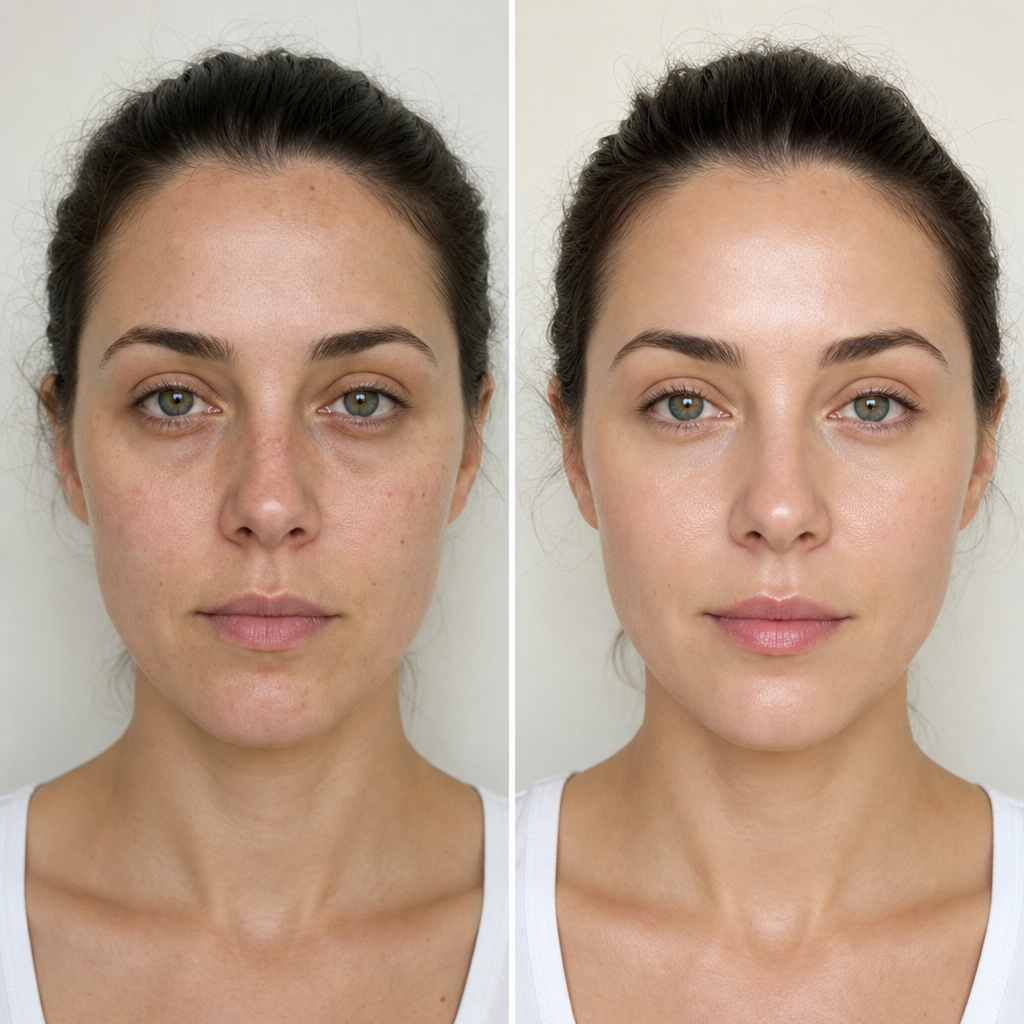
Pro tip: Book your first skin booster appointment at least two weeks before any important photos or events. The product needs time to settle and integrate before you see the full result.
Comparing Skin Booster Options
Not all skin boosters are the same, and the product your practitioner recommends will depend on your skin concerns, skin type, and treatment goals. Here is a direct comparison of the three most commonly used options in Ontario medical spas.
| Product | Key Characteristics | Best Suited For |
|---|---|---|
| Restylane Skinboosters | Stabilized HA with a long history of clinical use. Injected in a grid pattern, often with a stamp device for precision. Results last 6 to 12 months after initial series. | Clients wanting proven results with established long-term data. Strong option for first-time skin booster clients in Aurora. |
| Juvederm Volite | Uses Vycross technology for a smooth, spreadable texture. Addresses fine lines in addition to hydration with a single treatment series. Results often last up to 9 months. | Clients with superficial fine lines alongside hydration concerns, particularly around the perioral area and cheeks. |
| Profhilo | High-concentration, bi-phasic HA that is not cross-linked. Injected at only five points per side using the BAP technique. Spreads widely through tissue, stimulating collagen and elastin strongly. | Clients with skin laxity concerns as well as hydration loss. Particularly effective for neck and jawline remodeling in clients 40 and older. |
In practice, Profhilo tends to generate the most dramatic overall skin quality improvement in clients who have noticeable laxity, while Restylane Skinboosters is the most straightforward introduction for someone new to injectable hydration treatments. Your practitioner at Skin Excellence Medispa will advise which formulation matches your skin’s current state rather than defaulting to a single product for every client.
Results Timeline and Maintenance
Skin boosters are not a one-and-done treatment, and anyone who frames them that way is not setting realistic expectations. The initial protocol for most products involves two to three sessions spaced three to four weeks apart. This builds up the concentration of HA in the dermis progressively, which is what produces the cumulative improvement that clients become loyal to.
The data consistently shows that clients who complete the full initial series see significantly better results than those who stop after a single session. One session produces noticeable improvement. Three sessions produces the kind of result that has friends asking what you have been doing differently.
How Long Results Last
After the initial series, most clients maintain their results with a single session every four to six months. HA naturally degrades over time, and without top-ups, the hydration benefit gradually decreases. The collagen stimulation benefits last somewhat longer, which is why long-term clients often feel their skin looks better overall year over year compared to before they started.
A useful way to think about it: the first series builds your baseline. Maintenance sessions protect and extend that baseline. Clients who stay consistent over one to two years often require less product per session because their overall skin quality has genuinely improved.
Combining Skin Boosters With Other Treatments
Skin boosters work well as a standalone treatment, but they also integrate into broader treatment plans in ways that amplify the results of everything else being done. At Skin Excellence Medispa, clients who already use Botox and fillers frequently add skin boosters to their rotation as the missing piece that addresses overall skin quality rather than specific movement or volume concerns.
Skin Boosters and Micro-Needling
These two treatments should not be done at the same time, but they complement each other well when scheduled correctly. Micro-needling creates controlled micro-injuries that stimulate collagen remodeling. Skin boosters provide the HA foundation that supports skin repair and hydration. Spacing them four to six weeks apart allows the skin to recover from each treatment and respond to both at its best.
Skin Boosters and PRP or PRF Therapy
Some practitioners combine injectable HA with platelet-rich plasma or platelet-rich fibrin treatments to drive both hydration and regenerative growth factor activity simultaneously. This combination is particularly appealing to clients who prefer to minimize synthetic products and want to use their own biology as much as possible. Skin Excellence Medispa offers both PRP and PRF therapies, making this kind of integrated planning straightforward within a single clinic relationship.
The key principle is this: skin boosters make everything else you do look better because the canvas is healthier. Botox results look more refined on hydrated skin. Filler results look more natural when the surrounding tissue has good elasticity and moisture. Investing in skin quality is never wasted, regardless of what other treatments are in your plan.
Frequently Asked Questions
How is a skin booster injection different from getting a B12 shot or IV hydration therapy?
Skin booster injections deliver hyaluronic acid directly into the dermis of the skin, where it acts locally to hydrate tissue and stimulate collagen. B12 shots and IV hydration work systemically through the bloodstream. They address different things entirely. Skin boosters specifically target the structural layer of your skin in a way that systemic treatments cannot replicate.
Does it hurt?
With topical numbing cream applied beforehand, most clients rate the discomfort as very mild. The sensation is typically described as small pinches or light pressure across the treatment area. Sensitive areas like under the eyes or around the lips are the most noticeable, but the procedure is well tolerated without sedation or significant downtime from discomfort.
Can I get skin boosters if I have never had any injectables before?
Yes, and many practitioners consider skin boosters an excellent starting point for injectable treatment because they do not change facial structure or expression. They simply improve the quality of the skin you already have. If you are nervous about injectables, this is a lower-stakes introduction that builds familiarity with the process and lets you see results with a subtle, natural outcome.
How soon will I see results after my first session?
Initial improvement in skin texture and radiance is typically visible within one to two weeks of the first session. The full result of a single session develops over about four weeks as the HA integrates and begins attracting water into the tissue. After the complete initial series of two to three sessions, the cumulative improvement is substantially more visible than after any single appointment.
Are skin boosters safe for all skin tones?
Yes. Skin booster injections work at the level of the dermis and do not interact with melanin or pigmentation in the way that some laser or energy-based treatments do. They are appropriate for all Fitzpatrick skin types and are frequently used in clients with medium to deep skin tones who want to avoid pigmentation risks associated with other rejuvenation options.
What should I avoid after getting skin booster injections?
For the first 24 hours, avoid vigorous exercise, saunas, steam rooms, alcohol, and applying makeup over the injection points. After 24 hours, normal skincare and activity can resume. Avoid direct sun exposure on the treated area for at least 48 hours and use an SPF 30 or higher every day as part of your regular routine to protect your investment in the treatment.
If you have had skin booster injections or you are considering booking your first session at Skin Excellence Medispa, share what questions or concerns you had before getting started. Your experience might be exactly what someone else in Aurora or the GTA needs to hear.
We would love your feedback and any insights you would share with others. What perspective would you add?
References
- National Institutes of Health research database covering hyaluronic acid pharmacology and dermal injection studies
- Ontario Ministry of Health regulatory guidance on medical aesthetic procedures and practitioner standards
- Statista global and Canadian medical aesthetics market data and consumer trend statistics
- Forbes coverage of the medical spa industry growth and aesthetic treatment demand in North America
- American Academy of Dermatology clinical resources on hyaluronic acid treatments and skin aging science