
Roughly 10 million Americans and Canadians live with temporomandibular joint disorder, and a significant number of them are grinding their teeth, waking up with jaw pain, and cycling through night guards and physiotherapy with limited results. If that sounds familiar, Botox for TMJ Aurora residents are increasingly turning to is worth understanding in real clinical terms, not marketing language. At Skin Excellence Medispa in Aurora, Ontario, jaw Botox treatments are delivering measurable relief for clients across the Greater Toronto Area who thought their only options were a mouth guard or surgery.
Table of Contents
- Quick Takeaways
- What Is TMJ and Why Does It Hurt?
- How Botox Treats TMJ: The Mechanism
- Jaw Botox vs. Other TMJ Treatments
- What to Expect at Your Appointment
- The Cosmetic Bonus: Jaw Slimming
- Who Is a Good Candidate?
- Frequently Asked Questions
- References
Quick Takeaways
| Key Insight | Explanation |
|---|---|
| Botox relaxes the masseter muscle, not the joint | TMJ pain often comes from an overworked masseter, not structural joint damage. Reducing muscle force reduces pain. |
| Results appear within 1-2 weeks | Most clients notice significant jaw tension reduction within 10-14 days of injection, with full effect at 4 weeks. |
| Treatment lasts 4-6 months on average | Regular maintenance appointments extend the benefits and can gradually reduce masseter bulk over time. |
| Jaw Botox does not fix structural joint damage | If imaging shows disc displacement or bone erosion, Botox manages symptoms but does not replace surgical or dental intervention. |
| Dose matters more than most clinics admit | Under-dosing is the most common reason clients see partial results. An experienced injector titrates to masseter size, not a flat unit count. |
| The cosmetic jaw-slimming effect is real and clinically documented | Repeated masseter Botox causes measurable muscle atrophy, producing a slimmer facial profile as a genuine secondary outcome. |
| Ontario MedSpa regulations require physician oversight | In Ontario, Botox injections must be prescribed by a regulated health professional. Confirm your clinic meets this standard before booking. |
What Is TMJ and Why Does It Hurt?
TMJ stands for temporomandibular joint, the hinge connecting your jaw to your skull just in front of each ear. When people say they have “TMJ,” they typically mean temporomandibular joint disorder (TMD), a condition that causes jaw pain, clicking, locking, headaches, and referred pain into the neck and temples.
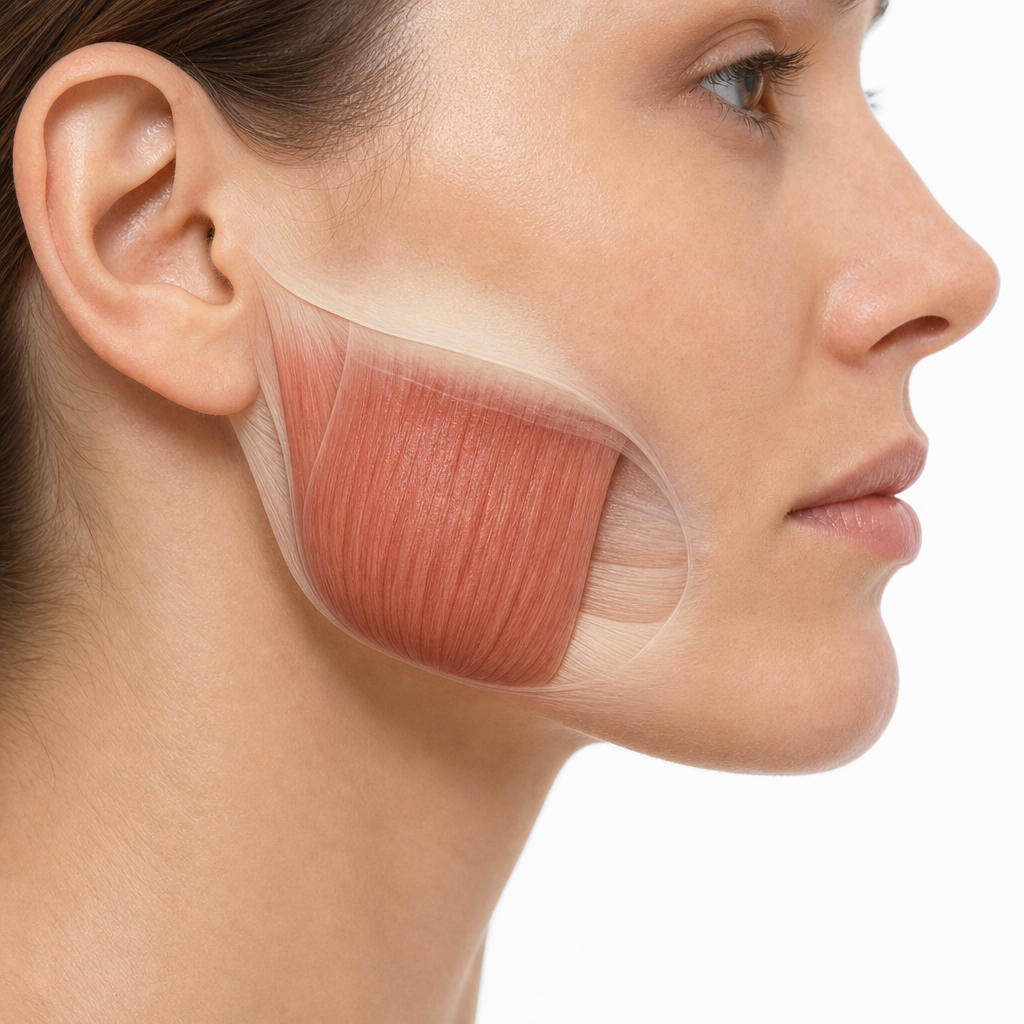
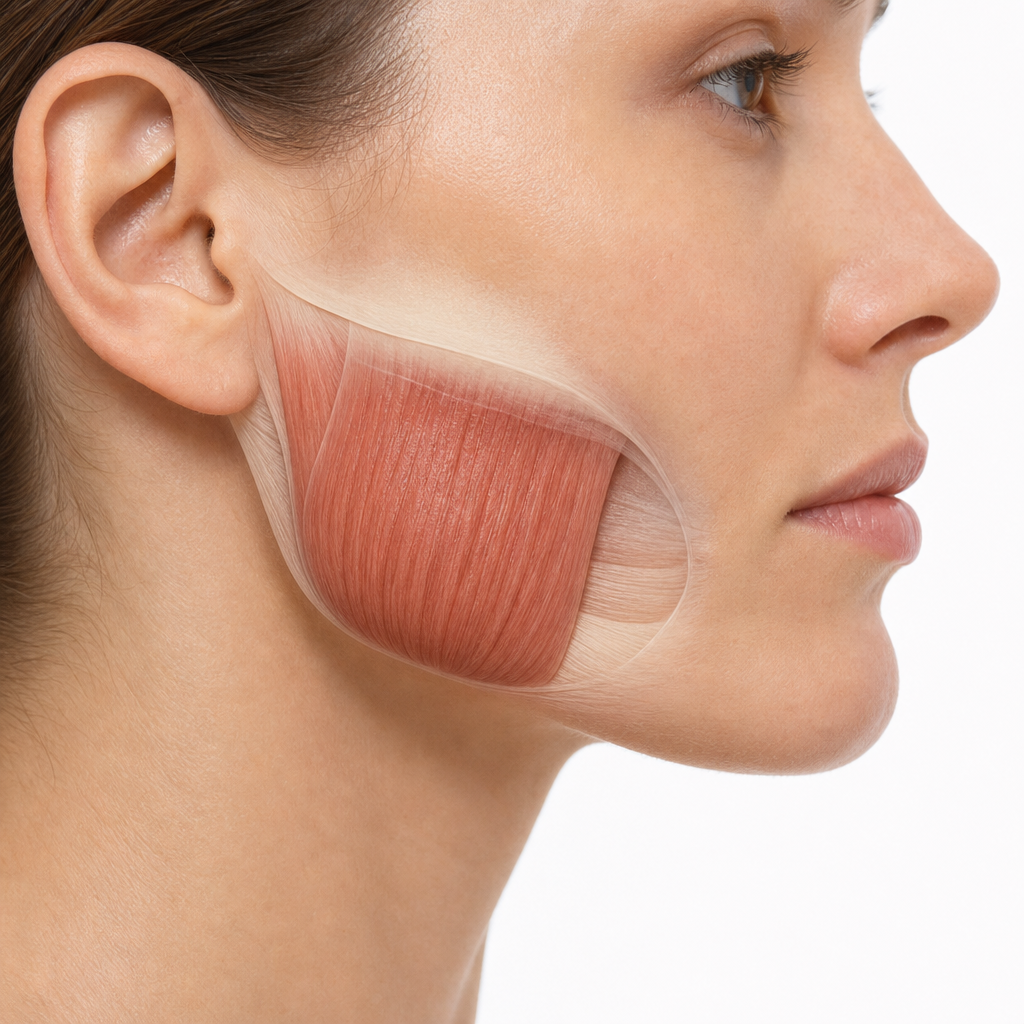
The most common driver of TMD symptoms is not the joint itself, but the masseter muscle. The masseter is one of the strongest muscles in the body relative to its size. When it is chronically overactivated through bruxism (teeth grinding), stress clenching, or certain bite misalignments, it generates forces the joint simply was not built to absorb continuously.
In practice, the clients who respond best to jaw Botox are those whose symptoms are primarily muscular. A dentist or physician can help you determine whether your TMD is driven by muscle overactivity, structural joint problems, or a combination. That distinction is what makes the difference between a client who gets 80 percent symptom relief and one who sees modest improvement.
How Botox Treats TMJ: The Mechanism
Botulinum toxin type A, the active ingredient in Botox, works by blocking acetylcholine release at the neuromuscular junction. In simpler terms, it prevents the nerve signal from reaching the muscle fiber, which reduces the muscle’s ability to contract with full force. When injected into the masseter, it does not paralyze the jaw. You can still chew, speak, and yawn normally.
What it eliminates is the excessive, involuntary force the masseter applies during clenching and grinding. Nocturnal bruxism, which is the grinding that happens during sleep, is particularly difficult to address with conscious habit changes. Botox addresses it at the muscle level rather than relying on patient compliance.
Why This Matters More Than a Night Guard Alone
A night guard protects your teeth. It does not reduce the muscular force being applied. Many clients arrive at Skin Excellence Medispa having worn a guard faithfully for years without headache or pain relief, because the muscle was still working just as hard. Jaw Botox addresses the source of the force, not just the surface it acts on.
According to a clinical review published in the Journal of Oral and Maxillofacial Surgery, Botox injections into the masseter and temporalis muscles produced statistically significant reductions in pain intensity scores in patients with chronic TMD. The data consistently shows that clients with myofascial (muscle-driven) TMD are the strongest responders.
“Botulinum toxin injection into the masseter muscle is an effective, minimally invasive treatment for reducing myofascial pain associated with temporomandibular disorders, with a favorable safety profile and reproducible outcomes.” – Summary from peer-reviewed literature on botulinum toxin for TMD management
Pro tip: Ask your injector to assess both the masseter and the temporalis muscle during consultation. Some clients clench primarily through the temporalis, and missing that injection site is one reason results fall short of expectations.
Jaw Botox vs. Other TMJ Treatments
TMD treatment options range from conservative and non-invasive to surgical. Understanding where jaw Botox fits in the clinical picture helps you make an informed decision rather than booking based on trend alone.
| Treatment Option | Best For | Key Limitations |
|---|---|---|
| Botox (Masseter Injection) | Muscle-driven TMD, bruxism, jaw tension headaches, cosmetic jaw slimming | Does not address structural joint damage, requires repeat treatment every 4-6 months |
| Occlusal Splint / Night Guard | Tooth protection from bruxism, mild symptom management | Does not reduce muscle force, does not relieve headaches or jaw fatigue |
| Surgical Intervention (Arthroscopy or Open Joint Surgery) | Structural disc displacement, advanced joint degeneration | Invasive, longer recovery, reserved for cases where conservative management has failed |
The comparison above is not meant to dismiss other treatments. A common mistake is viewing Botox as a replacement for dental care. In most cases, jaw Botox works best as part of a coordinated approach, handling the muscular component while a dentist manages occlusal issues if present.
For GTA residents weighing their options, the practical advantage of TMJ treatment at a medispa like Skin Excellence is accessibility and speed. A dental referral for a TMD specialist in the GTA can carry a waiting period of weeks or months. A Botox appointment for jaw relief can often be scheduled and completed within days.
What to Expect at Your Appointment
A jaw Botox appointment at Skin Excellence Medispa begins with a clinical consultation, not a sales pitch. The practitioner will ask about your symptoms, their duration, whether you have been diagnosed by a dentist or physician, and what previous treatments you have tried. This is not a formality. The consultation informs the injection pattern and dose.
The Injection Process
The masseter is palpated while you clench your teeth, which makes the muscle easy to isolate. A fine needle is used to deliver Botox at two to three points per side, targeting the bulk of the muscle belly. The procedure takes under 15 minutes. Discomfort is generally described as a brief pinch, and no downtime is required.
Dose ranges vary based on masseter size. In practice, smaller masseters in clients with lighter bruxism may require 20-25 units per side, while large, hypertrophied masseters in heavy clenchers may need 40-50 units per side to achieve therapeutic relief. Flat-rate pricing that does not account for muscle size is a red flag worth noting when comparing clinics.
What Happens After Injection
Clients are advised to avoid rubbing the injection sites for four hours and to refrain from strenuous activity on the day of treatment. Chewing hard foods in the first 24 hours is discouraged simply because it can theoretically influence neurotoxin spread before it has fully settled. Most people return to work and normal activity immediately.
Noticeable jaw tension reduction typically begins at 7-10 days. Full therapeutic effect is reached at approximately four weeks, which is also the appropriate time for a follow-up assessment if this is your first treatment.

Pro tip: Track your symptoms in the two weeks before your appointment. A simple daily pain scale note on your phone gives your injector baseline data that makes the four-week follow-up comparison genuinely meaningful rather than anecdotal.
The Cosmetic Bonus: Jaw Slimming
This is where the “beyond cosmetics” framing earns its complexity. Jaw Botox started gaining mainstream attention partly because of its aesthetic effect, a slimmer, more tapered lower face. For clients whose masseters have hypertrophied from years of clenching, the jaw can appear square or overly prominent. Repeated Botox treatment causes gradual muscle atrophy, softening the jawline over a series of treatments.
The important point is that this effect is not superficial manipulation. The muscle atrophy that produces a slimmer jaw is the same physiological process that delivers TMJ pain relief. The treatment is functionally therapeutic and cosmetically beneficial through a single mechanism, not two separate interventions.
Clients at Skin Excellence Medispa in Aurora who come in purely for jaw slimming frequently report that they had not connected their occasional headaches or morning jaw stiffness to bruxism. After their first treatment, the relief is often a welcome surprise. This crossover experience is extremely common with jaw Botox Ontario practitioners see regularly.
That said, jaw slimming from Botox is subtle and cumulative. Clients expecting a dramatic structural change after one session are sometimes disappointed. A realistic expectation is a modest softening of jawline prominence after the first round, with more visible results after two or three maintenance treatments spaced four to six months apart.
Who Is a Good Candidate?
The strongest candidates for jaw Botox for TMJ relief share a specific profile. They have muscle-driven TMD symptoms including jaw pain, morning soreness, tension headaches, and teeth grinding. They have already tried or considered a night guard and found it insufficient for pain management. And they have no contraindications to Botox, including pregnancy, neuromuscular disorders like myasthenia gravis, or allergies to botulinum toxin.
Candidates who are less likely to see strong therapeutic results include those whose imaging shows significant structural joint problems such as disc perforation or severe degenerative joint disease. Botox will not repair damaged cartilage or reposition a displaced disc. For that population, Botox may still provide some symptom relief, but it should be combined with appropriate dental or surgical management.
Age and Lifestyle Considerations
There is no upper age limit for jaw Botox as a therapeutic treatment. Adults in their 30s through 60s are the most common demographic seeking this treatment in Aurora and across the GTA. Stress levels, jaw posture habits, and sleep quality all influence how quickly symptoms return after a treatment, which is why some clients need appointments every four months while others maintain relief for six months or longer.
If you are already receiving Botox for cosmetic purposes elsewhere on your face, jaw Botox can typically be combined in the same appointment. Experienced injectors at medical aesthetic clinics account for total neurotoxin load across treatment areas, which is another reason practitioner experience matters more than price when booking.
Frequently Asked Questions
How many units of Botox are needed for TMJ treatment?
The typical range is 20 to 50 units per side, depending on the size and strength of your masseter muscle. Clients with severe bruxism or significantly hypertrophied masseters require higher doses to achieve therapeutic relief. An injector who quotes a single flat number without assessing your masseter is not calibrating treatment to your anatomy.
Is jaw Botox covered by insurance in Ontario?
Currently, Botox for TMJ is not covered under most provincial health insurance plans in Ontario, including OHIP. Some extended benefit plans may offer partial coverage if a physician documents the treatment as medically necessary for TMD management. Contact your insurer directly before your appointment to verify your specific plan terms.
How long does it take for Botox to relieve TMJ pain?
Most clients notice reduced jaw tension and less morning soreness within 7 to 14 days of injection. Headaches related to jaw clenching typically improve within the same window. Full effect is reached at approximately four weeks, which is the recommended timing for a first follow-up assessment.
Will jaw Botox affect my ability to chew?
At therapeutic doses, jaw Botox reduces involuntary clenching force without significantly impairing normal chewing function. You will notice that chewing tough foods like hard candies or raw carrots requires more effort in the first few weeks, as the masseter is working with reduced force. This resolves once the muscle adapts. Most clients do not find this functionally limiting in daily eating.
How does Botox for TMJ in Aurora compare to seeing a TMD specialist?
A TMD specialist, typically an oral and maxillofacial surgeon or a trained dentist, provides comprehensive diagnosis including imaging and bite analysis. Botox treatment at a medispa like Skin Excellence addresses the muscular component specifically. These are not competing options. For complex cases, seeing both a TMD specialist and a qualified injector produces better outcomes than choosing one over the other.
Are there any side effects specific to jaw Botox?
The most commonly reported side effects include temporary soreness at injection sites, mild swelling that resolves within 24 to 48 hours, and occasional asymmetry if one masseter responds more quickly than the other. Rarely, clients notice a temporary change in smile width if the injection affects the risorius muscle. This resolves as the neurotoxin metabolizes. Choosing an injector with documented experience in masseter injection significantly reduces this risk.
Have you tried jaw Botox for TMJ or bruxism? We would genuinely like to hear what your experience has been, whether it worked, what surprised you, or what questions you still have before booking.
References
- National Institutes of Health research database covering clinical studies on botulinum toxin and temporomandibular joint disorder management
- Mayo Clinic overview of temporomandibular joint disorder, its causes, symptoms, and evidence-based treatment approaches
- Health Canada regulatory information on botulinum toxin products approved for use in Canada and their medical applications
- Statista data on the medical aesthetics market in Canada including growth trends in therapeutic Botox treatment categories
- Harvard Health Publishing explanation of how botulinum toxin works at the neuromuscular junction and its therapeutic applications beyond cosmetics