Most people walk into their first laser hair removal consultation expecting a simple answer. What they get instead is a range like “six to eight sessions” with no real explanation of why their number might be closer to four or closer to twelve. If you have been referred to Skin Excellence Medispa by a friend who raved about their results in Aurora, you deserve a more honest breakdown than that. This guide gives you the real numbers, the real variables, and a clear picture of what your laser hair removal sessions Aurora plan should actually look like.
Table of Contents
- Quick Takeaways
- Why the Session Count Varies So Much
- The Hair Growth Cycle and Why It Drives Everything
- Body Area Breakdown: Expected Sessions by Treatment Zone
- Skin Tone and Hair Colour: What GTA Clients Need to Know
- Laser Types and How Technology Affects Your Session Count
- Comparing Treatment Approaches for Permanent Hair Reduction Ontario
- What Maintenance Sessions Actually Mean and When You Need Them
- Frequently Asked Questions
- References
Quick Takeaways
| Key Insight | Explanation |
|---|---|
| Most clients need 6 to 8 sessions per area | This is the clinical average for permanent hair reduction, but hormonal areas like the chin or bikini line often require more. |
| Spacing sessions 4 to 6 weeks apart is non-negotiable | The laser only works on hair in the active growth (anagen) phase. Skipping or shortening intervals wastes sessions and money. |
| Darker hair on lighter skin responds fastest | The laser targets melanin contrast. High contrast means fewer sessions. Low contrast means more. |
| Hormonal conditions extend the session count | PCOS, thyroid disorders, and certain medications can stimulate new follicle growth, requiring periodic top-up sessions. |
| Laser GTA results vary by technology used | Nd:YAG and Alexandrite lasers are the current clinical gold standards. Not all clinics in the GTA use the same equipment. |
| Sun exposure in Ontario summers disrupts scheduling | Tanned skin increases the risk of burns and hyperpigmentation. Many GTA clients start in fall or winter for this reason. |
| 80 to 90 percent reduction is the realistic goal, not 100 percent | Regulatory bodies and clinical studies do not classify laser as a permanent hair removal method, but as permanent hair reduction. |
Why the Session Count Varies So Much
The phrase “it depends” frustrates everyone, but in the context of laser hair removal, the variation is rooted in real biology, not vague clinic policy. In practice, the three biggest drivers of session count are hair colour, hair thickness, and the hormonal activity of the follicle being treated.
A common mistake is assuming that a friend’s experience is a reliable template. Your colleague from Newmarket who finished six underarm sessions and is completely smooth may have had naturally coarser, darker hair on fairer skin. That is the ideal candidate profile. Someone with finer hair, deeper olive skin, or an active hormonal condition is looking at a genuinely different plan.
The data consistently shows that the industry standard range of six to eight sessions reflects an average, not a ceiling. According to the American Academy of Dermatology, most people achieve 70 to 90 percent reduction over a full treatment course, with facial hair requiring more sessions than body hair due to ongoing hormonal stimulation. That range is the honest answer, and any clinic that promises complete removal in three sessions deserves serious skepticism.
The Hair Growth Cycle and Why It Drives Everything
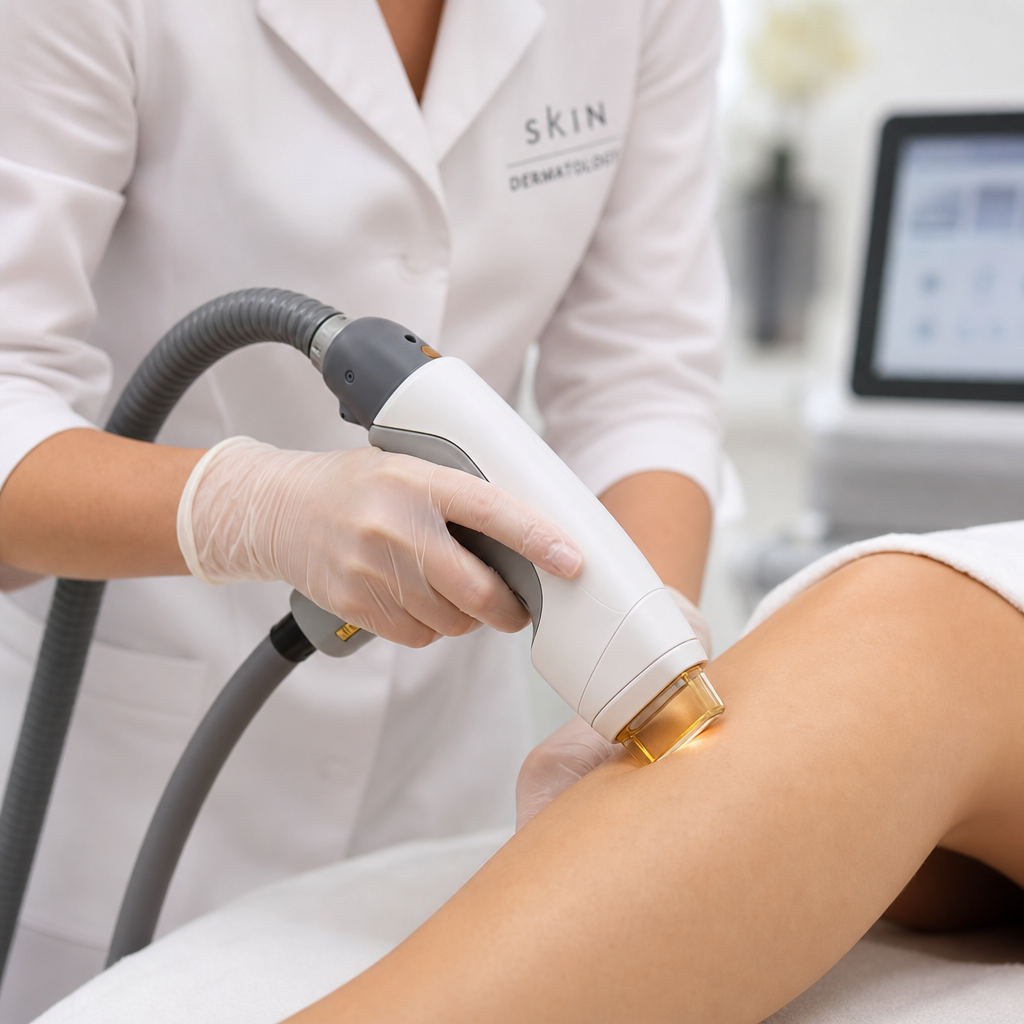
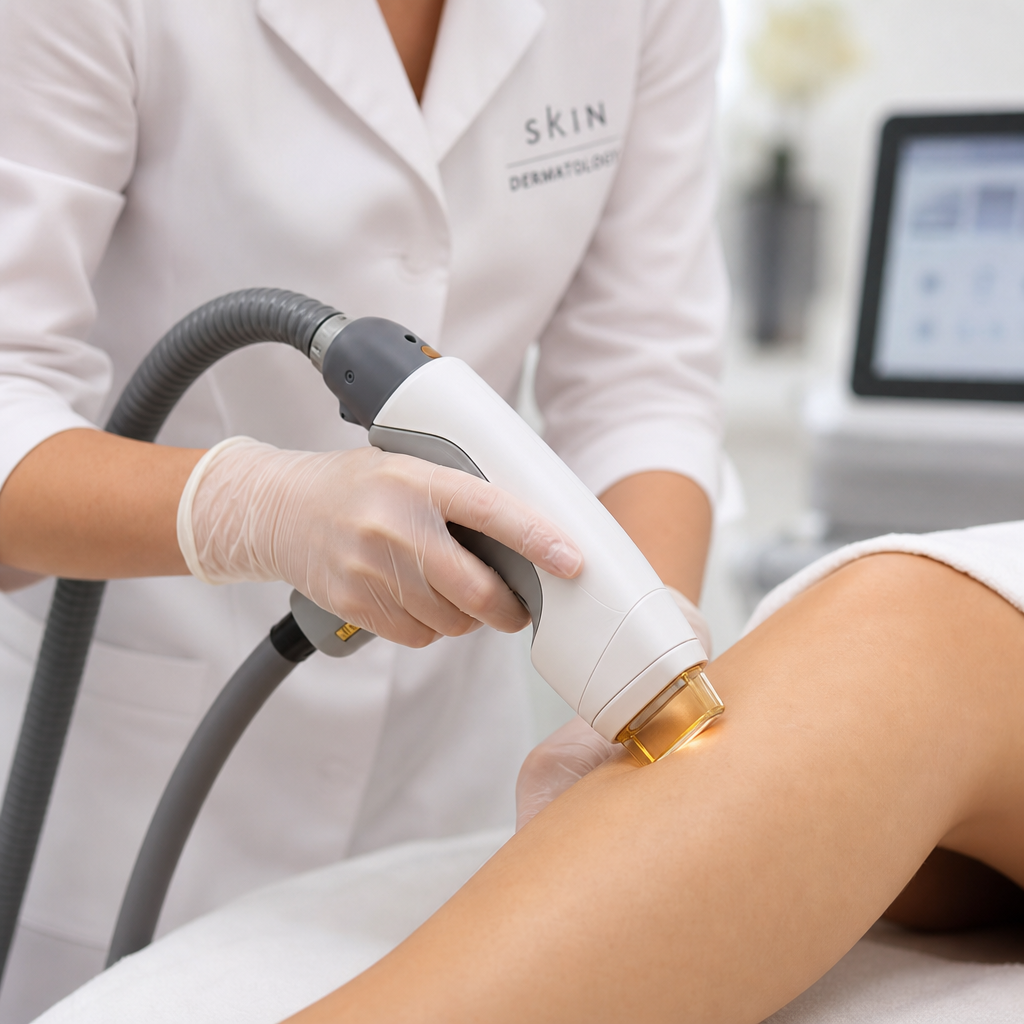
Laser hair removal works by delivering targeted energy into the hair follicle. That energy converts to heat, which damages the follicle’s ability to produce future hair. The critical constraint is that this only works on follicles that are in the anagen (active growth) phase at the time of treatment.
At any given moment, only 20 to 30 percent of your hair follicles are in anagen. The rest are in the catagen (transition) or telogen (resting) phase, where they are essentially invisible to the laser. This is why you cannot do all your sessions in a single month and be done with it. Each session catches a different wave of follicles entering their active phase.
Why Skipping Sessions Is Expensive
Clients who stretch their intervals to 10 or 12 weeks because of scheduling or cost concerns often report feeling like their results stalled. That is not coincidence. When you wait too long between sessions, some previously treated follicles can partially recover, and you spend the next session re-treating ground you already covered. Consistency is the difference between finishing in eight sessions and still being at it after twelve.
Pro tip: Book all six of your initial sessions at the time of your consultation at Skin Excellence Medispa. Clients who pre-book their series see better results because they protect their treatment intervals rather than squeezing sessions in around conflicts.
Body Area Breakdown: Expected Sessions by Treatment Zone
Not all body areas are equal. The legs and underarms tend to respond well and quickly because the hair there is typically coarser and the follicles are not driven by the same hormonal activity as facial or bikini hair. Here is a realistic breakdown that reflects what we see in practice with laser hair removal GTA clients.
- Underarms: 6 sessions on average. One of the best response areas. Most clients see significant reduction after session 4.
- Lower legs: 6 to 8 sessions. Larger surface area means more variation across the treatment zone.
- Upper lip: 8 to 10 sessions. Facial hair is hormonally influenced and regrowth is common, making this one of the highest maintenance areas.
- Chin and jawline: 8 to 12 sessions. Especially true for clients with PCOS or hormonal fluctuations. New follicles can be activated by ongoing hormonal changes.
- Bikini line or Brazilian: 6 to 10 sessions. Results are strong, but the hormonal influence in this area means some clients need annual maintenance.
- Back and shoulders (commonly requested by male clients): 6 to 8 sessions. Coarse hair responds well, though full coverage requires longer appointment times.
- Full arms: 6 to 8 sessions. Fine arm hair on clients with lower melanin contrast can require more sessions and adjusted energy settings.
Pro tip: If you are treating multiple areas, prioritize the ones most affected by hormonal activity first. Starting with the chin or bikini line before summer means you have more active sessions completed before Ontario’s sun exposure season creates scheduling complications.
Skin Tone and Hair Colour: What GTA Clients Need to Know
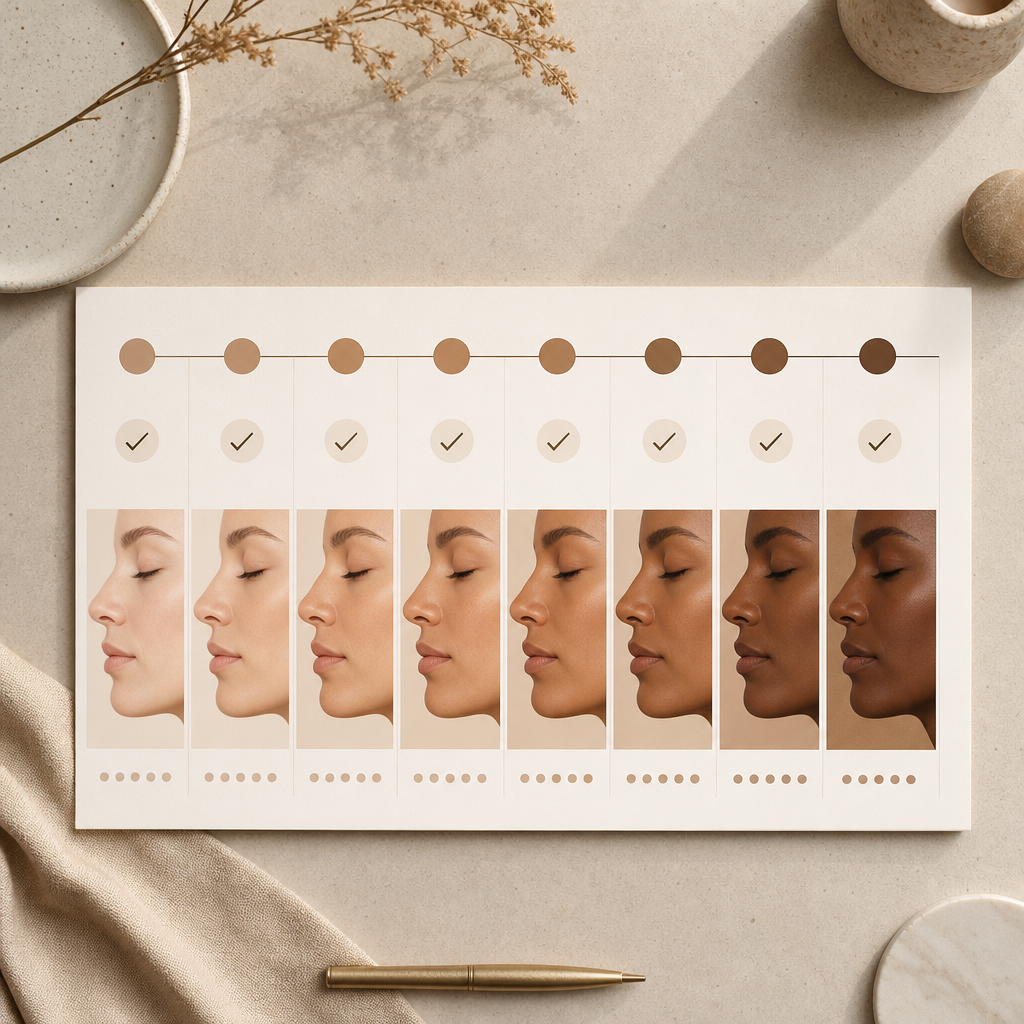
The Greater Toronto Area is one of the most ethnically diverse regions in Canada, and that diversity matters enormously in laser hair removal planning. The GTA’s client population spans the full Fitzpatrick scale, from Type I (very fair skin) to Type VI (very dark skin), and each type carries different considerations for both safety and effectiveness.
“The Fitzpatrick Skin Classification system remains the clinical standard for assessing laser parameters. Clinicians treating darker skin tones must select wavelengths that minimize epidermal absorption of energy while still reaching the dermal follicle.” – Journal of the American Academy of Dermatology
Clients with darker skin tones historically faced limitations with older laser technology because early devices were calibrated for high melanin contrast between light skin and dark hair. Modern Nd:YAG lasers at the 1064nm wavelength have largely resolved this, penetrating deeper into the dermis while bypassing surface melanin. However, the session count may still be slightly higher for clients with Type V or VI skin because energy settings must be calibrated more conservatively to prevent thermal injury.
Grey, Blonde, and Red Hair: The Honest Answer
Laser hair removal does not work on hair without melanin. White, grey, and very light blonde hair cannot be treated effectively by any current laser system because there is no pigment target for the energy to bind to. This is not a brand-specific limitation. It is a physics limitation. Clients with red hair fall into a partial response category, as pheomelanin (the pigment in red hair) absorbs laser energy less efficiently than eumelanin. Results are possible but take longer and may be incomplete.
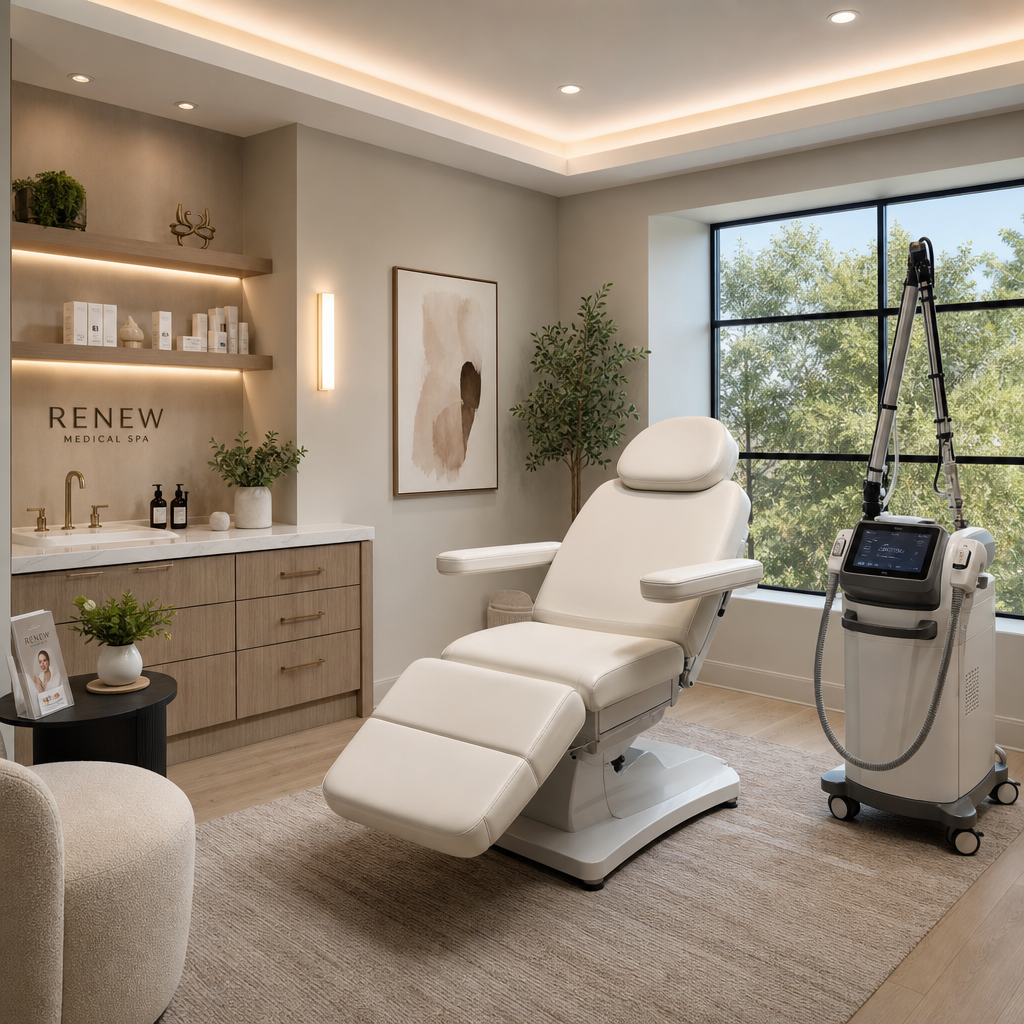
Laser Types and How Technology Affects Your Session Count
The equipment a clinic uses has a direct impact on how many sessions you need and how comfortable the process is. This is one area where clinics in the GTA vary significantly, and it is a fair question to ask before you book.
There are three primary laser technologies used in clinical settings for hair removal. Each has a specific wavelength and an ideal candidate profile.
- Alexandrite (755nm): Fast pulse delivery, highly effective on Fitzpatrick Types I to III. Best results on lighter skin with dark hair. Faster sessions over large areas due to larger spot sizes.
- Nd:YAG (1064nm): The preferred wavelength for darker skin tones. Deeper penetration, lower risk of epidermal damage on Type IV to VI skin. May require slightly more sessions than Alexandrite on ideal candidates because the energy is distributed more broadly.
- Diode (800-810nm): A middle-ground wavelength suitable for a wide range of skin tones. Common in med spas and often combined with contact cooling for comfort.
IPL Is Not Laser: A Common Source of Confusion
Intense Pulsed Light (IPL) is frequently marketed alongside laser hair removal but is a different technology. IPL emits a broad spectrum of light rather than a single focused wavelength. It can reduce hair, but it is less precise, requires more sessions, and carries a higher risk of side effects on darker skin tones. If a clinic is quoting you on IPL and calling it laser, those session numbers and outcome expectations do not apply to the same standard.
Comparing Treatment Approaches for Permanent Hair Reduction Ontario
When Ontario residents are deciding between options for permanent hair reduction Ontario, the choice often comes down to laser versus alternatives like electrolysis or IPL. Here is a direct comparison of the three for GTA clients.
| Treatment Method | Average Sessions for 80% Reduction | Best Candidate Profile |
|---|---|---|
| Nd:YAG or Alexandrite Laser | 6 to 8 sessions over 9 to 12 months | Most skin tones (Type I to VI with appropriate device selection), dark to medium hair colour |
| IPL (Intense Pulsed Light) | 8 to 12 sessions, often with lower reduction rates | Lighter skin tones only (Type I to III), dark hair. Not suitable for tanned or darker skin |
| Electrolysis | 15 to 30 or more sessions per small area over 18 to 24 months | All hair and skin colours including grey and white hair. Slower and more time-intensive per session |
The data consistently shows that medical-grade laser is the most efficient option for the majority of GTA clients who are good candidates based on hair and skin colour. Electrolysis remains the only truly universal option but is prohibitively time-consuming for large areas. At Skin Excellence Medispa, the consultation process is specifically designed to identify which device and protocol fits your profile before any sessions begin.
What Maintenance Sessions Actually Mean and When You Need Them
Once you complete your initial series, some clients are essentially done. Their hair reduction holds for years without any further treatment. Others, particularly those with hormonally active hair growth patterns, find that one or two maintenance sessions per year keep results sharp. Understanding which category you fall into affects your real cost calculation.
Hormonal events including pregnancy, menopause, discontinuing or starting hormonal birth control, and thyroid changes can all reactivate dormant follicles. This is not a failure of the original treatment. The follicles that were successfully treated remain dormant. What you are managing is the activation of follicles that were in telogen during your original course and have since been stimulated by a hormonal shift.
How to Know If You Need a Maintenance Session
A reasonable rule of thumb: if you are seeing consistent, uniform regrowth across a previously treated area, a maintenance session is warranted. If you are seeing isolated, scattered hairs, those are likely fine vellus hairs that were always there and may not require treatment at all. The key is not to reflexively book extra sessions at the first sign of any hair. Evaluate the density and distribution first with your practitioner.
For Aurora and surrounding GTA clients who completed their original series at Skin Excellence Medispa, the clinic maintains detailed records of the energy settings and parameters used, which makes any maintenance session faster and more precisely calibrated than starting from scratch at a new provider.
Frequently Asked Questions
How many laser hair removal sessions do I actually need for the upper lip?
The upper lip is one of the most hormonally active areas on the face, and clients typically need 8 to 10 sessions for meaningful reduction. If you have a condition like PCOS or notice your hair grows back quickly in this area, plan for the higher end of that range plus occasional maintenance sessions once or twice a year.
Can I do laser hair removal in the summer in Ontario?
You can, but it requires careful management. Fresh tan skin, whether from sun or self-tanner, increases the risk of burns and hyperpigmentation because the surface melanin competes with the follicle melanin for the laser’s energy. Most GTA clients who want to start in summer need to commit to strict sun avoidance on treated areas and sunscreen application daily. Many experienced clients specifically begin their series in September or October for this reason.
What happens if I skip a session or go too long between appointments?
Skipping sessions disrupts the treatment timeline and can allow partially treated follicles to recover. In practice, going beyond 8 to 10 weeks between sessions on facial areas or 8 weeks on body areas reduces the efficiency of your next appointment. You may not lose all your progress, but you will likely need additional sessions to compensate for the gap.
Is laser hair removal at a medical spa different from a dermatology office?
The key differences are the equipment used, the training of the practitioner operating it, and the clinical oversight structure. At a medical spa like Skin Excellence Medispa, treatments are performed under medical oversight with clinical-grade devices. The experience is designed to be both medically sound and client-focused. A dermatology office may offer the same technology but typically at a higher price point and with less availability for consultations.
Why do I still have hair after completing my recommended sessions?
No laser system eliminates 100 percent of hair. The clinical definition of success is 80 to 90 percent permanent reduction. Remaining hair is typically finer, lighter, and slower growing than original growth. If you are seeing substantial, coarse regrowth after a full course, it is worth reviewing whether your sessions were appropriately spaced, whether hormonal changes have occurred, and whether the energy settings used were optimal for your hair and skin profile.
Does laser hair removal hurt more on certain body areas?
Yes. Areas with thinner skin or more nerve endings, including the upper lip, bikini line, and underarms, tend to feel more intense. Areas like the legs and back are generally more comfortable. Most modern clinical lasers include integrated cooling systems that significantly reduce discomfort. Topical numbing cream can also be applied before treatment for more sensitive areas, and this should always be discussed at your consultation.
If you have been through laser hair removal yourself or are currently mid-series at a GTA clinic, share what has surprised you most about the process and how your session count has compared to the original estimate you were given.
We would love your feedback and any insights you would share with others. What perspective would you add?
References
- American Academy of Dermatology: clinical guidance on laser hair removal, candidate selection, and expected outcomes
- Statista: global and North American medical aesthetics market data, including laser treatment growth trends
- National Institutes of Health (NIH) / PubMed: peer-reviewed research on laser wavelengths, Fitzpatrick scale applications, and hair reduction efficacy
- Government of Canada Health Canada: regulatory standards for laser devices and medical aesthetic equipment used in Canadian clinics
- Forbes Health: consumer reporting on medical spa industry growth, pricing, and what patients should ask before booking aesthetic procedures