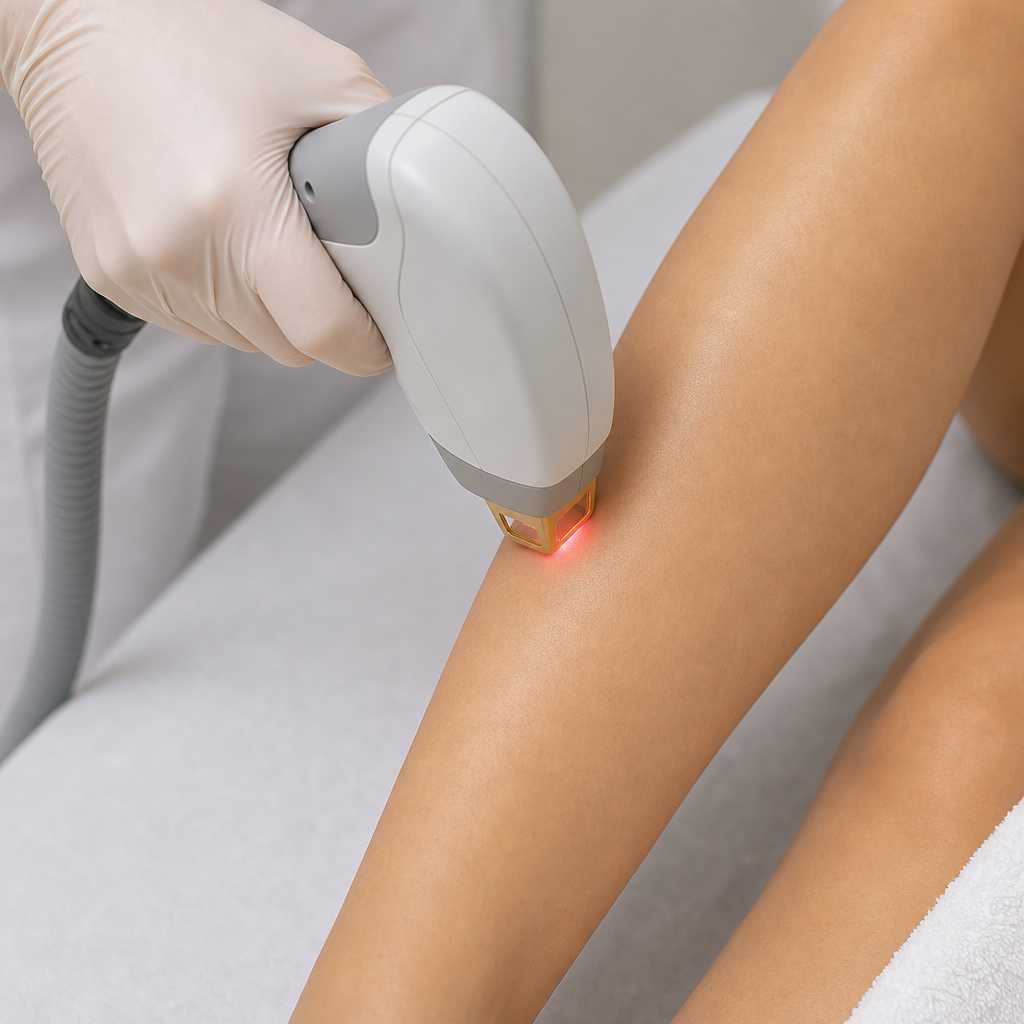
Most people walk into their first laser hair removal sessions in Aurora expecting to be done in three visits. Most leave with a more complicated picture. The reality is that the number of sessions you need depends on biology, not on what a clinic tells you to get you through the door. The data consistently shows that the average person requires between six and eight sessions to achieve significant permanent reduction, and some body areas demand more. This article gives you an honest, practitioner-informed breakdown of what to expect and why.
Table of Contents
- Quick Takeaways
- Why Multiple Sessions Are Necessary
- Session Count by Body Area
- Factors That Affect Your Timeline
- Realistic Timeline: From First Session to Final Results
- Laser Technology Comparison
- What Happens Between Sessions
- Skin and Hair Type Considerations for GTA Clients
- Frequently Asked Questions
- References
Quick Takeaways
| Key Insight | Explanation |
|---|---|
| Most people need 6 to 8 sessions | This range applies to the majority of clients treating common areas like underarms, legs, and bikini line. Some hormonal areas like the chin may require 8 to 12 sessions. |
| Sessions must be spaced 4 to 8 weeks apart | Hair grows in cycles. Laser only works on follicles in the active growth phase (anagen). Spacing sessions correctly ensures you target more follicles over time. |
| Skin tone and hair colour affect results directly | The ideal candidate has dark hair and lighter skin. Modern lasers like Nd:YAG have expanded safe treatment to all Fitzpatrick skin types, including the diverse GTA population. |
| Hormonal conditions extend the timeline | Conditions like PCOS cause ongoing hormonal stimulation of hair follicles. Clients with PCOS often need maintenance sessions beyond the initial package. |
| The face and neck need more sessions than legs | Facial hair has a shorter and more irregular growth cycle, meaning fewer follicles are in the anagen phase at any given time. Expect 8 to 12 sessions for upper lip and chin. |
| Results plateau around 80 to 90 percent reduction | Permanent complete removal is not achievable in most clients. Clinics promising 100 percent permanent results are overstating what the technology delivers. |
| Annual touch-up sessions are normal | Even after completing a full course, hormonal changes, medications, or aging can stimulate dormant follicles. One or two touch-up sessions per year maintain results. |
Why Multiple Sessions Are Necessary
The single most important thing to understand about laser hair removal is that it only works on hair follicles in the anagen (active growth) phase. At any given moment, only about 20 to 30 percent of your hair follicles are in that phase. The rest are either resting (telogen) or transitioning (catagen), and laser energy cannot permanently disable them in those states.
This is not a limitation of any particular clinic or laser system. It is basic follicular biology. The only way to catch more follicles in the anagen phase is to return for treatment multiple times, spaced out across several weeks. Attempting to rush this process by shortening the interval between sessions does not improve outcomes. It wastes treatment energy on follicles that are not ready.
In practice, this means the number of sessions is not arbitrary. A properly run course of treatment at a clinic like Skin Excellence Medispa in Aurora follows the biology, not a promotional package count. If someone tells you six sessions is the right number before they have even assessed your hair density, skin type, and treatment area, they are guessing.


“>
Session Count by Body Area
Different body areas have different hair cycle lengths and densities, which directly determines how many sessions you realistically need. The following breakdown reflects what practitioners consistently observe across client populations.
Underarms and Bikini Line
These are typically the fastest-responding areas. Most clients see 80 to 90 percent reduction in six to eight sessions. Hair in these zones tends to be coarser and darker, which responds strongly to laser energy, and the cycles are relatively predictable.
Legs and Arms
Legs respond well but cover a large surface area, which means treatment time per session is longer. Expect six to eight sessions for full legs. Fine, light-coloured hair on the forearms may respond more slowly or incompletely because lighter pigment absorbs less laser energy.
Upper Lip and Chin
Facial hair is notoriously unpredictable. The growth cycle is shorter and more irregular, and hormonal influence is significant. The realistic expectation for the upper lip and chin is eight to twelve sessions, with ongoing touch-ups for clients with hormonal drivers. A common mistake is for clients to stop after six sessions on the face and be disappointed with patchy results.
Back and Chest
These areas are treatable for all genders and typically respond in six to nine sessions. Hair follicles on the back can be deep, requiring appropriate laser settings to reach them effectively. Fitzpatrick skin type is particularly important here because the back tends to tan easily.
Neck and Jawline
Eight to ten sessions is a realistic target for the neck and jawline, especially in clients who experience ingrown hairs or pseudofolliculitis barbae (razor bumps). The skin in this area is sensitive and the hair cycle is influenced by androgen levels.
Factors That Affect Your Timeline
Two clients can walk into Skin Excellence Medispa on the same day, both wanting underarm treatment, and have completely different timelines. That is not inconsistency. That is individual biology.
Hair Colour and Thickness
Laser works by targeting melanin (pigment) in the hair shaft. Dark, coarse hair has high melanin concentration and responds fastest. Blonde, red, grey, and white hair has little to no melanin and responds poorly or not at all. This is a hard physiological constraint that no laser technology has fully overcome as of 2024.
Fitzpatrick Skin Type
The Fitzpatrick scale classifies skin tone from Type I (very fair, always burns) to Type VI (very dark, never burns). Historically, lasers worked best on Type I to III. Modern Nd:YAG and diode lasers have made safe and effective treatment possible across all six types. The Aurora and GTA population is notably diverse, and this matters enormously. At a well-equipped clinic, Fitzpatrick Type IV, V, and VI clients can achieve excellent results, but the protocols differ and must be customized to reduce the risk of hyperpigmentation.
Hormonal Factors and Medical History
Polycystic ovary syndrome (PCOS), thyroid disorders, pregnancy, and certain medications (particularly those that stimulate androgen production) actively promote new hair follicle activity. Clients with these conditions are not bad candidates. They simply need a realistic conversation upfront about needing more sessions and periodic maintenance to manage newly activated follicles.
Pro tip: Before your consultation at Skin Excellence Medispa, make a list of any medications you currently take, including oral contraceptives, topical hormones, and retinoids. Some of these affect both your treatment timeline and your eligibility for treatment on certain days.
Previous Hair Removal Methods
Waxing and threading remove the hair shaft from the follicle, which temporarily eliminates the target that laser needs to find. Clients who wax regularly before starting laser often need more sessions in the early phase because the treatment energy cannot lock onto a visible shaft. Shaving, by contrast, leaves the follicle intact and is the correct preparation method before a laser session.
Realistic Timeline: From First Session to Final Results
A standard treatment course for a straightforward area like underarms looks like this for most clients at a well-run Aurora clinic. Sessions are spaced every four to six weeks for the face and six to eight weeks for the body, following the natural hair cycle length for that area.
- Weeks 1 to 6: First session. Some clients notice immediate thinning within two to three weeks as treated hairs shed. Do not confuse this shedding phase for growth. It is the follicle expelling the treated shaft.
- Weeks 6 to 12: Second and third sessions. Hair regrowth noticeably slower and finer. Patchiness is normal at this stage.
- Months 4 to 7: Sessions four and five. Most clients see 50 to 70 percent reduction by this point. This is when results become clearly visible and confidence in the process increases.
- Months 8 to 12: Sessions six through eight. For most body areas, this is where the plateau of 80 to 90 percent reduction is reached. Remaining hair is typically finer and lighter.
- Year 2 onward: Maintenance sessions one to two times per year. These address newly stimulated follicles from hormonal changes or aging.
The total calendar time from first session to completed course is approximately nine to fourteen months for body areas and twelve to eighteen months for hormonal facial hair. Anyone promising you completion in three months is either treating a very small area or setting unrealistic expectations.
“Laser hair removal achieves permanent reduction, not permanent removal. Understanding this distinction at the start of treatment sets appropriate expectations and leads to far greater client satisfaction.” – American Academy of Dermatology guidance on laser hair removal outcomes
Laser Technology Comparison
The laser system used at your clinic affects both the number of sessions you need and your safety profile. Not all clinics in the GTA use the same technology, and this comparison matters when you are deciding where to go for treatment.

“>
| Laser Type | Best For | Limitations |
|---|---|---|
| Alexandrite (755 nm) | Fitzpatrick Types I to III. Fast treatment for large areas. Excellent efficacy on dark, coarse hair in fair to medium skin. | Higher risk of hyperpigmentation on darker skin tones. Not recommended for Fitzpatrick Types V and VI. |
| Diode (800 to 810 nm) | Broad range from Fitzpatrick Types I to V. Good penetration depth for coarse hair. Widely used in medispas across Aurora and the GTA. | Less effective on very fine or light-coloured hair. Requires proper cooling system to maintain client comfort. |
| Nd:YAG (1064 nm) | Fitzpatrick Types IV to VI. Safest option for darker skin tones. Minimal melanin absorption in the epidermis reduces burn risk. | Slightly less effective per session than Alexandrite on fair skin. May require more sessions for equivalent results. |
A clinic that offers only one laser type is limited in who it can treat safely. The GTA’s diverse population means a clinic serving Aurora clients needs the flexibility to use the appropriate technology for each skin type. This is a practical question worth asking at your consultation.
Pro tip: Ask your clinic which specific laser system they use and confirm it is appropriate for your Fitzpatrick skin type before booking. A reputable clinic like Skin Excellence Medispa will conduct a full skin assessment before recommending a treatment plan.
What Happens Between Sessions
What you do between sessions has a direct impact on your results and your safety. This is not incidental advice. It is part of the treatment protocol.
Sun Exposure and Tanning
Tanned skin, whether from the sun or a tanning bed, contains more epidermal melanin. This increases the risk that the laser will target the skin rather than the follicle, causing burns or hyperpigmentation. The standard protocol is to avoid sun exposure for four weeks before and after each session. For GTA clients who spend summers at the lake or cottage, this requires planning your treatment schedule carefully around outdoor activities.
Shaving Versus Other Hair Removal Methods
Shaving is the only acceptable hair removal method between sessions. It removes the hair above the skin while leaving the follicle and root intact, so the laser can target it at the next visit. Waxing, tweezing, and threading pull the follicle out and must be avoided for the entire duration of your treatment course.
Skincare Products to Avoid
Retinoids, AHA and BHA exfoliants, and benzoyl peroxide increase skin sensitivity and can cause adverse reactions when combined with laser treatment. Discontinue these products for at least five to seven days before each session. Your practitioner at Skin Excellence Medispa will provide a specific pre-treatment protocol based on your skincare routine.
Skin and Hair Type Considerations for GTA Clients
The Greater Toronto Area has one of the most diverse populations in North America. This is directly relevant to laser hair removal because the standard clinic model of offering a single protocol for all clients does not work here.
South Asian, East Asian, Middle Eastern, and Black clients represent a significant portion of the GTA population. Many have Fitzpatrick Types IV through VI, and a substantial number have the combination of dark hair and darker skin that historically required more careful laser selection. Clinics that have not updated their technology or training to serve this population safely should not be your first choice.
The data consistently shows that Nd:YAG lasers at 1064 nm deliver the best safety profile for Fitzpatrick Types IV to VI. They have lower melanin absorption at the epidermal level, which reduces the risk of post-inflammatory hyperpigmentation. This does not mean the results are inferior. It means the protocol is appropriately calibrated.
Clients of East Asian heritage often have finer body hair, which may require additional sessions for equivalent reduction compared to clients with coarser hair. This is biology, not a deficiency in the treatment. Setting this expectation honestly upfront leads to far better outcomes and client satisfaction than discovering it mid-course.
Aurora sits in York Region, which has one of the most culturally diverse demographics in Ontario. A clinic serving this community needs practitioners who are experienced with the full spectrum of skin types, not just the patients who match a narrow ideal candidate profile.
Frequently Asked Questions
How many laser hair removal sessions do I need for the bikini area?
Most clients need six to eight sessions for the bikini line and standard bikini area. Brazilian treatments covering more surface area may require eight sessions. Hormonal factors like PCOS can extend this to ten or more, with periodic maintenance afterward. Sessions are typically spaced six to eight weeks apart, meaning the full course takes approximately nine to twelve months.
Can I get laser hair removal done in the summer in Ontario?
Yes, but with significant caveats. Sun-exposed areas like the legs, arms, and face require that you avoid tanning for four weeks before each session. For GTA clients who are active outdoors in summer, this means treating only areas covered by clothing, or planning your schedule carefully around sun exposure. Underarms, bikini, and Brazilian treatments are generally fine year-round because they are not sun-exposed.
Why am I seeing hair growth after my third session? Did it not work?
Seeing hair regrowth between sessions is completely normal and does not mean the treatment is failing. Each session only disables the follicles that were in the anagen phase that day. The follicles that were in resting phases are unaffected and will cycle back into growth. The reduction you are seeing accumulates progressively across all sessions. By session four and five, most clients notice a significant overall decrease in density and coarseness.
Is there a difference in how many sessions I need compared to a med spa versus a dermatology clinic?
The number of sessions required is determined by biology, not the type of facility. What differs is the quality of the laser system used, the training level of the practitioner, and the accuracy of the assessment. A medical aesthetic clinic like Skin Excellence Medispa with properly trained practitioners and clinical-grade equipment can deliver equivalent or better results compared to a dermatology clinic, and often with more personalized care and scheduling flexibility. The key question to ask any facility is which laser they use, what training their operators have, and whether they conduct a proper Fitzpatrick skin assessment before starting treatment.
How many sessions do I need for laser hair removal on dark skin?
Clients with Fitzpatrick Type IV, V, or VI skin can absolutely achieve excellent results from laser hair removal. The treatment requires an Nd:YAG 1064 nm laser or a properly calibrated diode system. The number of sessions is typically comparable to clients with lighter skin, ranging from six to ten depending on area and hair characteristics. The risk of adverse effects is higher only if the wrong laser or incorrect settings are used. This makes choosing an experienced clinic with appropriate technology especially important for clients with darker skin tones.
What is the maintenance schedule after completing a full course of laser hair removal?
After completing your initial course of six to eight sessions, most clients need one to two maintenance sessions per year. This addresses dormant follicles that become active due to hormonal changes, aging, pregnancy, or medication changes. Skipping maintenance does not mean results disappear completely, but areas with hormonal influence (face, chin, bikini) tend to require more consistent upkeep than areas like legs or underarms.
If you have been through laser hair removal treatment yourself, at Skin Excellence Medispa or elsewhere in Aurora or the GTA, share what your actual session count looked like compared to what you expected. Your experience helps other readers plan realistically.
We would love your feedback and any insights you would share with others. What perspective would you add?
References
- American Academy of Dermatology clinical guidance on laser hair removal safety, candidacy, and expected outcomes
- National Institutes of Health research database covering laser and light-based hair removal clinical studies and Fitzpatrick skin type protocols
- Statista market data on aesthetic treatment trends, laser hair removal industry growth, and consumer demand statistics in North America
- Forbes Health reporting on medical aesthetic treatment costs, safety standards, and what consumers should ask before choosing a provider
- Health Canada regulatory information on laser devices, medical aesthetic equipment approvals, and safety standards for laser treatment facilities in Canada