
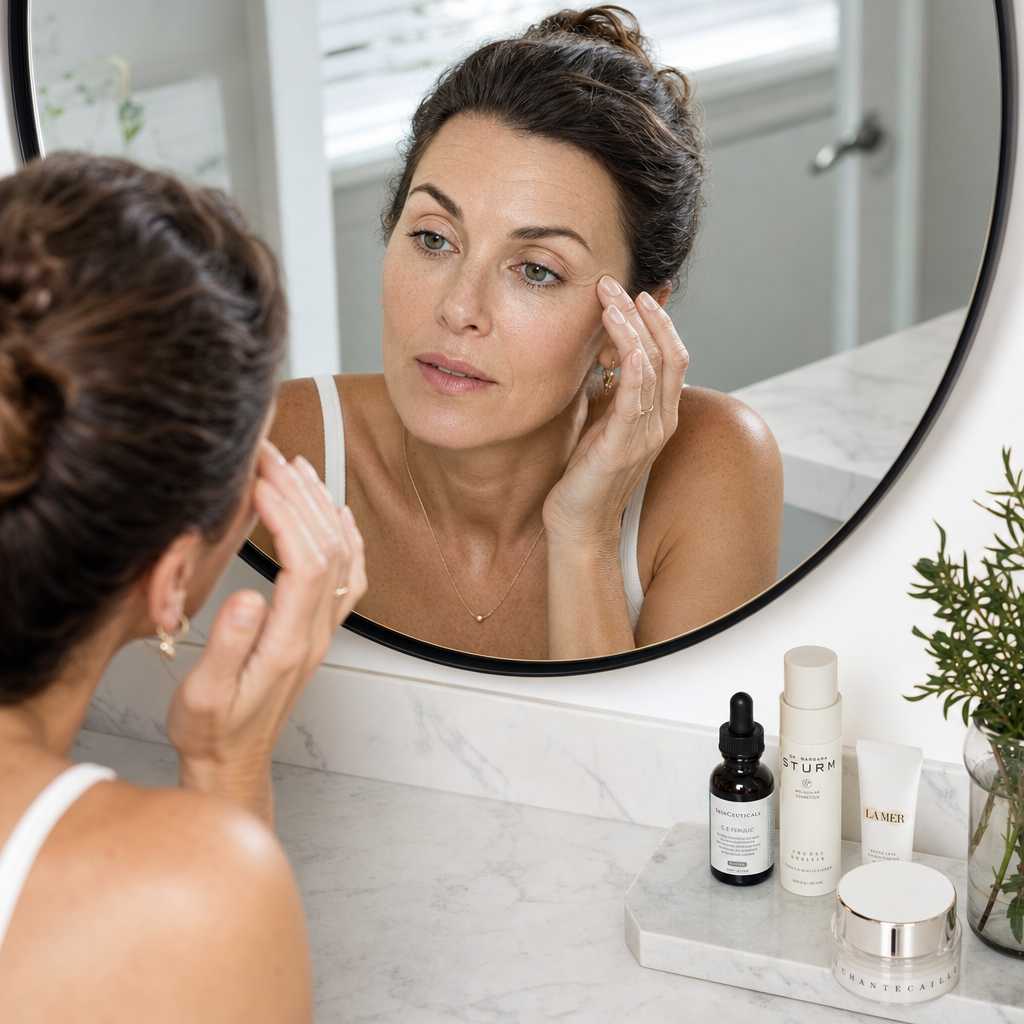
Most people approaching their 40s are still using the same skincare routine they pieced together in their 20s. That is a problem. After 35, collagen production drops roughly 1% per year according to research published by the National Institutes of Health, and cell turnover slows significantly. The result is dullness, fine lines, and uneven texture that no basic moisturizer can address. If you are looking for a real anti-aging skincare routine Aurora residents can actually follow, this guide cuts through the noise and tells you exactly what to add, what to stop doing, and when to call in professional support.
Table of Contents
- Quick Takeaways
- What Actually Changes in Your Skin After 35
- Ingredients to Add to Your Routine
- Skincare Habits to Stop Immediately
- Your Routine Decade by Decade: 35s, 40s, 50s
- Comparing Retinol, Peptides, and Vitamin C for Mature Skin
- When Your Home Routine Is Not Enough
- Professional Treatments Worth Considering in the GTA
- Frequently Asked Questions
- References
Quick Takeaways
| Key Insight | Explanation |
|---|---|
| Retinol is non-negotiable after 35 | Topical retinoids are the most clinically validated ingredient for stimulating collagen and accelerating cell turnover in mature skin. |
| SPF is still your most powerful anti-aging tool | UV exposure accounts for up to 90% of visible skin aging according to dermatology research. Daily broad-spectrum SPF 30 or higher is the baseline, not optional. |
| Stop over-exfoliating | Scrubbing daily or layering multiple acids damages the skin barrier, causing inflammation that accelerates aging. Limit exfoliation to 2-3 times weekly maximum. |
| Skincare for 40s GTA residents should include hydration layering | Hyaluronic acid serum applied to damp skin, followed by a peptide moisturizer, delivers significantly better hydration retention than one product alone. |
| Neck and hands age faster than your face | These areas have fewer sebaceous glands and thinner skin. Extend every facial product to your neck and the backs of your hands. |
| Medical-grade products outperform drugstore equivalents | Prescription-strength retinoids and medical-grade vitamin C serums contain higher concentrations of active ingredients with better delivery systems. |
| Professional treatments address what topicals cannot | Micro-needling, PRP therapy, and Sculptra stimulate collagen at a cellular level that no serum can replicate on its own. |
What Actually Changes in Your Skin After 35
The changes that happen between 35 and 55 are not subtle. Estrogen levels begin to shift in your late 30s and drop significantly through perimenopause, and estrogen directly supports collagen synthesis, skin thickness, and moisture retention. By 55, many women have lost roughly 30% of their dermal collagen compared to their peak levels.
For men, the timeline is different but the outcome is similar. Testosterone levels decline more gradually, which is why men often appear to age more slowly early on, then seem to catch up quickly in their 50s. The skin becomes thinner, loses elasticity, and the fat pads under the skin redistribute or diminish, causing hollowing around the cheeks and temples.
Beyond hormones, there is the cumulative damage factor. Years of sun exposure, pollution in the GTA, stress, and inconsistent skincare habits all compound. A 42-year-old’s skin is not just a slightly older version of their 22-year-old skin. It is fundamentally different tissue requiring a fundamentally different approach.


“>
Ingredients to Add to Your Routine
The skincare ingredient market is overwhelming, but the science narrows the list considerably for the 35-55 age range. These are not trendy additions. These are ingredients with consistent clinical evidence behind them.
Retinoids: Start Low, Build Slow
Retinoids (vitamin A derivatives) remain the gold standard for anti-aging. They increase cell turnover, stimulate collagen production, and reduce hyperpigmentation. Start with an over-the-counter retinol at 0.25% applied every third night, then gradually increase frequency over 8-12 weeks. If your skin tolerates it, move to 0.5% or consult a practitioner about prescription tretinoin.
A common mistake is applying retinol directly after washing your face when skin is still damp. This increases absorption and the likelihood of irritation. Wait 20-30 minutes after cleansing before applying retinol, especially when you are first starting out.
Pro tip: If you experience dryness or flaking from retinol, try the sandwich method: apply a thin layer of moisturizer, then retinol, then another thin layer of moisturizer. This buffers absorption without eliminating efficacy.
Peptides: The Underrated Workhorse
Peptides are short chains of amino acids that signal the skin to produce more collagen and elastin. Unlike retinol, they cause no irritation and can be used morning and evening. Look for products containing Matrixyl 3000, Argireline, or copper peptides. They work best as part of a moisturizer or serum applied after water-based hydrators.
Vitamin C: Morning Antioxidant Defense
L-ascorbic acid (the active form of vitamin C) neutralizes free radical damage from UV exposure and pollution, and it also inhibits melanin production to address brown spots. Use a 15-20% concentration vitamin C serum in the morning before SPF. Avoid products that have turned orange or brown, as oxidized vitamin C is ineffective.
Niacinamide and Hyaluronic Acid
Niacinamide (vitamin B3) at 5-10% strengthens the skin barrier, reduces redness, and visibly minimizes pore appearance over time. Hyaluronic acid draws moisture into the skin and is most effective when applied to slightly damp skin. These two ingredients form the hydration backbone of any solid skincare for 40s GTA routine.
Skincare Habits to Stop Immediately
There are things actively working against your skin that no amount of good product can compensate for. These are not minor tweaks. These are habits that are measurably accelerating the aging process.
Stop Using Fragrance-Heavy Products
Fragrance is one of the most common skin irritants. In mature skin with a compromised barrier, fragrance causes chronic low-grade inflammation. Inflammation breaks down collagen. This is not theoretical. Dermatologists have documented this consistently for years. Switch to fragrance-free formulas across your entire routine.
Stop Skipping SPF on Cloudy Days
UVA rays, the ones responsible for aging, penetrate clouds and glass. If you are driving to work in the GTA, your driver-side skin is receiving consistent UVA exposure year-round. The data is unambiguous: daily SPF use is the single most impactful preventative habit available without a prescription.
Stop Over-Cleansing
Washing your face more than twice a day strips the natural lipid barrier. After 40, sebum production already decreases, so over-cleansing compounds the problem dramatically. Use a gentle, pH-balanced cleanser in the morning and evening only.
Stop Pulling and Tugging at the Eye Area
The skin around the eyes is approximately 0.5mm thick, compared to roughly 2mm elsewhere on the face. Rubbing your eyes, aggressive makeup removal, and stretching the skin while applying products all contribute to premature crow’s feet and loss of elasticity. Use a ring finger with the lightest possible pressure when applying eye creams or serums.
Pro tip: Replace your makeup wipes with a gentle micellar water and a soft cotton pad. Wipes require friction and often contain preservatives that irritate mature skin. The switch takes ten seconds and your skin will respond within weeks.

“>
Your Routine Decade by Decade: 35s, 40s, 50s
A 36-year-old and a 54-year-old have meaningfully different skin needs. The underlying principles are the same, but the emphasis and the concentration of actives should shift with each decade.
Ages 35-39: Establish Your Foundation
This is the decade to introduce retinol, get serious about SPF, and stop relying on your metabolism to compensate for poor habits. Your skin can still recover quickly from neglect, but the window is closing. Start a vitamin C serum in the morning and a low-dose retinol 3 nights per week. Add a peptide moisturizer and ensure you are wearing SPF 30 minimum daily.
The goal in this decade is prevention. You are putting infrastructure in place so that the changes in your 40s hit a better-prepared surface.
Ages 40-49: Address What Is Already There
By 40, most people have visible concerns: fine lines around the eyes and mouth, early hyperpigmentation, loss of firmness along the jawline. This is the decade where home routines alone start to fall short for many people. Your routine should now include a dedicated eye cream with peptides and retinol, niacinamide, and ideally a prescription-strength retinoid if you can tolerate it.
Many of our clients who have been referred to Skin Excellence Medispa in Aurora come to us in their mid-40s when they notice that their skincare routine is no longer keeping pace with their skin’s changes. That observation is accurate and not a failure of the routine. It is simply the right moment to consider professional support alongside home care.
Ages 50-55: Prioritize Barrier Repair and Volume
Post-menopausal skin loses moisture rapidly and can become sensitized to products it previously tolerated. Scale back acids and introduce ceramide-rich moisturizers to rebuild the barrier. Continue retinoids at the frequency your skin tolerates. Volume loss becomes the dominant concern for many women at this stage, which is where topical products genuinely cannot deliver results without professional intervention.
Comparing Retinol, Peptides, and Vitamin C for Mature Skin
These three ingredients appear in nearly every serious anti-aging conversation. Understanding how they differ helps you stack them intelligently rather than randomly.
| Ingredient | Primary Benefit for Skin 35-55 | Key Limitation |
|---|---|---|
| Retinol | Increases cell turnover, stimulates collagen, reduces fine lines and hyperpigmentation over 12-24 weeks of consistent use | Causes irritation and sun sensitivity, especially at the start. Must be used at night. Not safe during pregnancy. |
| Peptides | Signal fibroblasts to produce collagen and elastin, improve firmness over time, no irritation risk, compatible with all skin types | Results are more subtle and slower compared to retinoids. Not a replacement for retinol in a complete anti-aging routine. |
| Vitamin C (L-ascorbic acid) | Antioxidant protection against UV and pollution damage, fades existing brown spots, boosts SPF efficacy when layered underneath | Unstable molecule that oxidizes quickly, particularly in lower-quality formulations. Requires careful storage and regular replacement. |
When Your Home Routine Is Not Enough
Home skincare works at the surface and just below it. Topical ingredients cannot reach the dermis where collagen lives, cannot restore lost volume, and cannot address deep dynamic wrinkles. These are structural issues that require structural solutions.
The data consistently shows that people who combine a solid home routine with periodic professional treatments get significantly better outcomes than either approach alone. This is not a marketing statement. It is the clinical reality that aesthetic practitioners see every day.
“The most effective anti-aging protocols combine evidence-based home care with professional treatments that target the dermis and subdermal structures. Neither alone is as effective as both together.” – American Academy of Dermatology, patient education guidance on combination skin care approaches.
If you are in your 40s or early 50s and your skin is not responding to your routine the way it did two years ago, that is not a product problem. It is a biology problem, and professional treatments are designed to address it at the right depth.
Professional Treatments Worth Considering in the GTA
For residents in Aurora and the broader Greater Toronto Area, there are several evidence-backed in-clinic treatments that complement a solid home routine and address what topicals genuinely cannot.
Micro-Needling and PRP/PRF Therapy
Micro-needling creates controlled micro-injuries in the skin that trigger the body’s natural collagen repair response. When combined with PRP (platelet-rich plasma) or PRF (platelet-rich fibrin) drawn from your own blood, the treatment introduces concentrated growth factors that significantly amplify collagen stimulation. The results build over 3-6 months and are particularly effective for texture, scarring, and early laxity.
At Skin Excellence Medispa, micro-needling with PRP/PRF is one of the most requested treatments from clients in their 40s and 50s who want meaningful skin rejuvenation without downtime that disrupts their schedules.
Sculptra for Volume Restoration
Sculptra is a poly-L-lactic acid injectable that works by stimulating your own collagen production over time. Unlike hyaluronic acid fillers that add immediate volume, Sculptra works gradually over 3-6 months and results can last two or more years. It addresses the hollowing and laxity that becomes prominent in the mid-face during the 40s and 50s. It is one of the most underutilized but clinically impressive treatments for this age group.
Medical Facials and Skin Rejuvenation
Medical-grade facials go well beyond what a standard spa facial delivers. They incorporate prescription-strength exfoliants, customized masks, and professional-grade serums applied with techniques that maximize penetration. As part of a quarterly skin maintenance plan, they keep the surface clear, address congestion, and maintain the progress made by home actives and other treatments.
The skin rejuvenation services at Skin Excellence Medispa in Aurora are built to complement your at-home routine rather than replace it. The practitioners work with you to identify which professional treatments address your specific concerns at your specific life stage.
Frequently Asked Questions
What is the most important single change someone in their 40s can make to their skincare routine?
Start using retinol consistently if you are not already. Nothing else in the over-the-counter skincare market has the same volume of clinical evidence behind it for collagen stimulation and cell turnover improvement. Begin with a low concentration 2-3 nights per week, and build from there. The results are cumulative and they compound over months of consistent use.
Is it too late to start a proper anti-aging skincare routine at 50?
No, it is not too late. Skin maintains its capacity to respond to actives throughout your 50s and beyond. The response may be slower and the focus shifts from prevention to repair and maintenance, but consistent use of retinoids, SPF, peptides, and professional treatments still produces measurable, visible improvement. Starting at 50 is infinitely better than not starting.
How often should someone over 40 get professional skin treatments?
In practice, a quarterly medical facial combined with one or two micro-needling sessions per year is a strong baseline for most people in the 40-55 age range. Treatments like Sculptra may be done in a series of three sessions spaced 4-6 weeks apart, then maintained annually. Your exact schedule depends on your specific concerns and budget, and a consultation with an experienced practitioner is the right place to start.
Can I use vitamin C and retinol in the same routine?
Yes, but not at the same time. Use vitamin C in the morning under SPF, and retinol at night. Using them simultaneously increases the risk of irritation and can destabilize the vitamin C molecule. Keeping them in separate parts of your routine lets each ingredient perform at its best without interference.
What skin rejuvenation treatments are available near Aurora, Ontario?
Skin Excellence Medispa in Aurora, Ontario offers a full range of professional skin rejuvenation treatments including micro-needling, PRP and PRF therapy, Sculptra, Belkyra, Botox, dermal fillers, laser hair removal, and medical facials. For GTA residents seeking personalized anti-aging care, this is a strong local option with experienced practitioners who specialize in mature skin concerns.
What ingredients should I avoid layering together in my routine?
Avoid using vitamin C with niacinamide in the same step, as some formulations can interact and reduce efficacy. Do not layer retinol with AHA or BHA exfoliants on the same night as this combination significantly increases irritation risk. And never use benzoyl peroxide on the same day as retinol as it oxidizes and deactivates the retinoid before it can work.
If this article resonated with you or if you have questions about building the right anti-aging routine for your specific skin at your age, share your experience or ask your question in the comments. We read every one.
We would love your feedback and any insights you would share with others. What perspective would you add?
References
- National Institutes of Health research database covering clinical studies on collagen loss, retinoid efficacy, and UV-induced skin aging
- American Academy of Dermatology patient and practitioner guidance on anti-aging skincare ingredients and treatment protocols
- Harvard Health Publishing evidence-based consumer guides on skin aging, hormonal changes, and topical skincare efficacy
- Statista market data on skincare industry trends and consumer behavior among adults ages 35 to 55
- Forbes coverage of medical aesthetics industry growth and professional skin treatment adoption trends in North America