
Written by Skin Excellence Medispa Editorial Team.
Clinic review by Zahra Erfan, Owner of Skin Excellence Medispa.
Winter skin prep in Aurora starts earlier than most people expect. By the time the furnace is running and the air turns dry, your skin has already been through summer sun and is heading into a season that strips moisture and exposes every uneven patch. A treatment booked in January is a repair job, not prep. Fall is the window where medspa treatments do the most good, because you have time for recovery, follow-up sessions, and any downtime before holiday events. This guide covers which treatments to book before the cold hits, why timing matters for each one, and what to do at home so the results last through the coldest months.
Table of Contents
- Quick Takeaways
- Why October Is the Right Time to Book
- Hydration and Medical Facials for the Dry Months
- Microneedling and PRP/PRF Timing
- Laser Hair Removal Before Winter
- Sun Protection Still Matters in Winter
- Comparing Winter Prep Treatments
- Building a Winter Home Care Routine
- Frequently Asked Questions
- References
Quick Takeaways
| Key Insight | Explanation |
|---|---|
| Book microneedling or PRP/PRF in early fall | These treatments need recovery time and often a follow-up session, so finishing by mid-October leaves room before the dry, windy weeks. |
| Leave at least two weeks before a major event for injectables | Botox and dermal fillers need time to settle, so schedule them well ahead of holiday photos, parties, or travel. |
| Start barrier care in October, not after flaking begins | Dry air strips moisture quickly, so a richer moisturizer and a hydrating serum should be in your routine before the heating season. |
| Book laser hair removal during the lower-sun months | Fewer weeks of sun exposure after a session means less risk of pigment changes in the treated area. |
| Keep sunscreen on through the winter | Winter UV is weaker, but snow reflects light back onto the skin, so daily protection still matters. |
| Pause harsh exfoliants before any device or needling session | Stripping the surface right before a procedure can increase irritation and make your provider’s assessment harder. |
Why October Is the Right Time to Book
In practice, the skin that looks worst in January usually carried a summer problem into winter. Sun-related pigment, uneven texture, and a dull surface do not reset on their own when indoor heating starts pulling moisture out of the air.
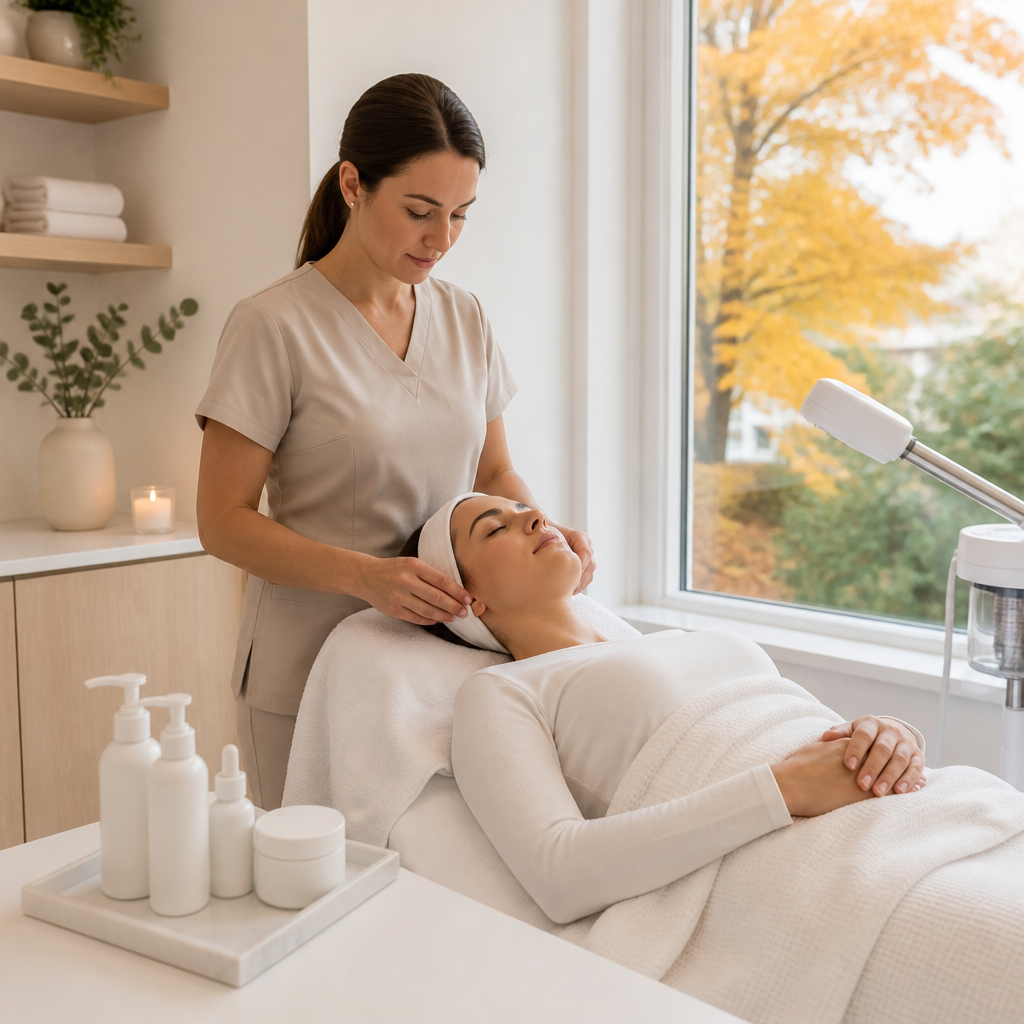
Fall gives you a buffer that January never will. Most treatments need a little room for swelling, redness, or several days of downtime, and a clear calendar in October means you are not trying to fit a recovery window between holiday parties.
Why fall gives you a recovery buffer
Recovery is the part of prep that people skip. A session that looks minor on the calendar can still leave skin pink, tender, or flaky for a few days, and that is much easier to manage when the weather is mild and you can keep your routine simple.
Booking early also leaves room for a follow-up. Some treatments are planned as a series, so the first session in October gives you a realistic chance to finish the course before the coldest weeks arrive.
Scheduling around the holiday calendar
Count backward from your first major event, not from the day you feel ready. If you have a wedding, family photos, or a work event in December, the treatment should be finished at least two weeks before that date, with more time for anything that needs a follow-up.
Pro tip: Write down every date you already know about, including trips and photo sessions, before you call to book. A provider can only plan a realistic schedule when they know your real deadlines.
Hydration and Medical Facials for the Dry Months
A medical facial is one of the simplest ways to prepare skin for winter because it works on the surface quality you will be living with for months. It is also a useful first visit if you are not sure which treatment suits your skin, since your provider can see how your skin responds before recommending anything more involved.
Medical facials before the heating season
The best time for a medical facial is early to mid fall, when your skin still has some summer resilience. Booking one in late November or December often means you are treating dryness that has already set in, which takes longer to correct.
Skin that is prepared in October handles December far better than skin that is rescued in January.
Why dryness shows up around the nose and lips
Dryness tends to appear first in the areas that move the most or touch the air most, such as the nose, the lips, and the lines around the mouth. A dermatology guide on winter skin, a feature in Vogue on changing a skin-care routine for winter, makes a point that is useful here: applying face oils, ointments, or balms selectively to those dry areas can give immediate relief without making the whole face feel heavy.
In practice, most people over-apply a heavy cream everywhere and still have flaky patches around the mouth. Targeting the dry zones with a richer product and keeping the rest of the face on a lighter layer usually works better.
Microneedling and PRP/PRF Timing
Microneedling and PRP or PRF are the treatments most affected by calendar planning. Both work by stimulating the skin, which is useful for texture and overall skin quality but means the skin needs time to recover before the cold and dry weather takes over.
Microneedling before the dry months set in
Microneedling is best scheduled in early fall, so the skin has settled before the heating season begins. Your provider will set the number of sessions and the spacing between them, and that plan should be the first thing you confirm before you choose a date.
Results from microneedling build over time as the skin responds, so a session in late November is rarely enough to be ready for a December event. If your goal is a smoother look for the holidays, plan the course well ahead.
PRP and PRF: plan the recovery window
PRP and PRF use your own blood-derived material, and the appointment itself is only part of the timeline. Planning for redness, sensitivity, and any advice about what to avoid afterward is what makes the difference between a smooth recovery and a rushed one.
Pro tip: Stop strong exfoliants, retinoids, and harsh scrubs several days before a needling or PRP/PRF appointment, and ask your provider exactly which products to pause. Stripping the surface right before treatment can increase irritation.
Laser Hair Removal Before Winter
Laser hair removal is one of the few treatments where winter can be the better season. Many people hold off on hair removal until spring, but the colder months often offer a practical advantage: less direct sun exposure in the weeks after a session.
That matters because laser treatment and sun exposure do not mix well. Your provider will give you specific guidance on sun avoidance, but a clear winter calendar makes that guidance far easier to follow.
Why winter suits laser hair removal
Winter sessions fit well with a series, since the appointments can be spaced across the cold months and finished before the warmer season. A series that starts in fall also means you are not trying to book sessions in the busiest spring weeks.
Keep in mind that a series needs consistency. Missing appointments or stopping early can leave you with patchy results, so choose a schedule you can actually keep before you commit.
Sun avoidance before and after sessions
Plan to limit sun exposure in the days before and after each session, even in winter. Wearing a hat, staying out of direct light when you can, and using sunscreen on exposed areas is the standard approach, and it costs very little compared with managing a pigment problem later.
Sun Protection Still Matters in Winter
Many people stop thinking about sunscreen once summer ends, and that is one of the most common prep mistakes we see described across skin care guidance. Winter UV is weaker than summer UV, but it does not disappear, and it is still enough to contribute to fine lines, uneven tone, and discoloration over time.
Winter UV still reaches your skin
Snow, ice, and bright sidewalks reflect light back onto the face, which means exposure can be higher than the calendar suggests. A walk in the afternoon sun on a clear day can add up, especially if you are outdoors for errands, school pickups, or a commute.
Skin that has been treated with a device or a laser needs this protection even more. Sun exposure is one of the fastest ways to undo a careful treatment plan, so daily protection should be a non-negotiable part of your prep.
Choosing a daily sunscreen for dry-season wear
Choose a sunscreen you will actually wear every morning, even on overcast days. A lightweight formula that sits well under moisturizer is usually easier to keep up with than a heavy product you avoid applying.
Pro tip: Apply sunscreen as the last step of your morning routine, after moisturizer, and reapply if you spend extended time outdoors. A protective layer you skip on bright days protects very little.
Comparing Winter Prep Treatments
The right treatment depends on the problem you want to solve before the cold arrives. The table below compares three common options, but the timing is a general guide rather than a fixed rule, since your provider will adjust it based on your skin, your goals, and your schedule.
Matching treatments to your main winter problem
If your main concern is dullness and uneven texture before holiday events, a medical facial is the simplest starting point. If you want to address texture and overall skin quality over a longer period, microneedling or PRP/PRF usually needs more lead time.
| Treatment | Best fit for | Book by |
|---|---|---|
| Medical facial | Dullness and uneven texture before a specific event | Early to mid October, with a second visit if needed |
| Microneedling | Texture, fine lines, and overall tone over a series of sessions | Late September to early October, to allow time for recovery and follow-up |
| PRP/PRF | Skin quality concerns when a provider recommends it for your goals | Early fall, with recovery time and any follow-up built in |
Mixing treatments in one season
Combining treatments in a single season can work well, but only if the sessions are spaced to allow recovery. Stacking two procedures in the same week is a common mistake, because it leaves skin inflamed and makes it harder to tell what is working.
A simpler plan is one main treatment, one supporting facial, and a steady home routine. That gives you a clear picture of results and keeps your skin calmer through the cold months.
Building a Winter Home Care Routine
Treatments do the heavy lifting, but a home routine decides how well those results hold up in dry air. The goal in winter is to keep the barrier intact, so the skin can retain moisture and recover from the stress of indoor heating and cold wind.
A practical routine is short. Start with a gentle cleanser, add a hydrating serum, follow with a moisturizer that suits your skin, and finish with sunscreen in the morning. A step-by-step winter routine from ISDIN lays out a similar sequence, starting with a nourishing cleanser and moving to a winter-friendly serum.

Morning and evening steps for dry air
Your morning routine should focus on hydration and protection, with a moisturizer that feels comfortable under sunscreen. Your evening routine can be slightly richer, since the skin has more time to recover overnight and the heating is often still running.
Keep the number of products low. Adding several new actives at once makes it hard to tell what is causing irritation, and it can undermine the treatments you have already booked.
Ingredients to pause when skin feels tight
When skin feels tight, stings, or shows fine flaking, pause strong exfoliants and any active that makes the skin feel raw. Give the barrier a week or two to settle, then reintroduce products one at a time.
If you are unsure whether a product is too strong for winter, bring it to your appointment. A provider can tell you whether it should stay in your routine during the season or wait until your skin is calmer.
Frequently Asked Questions
When should I book winter skin prep in Aurora?
For most treatments, early to mid fall is the best window. That gives your skin time to recover and gives you room for a follow-up before the coldest and driest weeks arrive.
Is Botox a useful winter prep treatment?
It can be, as long as it is scheduled well ahead of any event you want to look your best for. Your provider can confirm the right timing for your goals and your face.
How far ahead should I book microneedling before a holiday event?
Plan several weeks ahead, since results build over time and the skin needs recovery before you are ready for photos or parties. Your provider will set the spacing based on your plan.
Does winter sun still damage the skin?
Yes. Winter UV is weaker than summer UV, but snow and bright surfaces reflect light back onto the skin, so daily sunscreen remains important for maintaining results.
Can I book laser hair removal in winter?
Often yes, and many people find the colder months easier for sun avoidance. Your provider will give you specific guidance on how to protect the treated area before and after each session.
About Zahra Erfan
Zahra Erfan is the owner of Skin Excellence Medispa in Aurora, Ontario. She oversees the clinic’s client experience, treatment standards, and aesthetic services. Her work with Skin Excellence gives her firsthand insight into the questions clients commonly ask when considering aesthetic treatments in Aurora.
Skin Excellence Medispa is an independently operated medical aesthetics clinic in Aurora, Ontario, owned by Zahra Erfan.
Skin Excellence Medispa
14845 Yonge Street, Unit 301
Aurora, Ontario L4G 6H8
Aurora, Ontario
This article is provided for general educational purposes and does not replace an individual medical consultation. Treatment suitability, risks and expected outcomes vary by patient and should be discussed with a qualified healthcare professional.
Considering a treatment in Aurora? Book a consultation with Skin Excellence Medispa to discuss your goals and determine whether it is appropriate for you.
Which winter prep step has made the biggest difference for your skin, or what do you wish you had booked earlier?