
Written by Skin Excellence Medispa Editorial Team.
Clinic review by Zahra Erfan, Owner of Skin Excellence Medispa.
If you are searching for stretch mark treatment in Aurora, you have probably seen the same promise repeated everywhere: microneedling and lasers will make the marks disappear. The reality is more useful than that. Both treatments can improve how stretch marks look, but the result depends on the colour, age, and depth of the marks, and on the skin you start with. At Skin Excellence Medispa in Aurora, Ontario, clients from across the Greater Toronto Area often ask for a straight answer before committing to a series of sessions. This guide explains what each option does, where each one falls short, and how to decide which is worth your time and budget.
Table of Contents
- Quick Takeaways
- What Stretch Marks Are and Why Timing Matters
- How Microneedling Works on Stretch Marks
- How Laser Treatments Work on Stretch Marks
- Microneedling vs Laser: Side-by-Side Comparison
- What Treatment Costs Look Like in Aurora
- Aftercare and Downtime
- Who Should Skip Stretch Mark Treatment for Now
- Frequently Asked Questions
- References
Quick Takeaways
| Key Insight | Explanation |
|---|---|
| Red or purple marks respond best | Newer stretch marks still have visible blood vessels and active tissue, so they are more responsive to treatments that build collagen. |
| White marks improve less | Mature marks have fewer active cells left, so the realistic goal is softer edges and better texture, not full disappearance. |
| Microneedling is the usual starting point | It is less aggressive than laser, involves shorter recovery, and can be adjusted for different skin types when a trained practitioner sets the depth. |
| Lasers act faster on specific targets | Pulsed dye and fractional lasers aim at redness or surface texture directly, but they carry a higher risk of pigment change in deeper skin tones. |
| Plan for a series | A single session rarely produces a complete result. Expect several visits spaced over months and judge progress against your photos. |
| Raise your skin tone at consultation | Post-inflammatory darkening is the complication most likely to surprise clients with deeper skin, so ask how the plan accounts for it. |
What Stretch Marks Are and Why Timing Matters
Stretch marks, also called striae, form when the dermis tears under rapid stretching. Pregnancy, weight changes, growth spurts, and muscle building are common triggers. In the early stage they look red, purple, or slightly raised, because small blood vessels show through thinned skin.
Over time, those lines fade to a flat, silvery white that feels smooth and reflects light differently than the surrounding skin. That colour change is the most useful thing to understand before booking anything. The red stage responds to treatment that stimulates new collagen and calms blood vessels. The white stage has far fewer active cells left in the affected area, so the goal shifts from erasing the line to softening its edges.
In practice, mixed presentations are common. A thigh or abdomen often shows fresh red lines next to older white ones, which means one treatment plan may need to address different targets at different points in the series.
How Microneedling Works on Stretch Marks
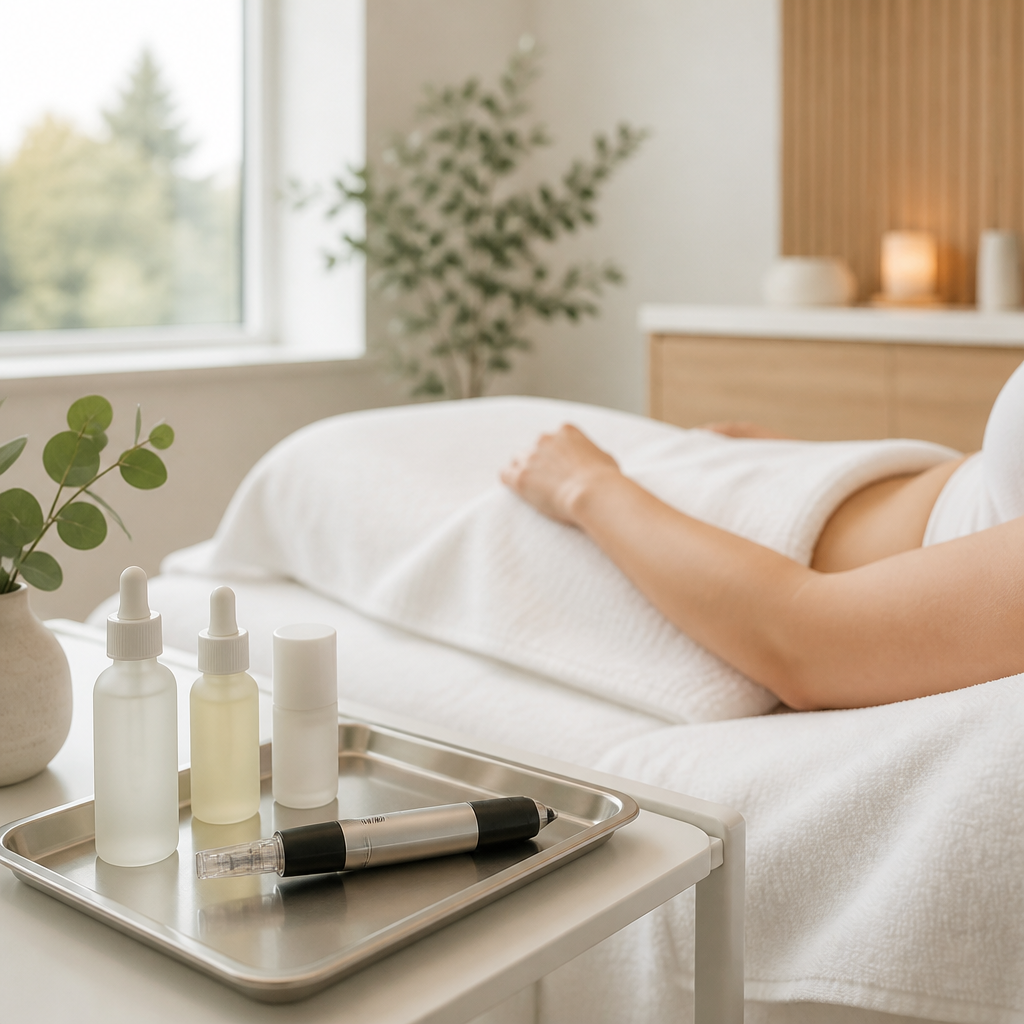
Microneedling uses a device fitted with fine needles that create many controlled micro-punctures in the skin. Those points of injury trigger the body’s repair response, which lays down new collagen and elastin in the treated zone. For stretch marks, the aim is to rebuild the tissue that was torn so the scar sits closer to the level of the surrounding skin.
Which stretch marks respond to microneedling
Red and recently raised marks usually respond best. Thick, deeply indented white marks can improve, but expectations should be modest. The most useful signal at consultation is how the mark feels under gentle pressure. A line that still feels firm and slightly raised has more to give than one that is flat and papery.
Radiofrequency microneedling and why it comes up
Some providers add radiofrequency energy to microneedling, which heats deeper tissue and can encourage tightening of the surrounding collagen. A practitioner answer on RealSelf recommends microneedling with radiofrequency technology for striae, and that combination is a reasonable option to ask about if your marks are thicker or sit deeper in the skin.
Pro tip: Bring photos of your stretch marks taken in the same light, at the same distance, every few weeks. Visual change is slow, and photos are the only fair way to judge whether a plan is working.
How Laser Treatments Work on Stretch Marks
Lasers come in several types, and the differences matter more than the name on the machine. Pulsed dye lasers target haemoglobin, which means they go after the redness in new marks. Fractional lasers treat a grid of small columns and leave untouched skin between them, which speeds healing while still prompting new collagen. Ablative fractional lasers remove more surface tissue, so they can address older, textured marks, but they require more recovery.
Pulsed dye lasers for red, new marks
When the goal is colour, a vascular laser is the logical tool. Clients often notice the marks look less angry before they notice any change in texture. That makes it a useful early-stage option, provided the provider confirms the device settings suit your skin tone.
Fractional CO2 for older, textured white marks
For white marks with a visible dip or ridge, a fractional CO2 laser is the more aggressive choice. It works on surface texture, but the trade-off is longer redness, peeling, and a clear risk of pigment changes in darker skin. Not every clinic offers laser for stretch marks, so ask exactly which device will be used before you commit.
Pro tip: Ask any provider to show you the device settings for your plan and to explain how they will adjust them for your skin tone. A provider who cannot answer that clearly is a warning sign.
Microneedling vs Laser: Side-by-Side Comparison
The choice between microneedling and laser usually comes down to three questions: how old the marks are, how deep the texture goes, and how much downtime you can accept. Colour matters too, but it is often the first thing a provider checks rather than the only thing. Most clients with fresh marks start with microneedling because it is gentler, while those with older, textured marks may need a stronger approach after a few sessions.
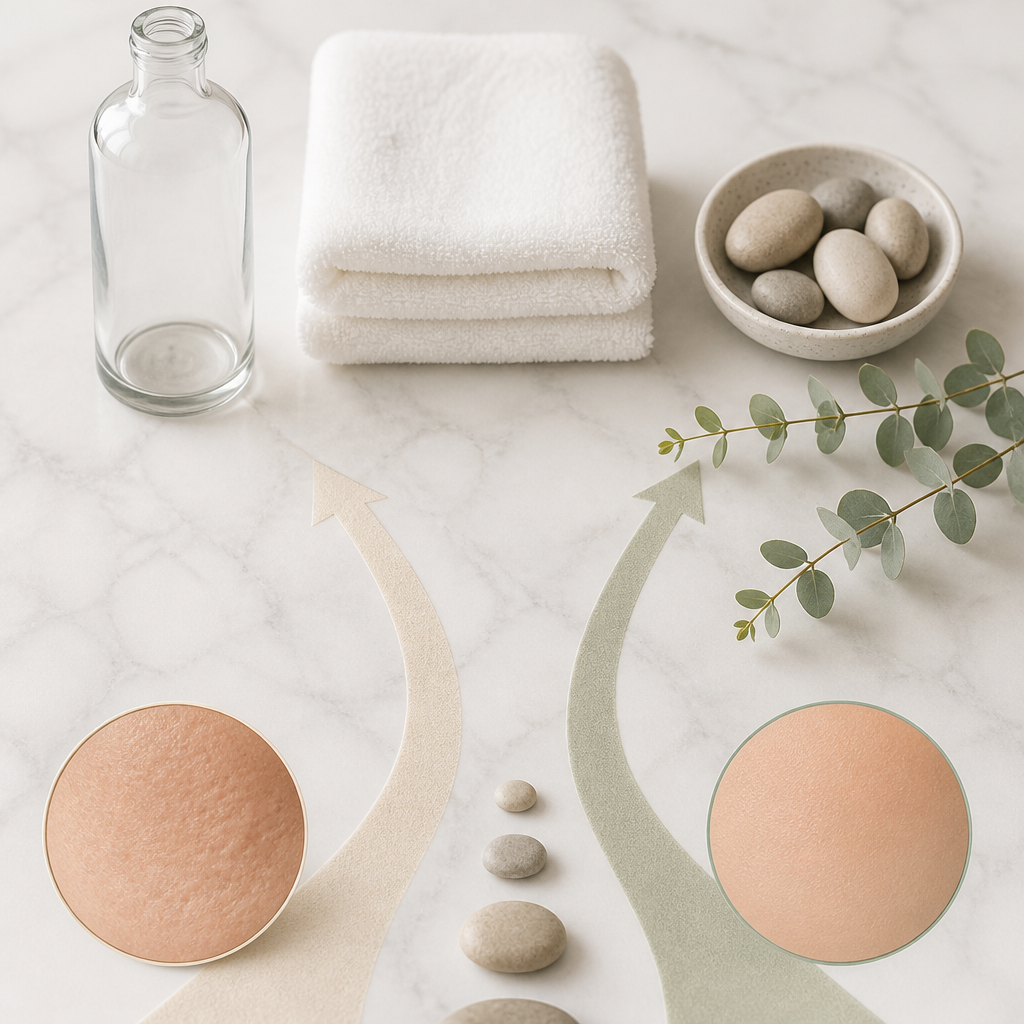
A stretch mark is a healed injury, and the best results come from treating it while the tissue can still respond.
| Approach | Best suited for | Main trade-off |
|---|---|---|
| Standard microneedling | Red or fresh marks, and clients who want a gentler start across a range of skin tones | Several sessions are needed, and mild redness can last a few days |
| Radiofrequency microneedling | Thicker or raised marks that need deeper heating | Higher cost per session and more discomfort, with more pre-treatment questions |
| Fractional CO2 laser | Older, textured white marks on lighter skin | Longer downtime, peeling, and a higher risk of pigment change in darker skin |
What Treatment Costs Look Like in Aurora
Cost is where many clients get surprised, mainly because sources online quote very different figures. A Healthline guide to laser stretch mark removal cost reports average figures of $2,681 per ablative laser treatment and $1,410 per non-ablative treatment. Those are US figures, so they may not match what you would pay in Ontario.
A Livderm overview of laser resurfacing puts the cost of laser skin resurfacing treatments anywhere from $500 up to nearly $9,000, with ablative laser therapy at the high end. That range is wide because the treatment, the device, and the number of sessions all change the total. A practitioner answer on Amoderm describes fractional CO2 as usually costing roughly 1 to 2 thousand dollars per session, though it notes that the price can vary.
In Aurora, each clinic sets its own pricing, so ask for a written quote that lists the number of sessions, the device, and what is included in aftercare. A low price per session can still add up to a higher total if the plan needs more visits than you expected.
Aftercare and Downtime
Downtime depends on the device and on your skin. Microneedling usually causes redness and mild swelling for a few days, and some people notice tenderness for longer. Fractional laser recovery is more visible, with peeling and redness that can last a week or more. Follow your provider’s written instructions closely, because the first two weeks shape how the skin heals.
In practice, the common problems are sun exposure, skipping sunscreen, and returning to strong exfoliants too early. Sun exposure is the main reason pigment changes happen after treatment, and it is preventable. Plan your sessions for a season when you can keep the treated area covered or protected from direct sun.
Some clinics pair microneedling with PRP or PRF. Evidence for those add-ons specifically on stretch marks is limited, so treat them as options to discuss rather than guaranteed boosts. Ask what the add-on is expected to do and what it costs on top of the base treatment.
Who Should Skip Stretch Mark Treatment for Now
Some clients should wait. Active skin infections, open wounds, and areas with recent sunburn are reasons to postpone. A history of abnormal scarring, including keloids, changes the risk picture, so disclose it before treatment. Pregnancy is another reason to delay, since these treatments are usually not planned during pregnancy, and you should raise the timing with your healthcare professional.

Recent isotretinoin use is another flag that should be reviewed before any laser work. Providers also need to know about medications and blood-thinning conditions, because they affect bruising and bleeding during treatment. A good consultation asks these questions early rather than after the first session.
If a provider skips your medical history and goes straight to booking a package, treat that as a reason to look elsewhere. Good planning starts with what you are not a candidate for, not with what can be sold to you.
Frequently Asked Questions
Can microneedling remove stretch marks completely?
Microneedling usually improves the look of stretch marks rather than removing them entirely. Red and newer marks tend to show the most visible change, while older white marks typically soften in colour and texture. Set realistic goals at consultation and compare progress with photos taken over the course of the plan.
Are newer stretch marks easier to treat than old ones?
Yes, in most cases. Red or purple marks still have active blood vessels and tissue that can respond to treatment. Older white marks have fewer active cells, so results are usually more modest and may require a stronger approach.
How many sessions will I need?
Most plans involve a series rather than a single visit, and the exact number depends on the marks, the device, and how your skin responds. Your provider should explain the expected timeline and how progress will be checked between sessions.
Does laser treatment for stretch marks hurt?
Most clients describe discomfort during laser treatment rather than severe pain, and providers typically use topical numbing. Recovery is the bigger difference, with fractional laser causing more redness and peeling for several days than microneedling does.
Is stretch mark treatment safe during pregnancy?
These treatments are generally not planned during pregnancy. If you are pregnant, planning to become pregnant, or breastfeeding, raise the timing with your healthcare professional before booking a consultation.
About Zahra Erfan
Zahra Erfan is the owner of Skin Excellence Medispa in Aurora, Ontario. She oversees the clinic’s client experience, treatment standards, and aesthetic services. Her work with Skin Excellence gives her firsthand insight into the questions clients commonly ask when considering aesthetic treatments in Aurora.
Skin Excellence Medispa is an independently operated medical aesthetics clinic in Aurora, Ontario, owned by Zahra Erfan.
Skin Excellence Medispa
14845 Yonge Street, Unit 301
Aurora, Ontario L4G 6H8
(647) 979-5927
marketing@skinexcellencemedispa.com
Aurora, Ontario
This article is provided for general educational purposes and does not replace an individual medical consultation. Treatment suitability, risks and expected outcomes vary by patient and should be discussed with a qualified healthcare professional.
Considering a treatment in Aurora? Book a consultation with Skin Excellence Medispa to discuss your goals and determine whether it is appropriate for you.
Have you tried microneedling or laser for stretch marks, and what changed for you? Share your experience in the comments below.