
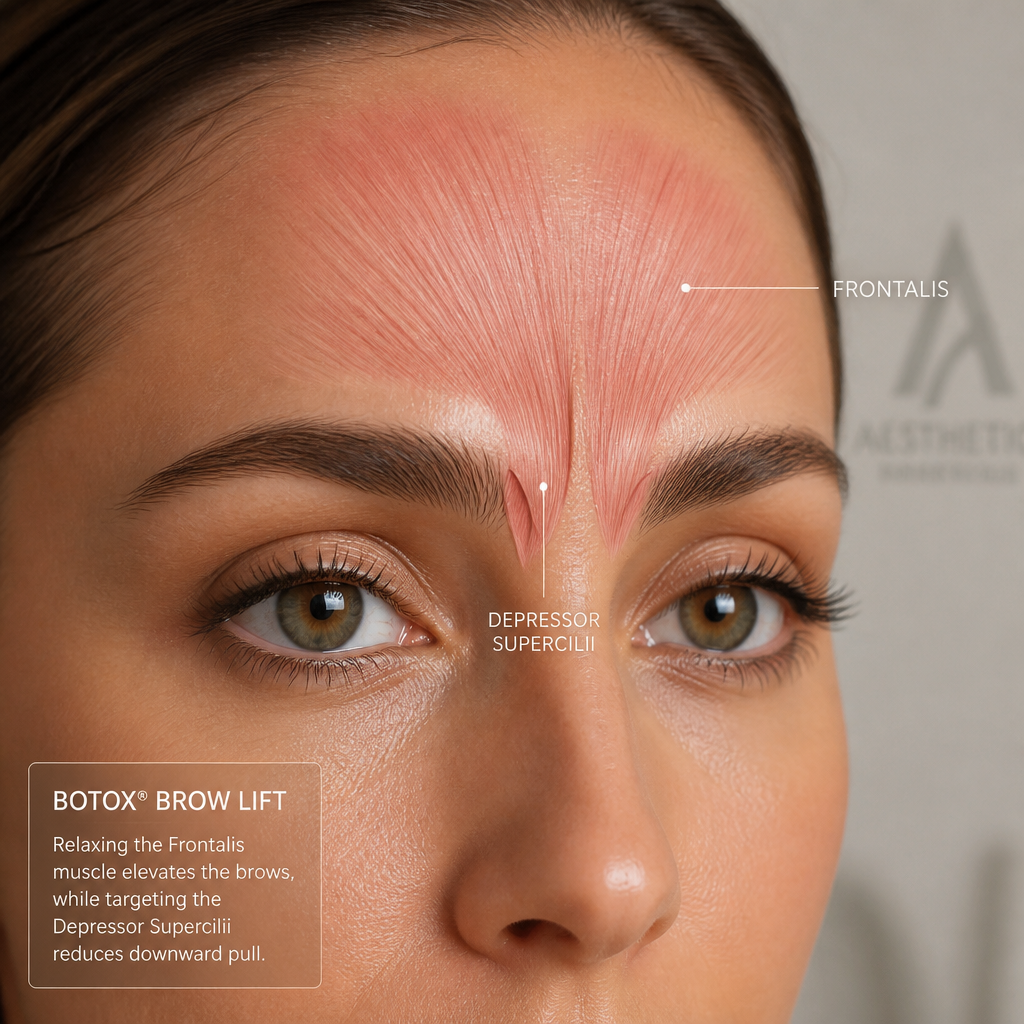
Your brows have been slowly descending for years, and at some point the mirror stops reflecting energy and starts reflecting fatigue. That heaviness above the eyes is one of the earliest and most noticeable signs of facial aging, yet most people have no idea it can be addressed in under 30 minutes without a single incision. A non-surgical brow lift Aurora residents are booking at growing rates uses precisely placed Botox injections to relax the muscles that pull the brows downward, letting the natural elevator muscles do their job unopposed. The result is a more open, alert eye area, with zero recovery time.
Table of Contents
- Quick Takeaways
- What Is a Botox Brow Lift and How Does It Work?
- The Muscle Anatomy Behind the Lift
- Injection Placement That Actually Opens the Eye Area
- Who Is an Ideal Candidate in the GTA?
- Botox Brow Lift vs. Surgical Brow Lift: An Honest Comparison
- What to Expect Before, During, and After Treatment
- Frequently Asked Questions
- References
Quick Takeaways
| Key Insight | Explanation |
|---|---|
| It works by targeting depressor muscles, not by adding filler volume | Botox relaxes the muscles pulling the brow down, allowing the frontalis elevator muscle to lift the brow position naturally. |
| Placement is everything, not just the product | Injecting only the forehead without addressing lateral depressors creates the “Spock brow” complication. A skilled injector treats multiple muscle groups in balance. |
| Typical lift is 1 to 3 millimetres, but visually significant | Even a 2 mm elevation in the lateral brow tail creates a measurably more open, rested eye area that patients notice immediately. |
| The lateral brow tail is the primary target for opening the eye | Small doses into the orbicularis oculi at the outer brow release downward pull and create the arch that frames the eye most effectively. |
| Results last roughly 3 to 4 months | Like all neuromodulator treatments, a Botox brow lift is temporary and requires maintenance appointments to sustain results. |
| Not a replacement for surgery when laxity is significant | If there is pronounced skin redundancy or deep brow ptosis, a Botox brow lift delivers subtle improvement, not a surgical-level correction. |
| Glabellar treatment amplifies the brow-opening effect | Addressing the frown muscles (procerus and corrugators) alongside lateral depressors creates a more complete elevation and reduces the heavy, furrowed look between the brows. |
What Is a Botox Brow Lift and How Does It Work?
A Botox brow lift, sometimes called a chemical brow lift, uses botulinum toxin A injections to reposition the eyebrows upward without any cutting, stitching, or general anaesthetic. The treatment works by manipulating the balance between opposing muscle groups: the muscles that pull the brow down and the muscle (the frontalis) that holds it up.
When the downward-pulling muscles are selectively relaxed, the frontalis can function with less resistance, and the brow naturally sits higher. The eye area appears more open, the upper lid has more visible space, and the overall expression reads as rested rather than heavy.
This is not the same as simply injecting the forehead to smooth lines. A true brow-lifting technique is a targeted protocol that requires an injector to understand which specific muscles to treat, in which proportions, and at which anatomical landmarks. The difference between a refreshed look and a frozen one comes down almost entirely to that precision.
The Muscle Anatomy Behind the Lift
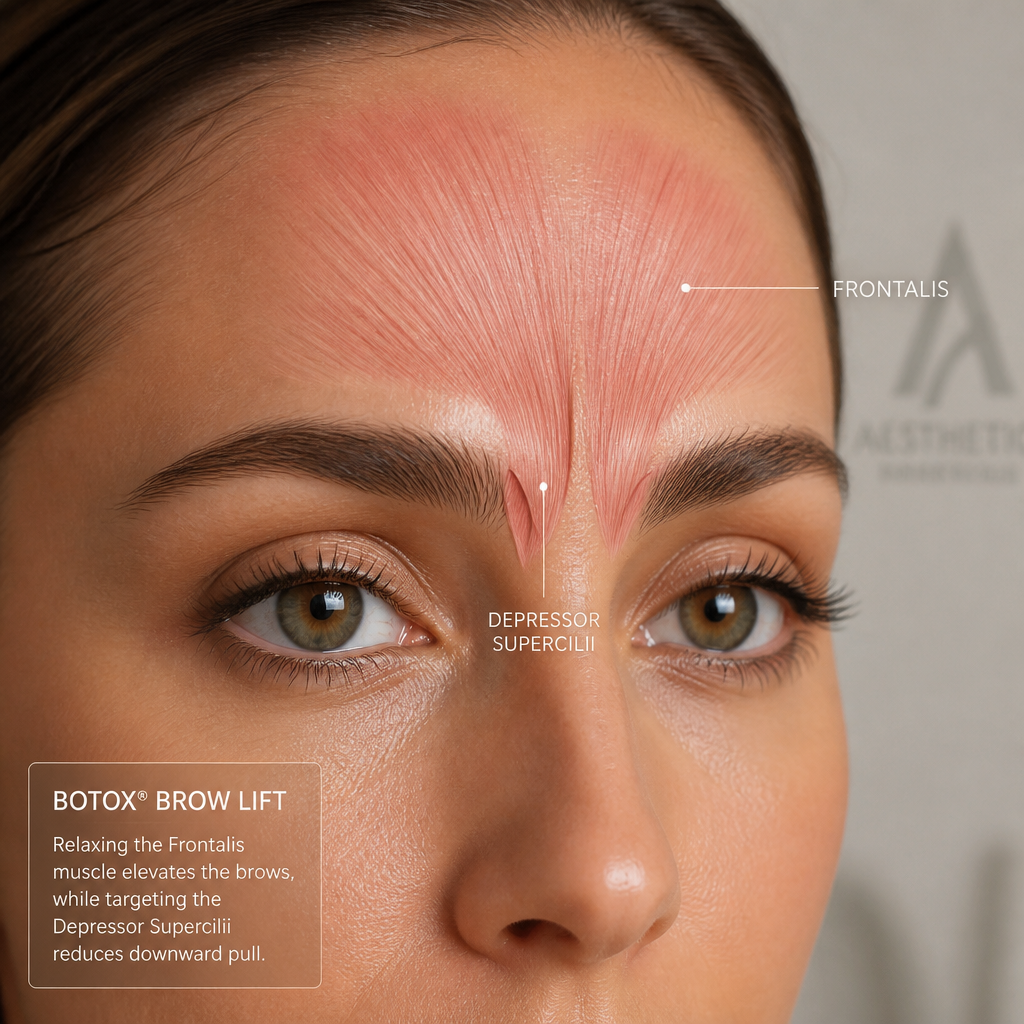
Understanding why the brow descends requires a quick look at the competing forces on the forehead. The frontalis muscle runs vertically across the forehead and is the primary elevator, responsible for raising the brows and creating horizontal forehead lines. Several muscles work against it.
The Depressor Group
The orbicularis oculi wraps around the eye and, at its upper outer portion, pulls the lateral brow tail downward. This is the primary target for opening the eye area in a brow lift protocol. The corrugator supercilii and procerus, the muscles responsible for the “11 lines” between the brows, pull the medial brow inward and downward, creating the heavy, furrowed appearance between the eyes.
With age, repeated contraction of these depressors causes the brow to gradually migrate south. The frontalis compensates by working harder, which is why people with descending brows often have more pronounced horizontal forehead lines: their elevator is in overdrive.
Why Treating Only the Forehead Causes Problems
A common mistake is injecting only the frontalis to smooth forehead lines without also addressing the lateral depressors. When the frontalis is weakened and the brow depressors remain fully active, the outer brow tail drops and the inner brow elevates, producing the exaggerated arched look sometimes called Spock brow. Treating the full picture, including the lateral orbicularis and the glabellar complex, prevents this asymmetric outcome and creates the balanced, natural lift patients are actually after.
Pro tip: If a previous injector left you with a peaked or uneven brow after forehead Botox, the cause is almost always undertreated lateral depressors. This is correctable. Mention your previous result at your consultation so the injector can adjust placement accordingly.
Injection Placement That Actually Opens the Eye Area
Placement is the variable that separates a genuinely refreshed result from a stiff or distorted one. There is no single universal injection map because facial anatomy differs meaningfully between individuals. That said, there are well-established principles that experienced injectors follow for brow lifting.
The Lateral Brow Tail Injection
The most targeted and lowest-risk entry point for a brow lift is the lateral orbicularis oculi, just at and above the tail of the eyebrow. A small dose in this zone releases the downward traction on the outer brow and allows it to ride slightly higher. This creates the lifted arch shape that opens the outer eye area most noticeably. The injection must be placed superficially and precisely, because sitting too low or too medially risks weakening muscles that support the upper lid.
The Glabellar Zone: Medial Brow and Between-Brow Heaviness
Injecting the procerus and corrugators reduces the inward, downward pull on the medial brow. This softens the 11 lines and elevates the inner brow tail, which contributes to a more open resting expression. Treating this area in combination with the lateral orbicularis produces a more complete lift across the entire brow span, rather than an elevation in only one portion that can look unnatural.
Strategic Frontalis Sparing
Experienced injectors leave a portion of the lateral frontalis untreated, or dose it conservatively, to preserve some upward pull in the outer brow zone. Treating the full frontalis with aggressive doses eliminates the natural lift and allows the depressors to win, which reverses the effect. The goal is balance, not paralysis of the entire forehead.
A Botox brow lift works not by freezing the face but by selectively removing the muscular forces that are dragging the brow down, allowing the natural architecture of the upper face to express itself more cleanly.
Pro tip: Ask your injector to show you where each injection point will be placed and why, before treatment begins. A practitioner who can explain the anatomical rationale for each point is far more likely to deliver a result that looks intentional and balanced.
Who Is an Ideal Candidate in the GTA?
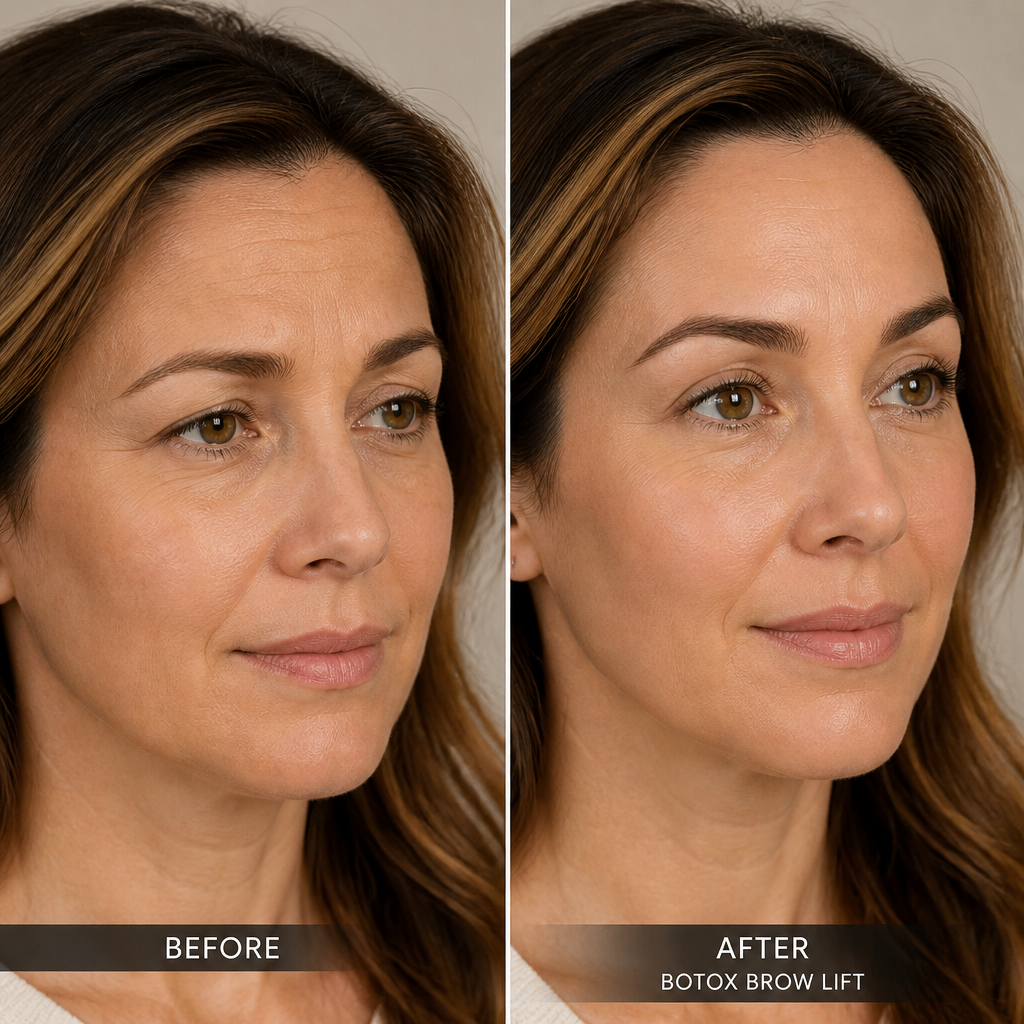
The best candidates for a Botox brow lift Aurora Ontario are adults who are noticing mild to moderate brow descent, particularly at the lateral brow tail, and who want a subtle but visible improvement without surgery or downtime. People who look perpetually tired or stern even when they are not, and who find their upper lids feel heavier than they used to, are exactly the profile this treatment is designed for.
Age range matters less than the degree of laxity. Patients in their early thirties can benefit from a preventative approach, while those in their forties and fifties often see the most noticeable change because their brow descent is more established. The treatment delivers a lift of roughly 1 to 3 millimetres, which sounds modest but is visually significant at the eye area.
Candidates who are not well-suited for this treatment include those with significant skin redundancy or deep brow ptosis, where the volume of descended tissue exceeds what muscle balance alone can correct. In those cases, a surgical brow lift or a combination approach using filler alongside Botox is a more honest recommendation. At a chemical brow lift GTA consultation, a thorough assessment of brow position, skin laxity, and muscle dynamics is essential before committing to a treatment plan.
Botox Brow Lift vs. Surgical Brow Lift: An Honest Comparison
Patients researching brow rejuvenation regularly ask whether Botox can deliver the same result as surgery. The honest answer is: it depends on what the face actually needs. Here is a direct comparison of the three main approaches.
| Approach | Best For | Key Limitations |
|---|---|---|
| Botox Brow Lift (neuromodulator only) | Mild to moderate lateral brow descent, tired or heavy eye appearance, preventative treatment in younger adults, patients who want zero downtime | Temporary (3 to 4 months), limited lift of 1 to 3 mm, does not address skin laxity or significant brow ptosis |
| Combination Botox + Filler | Moderate brow descent with some volume loss in the brow or temple area, patients seeking a more pronounced arch and structural support | More injections required, higher cost per session, filler carries its own risk profile when placed in the periorbital zone |
| Surgical Brow Lift | Significant brow ptosis, pronounced skin redundancy, patients who want a durable multi-year result and can accommodate recovery time | Surgical risks, anaesthesia, weeks of recovery, permanent change that may not age ideally over time |
For the majority of GTA residents who notice brow heaviness in their thirties and forties, a Botox brow lift is the appropriate first intervention. It is reversible in the sense that it is temporary, it carries minimal risk when performed by a skilled injector, and it produces results that are visible without being extreme. Surgery should not be the first tool used when a less invasive option delivers genuine improvement.
What to Expect Before, During, and After Treatment
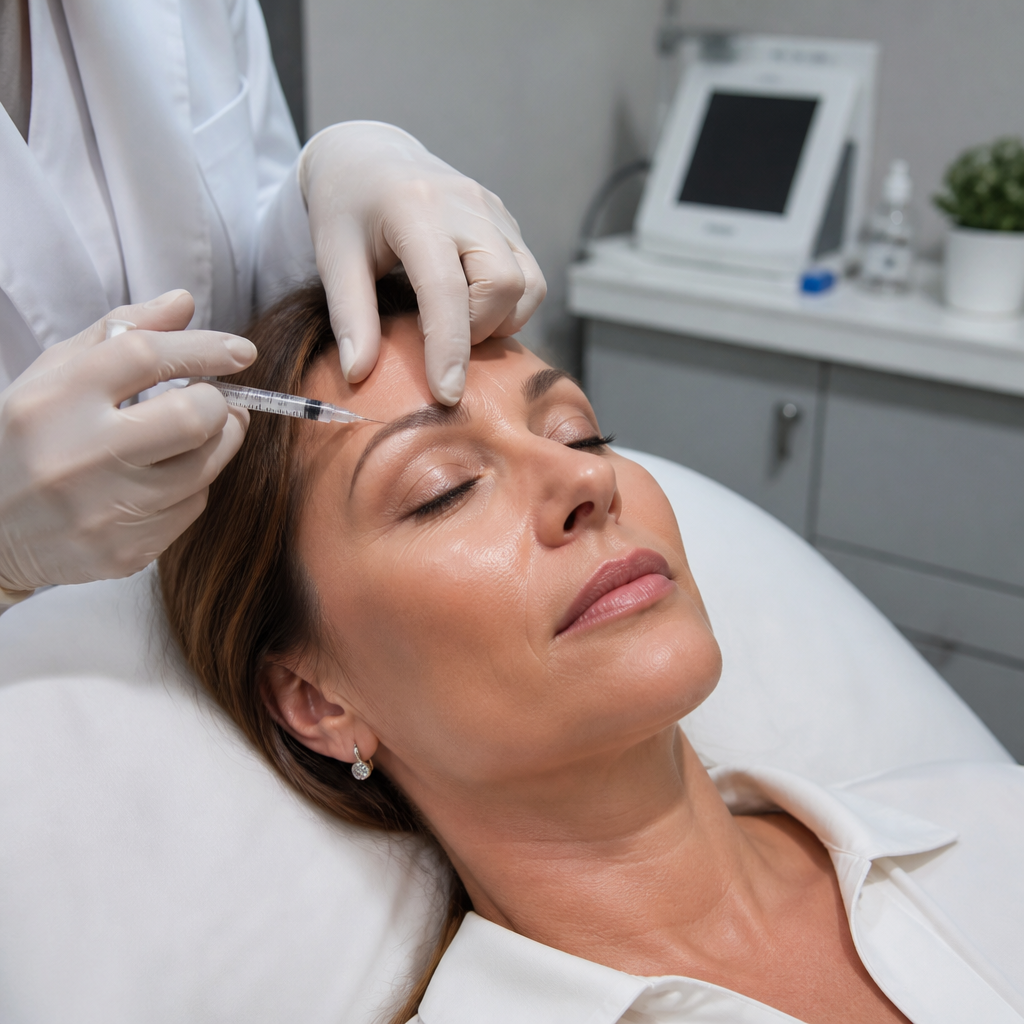
A non-surgical brow lift appointment at a medical aesthetic clinic in Aurora takes between 15 and 30 minutes. The consultation portion, where the injector assesses your brow anatomy and discusses your goals, is as important as the treatment itself. Do not skip or rush this step.
Before Your Appointment
Avoid blood-thinning medications and supplements, including aspirin, ibuprofen, fish oil, and vitamin E, for several days before treatment if your physician permits. This reduces the chance of bruising at injection sites. Come to your appointment with a clean face, free of makeup around the eyes and brows. Arrive with realistic expectations: a Botox brow lift produces a refined, natural improvement, not a dramatic surgical transformation.
During the Treatment
Injection points are marked or mentally mapped based on your individual anatomy. Topical numbing cream can be applied beforehand, though most patients find the injections tolerable without it. The actual injection portion takes only a few minutes. You will be asked to make facial expressions so the injector can observe your muscle dynamics in motion before finalizing placement.
After Treatment and Timeline
Expect minor redness or small raised points at injection sites that resolve within an hour. Avoid lying flat, exercising intensely, or pressing on the treated areas for the remainder of the day. Results begin to appear within three to five days as the neuromodulator starts to take effect, with full results visible at two weeks. A follow-up appointment at the two-week mark allows the injector to assess the outcome and make any small adjustments if needed. Results typically last three to four months, at which point a maintenance treatment sustains the effect.
At Skin Excellence Medispa in Aurora, Botox treatments including brow lifting protocols are performed by experienced practitioners who assess each patient’s facial dynamics individually before placing a single unit. You can learn more about the full range of Botox and neuromodulator services at Skin Excellence Medispa or read the detailed guide to what to know before your first Botox appointment in Aurora.
Frequently Asked Questions
How many units of Botox are needed for a brow lift?
Unit counts vary based on individual anatomy, muscle mass, and how many areas are being treated. For the lateral brow lift specifically, roughly 4 to 8 units per side are used at the outer brow. If the glabellar area is also treated to address the medial brow and 11 lines, an additional 20 to 25 units are typically required for adequate relaxation. Your injector will assess your specific muscle dynamics at the consultation and provide a personalized estimate.
Is a Botox brow lift painful?
Most patients describe the sensation as a minor pinch at each injection point. The needles used are very fine, and the procedure takes only a few minutes. Topical numbing cream is available if you prefer additional comfort. In practice, the brow area is no more sensitive than a standard forehead or crow’s feet treatment.
Can a Botox brow lift fix hooded eyelids?
It depends on the cause of the hooding. If the heaviness is due to brow descent pushing skin downward over the lid, a brow lift can create meaningful improvement by elevating the brow and giving the lid more visible space. If the hooding is due to excess upper eyelid skin (dermatochalasis) independent of brow position, Botox will not resolve it, and a surgical referral for blepharoplasty is the appropriate conversation. An honest assessment at your consultation will clarify which situation applies to you.
How long before I see results from a Botox brow lift?
The initial effect becomes noticeable within three to five days. Full results are visible at the two-week mark when the neuromodulator has fully taken effect and the muscle balance has shifted. This is why a follow-up appointment at two weeks is valuable: it allows for any minor refinements before the treatment settles into its final result.
Can a Botox brow lift be combined with dermal fillers?
Yes, and in some cases combining Botox with a small amount of hyaluronic acid filler placed in the brow area or temples produces a more structured lift than Botox alone. The filler provides volumetric support while Botox addresses the muscular downward pull. This combination is more appropriate for patients with some brow volume loss in addition to descent. The combination approach is discussed at consultation based on individual assessment, not applied as a standard protocol.
What is the “Spock brow” complication and how is it avoided?
Spock brow refers to an exaggerated peaked arch, usually in the outer third of the brow, that results from treating the frontalis with too many units while leaving the lateral depressors fully active. The medial frontalis is weakened, the lateral portion continues to pull up, and the result is an unnatural peaked shape. It is avoided by treating the lateral orbicularis oculi alongside the forehead, so the elevator and depressor balance remains coherent across the full brow. Experienced injectors anticipate this and adjust placement proactively.
Is there any downtime after a non-surgical brow lift with Botox?
Downtime is minimal. Most patients return to work and daily activities the same day. The main post-treatment precautions are avoiding intense exercise, lying flat, and pressing on the injection sites for the first four hours. Avoid facials, saunas, and any aggressive heat exposure for 24 hours. Minor redness or pinpoint swelling at injection sites resolves within an hour for most patients.
Have you had a Botox brow lift, or are you considering one? Share your experience or questions below, and our team at Skin Excellence Medispa is happy to help.
References
- American Society of Plastic Surgeons: Brow Lifts vs. Botox, Do You Need One or Both?
- PubMed: Temporal Brow Lift Using Botulinum Toxin A, Prospective Case Series Study
- Dr. Tim Pearce: Best Botox Brow Lift Injection Patterns to Avoid Ptosis and Spock Brow
- Expert Overview of Botox Brow Lift: Mechanism, Candidacy, and Expected Results
- Glowday: The Botox Brow Lift Explained, Muscles Targeted and Technique Overview