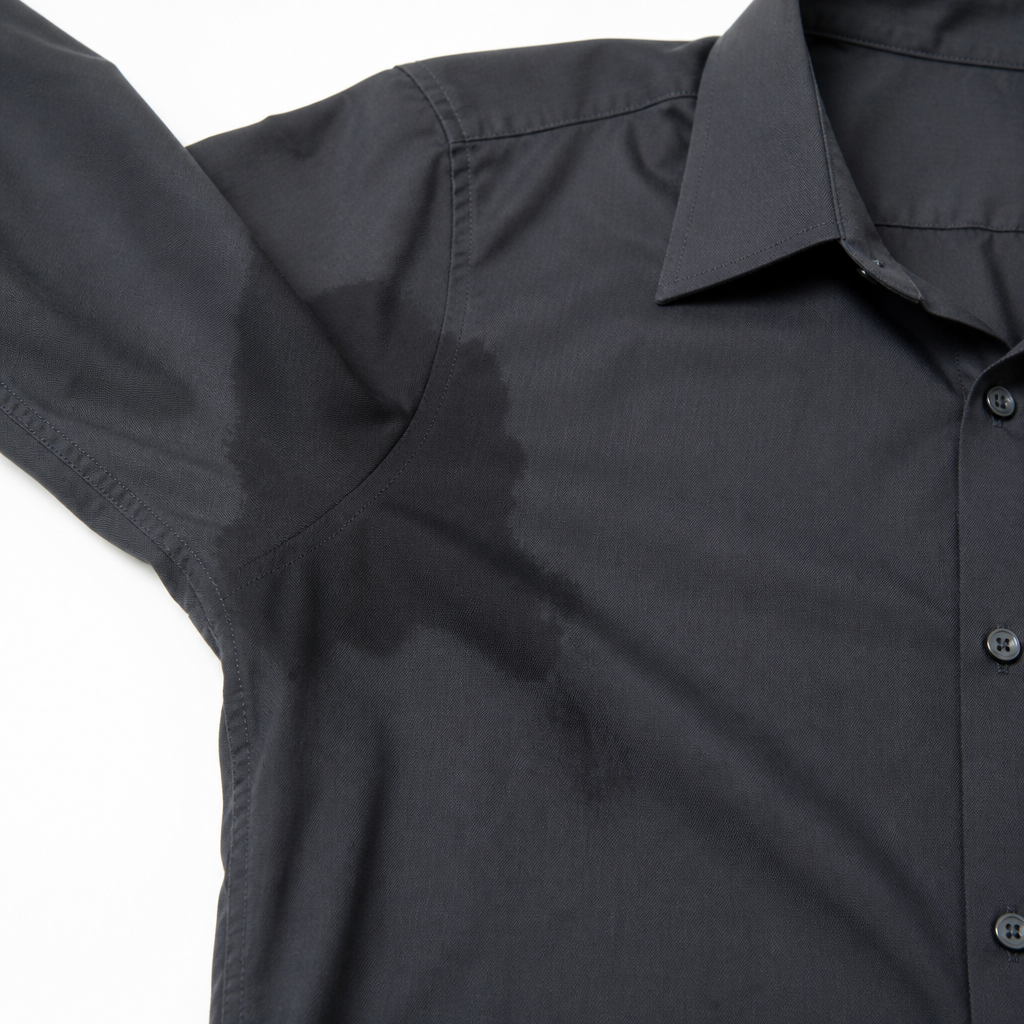
Sweat-soaked shirts before an important meeting. Handshakes you dread. Underarms that no antiperspirant can keep dry. If this is your daily reality, you are not alone and you are not out of options. Botox hyperhidrosis Aurora treatment is one of the most effective, clinically validated solutions available for people whose sweating goes far beyond what normal temperature regulation demands. At Skin Excellence Medispa in Aurora, Ontario, we see clients from across the Greater Toronto Area who have spent years managing hyperhidrosis with temporary fixes, and who are finally ready for a treatment that actually works.
Table of Contents
- What Is Hyperhidrosis and Who Does It Affect
- How Botox Stops Excessive Sweating
- Treatment Areas: Where Botox Can Help
- What to Expect at Your Appointment
- Results, Duration, and Repeat Treatments
- Comparing Hyperhidrosis Treatment Options
- Insurance and Cost Considerations in Ontario
- Who Is a Good Candidate
- Frequently Asked Questions
- References
What Is Hyperhidrosis and Who Does It Affect
Hyperhidrosis is a medical condition defined by sweating that exceeds what the body physiologically needs for temperature control. It is not about being warm or nervous in the ordinary sense. The sweat glands are simply overactive, firing signals even at rest, in cool temperatures, or in low-stress situations.
Estimates suggest that roughly 910,000 Canadians are affected by hyperhidrosis. The condition is divided into two main types. Primary focal hyperhidrosis occurs in specific, localized zones such as the underarms, palms, feet, or forehead, with no underlying medical cause. Secondary generalized hyperhidrosis is caused by an underlying condition or medication and tends to affect the body more broadly. The vast majority of people seeking treatment at a medispa are dealing with the primary focal form.
The social and professional impact of hyperhidrosis is consistently underestimated by people who do not experience it. Avoiding certain fabrics, canceling plans, carrying extra clothing, limiting physical contact, and experiencing significant anxiety around situations that involve sweating are all common. This is not a cosmetic inconvenience. It is a quality-of-life issue that responds very well to the right treatment.
Pro tip: If you are unsure whether your sweating qualifies as hyperhidrosis, a quick benchmark is this: if excessive sweating has directly caused you to change your behavior, your wardrobe, or your social choices at least once in the past month, it is worth discussing with a practitioner.
How Botox Stops Excessive Sweating
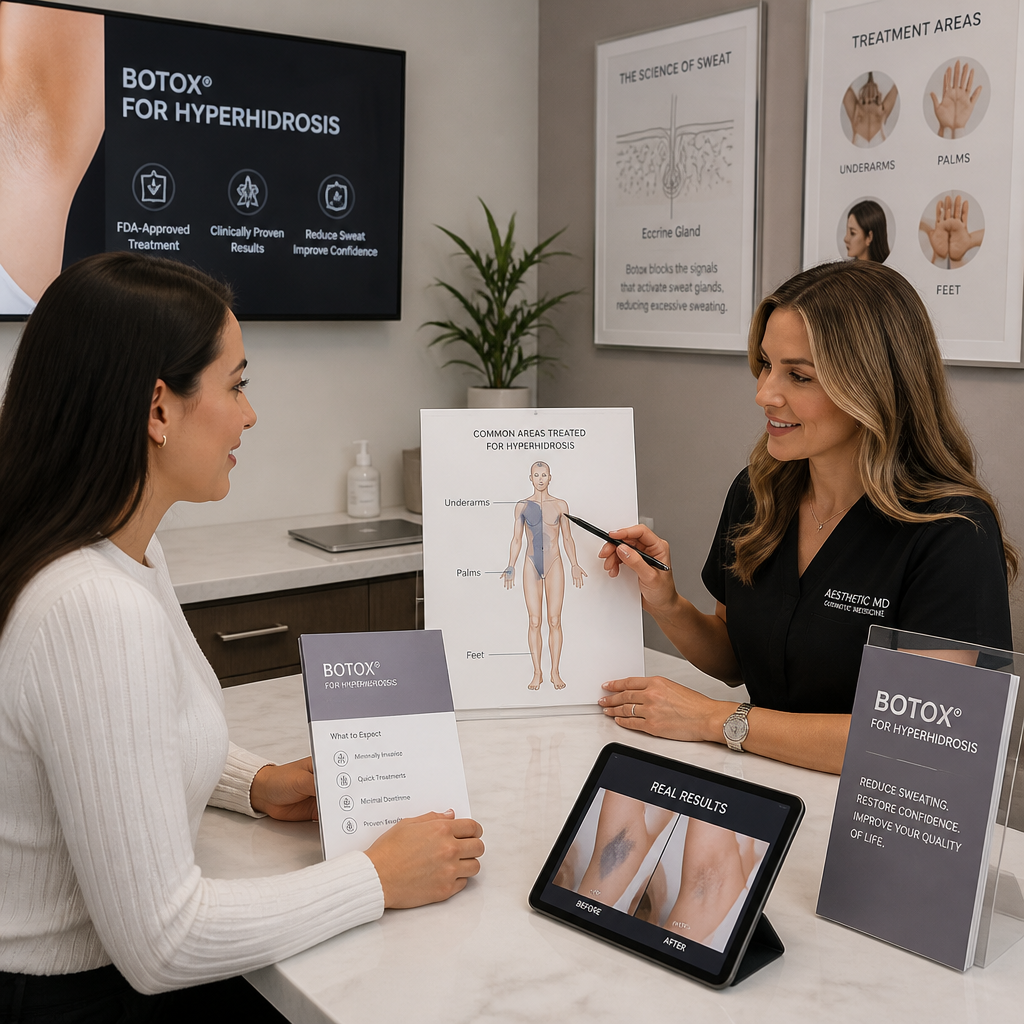
The mechanism behind Botox for hyperhidrosis is more straightforward than most people expect. Botulinum toxin type A, the active ingredient in Botox, temporarily blocks the release of acetylcholine, the chemical messenger that signals the eccrine sweat glands to produce sweat. With that signal interrupted, the glands simply do not activate.
The injections are placed very shallowly, just beneath the surface of the skin, directly into the treatment zone. The toxin stays localized at the injection site. It does not travel through the body systemically in the doses used for hyperhidrosis treatment. This is an important distinction for clients who worry about broader effects.
Botox for hyperhidrosis works by blocking the nerve signal that tells sweat glands to activate. It does not reduce normal body function or affect sweat production in untreated areas.
What Botox does not do is eliminate sweat permanently or affect your body’s overall ability to regulate temperature. Your body has millions of sweat glands distributed across its surface. Treating a localized area like the underarms accounts for only a small fraction of total sweat output, so there is no risk of overheating or compensatory problems when the treatment is applied to focal zones.
Treatment Areas: Where Botox Can Help
Botox is most commonly associated with underarm hyperhidrosis, and that is where the strongest clinical evidence sits. But experienced practitioners treat several other body zones effectively.
Axillary Hyperhidrosis (Underarms)
This is the most frequently treated area and the one with the best-documented outcomes. Clinical research has demonstrated an average reduction in underarm sweating of approximately 82 to 87 percent following treatment. Results in the underarms also tend to last the longest of any treatment site, often extending to 6 to 12 months or beyond.
Palmar Hyperhidrosis (Hands)
Sweaty palms interfere with handshakes, keyboards, instruments, and physical contact in ways that are difficult to manage through any topical means. Research indicates Botox is 80 to 90 percent effective for palmar hyperhidrosis. Because the palms contain dense nerve endings, a topical numbing agent or local anesthesia is used before injection to keep the procedure comfortable. There is a small risk of temporary, mild hand weakness, which resolves on its own.
Plantar Hyperhidrosis (Feet)
Excessive foot sweating causes odor, skin breakdown, difficulty with footwear, and slipping. Botox treats this area using the same approach as palmar treatment, with local anesthesia to manage injection discomfort. The results are comparable to hand treatment in terms of effectiveness.
Craniofacial Hyperhidrosis (Forehead and Scalp)
Forehead or scalp sweating that soaks through hair and drips during minimal exertion responds well to Botox, but the technique requires more precision than underarm injections. A practitioner skilled in facial anatomy is essential here, as incorrect placement can cause temporary asymmetry in forehead muscle movement. This is one area where provider experience matters more than in others.
Pro tip: If you are considering Botox for palmar or craniofacial hyperhidrosis, be direct with your practitioner about your daily activities. Athletes, musicians, and people in client-facing professions often need slightly different placement strategies to protect function while maximizing sweat reduction.
What to Expect at Your Appointment
The first step at Skin Excellence Medispa is a consultation. This is not a formality. The practitioner will confirm the diagnosis, review your history with other treatments, identify the specific treatment zones, and calculate the appropriate dosage. Hyperhidrosis treatment uses higher doses of botulinum toxin than cosmetic wrinkle treatments, and getting the dose right is central to a good outcome.
The Starch-Iodine Test
For underarm treatment, many practitioners use a starch-iodine test to map exactly where sweat is being produced before injecting. Iodine is applied to the skin, then starch powder is dusted over it. Wherever sweating is active, the starch turns dark, making the active zones visible. This allows for precise, targeted injection placement rather than a uniform grid pattern.
The Injection Process
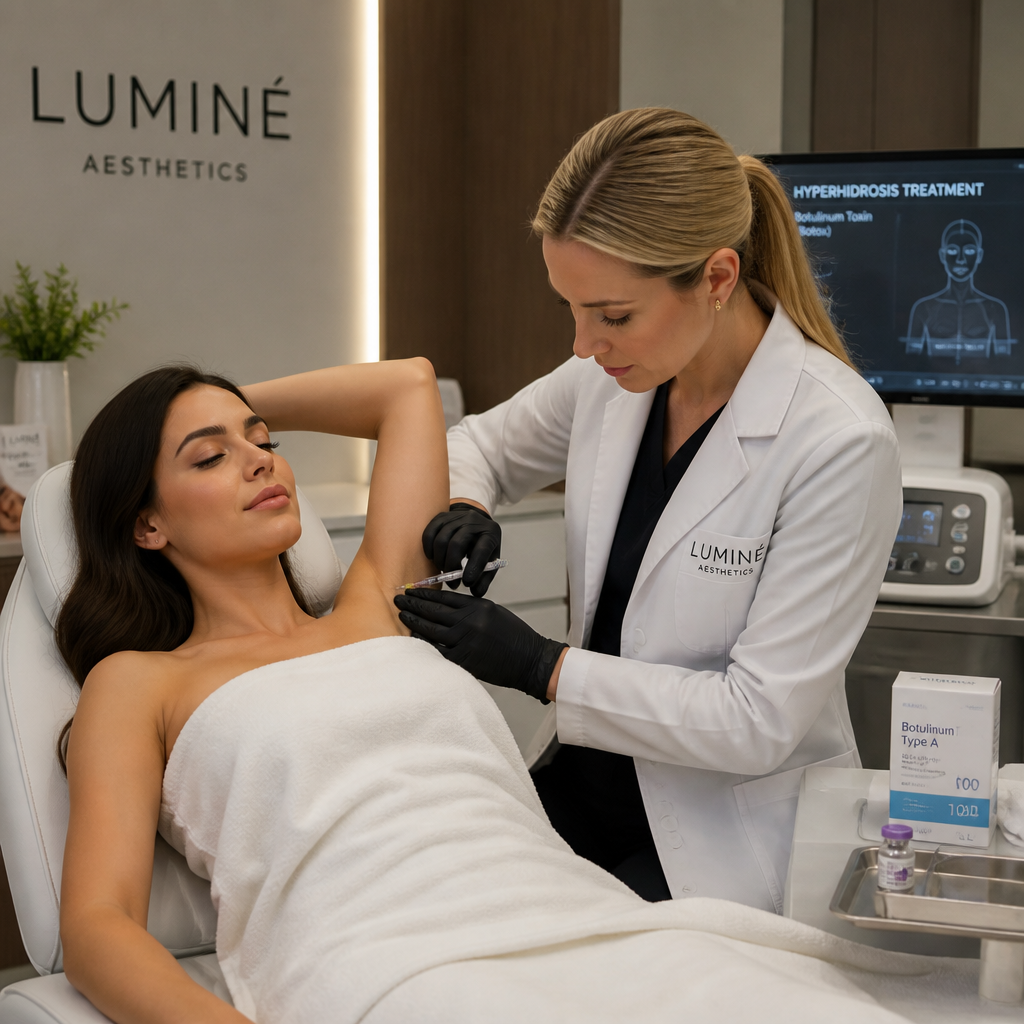
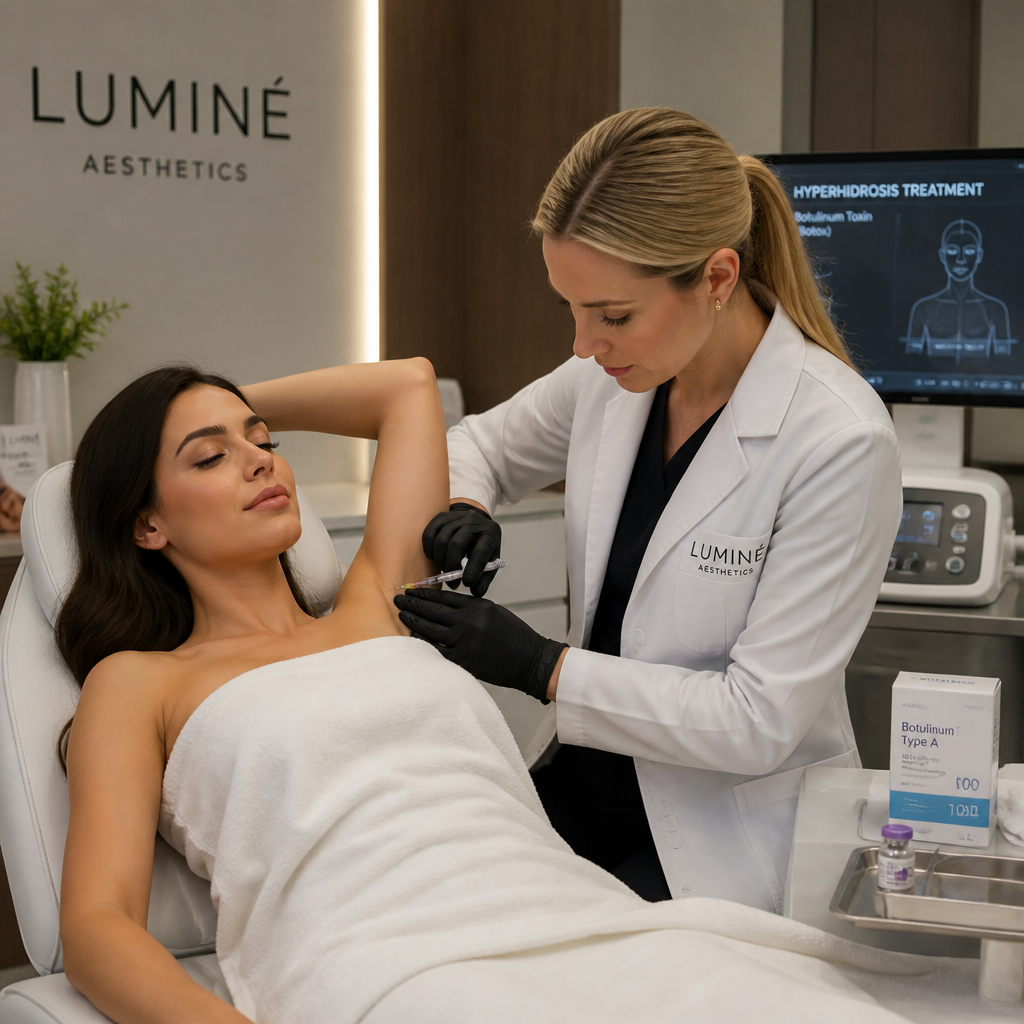
For underarms, no anesthesia is required. The needles used are very fine and the injections are shallow, making the procedure well-tolerated by most clients. The session itself typically takes 20 to 30 minutes. For hands and feet, a topical numbing cream or local anesthetic block is applied first to significantly reduce discomfort.
Most clients return to all normal activities immediately after the appointment. There is no meaningful downtime. For underarm treatment specifically, practitioners typically advise avoiding intense exercise, saunas, and hot showers for 24 hours post-treatment, and refraining from shaving the treated area for a day or two to avoid skin irritation.
Results, Duration, and Repeat Treatments
Results from Botox hyperhidrosis treatment are not immediate, but they come quickly. Most clients notice a significant reduction in sweating within 2 to 4 days. Full results are typically evident within 2 weeks of the appointment.
The dryness typically lasts 4 to 12 months for underarm treatment, with some studies documenting effects lasting up to 14 months. The average duration across treatment sites is approximately 6 to 7 months. Palmar and plantar treatments tend to have a shorter duration, often in the 4 to 6 month range. Repeat treatments are straightforward and, with consistent treatment over time, some clients find that the interval between sessions gradually extends.
A common mistake clients make is waiting until sweating has fully returned to its pre-treatment level before booking their next appointment. Scheduling a follow-up when sweating begins to noticeably increase again, rather than after it has completely returned, makes for a smoother maintenance cycle and better overall quality of life between sessions.
What Happens to Sweat in Other Areas
One concern clients frequently raise is whether blocking sweat in one zone will cause compensatory sweating elsewhere. This concern is well-founded after certain surgical procedures for hyperhidrosis, but it has not been identified as a significant issue with localized Botox injections. The treatment is confined to the injection zone, and compensatory sweating is not a documented side effect at the doses and locations used in standard hyperhidrosis treatment.
Comparing Hyperhidrosis Treatment Options
Understanding where Botox sits relative to other hyperhidrosis management strategies helps clients make a genuinely informed decision, not just a reactive one after years of frustration.
| Treatment Option | Effectiveness | Key Considerations |
|---|---|---|
| Botox (Botulinum Toxin A) | 82 to 90% reduction in focal zones; results last 4 to 14 months depending on area | Requires repeat sessions; minimal downtime; effective for underarms, hands, feet, and face; cost may be partially covered by extended health insurance |
| Prescription-Strength Antiperspirants | Moderate; works for mild to moderate cases; inconsistent for severe hyperhidrosis | First-line approach; can cause skin irritation with aluminum chloride formulas; must be applied consistently; does not work for all patients or all body zones |
| Iontophoresis | Effective for hands and feet specifically; requires multiple sessions weekly to maintain results | Non-invasive; can be done at home with a device; time-intensive maintenance; not suitable for underarms; minimal side effects but requires discipline and consistent scheduling |
Botox is not always the first treatment tried, but it is consistently the most effective option once prescription antiperspirants have failed to deliver adequate relief. For axillary hyperhidrosis specifically, it is the only prescription medication with formal regulatory approval for the indication in multiple countries.
Insurance and Cost Considerations in Ontario
Cost is a real consideration for hyperhidrosis treatment, and it is worth addressing directly. In Ontario, OHIP does not cover Botox for hyperhidrosis. However, many extended health insurance plans do cover the cost of the medication when hyperhidrosis is documented as a medical condition by a physician. The injection service fee is typically a separate charge from the cost of the product itself.
The smart approach before booking is to contact your benefits provider directly and ask whether botulinum toxin for hyperhidrosis is covered under your plan, and what documentation they require. Many clients are surprised to find that the product cost is covered and only the administration fee comes out of pocket.
If you are paying entirely out of pocket, costs in the GTA market generally start around $1,000 for a full underarm treatment, with the specific breakdown varying by clinic structure. That figure aligns with what reputable practices in the region charge, and it reflects appropriate dosing rather than a discounted approach that uses too few units to be effective.
Pro tip: When inquiring about insurance coverage, ask your provider specifically about “botulinum toxin type A for axillary hyperhidrosis” rather than just “Botox.” Plans often categorize the coverage under the drug benefit rather than as a medical procedure, which can make a significant difference in what gets reimbursed.
Who Is a Good Candidate
The ideal candidate for Botox hyperhidrosis treatment is an adult whose excessive sweating is localized to one or more specific body zones, has not responded adequately to prescription-strength antiperspirants, and is willing to maintain results with periodic repeat treatments.
There are situations where Botox is not the right fit. Clients who are pregnant or breastfeeding should postpone treatment. Those with certain neuromuscular conditions require a medical consultation before proceeding. Anyone with a known allergy to botulinum toxin or its components is not a candidate.
Secondary hyperhidrosis, caused by an underlying health condition or medication, should be addressed at its source first. A good practitioner will ask screening questions to identify whether the sweating pattern might suggest an underlying cause that warrants a physician referral before aesthetic treatment begins. This is not an obstacle, it is responsible care.
Age, skin type, and general health do not determine candidacy in the way they might for some other treatments. Hyperhidrosis does not discriminate, and neither does the treatment. Clients in their 20s dealing with palmar sweating and clients in their 50s managing axillary hyperhidrosis are equally good candidates if the clinical picture supports treatment.
Frequently Asked Questions
How many units of Botox are needed for hyperhidrosis treatment?
Underarm hyperhidrosis treatment typically requires significantly more units than cosmetic wrinkle treatment. Each underarm generally requires 50 units or more, making the total dose per session considerably higher than what is used for forehead lines or crow’s feet. Your practitioner will determine the appropriate dose based on the severity of your sweating and the treatment area. Using too few units is a common reason people have disappointing results, so dosing precision matters significantly here.
Is the treatment painful?
For underarm treatment, most clients describe the injections as mildly uncomfortable at most. The needles are fine, the depth is shallow, and the procedure is brief. For palmar and plantar treatment, a numbing agent or local anesthetic block is applied before injection, which dramatically reduces discomfort. The sensation varies by individual and by treatment zone, but it is rarely described as significantly painful.
How soon will I stop sweating after treatment?
Most clients notice a meaningful reduction in sweating within 2 to 4 days of their appointment. Full results typically develop over 2 weeks. It is not uncommon to have a period in the first week where you are not yet at maximum dryness. Patience through that window is worthwhile, as the results at the two-week mark are usually striking.
Can I get Botox for sweating if I have already had cosmetic Botox for wrinkles?
Yes. Having cosmetic Botox in facial zones does not interfere with hyperhidrosis treatment in the underarms, hands, or feet. Your practitioner will note your full treatment history during consultation and factor total botulinum toxin exposure into the treatment plan. The two indications are managed independently and do not compete with each other.
Will my sweating come back worse after Botox wears off?
No. There is no rebound effect when Botox for hyperhidrosis wears off. Sweating returns gradually to its pre-treatment level as the botulinum toxin naturally breaks down over months. It does not come back stronger or in new areas as a result of the treatment. This is a common concern and there is no clinical evidence to support it for localized Botox hyperhidrosis treatment.
How do I find an experienced provider for hyperhidrosis Botox in the GTA?
Look for a medical aesthetic clinic where injections are performed by a trained and experienced practitioner, not delegated to a junior staff member without oversight. Ask specifically whether the clinic has treated hyperhidrosis, how they approach dosing, and whether they use a starch-iodine test for underarm mapping. A practitioner who can answer these questions specifically and confidently is a good sign. Skin Excellence Medispa in Aurora serves the full GTA region and has practitioners experienced in both cosmetic and therapeutic botulinum toxin applications.
If you have been living with excessive sweating and wondering whether Botox for hyperhidrosis might finally be the solution that fits your situation, we would love to hear about your experience and answer any questions you have in the comments below.
We would love your feedback and any insights you would share with others. What perspective would you add?
References
- International Hyperhidrosis Society overview of Botox treatment for excessive sweating, including effectiveness data and treatment site guidance
- Medical News Today review of Botox for sweating: how it works, effectiveness rates, and what patients should know
- Cleveland Clinic patient guide to Botox for excessive sweating, including duration of results and treatment areas
- Canadian Dermatology Association information on hyperhidrosis and botulinum toxin treatment in Canada