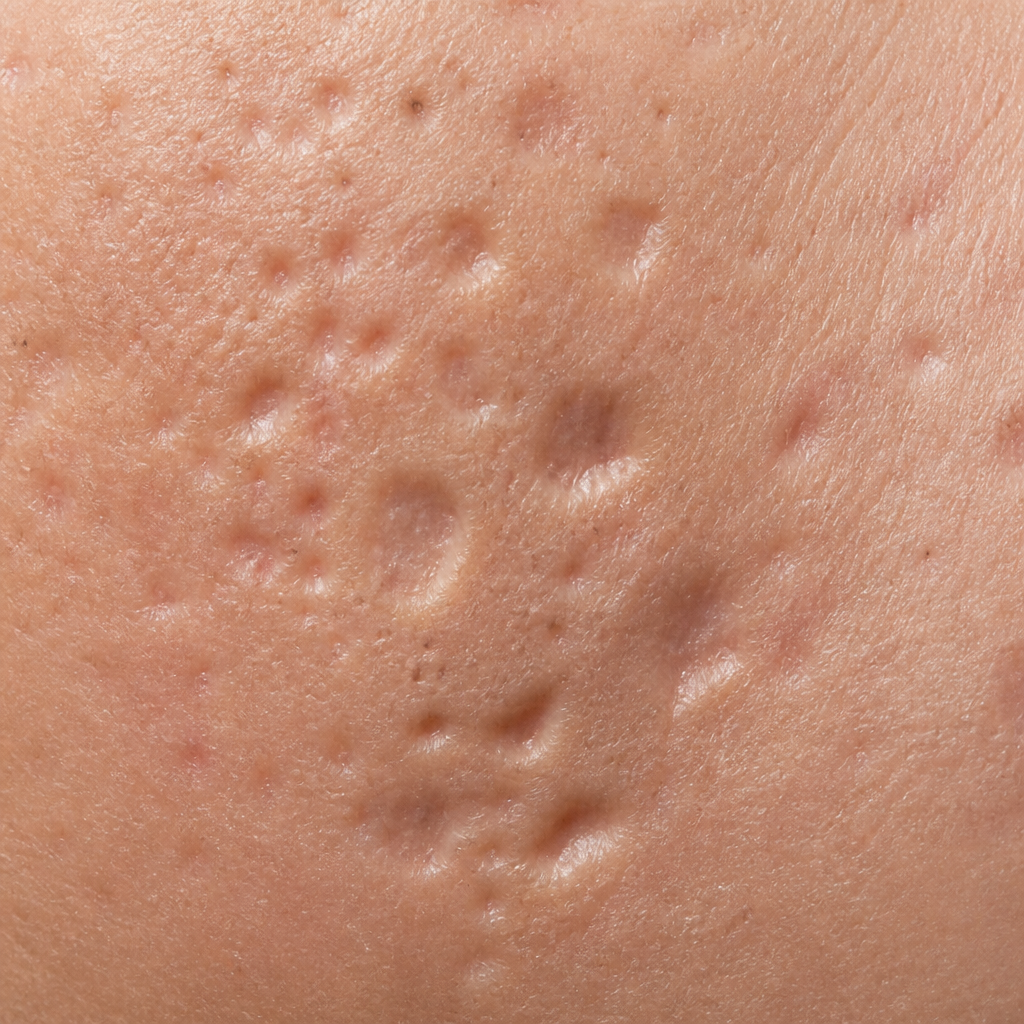
Acne scars are not just a teenage problem. A significant portion of adults across the Greater Toronto Area are still dealing with the textural damage, pitted skin, and discoloration that linger years after their breakouts cleared up. If you have asked a friend for a recommendation and ended up here, you are probably past the stage of hoping a good moisturizer will fix things. The question is a practical one: which acne scar treatment in Aurora actually delivers results, and how do you know which one is right for your specific scars? This guide answers exactly that, without the vague promises.
Table of Contents
- Quick Takeaways
- Understanding Acne Scar Types Before Choosing a Treatment
- Microneedling and PRP/PRF: The Workhorse of Scar Revision
- Laser Treatments for Acne Scars in Aurora
- Dermal Fillers for Depressed Acne Scars
- Chemical Peels: Where They Help and Where They Fall Short
- Treatment Comparison: Which Option Suits Which Scar?
- Why a Combination Approach Usually Wins
- What to Expect at a Medical Aesthetic Clinic in Aurora
- Frequently Asked Questions
- References
Quick Takeaways
| Key Insight | Explanation |
|---|---|
| Scar type determines treatment choice | Icepick, boxcar, and rolling scars each respond differently to available treatments. No single approach works for all three equally well. |
| Microneedling with PRP is highly versatile | This combination stimulates collagen production and is well-tolerated across a range of skin tones, including darker Fitzpatrick skin types common in the GTA. |
| Laser therapy offers the strongest resurfacing results | Fractional ablative lasers can produce significant improvements in scar depth and texture, though they require appropriate downtime and careful skin-type screening. |
| Dermal fillers are immediate but not permanent | Fillers work quickly to restore volume to depressed scars but require repeat sessions over time to maintain results. |
| Combination therapy consistently outperforms single treatments | Most patients present with multiple scar subtypes, meaning one modality rarely addresses everything. A staged, multi-treatment plan is the clinical standard. |
| Post-inflammatory hyperpigmentation is not a scar | Flat red or brown marks left after acne are discoloration, not structural scars. They respond to different treatments and often improve faster. |
| Skin tone matters for treatment selection | Aggressive laser settings can trigger pigmentation changes in medium to darker skin tones. A knowledgeable Aurora practitioner will factor this in from the start. |
Understanding Acne Scar Types Before Choosing a Treatment
Most people walk into a consultation knowing they have scars but not knowing what kind. That distinction matters enormously, because the treatment that works beautifully for one scar type can do very little for another.
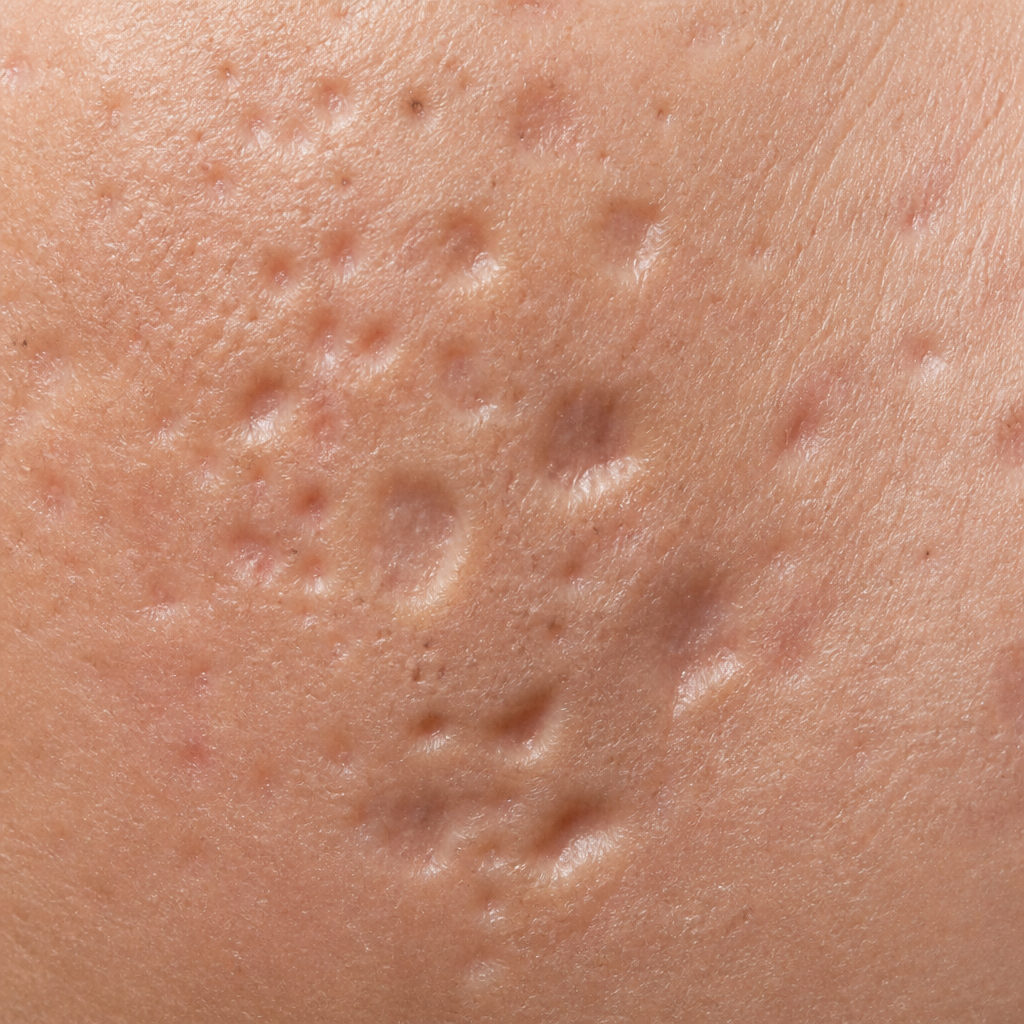
Acne scars fall into two broad categories: atrophic scars, which are depressions in the skin caused by collagen loss, and hypertrophic or keloidal scars, which are raised and caused by excess collagen production. The vast majority of patients seeking acne scar removal in Aurora, Ontario are dealing with atrophic types.
The Three Atrophic Subtypes
Icepick scars are deep, narrow, V-shaped channels that go straight down into the dermis. They are the hardest to treat because most surface-level treatments cannot reach their base. Chemical peels using the CROSS technique (focal application of trichloroacetic acid), punch excision, and laser therapy are the most targeted options for icepick scars.
Boxcar scars are wider, U-shaped depressions with sharp, defined edges. Their defined borders make them visible and stubborn, but they respond well to laser resurfacing, microneedling, and, in some cases, dermal fillers.
Rolling scars have a wave-like, undulating surface caused by fibrous bands tethering the skin to deeper tissue. They tend to respond well to microneedling, radiofrequency treatments, subcision, and dermal fillers.
Most people have a mix of all three. That is why a thorough assessment before starting any treatment is not a formality but a clinical necessity.
Combination therapies are more effective than solo treatments because patients typically have different types of scars that require volume restoration, tightening, and tissue movement along with resurfacing. Treatment should be tailored according to each patient’s needs, tolerance, and goals.
Microneedling and PRP/PRF: The Workhorse of Scar Revision
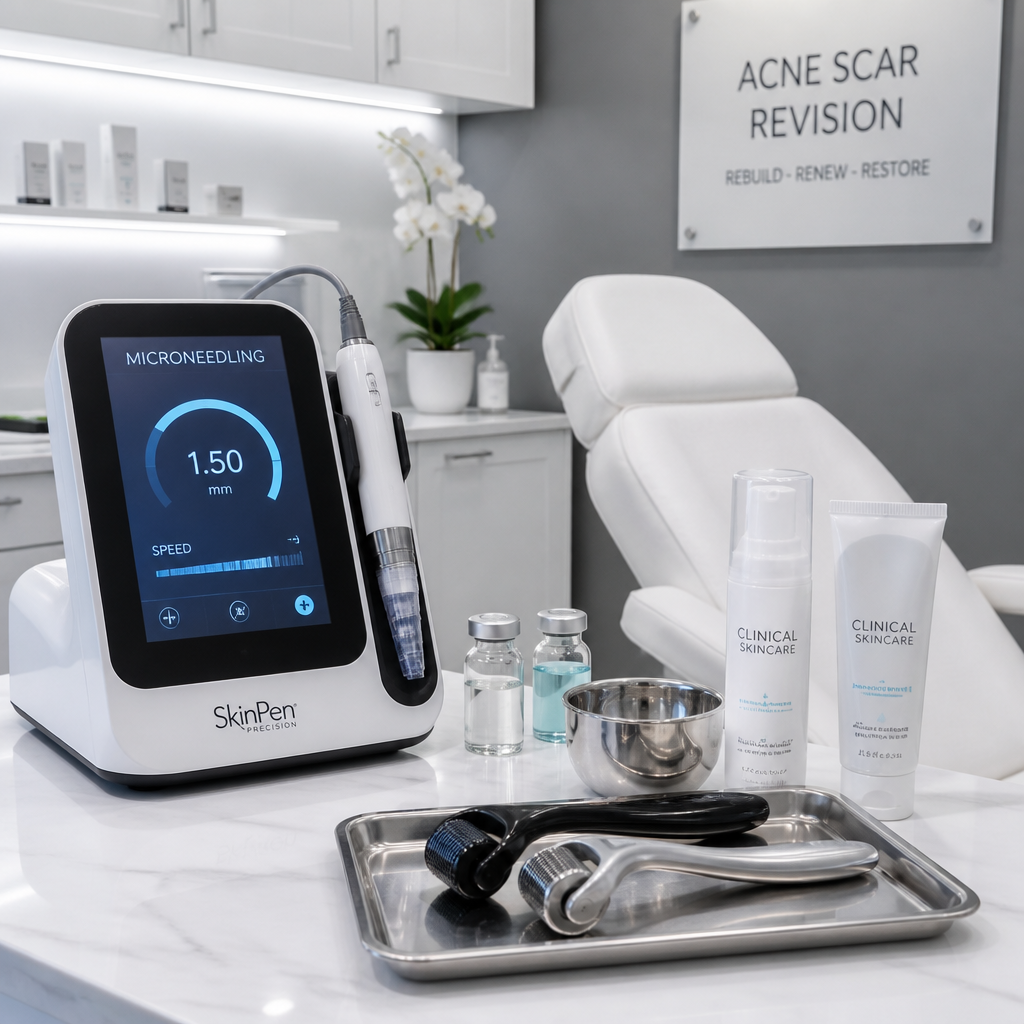
If there is one treatment that belongs in almost every acne scar revision plan, it is microneedling, especially when combined with PRP or PRF (platelet-rich fibrin). At Skin Excellence Medispa, this is offered as Automated Micro-Needling, also known as Epidermal Collagen Induction Therapy (ECIT), a clinically grounded approach to triggering the skin’s own repair mechanisms.
How Microneedling Works on Acne Scars
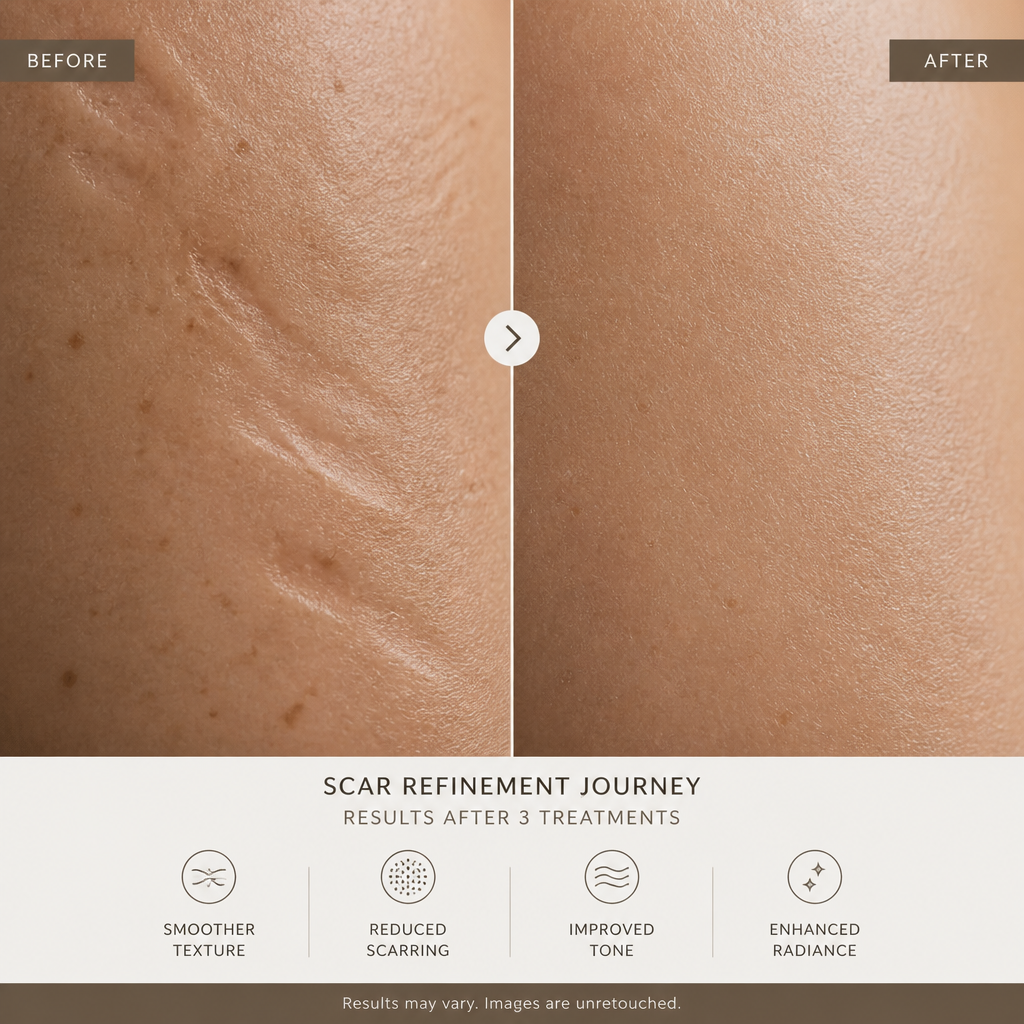
Microneedling creates thousands of controlled micro-injuries in the skin, triggering a collagen and elastin response. Over weeks and months, this new collagen begins filling in depressed scars from below, improving both texture and depth. The results are gradual but real.
Adding PRP amplifies this effect significantly. A small amount of the patient’s own blood is drawn, processed in a centrifuge to isolate the platelet-rich plasma, and then applied directly to the micro-channeled skin. The growth factors in PRP accelerate the healing and collagen-building response. This combination can improve the body’s ability to produce collagen well beyond what microneedling alone achieves.
Who Is It Best For
Microneedling with PRP or PRF is an excellent option for rolling and boxcar scars, and it is notably well-tolerated across a wider range of skin tones than ablative laser treatments. For GTA patients with medium to darker skin, this matters. It typically requires three to five sessions to achieve meaningful improvement, with results continuing to develop for several months after each treatment.
Pro tip: Do not expect dramatic change after your first microneedling session. The collagen remodeling process takes time. Patients who see the best outcomes commit to a full course of treatments and maintain results with medical-grade skincare in between sessions.
Laser Treatments for Acne Scars in Aurora
For patients with more significant textural scarring, laser treatments offer a higher level of resurfacing power than microneedling alone. Skin Excellence Medispa uses the Syneron Candela GentleMax Pro, a dual-wavelength laser system that can safely and effectively treat a range of skin types with precision and a built-in air-cooling option for patient comfort.
Ablative vs. Non-Ablative Laser Options
Fractional ablative lasers work by removing the top layers of damaged skin and stimulating deep collagen remodeling. Studies on fractional ablative modalities have reported improvements ranging from approximately 26 to 75 percent in the appearance of atrophic acne scars, depending on the number of treatments and the settings used. This is a significant outcome range, and the difference between results comes down to treatment planning, skin type assessment, and the skill of the practitioner.
Non-ablative fractional lasers are gentler, working beneath the skin’s surface without removing the top layer. They involve less downtime but typically require more sessions to achieve comparable results. For patients with active professional or social commitments who cannot manage extended recovery, this can be the more practical starting point.
A Critical Note on Skin Tone and Laser Safety
Laser energy and melanin interact in ways that can, if not managed correctly, cause post-inflammatory hyperpigmentation in medium to darker skin tones. Aggressive laser settings carry an increased risk of pigmentation changes in these patients. The GentleMax Pro’s dual-wavelength design and conservative, personalized settings address this directly, but the point stands: always choose a clinic where the practitioner has genuine experience treating diverse skin types.
Pro tip: If you are researching acne scar removal in Aurora, Ontario and comparing clinics, ask specifically about their experience with your Fitzpatrick skin type and which laser settings they use. The answer will tell you immediately whether they are thinking about your skin as an individual or applying a one-size protocol.
Dermal Fillers for Depressed Acne Scars
Dermal fillers are not the first thing most people think of when it comes to acne scars, but for the right scar type, they deliver immediate, visible improvement that nothing else can match on the same timeline.
When Fillers Make Sense
Rolling and wide boxcar scars are the primary candidates. Fillers work by physically elevating the depressed scar tissue back toward the surface of the surrounding skin, essentially restoring lost volume. The result is visible in the treatment session. For patients who have an event coming up or are simply impatient with gradual collagen-building approaches, fillers can bridge the gap while longer-term treatments do their work.
The important caveat: fillers are not permanent. They are metabolized over time and require repeat sessions to maintain results. They also do nothing for icepick scars, which are too narrow and too deep for volumization to be effective. In practice, fillers are most useful as part of a broader treatment plan rather than as a standalone solution for acne scar revision.
Chemical Peels: Where They Help and Where They Fall Short
Medical-grade chemical peels have a legitimate place in acne scar treatment, but their role is often misunderstood. Peels work by removing the outer layer of skin and prompting cellular turnover and, at deeper concentrations, collagen remodeling. For surface-level discoloration and mild textural irregularities, they are an efficient option.
Where they genuinely shine is in the treatment of post-inflammatory hyperpigmentation, the flat red or brown marks that many people mistake for scars. These are not structural scars but pigmentation changes, and peels at the right concentration clear them more quickly than most other approaches.
For deeper atrophic scars, particularly icepick scars, the CROSS technique uses a focal, high-concentration trichloroacetic acid application directly into the scar channel to stimulate collagen remodeling at depth. This is a precise, practitioner-dependent technique that is very different from a general resurfacing peel.
Where peels fall short is in treating moderate to severe textural scarring on their own. A patient with significant rolling or boxcar scars will see limited improvement from peels alone. They are better positioned as a preparatory or maintenance step alongside laser or microneedling treatments.
Treatment Comparison: Which Option Suits Which Scar?
| Treatment | Best Scar Types | Key Considerations |
|---|---|---|
| Microneedling with PRP/PRF | Rolling, Boxcar, mild Icepick | Suitable for most skin tones; gradual results over 3-5 sessions; minimal downtime; good for darker Fitzpatrick types |
| Fractional Laser Resurfacing | Boxcar, Rolling, surface texture | Stronger resurfacing power; some downtime required; must be matched carefully to skin tone; meaningful improvement in 1-3 sessions |
| Dermal Fillers | Rolling, wide Boxcar | Immediate visible lift; not permanent; not effective for Icepick scars; best used alongside collagen-stimulating treatments |
| Chemical Peels (including CROSS) | Post-inflammatory hyperpigmentation, mild surface texture, Icepick (CROSS technique) | Excellent for discoloration; limited on structural scars; CROSS technique requires precise application by trained practitioner |
Why a Combination Approach Usually Wins
The honest clinical reality is that single-modality treatment rarely resolves acne scarring completely. Most patients present with a combination of scar types, meaning that even the most effective individual treatment will only address part of the picture. Research consistently supports this: combination therapies outperform solo treatments because they address volume loss, textural damage, and surface discoloration simultaneously.
A common approach at a well-run Aurora medical aesthetics clinic is to begin with a thorough skin assessment, identify the dominant scar types, and then build a staged plan. This might look like starting with microneedling and PRP sessions to improve overall texture and stimulate collagen, adding a laser treatment to refine surface irregularities, and using fillers strategically to address any remaining depressed areas that have not fully responded.
The sequence matters. Treating a patient’s most aggressive scar types first and then maintaining progress with lighter treatments is a smarter strategy than throwing everything at the problem at once. In practice, a good practitioner will also schedule treatments to allow for adequate healing between sessions rather than rushing the timeline.
What to Expect at a Medical Aesthetic Clinic in Aurora
Aurora is well positioned within the GTA for residents in the northern York Region who want access to medical-grade aesthetic treatments without travelling into central Toronto. Skin Excellence Medispa serves this community with a full range of advanced scar revision options including Automated Micro-Needling (ECIT), PRP therapy, GentleMax Pro laser treatments, and dermal fillers, all delivered by experienced practitioners.
The Consultation Process
Any credible acne scar treatment plan starts with a proper consultation, not a sales pitch. During an initial assessment, your practitioner should examine your skin in good lighting, classify your scar types, ask about your skin history and any previous treatments, and discuss realistic expectations for your specific case. Be wary of any clinic that offers a generic package without taking the time to assess what you actually have.
Realistic Timelines
Acne scar revision is not a quick fix. Even the most aggressive laser treatment will not produce final results in a single session, and collagen remodeling continues for months after treatment. A realistic plan for moderate scarring typically spans several months, with sessions spaced four to six weeks apart. Patients who commit to this process and support it with appropriate aftercare consistently see better outcomes than those who expect a single appointment to transform their skin.
The good news is that improvements in the GTA medical aesthetics space have made these treatments safer, more comfortable, and more effective than they were even five years ago. Laser technology with air cooling, refined microneedling protocols, and a better understanding of combination sequencing mean that both the experience and the results are meaningfully better for today’s patients.
Frequently Asked Questions
How many sessions of microneedling do I need to see results on acne scars?
Most patients require three to five microneedling sessions to achieve meaningful improvement in acne scars. Sessions are typically spaced four to six weeks apart to allow adequate healing between treatments. Results continue developing for several months after the final session as collagen remodeling progresses.
Can laser treatment be used on darker skin tones for acne scars?
Yes, but the choice of laser technology and settings matters significantly. Aggressive ablative settings carry a higher risk of post-inflammatory hyperpigmentation in medium to darker skin tones. At Skin Excellence Medispa, the GentleMax Pro dual-wavelength laser is selected and calibrated to treat a range of skin types safely. Microneedling with PRP is often a preferred starting point for patients with darker Fitzpatrick skin types because of its lower pigmentation risk.
Are dermal fillers a permanent solution for acne scars?
No. Dermal fillers for acne scars offer immediate visible improvement by physically elevating depressed scar tissue, but they are gradually metabolized by the body and results are not permanent. They are most effective as part of a broader treatment plan, used alongside collagen-stimulating treatments like microneedling or laser therapy to address both the appearance and underlying structure of the scar.
What is the difference between an acne scar and post-inflammatory hyperpigmentation?
Post-inflammatory hyperpigmentation (PIH) refers to the flat red or brown discoloration that forms after acne inflammation. It is a pigmentation change, not a structural scar, and it often fades on its own over time, though chemical peels and topical treatments can accelerate that process. True acne scars involve textural changes, meaning pitting, raised tissue, or changes in skin architecture that require more targeted collagen-stimulating treatments to address.
Is it worth treating old acne scars, or only recent ones?
Old acne scars absolutely respond to treatment. While very recent scars are technically still in a remodeling phase and may continue to improve on their own, long-standing scars from years or even decades ago can still show meaningful improvement with the right treatment approach. Older scars are stable and predictable, which can actually make treatment planning more straightforward.
What should I do to prepare for acne scar treatment?
Preparation depends on the specific treatment, but general guidance includes avoiding active retinoid use and certain skincare actives in the days before treatment, staying out of direct sun exposure, arriving with clean skin, and being upfront with your practitioner about your full skincare routine and any medications you take. Your clinic will provide specific pre-treatment instructions tailored to your planned procedure.
Can I combine acne scar treatment with other aesthetic treatments like Botox or Sculptra?
In many cases, yes. Sculptra, a poly-L-lactic acid biostimulator, supports overall collagen building and can complement scar revision treatments. Botox is not directly used for scar treatment but is sometimes incorporated into broader facial rejuvenation plans. Your practitioner at Skin Excellence Medispa can advise on sequencing and any intervals needed between different treatment types to maximize safety and results.
Have you already tried a treatment for your acne scars, and were the results what you expected? Share your experience below, we would love to hear what has and has not worked for you.
References
- Published research comparing efficacy of acne scar treatments including laser, PRP, microneedling, and fillers
- Clinical review of atrophic acne scar subtypes and treatment strategies by scar morphology
- American Academy of Dermatology guidance on microneedling with PRP for acne scars
- Journal of Clinical and Aesthetic Dermatology findings on combination therapies for acne scar types
- Clinical trial definitions and classifications of icepick, boxcar, and rolling acne scar subtypes