Your skin does not age in a vacuum. For a significant portion of adults in the Greater Toronto Area, the lines, breakouts, and sagging they notice in their 30s, 40s, and 50s are not random signs of neglect. They are direct, measurable responses to shifting hormone levels. If you have been searching for answers about hormonal skin changes in Aurora and wondering whether a medical spa can actually move the needle, the honest answer is yes, but only when the right treatments are matched to the right hormonal stage. Here is what experienced practitioners at Skin Excellence Medispa see regularly, and what modern medical aesthetics can realistically do about it.
Table of Contents
- Quick Takeaways
- How Hormones Actually Change Your Skin
- Hormonal Acne: What a Medspa Can Do
- Collagen Loss and Skin Laxity: The Estrogen Connection
- Treatment Comparison: Matching the Right Approach to Your Hormonal Stage
- Volume Loss and Facial Contouring After Hormonal Shifts
- What a Medspa Cannot Replace
- Frequently Asked Questions
- References
Quick Takeaways
| Key Insight | Explanation |
|---|---|
| Estrogen drives collagen production | When estrogen declines during perimenopause and menopause, collagen production slows significantly. Research suggests women can lose up to 30% of skin collagen within the first five years after menopause, which is why skin laxity tends to appear rapidly during this stage. |
| Hormonal acne has a distinct pattern | Adult hormonal breakouts typically cluster along the jawline and chin, are often deep and cystic, and tend to flare around menstruation or hormonal transitions like starting or stopping birth control. This pattern is the first clue that skincare alone will not solve the problem. |
| Progesterone spikes drive excess oil | After ovulation, rising progesterone stimulates the sebaceous glands, increasing oil production and setting the stage for clogged pores and pre-period breakouts. Medical-grade treatments can manage the resulting congestion more effectively than over-the-counter products. |
| Sculptra and PRF address the root cause of collagen loss | Biostimulatory treatments like Sculptra (poly-L-lactic acid) and Platelet-Rich Fibrin (PRF) do not simply fill lines. They actively prompt the skin to build new collagen, making them especially relevant for perimenopausal and menopausal patients experiencing structural volume loss. |
| Botox wears off faster during perimenopause | Hormonal fluctuations affect how long neuromodulators like Botox hold. Patients in perimenopause often need to revisit their treatment schedule, not because the injector made an error, but because the skin environment itself has become less stable. |
| Microneedling with PRP/PRF is particularly effective for hormonally thinned skin | By triggering the body’s wound-healing response, microneedling combined with PRP or PRF stimulates collagen and elastin in skin that has lost thickness due to hormonal decline. It is one of the most versatile tools in the hormonal skin toolkit. |
| Belkyra targets fat redistribution, not lifestyle choices | Hormonal changes, especially during menopause, often cause fat to migrate to the submental area (under the chin). Belkyra (deoxycholic acid) is designed specifically for this concern and is available through medical aesthetic clinics in Aurora. |
How Hormones Actually Change Your Skin
Most people understand that hormones affect mood and energy. Fewer people realize how directly they govern skin structure, oil production, and the rate at which skin ages. The three hormones that matter most for skin are estrogen, progesterone, and androgens (primarily testosterone), and each acts on the skin in a distinct way.
Estrogen stimulates the production of collagen, elastin, and hyaluronic acid. These three molecules are what keep skin plump, firm, and hydrated. Estrogen levels peak just before ovulation, giving skin a brief window of radiance, then drop after ovulation. Over the course of the reproductive years, these cyclical dips are manageable. During perimenopause and menopause, the decline becomes sustained and significant.
Progesterone rises after ovulation and stimulates the sebaceous glands to increase oil production. This is why many women experience congestion, clogged pores, and breakouts in the second half of their cycle. In practice, this is the hormonal driver behind the “I break out every month at the same time” complaint that so many patients bring to a first consultation.
Androgens such as testosterone stimulate sebum production and hair growth. Women produce androgens in smaller amounts, but conditions like Polycystic Ovarian Syndrome (PCOS) can elevate androgen levels, producing persistent cystic acne, often concentrated along the jawline and chin. This pattern does not respond the same way typical teen acne does, and treating it requires a different approach.
Hormonal skin changes are not cosmetic inconveniences. They are physiological events driven by measurable shifts in the body’s chemistry, and they deserve treatment strategies that are equally precise.
Understanding which hormonal shift is driving which skin concern is what separates effective medical aesthetic treatment from generic skincare advice. At Skin Excellence Medispa in Aurora, the first step in any consultation for hormonally-driven skin concerns is mapping the pattern of change against the patient’s life stage and symptoms.
Hormonal Acne: What a Medspa Can Do
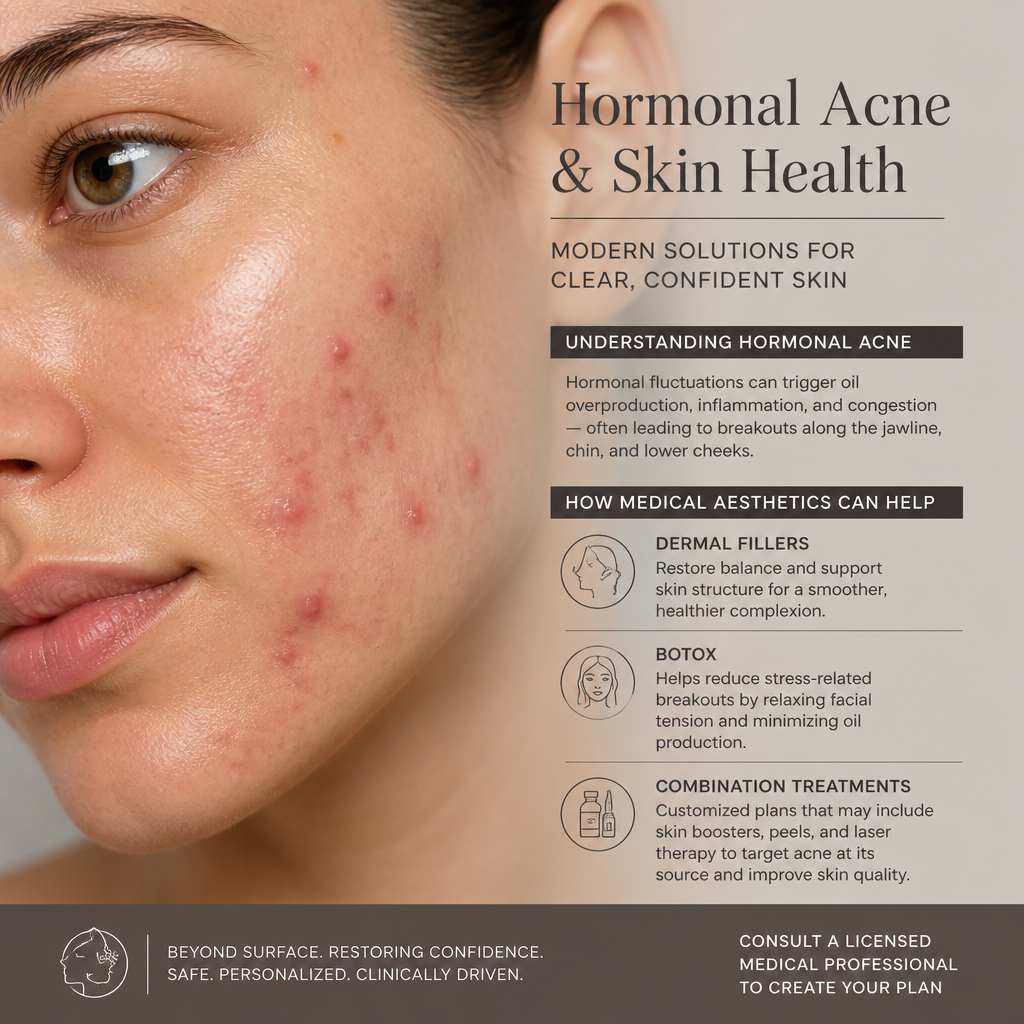
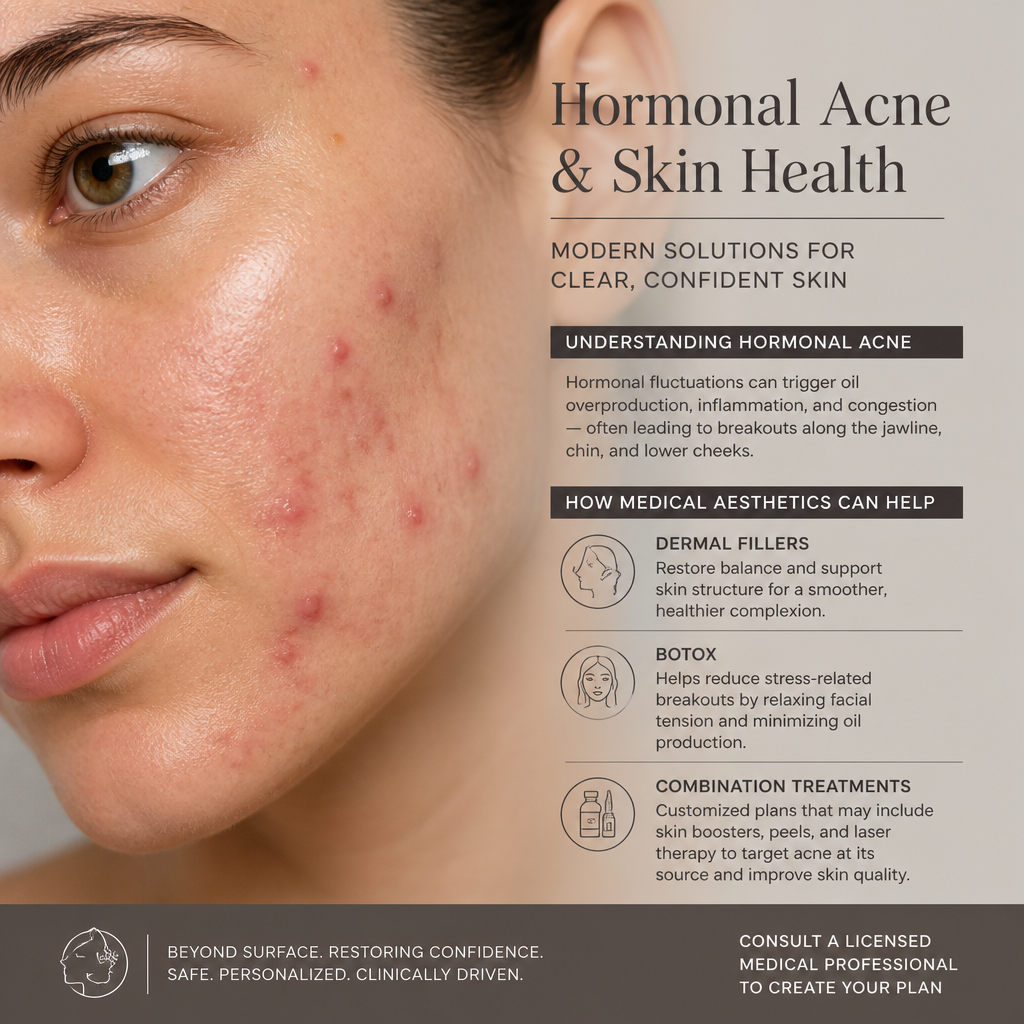
Adult hormonal acne is a category of its own. It is distinct from the comedonal acne most people associate with adolescence, and it does not respond well to the same treatments. The hallmarks are deep, painful cysts along the lower face, particularly the jawline, chin, and neck, often flaring predictably around menstruation or during hormonal transitions.
Medical-Grade Facials and Chemical Peels
The first line of in-clinic support for hormonally driven breakouts is a structured program of medical facials paired with chemical peels. Medical-grade facials at a medspa use active ingredients and protocols not available in standard spa settings. Chemical peels using acids such as salicylic acid help accelerate cell turnover, decongest pores, and reduce the inflammation and post-inflammatory hyperpigmentation that hormonal cysts leave behind.
A common mistake is treating hormonal acne with overly aggressive peels during active flares. In practice, calming the skin first, then introducing exfoliating treatments during stable periods, produces significantly better outcomes than applying the same protocol regardless of where a patient is in their cycle.
Microneedling for Post-Acne Scarring
Once the active breakout phase is managed, hormonal acne almost always leaves a legacy of textural scarring and uneven pigmentation. Microneedling creates controlled micro-injuries that trigger the skin’s wound-healing response, stimulating collagen and elastin to remodel scar tissue. For patients dealing with the aftermath of years of hormonal breakouts, a series of microneedling sessions produces meaningful improvement in texture that topical products cannot achieve on their own.
Pro tip: If you are managing active hormonal breakouts alongside existing scarring, inform your practitioner before your first microneedling appointment. Needling over active inflamed lesions can worsen inflammation and spread bacteria. Timing the treatment correctly within your hormonal cycle matters.
PRF (Platelet-Rich Fibrin) as an Add-On
Adding PRF to microneedling sessions introduces growth factors that accelerate the skin’s healing response, reduce inflammation, and support new collagen production. For patients whose skin has been chronically inflamed by hormonal acne, PRF helps reset the skin environment and reduces the recovery time between sessions. This combination is one of the most consistently effective tools available at a medspa in Aurora for hormonally-compromised skin.
Collagen Loss and Skin Laxity: The Estrogen Connection
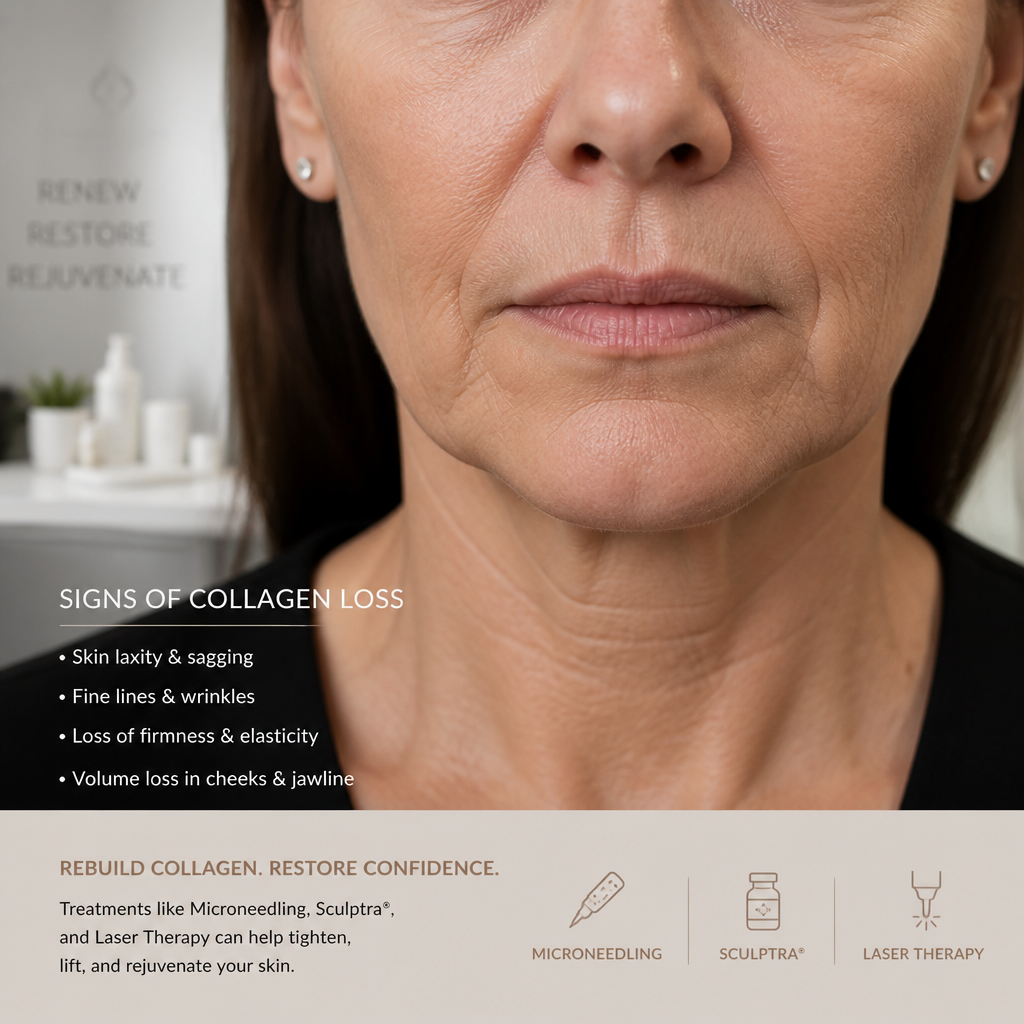
Skin laxity is the concern that most directly tracks hormonal decline, and it accelerates sharply during perimenopause. Studies indicate that women can lose up to 30% of their skin’s collagen within the first five years after menopause, with an ongoing annual decline of approximately 2% thereafter. This is not a gradual, barely-noticeable process for most women. Patients commonly describe it as looking in the mirror one year and their face looking noticeably different from the year before.
The skin thins, loses elasticity, and begins to sag along the jawline and cheeks. Fine lines deepen. The under-eye area becomes more hollowed. These are direct structural consequences of estrogen loss, not simply “aging poorly.”
Sculptra: Building Collagen Over Months
Sculptra, made from poly-L-lactic acid (PLLA), is a biostimulatory injectable that works by prompting the body’s own fibroblasts to produce new collagen. Unlike a hyaluronic acid filler that adds volume immediately and then degrades, Sculptra works gradually, with results building over several weeks and lasting up to two years. For perimenopausal and menopausal patients experiencing structural collagen loss, this is arguably the most appropriate injectable treatment because it addresses the actual deficit rather than masking it.
Sculptra is not an instant result. Patients who expect to look visibly different the week after treatment are misunderstanding what the product does. The payoff comes at the three to six month mark, when new collagen has been laid down and the face looks naturally firmer.
Microneedling With Sculptra or PRF for Deeper Laxity
Combining microneedling with Sculptra or PRF supercharges both treatments. The micro-channels created by needling enhance the penetration and distribution of Sculptra and growth factors, while the mechanical stimulation of needling simultaneously activates the skin’s own healing response. For patients with moderate skin laxity related to hormonal decline, this combination targets the problem on two fronts at once.
Pro tip: Collagen stimulation treatments require patience and consistency. A single session of microneedling or one vial of Sculptra will not replicate years of lost collagen. Realistic expectations and a planned series of treatments produce far better outcomes than a one-time appointment.
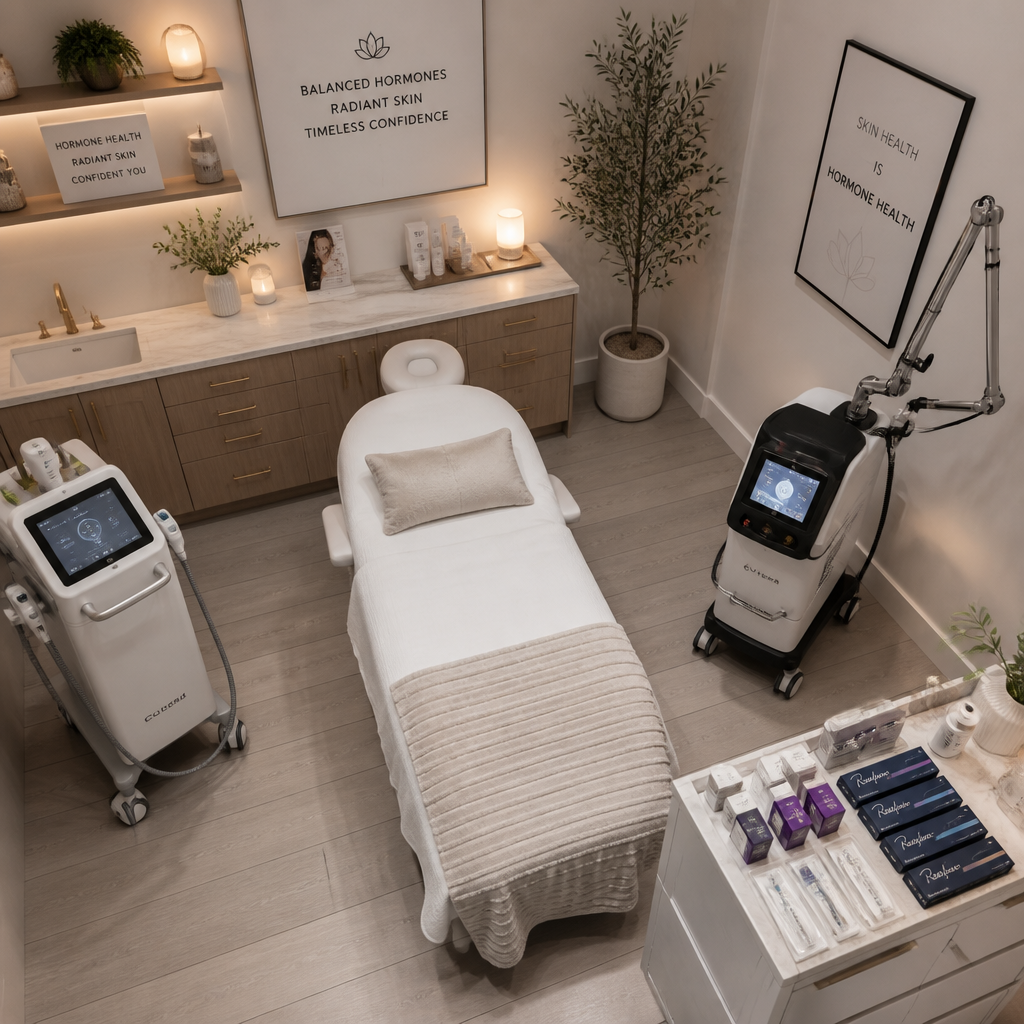
Treatment Comparison: Matching the Right Approach to Your Hormonal Stage
| Hormonal Skin Concern | Primary Medspa Treatment Option | What It Does and What to Expect |
|---|---|---|
| Active hormonal acne (jawline, chin, cyclical) | Medical facials, chemical peels, PRF microneedling | Reduces active breakouts, decongests pores, manages inflammation. Results improve with a consistent series. Does not replace medical management of underlying hormonal conditions. |
| Post-acne scarring and pigmentation | Microneedling with PRP/PRF, chemical peels | Stimulates collagen remodeling of scar tissue. Multiple sessions needed. Significant improvement in texture and tone achievable over three to six months. |
| Skin laxity and fine lines (perimenopause, menopause) | Sculptra, dermal fillers, Botox, microneedling with PRF | Sculptra rebuilds collagen over months. Fillers restore volume and lift immediately. Botox softens dynamic lines. Best results come from combining approaches based on patient-specific loss pattern. |
| Submental fat (hormonally-driven chin heaviness) | Belkyra | Deoxycholic acid destroys fat cells in the submental area permanently. Requires a series of sessions. Results are permanent once fat cells are eliminated, assuming stable weight. |
| Overall skin dullness, dryness, and thinning | PRF injections, medical-grade facials, laser rejuvenation | PRF supports skin hydration and thickness. Medical facials using active ingredients restore radiance. Laser treatments improve tone and stimulate collagen at the surface level. |
Volume Loss and Facial Contouring After Hormonal Shifts
Volume loss is one of the most visually striking consequences of hormonal decline, and it is frequently misread as weight loss or “just getting older.” In reality, the redistribution of facial fat and the collapse of structural support beneath the skin are hormonally driven events. As estrogen declines, the fat pads that give the midface its lifted appearance begin to shift downward and thin out. The result is hollowed temples, flattened cheeks, and heaviness along the jawline.
Dermal fillers using hyaluronic acid remain one of the fastest ways to restore this lost volume and lift. The key distinction in menopausal patients is that filling needs to be done with restraint and precision. Overfilling areas that have lost bone density and structural support produces an unnatural result. The goal is subtle restoration of the face’s natural scaffold, not a replacement of it.
A common mistake in treating hormonally-driven volume loss is focusing only on where the deficit is most visible, rather than addressing the architectural loss that caused it. A skilled injector in Aurora will assess the entire face as a structure, not just the individual lines or hollows that a patient points to in the mirror.
Belkyra for Hormonal Fat Redistribution Under the Chin
Hormonal changes, particularly during menopause, often cause fat to collect in the submental area, creating the appearance of a double chin that is resistant to diet and exercise. Belkyra, a synthetic form of deoxycholic acid, is injected directly into this fat deposit and permanently destroys the fat cells. Once those cells are gone, they do not return. For patients in the GTA who have been frustrated by a submental heaviness that appeared during hormonal changes, Belkyra offers a targeted, non-surgical solution available through medically-supervised clinics like Skin Excellence Medispa in Aurora.
Botox in a Hormonal Context
Botox and other neuromodulators work by temporarily relaxing the muscles responsible for dynamic expression lines. In perimenopausal patients, these lines tend to deepen faster because the skin has lost the collagen cushion that once softened their appearance. What is important to understand is that Botox results may not last as long during hormonal fluctuations. The product itself is not failing. The skin environment is simply less stable, and treatment schedules may need adjustment accordingly.
Botox works best in a hormonally-driven laxity context when it is part of a broader plan that includes collagen stimulation. Relaxing the muscles while simultaneously rebuilding the skin’s structural foundation produces results that look natural and last longer than either treatment alone.
What a Medspa Cannot Replace
Honest practitioners are clear about this: medical aesthetic treatments address the skin-level manifestations of hormonal change. They do not regulate hormones. If a patient is dealing with significant hormonal imbalance, whether from PCOS, thyroid dysfunction, or the full transition of menopause, in-clinic treatments will work better and last longer when the underlying hormonal picture is also being managed in collaboration with a physician or endocrinologist.
The role of a medspa in this context is to treat what hormones have done to the skin’s structure, texture, and function, using the most appropriate tools available. Results are real and often significant. But they are not a substitute for systemic hormonal care when that care is indicated. This is a boundary that the best medical aesthetic clinics in Aurora hold firmly, and it is one of the reasons why a good consultation always includes a conversation about the patient’s overall health picture, not just their skin complaints.
Lifestyle factors amplify or undermine every in-clinic treatment. Consistent sleep, a protein-adequate diet, sun protection, and not smoking all directly affect how the skin responds to treatments like Sculptra, microneedling, and fillers. In practice, patients who invest in their lifestyle alongside their clinic treatments see noticeably better and longer-lasting results than those who treat the clinic visit as a standalone fix.
Frequently Asked Questions
Can a medspa in Aurora treat hormonal acne, or do I need to see a dermatologist first?
A medical aesthetic clinic can effectively treat the skin-level consequences of hormonal acne, including active breakouts, congestion, post-inflammatory pigmentation, and scarring. However, if your hormonal acne is related to a condition like PCOS or a thyroid disorder, managing that underlying condition with a physician will significantly improve the results you get from any medspa treatment. The best outcomes come from a coordinated approach, not an either-or choice.
At what age do hormonal skin changes typically become noticeable?
For many women, the first noticeable hormonal skin changes begin in the mid-to-late 30s, during the early stages of perimenopause, even before periods become irregular. Cyclical breakouts, increased dryness in the second half of the cycle, and slightly reduced skin firmness are among the earliest signs. The changes accelerate through the 40s and are most dramatic in the first five years after menopause, when collagen loss is most rapid.
How many sessions of microneedling or Sculptra will I need for hormonal skin laxity?
There is no universal answer, because the degree of collagen loss varies considerably between individuals. As a general guide, most patients with moderate laxity related to hormonal decline benefit from a series of three to four microneedling sessions spaced four to six weeks apart, and two to three Sculptra treatments spaced several months apart. Your practitioner at Skin Excellence Medispa will assess your skin and recommend a plan based on your specific starting point and goals.
Will Botox still work the same way during perimenopause?
Botox does work during perimenopause, but many patients notice that the results do not last quite as long as they did previously. This is related to the less stable hormonal environment affecting how the skin maintains the treatment. The solution is not to abandon Botox but to combine it with collagen-stimulating treatments and to adjust the treatment schedule to match the skin’s current behaviour. A practitioner familiar with hormonally-driven skin changes will anticipate this and plan accordingly.
Is Belkyra effective for menopausal weight gain under the chin?
Belkyra is effective specifically for submental fat, meaning the localized fat deposit under the chin. It works by permanently destroying fat cells in that area. If the submental heaviness is primarily driven by fat accumulation, Belkyra is a well-suited treatment. If there is also significant skin laxity in that area (loose skin rather than just fat), a combination approach that includes skin-tightening treatments may be more appropriate. Your practitioner will assess this during your consultation.
Can men experience hormonal skin changes that a medspa can address?
Yes. Men experience a gradual decline in testosterone as they age, sometimes referred to as andropause. This leads to reduced sebum production, thinner skin, decreased collagen, and increased fine lines. Treatments including Botox, dermal fillers, Sculptra, and microneedling with PRF are all relevant for men experiencing hormonally-accelerated skin aging. The treatments are the same; the assessment of facial anatomy and treatment goals is simply adapted to male facial structure.
Have you noticed changes in your skin that seemed to coincide with a hormonal shift? Share your experience in the comments below, or reach out to the team at Skin Excellence Medispa to book a consultation and discuss what these changes might mean for your treatment options in Aurora.
We would love your feedback and any insights you would share with others. What perspective would you add?
References
- How hormones affect skin from PMS through perimenopause, explained by dermatologists
- The relationship between estrogen levels and skin collagen production across life stages
- Clinical overview of the best treatment approaches for adult hormonal acne
- How perimenopause changes the way skin responds to aesthetic treatments like Botox and fillers
- Comparing collagen stimulation treatments including Sculptra and PRP for facial rejuvenation