
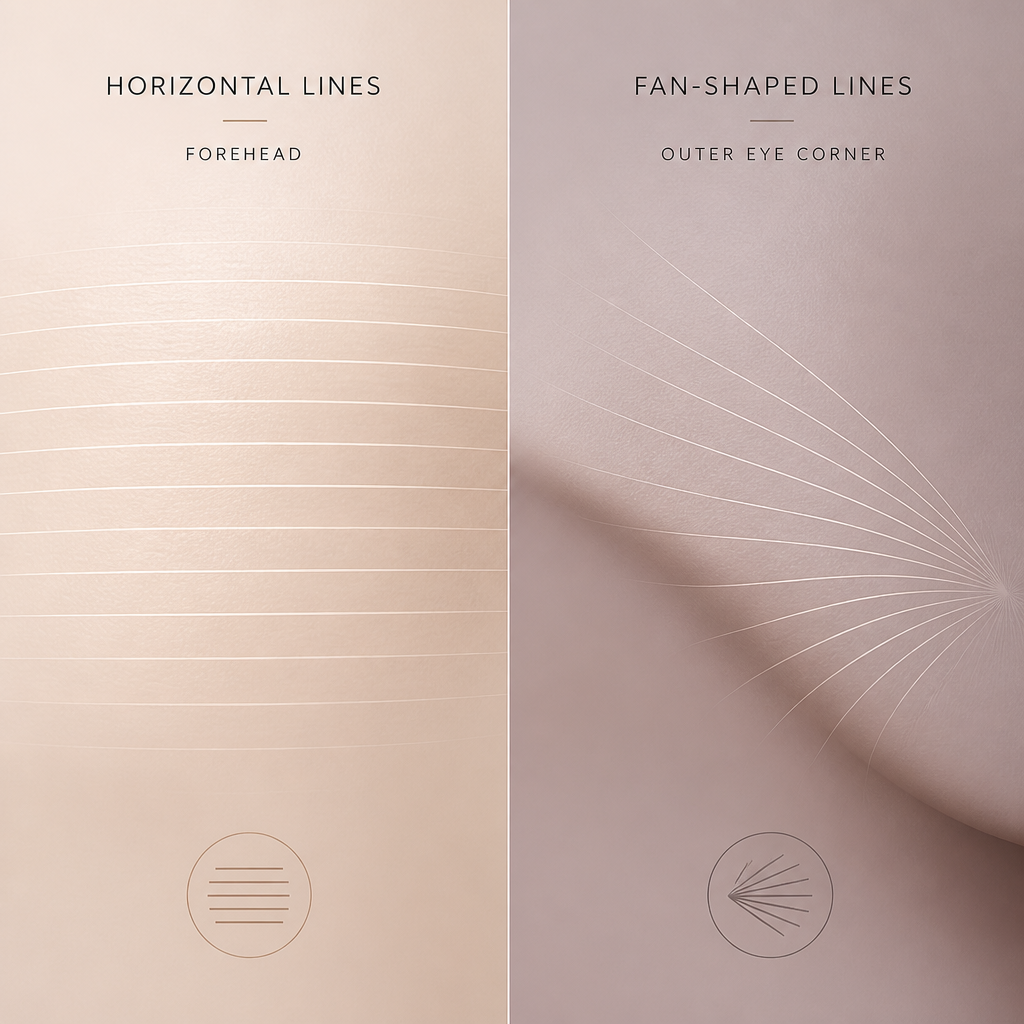
Most people who come in asking about forehead Botox in Aurora are actually thinking about two very different problems at once. The horizontal lines across the brow and the fan-shaped creases at the outer corners of the eyes look similar on the surface, but they are caused by different muscles, require different injection techniques, and respond differently to treatment. Getting this distinction right is the difference between a refreshed, natural result and a result that looks off. This guide breaks down exactly what separates these two treatment zones, how a skilled injector approaches each one, and what you should realistically expect.
Table of Contents
- What Causes Forehead Lines vs. Crow’s Feet
- Quick Takeaways
- The Frontalis Muscle: Why Forehead Botox Demands Precision
- The Orbicularis Oculi: The Muscle Behind Crow’s Feet
- Units, Dosing, and Treatment Planning
- Comparison: Forehead Lines vs. Crow’s Feet Botox
- Treating Both Areas Together: Why the Upper Face Works as a System
- What to Expect: Timeline and Longevity
- Who Is a Good Candidate in the GTA
- Frequently Asked Questions
- References
What Causes Forehead Lines vs. Crow’s Feet
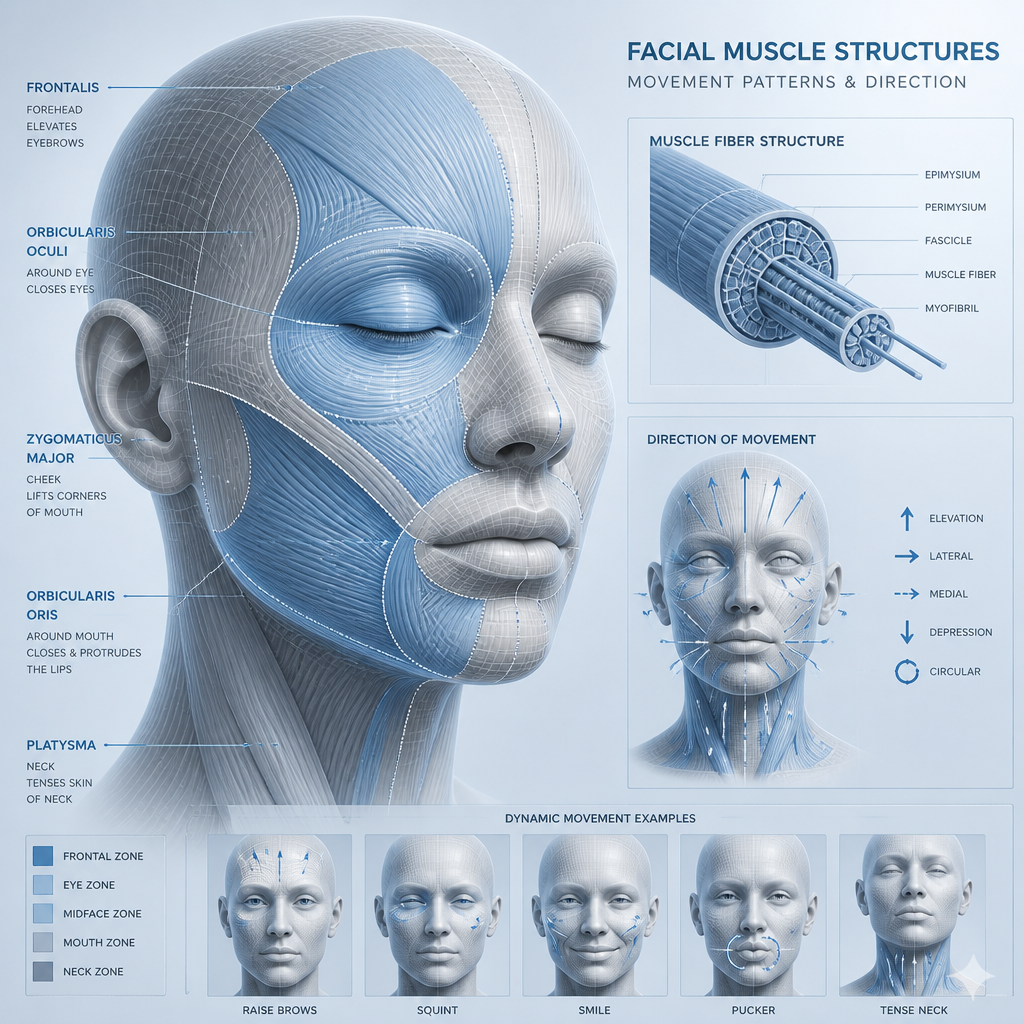
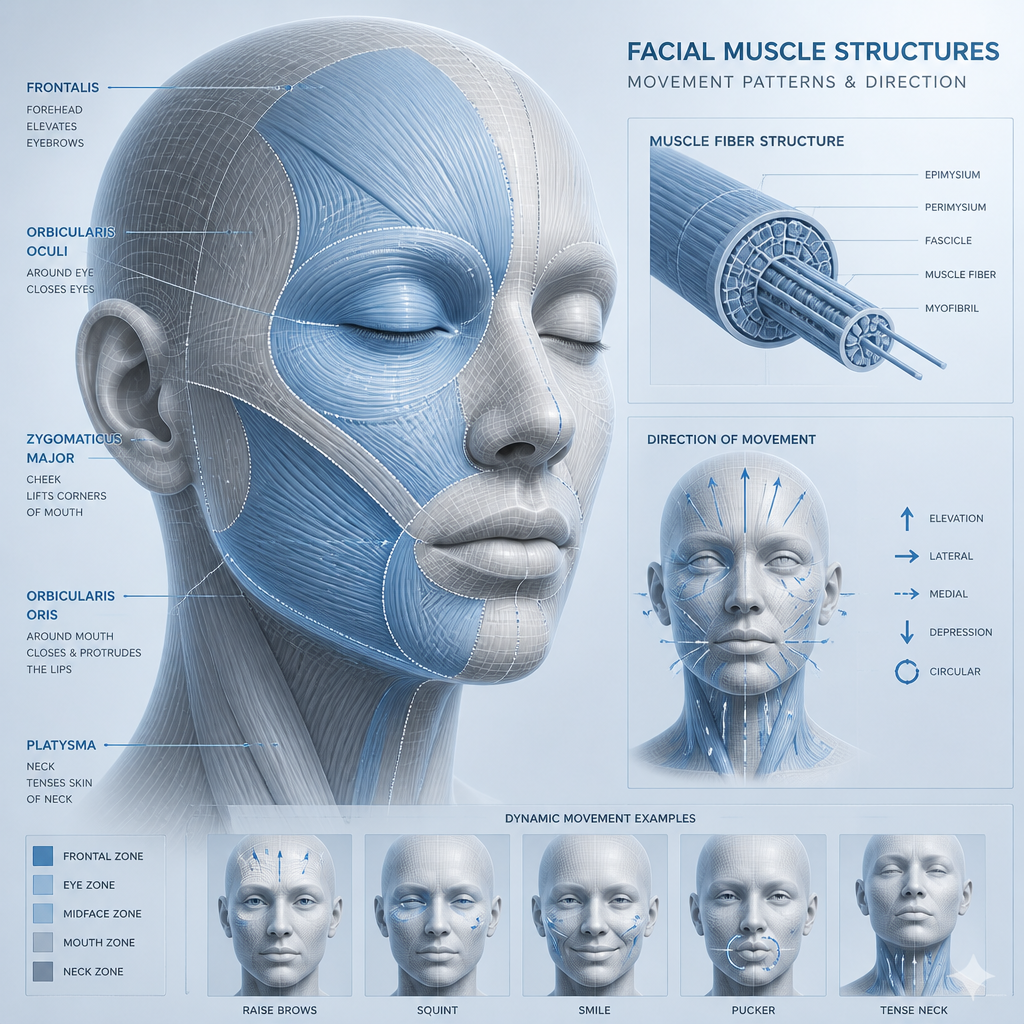
Both forehead lines and crow’s feet are dynamic wrinkles, meaning they are created by repeated muscle movement rather than by gravity or volume loss alone. When you raise your eyebrows, the frontalis muscle on your forehead contracts and folds the skin above it into horizontal bands. When you smile or squint, the orbicularis oculi muscle surrounding your eye contracts and fans the skin outward from the outer corner of your eye.
Early on, these lines only appear during expression and disappear at rest. Over time, with repeated muscle activity and the gradual thinning of collagen in the skin, the lines etch themselves in and become visible even without any expression. That is the shift from dynamic wrinkles to static wrinkles, and it is exactly the point at which many GTA residents decide to act.
Understanding the cause matters because it directly shapes how Botox is used. Botox works by temporarily blocking nerve signals to specific muscles, reducing the contractions that create those folds. The technique is precise by design: you are not numbing an area, you are selectively quieting a particular muscle while leaving surrounding ones fully functional.
Quick Takeaways
| Key Insight | Explanation |
|---|---|
| Different muscles, different techniques | Forehead lines involve the frontalis muscle; crow’s feet involve the orbicularis oculi. Each requires a distinct injection approach and dosing strategy. |
| Forehead Botox carries brow-drop risk if under-dosed incorrectly | Paradoxically, too few units placed too low on the forehead can cause the brow to drop. Placement height and dose balance are critical. |
| Crow’s feet are more forgiving but still require conservatism | The eye area is sensitive. Over-treating the orbicularis oculi can smooth out natural smile lines in a way that looks unnatural up close. |
| Official dosing provides a reliable starting point | BOTOX Cosmetic’s approved dosing uses 20 units for forehead lines and 24 units for crow’s feet, though individual anatomy varies. |
| Results appear gradually, not overnight | You may notice initial softening within 1 to 2 days, but full results typically develop over 30 days. |
| Treating both areas together improves overall balance | The upper face functions as an interconnected system. Treating one zone in isolation sometimes creates imbalance across the brow and eye area. |
| Results for both areas last up to four months | Consistent maintenance appointments, typically every three to four months, are recommended for sustained results. |
Before walking through the specifics of each treatment zone, it helps to understand why the forehead is routinely considered the trickier of the two areas for injectors. The anatomy there involves a balancing act that has no equivalent in the crow’s feet zone.
The Frontalis Muscle: Why Forehead Botox Demands Precision
The frontalis is the broad, thin muscle that covers the forehead and is responsible for raising the eyebrows. It is the only muscle in the forehead that lifts the brow. That single anatomical fact is what makes forehead Botox more technically demanding than it looks.
The Brow Ptosis Problem
When too much Botox is placed too low on the frontalis, or when the entire muscle is over-treated without accounting for the patient’s baseline brow position, the brow can drop. This is called brow ptosis. It makes the eyes look heavy and tired, and it is the result that most people are trying to avoid when they say they do not want to look “frozen.” Brow ptosis is not caused by Botox spreading to the wrong area in most cases. It is caused by removing the frontalis’s ability to hold the brow up when the patient already relies on that muscle to maintain their natural resting brow height.
Injection Placement and Depth
The frontalis is a thin muscle. Injecting too deeply risks hitting the periosteum, the membrane covering the bone, which can trigger a headache. Injecting too superficially may miss the muscle entirely. Placement is typically mapped to sites well above the brow, with the medial and lateral boundaries defined based on individual anatomy. A thorough consultation that includes assessing resting brow position, brow asymmetry, and the patient’s natural muscle activity is not optional for this area. It is the foundation of a safe result.
In practice, patients with a naturally low brow or heavy upper eyelids are often treated more conservatively in the forehead, with attention shifted toward lifting the tail of the brow by selectively treating other muscles around it. This kind of individualized planning is what separates a medispa consultation from a standard appointment.
Pro tip: If you have been told you have a naturally low brow or heavy upper lids, mention this at your consultation before any forehead Botox treatment. It changes the recommended dosing and placement strategy significantly.
The Orbicularis Oculi: The Muscle Behind Crow’s Feet
The orbicularis oculi is the circular muscle that surrounds the eye. When it contracts during smiling, laughing, or squinting, it fans the skin outward from the outer corner of the eye, creating the lines we call crow’s feet. Because this muscle is active dozens of times per day through ordinary social expression, crow’s feet tend to develop earlier than many other facial wrinkles.
Why the Eye Area Requires a Conservative Approach
The skin around the eyes is thinner and more delicate than the skin on the forehead. Bruising is more common here, which is worth knowing before a social event. More importantly, over-treating the orbicularis oculi can create an artificially smooth, expressionless look around the eye that looks unusual during smiling. The goal is not to eliminate all lateral eye movement. The goal is to soften the depth of the lines while preserving the naturalness of your smile and the warmth of your expression.
Injection Points for Crow’s Feet
Crow’s feet Botox is typically delivered at multiple points along the lateral orbital rim, outside the bony edge of the eye socket, rather than close to the eye itself. This keeps the product away from the eyelid and reduces the risk of lid-related complications. The number of injection points varies depending on how far the crow’s feet extend, which can range from the outer corner of the eye alone to a wider fan that reaches toward the cheekbone and below the eye.

Pro tip: Avoid blood-thinning supplements like fish oil, vitamin E, and aspirin for several days before a crow’s feet treatment. The skin around the eyes bruises more easily than any other Botox treatment zone, and this simple preparation step makes a visible difference in recovery.
Units, Dosing, and Treatment Planning
Dosing for Botox is measured in units, and both the forehead and crow’s feet have well-established dosing frameworks. BOTOX Cosmetic’s own approved dosing calls for 20 units for forehead lines and 24 units for crow’s feet as part of a comprehensive upper-face treatment. These numbers are derived from clinical testing and represent a reliable reference point, though individual anatomy, muscle mass, and treatment goals mean that real-world doses are adjusted accordingly.
For the forehead specifically, ranges in clinical practice run broadly from 10 to 30 units depending on the individual. Patients with strong frontalis muscles, deep established lines, or a history of previous treatment that has worn off may be on the higher end. First-time patients, those with a naturally low brow, or patients who prefer a subtle result are usually started more conservatively.
For crow’s feet, conservative dosing that preserves natural expression is a consistent recommendation among practitioners. The eye area does not need to be treated aggressively to show meaningful results. Starting with a moderate dose and adjusting at a follow-up appointment is a lower-risk strategy than going heavy on the first session.
The measure of a well-executed Botox treatment is not how much product was used, but how naturally the result reads. A face that moves like itself, only more rested, is the goal.
Comparison: Forehead Lines vs. Crow’s Feet Botox
| Feature | Forehead Lines | Crow’s Feet |
|---|---|---|
| Primary muscle targeted | Frontalis | Orbicularis oculi (lateral portion) |
| Typical approved dosing (BOTOX Cosmetic) | 20 units | 24 units (bilateral) |
| Main technical risk | Brow ptosis from over-treating or low placement | Over-smoothing, visible bruising, unnatural smile appearance |
| Skin sensitivity | Moderate. Skin is thicker than eye area | High. Periorbital skin is the thinnest on the face |
| Expression preservation concern | Keeping natural brow movement and lift | Keeping natural smile and squint expression |
| Results timeline | Initial onset 1 to 2 days, full results at 30 days | Initial onset 1 to 2 days, full results at 30 days |
| Longevity | Up to four months | Up to four months |
Treating Both Areas Together: Why the Upper Face Works as a System
The forehead, glabella (the area between the brows), and the crow’s feet zone are anatomically interconnected. The muscles in these areas pull against each other and influence brow position as a group. Treating only the forehead, for instance, without also addressing the depressor muscles between the brows can sometimes leave the face looking unbalanced, with a heavy central brow and a smooth upper forehead.
Many practitioners who see patients for crow’s feet Botox in the GTA will assess the full upper face during a consultation, even if the patient initially presents with a single concern. The reason is practical: treating the lateral eye lines alone while leaving the forehead heavily creased creates an odd visual contrast. Conversely, treating the forehead without softening strong crow’s feet can leave one zone looking treated while the other ages the face.
This does not mean every patient needs every area treated at once. It means the treatment plan should account for the whole picture. Some patients are well served by a targeted single-zone treatment. Others benefit from a coordinated approach across two or three areas. That determination belongs in the consultation room, not in a general online recommendation.
What to Expect: Timeline and Longevity
Botox does not work immediately. Most patients begin to notice softening of movement within one to two days after treatment, but the full visual result takes approximately 30 days to develop as the muscle activity gradually reduces. If you are planning treatment ahead of a specific event, scheduling at least four to six weeks in advance is a reasonable buffer that also gives time for a follow-up if any touch-up is needed.
For both forehead lines and crow’s feet, results last up to four months. The exact duration varies by individual. Patients who are more physically active, who metabolize the product faster, or who have strong underlying muscle mass often find that results fade closer to the three-month mark. First-time patients sometimes find their results last slightly less than repeat patients, as the muscle has not yet begun to weaken with repeated treatments over time.
Consistent maintenance is the most effective long-term strategy. Patients who return regularly, before the lines fully re-establish themselves, generally need less product per session over time and maintain smoother baseline skin texture. Waiting until lines are fully back and deeply etched before retreating means starting from scratch each time.
Who Is a Good Candidate in the GTA
Botox for forehead lines and crow’s feet is appropriate for adults who have moderate to severe dynamic wrinkles in these zones and realistic expectations about what injectable treatments can achieve. It is not a substitute for surgical procedures in cases of significant skin laxity, and it does not address volume loss or deep static wrinkles that are present regardless of muscle movement.
The best candidates are people who are bothered by lines that appear during expression or who are starting to notice those lines persisting at rest. Both men and women across a wide age range seek this treatment. Younger patients in their late twenties and early thirties often come in for preventative dosing, using low doses to slow the deepening of lines before they become established. Patients in their forties, fifties, and beyond typically focus on reducing existing lines while maintaining natural movement.
For residents of Aurora and the broader Greater Toronto Area, the advantage of working with a dedicated medical aesthetic clinic rather than a general wellness setting is access to experienced injectors who understand the nuances of each treatment zone, assess the whole face rather than isolated spots, and build a personalized plan that evolves with your skin over time. The difference shows in the results.
If a friend referred you to Skin Excellence Medispa, chances are that referral came from someone who has seen what a personalized, anatomy-focused approach looks like firsthand. Book a Botox consultation to have your forehead and crow’s feet assessed together by a practitioner who will give you an honest picture of what each area needs and what realistic results look like for your face specifically.
Frequently Asked Questions
Can I get forehead Botox without also treating my crow’s feet?
Yes. There is no requirement to treat multiple areas at once. Many patients treat one zone at a time based on budget, priority, or how their concerns have progressed. The only consideration is that treating the forehead in isolation can sometimes make crow’s feet appear more prominent by contrast, so it is worth having that conversation with your injector during the consultation.
Will Botox in my forehead make my eyebrows drop?
Brow ptosis is a known risk with forehead Botox, but it is preventable with proper technique. The risk is highest when Botox is placed too low on the forehead or when the dose is not calibrated to the patient’s existing brow position. A thorough pre-treatment assessment that evaluates your resting brow height and muscle activity is the primary safeguard against this outcome.
How many units of Botox do crow’s feet typically require?
BOTOX Cosmetic’s approved dosing for crow’s feet is 24 units total for both sides. In practice, doses are adjusted based on individual muscle bulk, the extent of the lines, and the desired level of softening. Some patients with milder crow’s feet are treated with fewer units, particularly if the goal is a subtle, expression-preserving result.
How long does it take to see results from crow’s feet Botox?
Initial reduction in muscle movement typically begins within one to two days. Full results, meaning the complete visual smoothing of the lines at rest and during expression, develop over approximately 30 days. Judging the outcome of any Botox treatment before the 30-day mark means evaluating an incomplete result.
How is treating crow’s feet different from treating forehead lines in terms of what to expect during the appointment?
Both treatments involve small injections with a fine needle and are completed quickly, typically within a few minutes per zone. The crow’s feet area tends to produce more visible bruising post-treatment because the skin there is thinner and more vascular. Forehead injections are generally less likely to bruise but require more careful mapping of injection points relative to brow position. Neither treatment involves significant downtime, though most practitioners recommend avoiding lying flat, intense exercise, and heat exposure for the remainder of the day.
Is there a difference between how Botox for forehead lines and crow’s feet holds up over time?
Both areas have a similar longevity profile, with results lasting up to four months. In practice, patients who make frequent and strong facial expressions, such as those who smile broadly and often, may find crow’s feet results fade slightly faster because the orbicularis oculi is such an active muscle. Consistent maintenance at regular intervals is the most reliable way to sustain results in both zones.
If you have had Botox for forehead lines or crow’s feet before, or if you are considering it for the first time, we would love to hear what questions came up for you along the way. Share your experience or questions in the comments below.
We would love your feedback and any insights you would share with others. What perspective would you add?
References
- Official BOTOX Cosmetic dosing information for forehead lines, frown lines, and crow’s feet treatment areas
- How BOTOX Cosmetic works: treatment timeline, results, and what to expect
- Clinical overview of Botox for crow’s feet: orbicularis oculi muscle, dosing, and results longevity
- Practitioner comparison of crow’s feet versus forehead Botox treatment approaches and technique differences
- Peer-reviewed study on comprehensive upper-face botulinum toxin treatment covering glabellar lines, forehead lines, and crow’s feet