
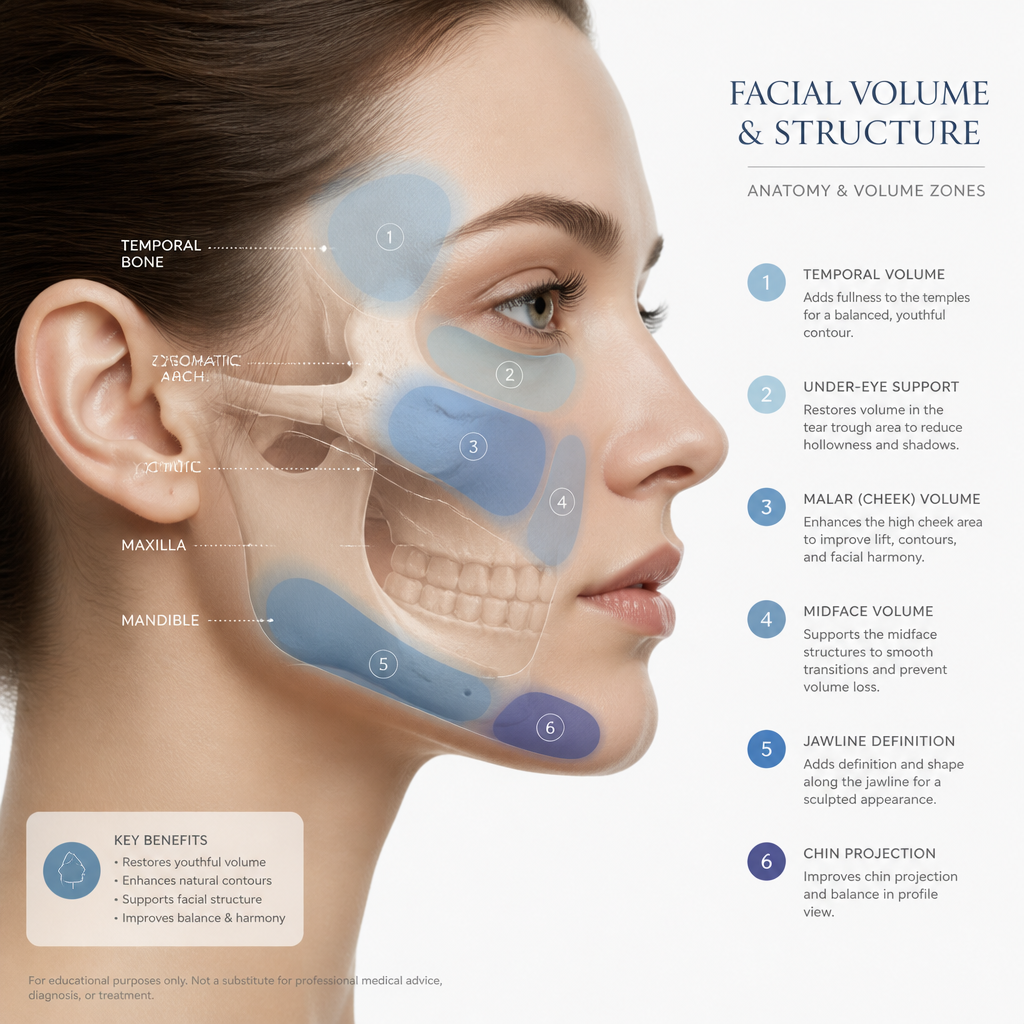
Most people notice it gradually. The cheeks lose their lift, the jaw softens, and the face starts to look heavier at the bottom than it used to. Volume loss is not a cosmetic myth. It is a structural reality that happens to nearly everyone over time, and it changes the entire character of the face. If you have been looking into cheek filler in Aurora or researching jawline contouring options across the GTA, this guide is written specifically for you. It covers how these treatments actually work, what differentiates a skilled approach from a mediocre one, and what to realistically expect before booking a consultation at a clinic like Skin Excellence Medispa.
Table of Contents
- Quick Takeaways
- Why Facial Contouring with Fillers Works
- Cheek Filler: What It Treats and How
- Jawline Filler GTA: Defining the Lower Face
- Choosing the Right Filler Product for Contouring
- Comparison: Cheek Filler vs. Jawline Filler vs. Combined Approach
- Who Is a Good Candidate
- What to Expect Before, During, and After Treatment
- Frequently Asked Questions
- References
Quick Takeaways
| Key Insight | Explanation |
|---|---|
| Volume loss is structural, not just skin-deep | Aging causes bone resorption, fat pad descent, and muscle atrophy. Fillers address the structural root cause, not just surface wrinkles. |
| Cheek filler lifts more than it fills | Placing filler at the correct anatomical layer in the cheek creates a lifting effect that improves jowls and nasolabial folds without touching those areas directly. |
| Jawline filler requires a firm, cohesive product | Structural areas like the jawline need high-viscosity, cross-linked hyaluronic acid that holds its shape under muscle movement. Soft lip-style fillers are the wrong tool here. |
| Results typically last 9 to 18 months depending on the area | Cheek filler tends to last longer than lip filler due to less movement. Jawline filler longevity ranges from 9 to 18 months based on product choice and individual metabolism. |
| Treating both cheeks and jawline together gives the most balanced result | Contouring only one area creates visual imbalance. A practitioner who sees the whole face in thirds will always produce a more natural-looking outcome. |
| Hyaluronidase can dissolve HA fillers if needed | Unlike some permanent or semi-permanent options, hyaluronic acid fillers are reversible. This makes them the safest starting point for most clients. |
| The injector matters more than the brand | Juvederm, Restylane, and Revanesse all have quality products for contouring. Technique, anatomical knowledge, and aesthetic judgment determine the result far more than product alone. |
Why Facial Contouring with Fillers Works
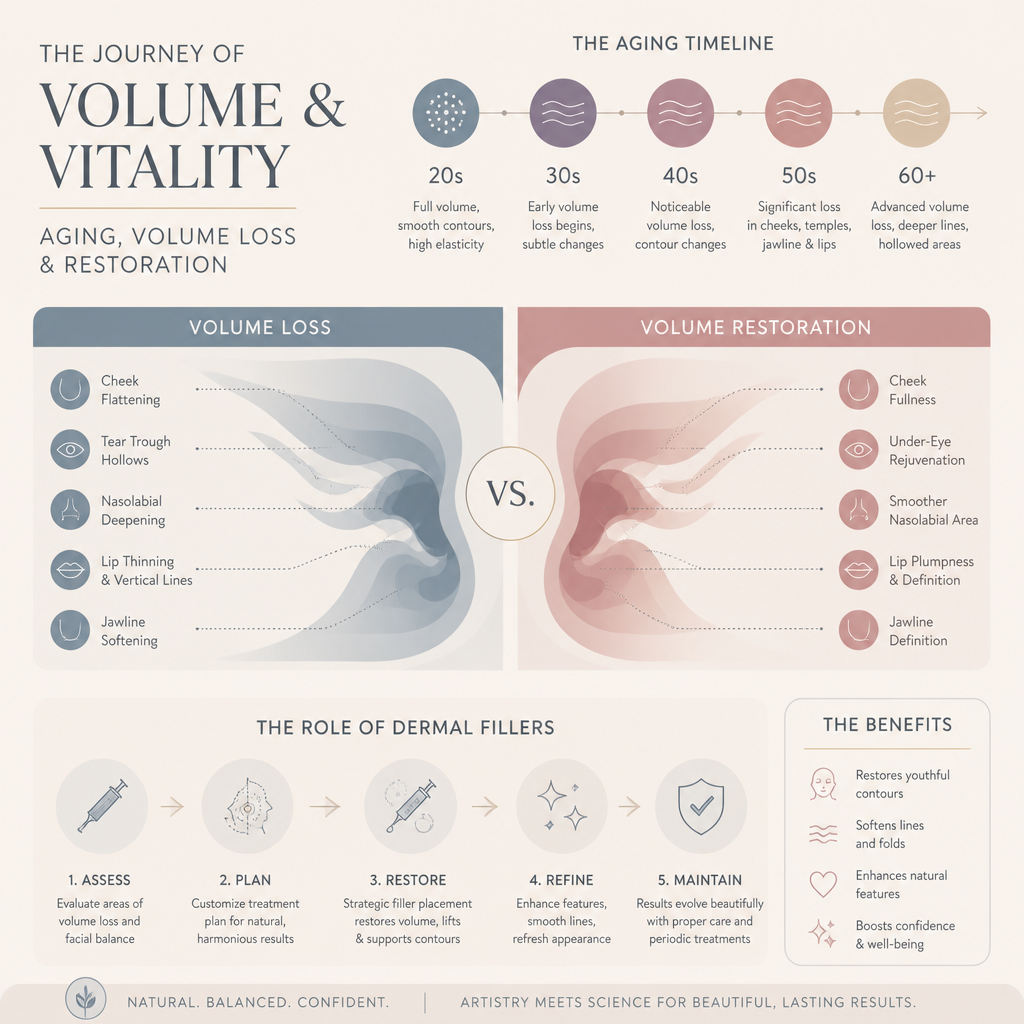
The face ages in three dimensions. Skin quality changes, yes. But what makes a face look dramatically older is the loss of volume and structural support underneath. As bone density decreases in the mid-face and jaw over time, fat pads that once sat high on the cheekbones begin to descend. The result is flattened cheeks, a softened jawline, and extra weight pooling around the jowls.
Dermal fillers work because they restore what the face has physically lost. When placed correctly at the right anatomical depth, a hyaluronic acid filler can re-project the cheekbone, recreate the ogee curve of the mid-face, and sharpen the jaw angle, all without surgery, general anesthesia, or significant downtime.
The goal of facial contouring with fillers is not to change someone’s face. It is to return the face to what it was at its structural peak, then refine from there.
This is why the conversation at any credible clinic should start with facial analysis, not a product menu. A practitioner who looks at your face and immediately recommends a specific area without discussing your overall facial balance is skipping the most important step.

Cheek Filler: What It Treats and How
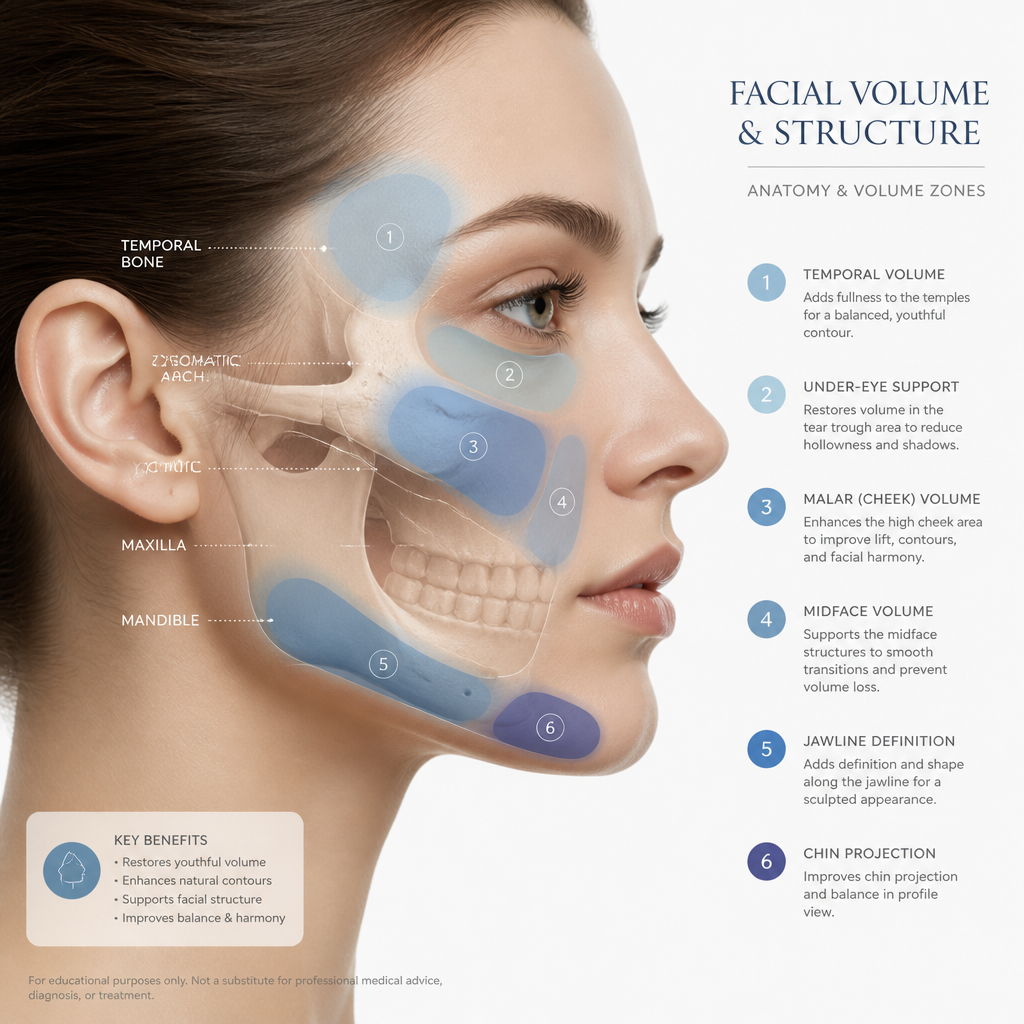
Cheek filler is one of the most impactful single treatments available in aesthetic medicine. The cheeks are the structural scaffold of the mid-face. When volume depletes there, everything below it droops.
What Cheek Filler Actually Addresses
Patients who come in for cheek filler in Aurora are often not just concerned about flat cheeks. They are concerned about nasolabial folds that have deepened, jowls that have appeared, or a face that looks tired even when they are not tired. All of these are downstream effects of mid-face volume loss. Restoring cheek volume lifts and supports the tissue below it, often softening those concerns without directly injecting those areas.
Cheek filler is also used to add definition and projection to naturally flat or wide cheekbones in younger clients who simply want more facial dimension. This is different from volume restoration, and a good injector treats these two goals differently, even though the product is placed in a similar location.
Technique and Placement
Effective cheek filler placement requires understanding multiple tissue layers. The most structural, long-lasting results come from placing product deep, near the periosteum (the bone surface), where the filler sits stably and creates real projection. Placing filler too superficially in the cheek leads to a puffy, unnatural look that moves when the patient smiles.
Most experienced practitioners use a combination of a needle for deep placement and a blunt-tip cannula for shaping through the superficial fat compartments. The cannula reduces bruising significantly and allows for smoother blending through wider areas.
Pro tip: Ask your practitioner specifically where they plan to place the filler and at what depth. A practitioner who can articulate a clear anatomical plan is one who has trained properly. Vague answers about “adding volume to your cheeks” are not enough.
Jawline Filler GTA: Defining the Lower Face
Interest in jawline filler across the GTA has grown considerably as more people understand that it does not create an artificial, blocky look when done well. The lower face defines gender characteristics, age perception, and overall facial balance. A defined jawline creates visual separation between the face and neck, which is one of the strongest signals of a youthful appearance.
What Jawline Filler Treats
The most common concerns that lead GTA residents to pursue jawline filler include a softened or blurred jaw angle, early jowling, asymmetry between the left and right sides of the jaw, and a chin that lacks projection. These are not vanity complaints. They are structural changes that affect how the entire lower face reads from multiple angles.
Jawline filler placed along the jawline body and angle creates a crisp, defined edge. Filler placed at the chin can improve projection and balance the profile view. These two areas are often treated together because addressing one without the other frequently looks incomplete.
Jawline Filler vs. Botox for the Jaw
It is worth being clear about the difference: jawline filler adds structure and definition through volume. Botox injected into the masseter muscle reduces jaw width by relaxing the muscle over time. These are not interchangeable, and they serve different goals. Some clients benefit from both. A client who has a wide, heavy jaw from large masseters but also lacks definition along the jawline body may see the best result from masseter Botox combined with strategic filler along the jaw angle and body.
Pro tip: If you are comparing clinics for jawline filler in the GTA, ask whether the practitioner considers masseter Botox as part of their jawline contouring approach. A practitioner who thinks in terms of the whole lower face, not just where to inject filler, will give you a more balanced result.
Choosing the Right Filler Product for Contouring
Not all hyaluronic acid fillers are the same, and choosing the wrong product for the wrong area is one of the most common technical errors in aesthetic medicine. Facial contouring requires products specifically formulated for structural support.
For cheek and jawline work, practitioners typically reach for high-viscosity, cohesive fillers with a high G-prime (resistance to deformation). Products in this category from established brands include Juvederm Voluma, Restylane Lyft, and Revanesse Contour or Shape. These are designed to hold their projection under the constant pressure of facial movement, which softer fillers cannot do reliably in structural areas.
Softer, lower-viscosity fillers, the type used for lips or fine lines, will not maintain their shape in the cheek or jaw. They migrate more easily and flatten under pressure. Using the wrong filler in a structural area is why some patients end up with results that look puffy or that disappear faster than expected.
The specific product your practitioner recommends should reflect your anatomy, the depth of placement, and the degree of correction needed. There is no universally best product, only the right product for the plan.
Comparison: Cheek Filler vs. Jawline Filler vs. Combined Approach
| Approach | Best For | Typical Duration |
|---|---|---|
| Cheek Filler Only | Mid-face volume loss, flat cheekbones, early jowling caused by cheek descent, patients who want a lifted look without a sharper jaw | 12 to 18 months, sometimes longer with touch-ups |
| Jawline Filler Only | Defined jaw angle loss, early jowling from the lower face, chin projection, patients with adequate cheek volume but a blurred lower border | 9 to 18 months depending on product and placement depth |
| Combined Cheek and Jawline (Facial Contouring) | Overall facial rejuvenation, patients with volume loss across the full mid and lower face, anyone wanting a balanced, sculpted result that looks natural from all angles | 12 to 18 months for cheek component, 9 to 18 months for jawline, with staged touch-ups to maintain both |
The combined approach consistently produces the most natural-looking outcome. When you restore the mid-face without addressing the lower face, the face can look top-heavy. When you sharpen the jaw without lifting the cheeks, the result can look angular but still aged. Treating the face as a whole is not upselling. It is proper aesthetic planning.
Who Is a Good Candidate
The ideal candidate for cheek or jawline filler is someone in their mid-twenties to mid-fifties who has noticed structural changes in their face and wants a non-surgical approach. Good skin elasticity helps the filler integrate well and the skin conform to the new structure beneath it.
Clients who are pregnant or breastfeeding should wait. Anyone with an active skin infection in the treatment area, certain autoimmune conditions, or a history of severe allergic reactions to HA fillers should discuss their history thoroughly with the practitioner before any treatment is planned.
Realistic expectations are not a cliche requirement. They are genuinely important. Fillers will not replicate the result of a surgical facelift, and any clinic that implies otherwise is not being honest. What fillers can do, exceptionally well, is restore a refreshed, rested, structurally supported version of your own face. That is a meaningful and valuable result.
For GTA residents who have been referred to Skin Excellence Medispa by a friend, the most useful thing to bring to a first consultation is a photo of yourself from five to ten years ago. It gives your practitioner a reference point for what your face looked like at its structural peak, which is a far better goal than chasing someone else’s features.
What to Expect Before, During, and After Treatment
Before Your Appointment
Avoid blood-thinning medications and supplements, including aspirin, ibuprofen, fish oil, and vitamin E, for approximately one week before your appointment unless they are prescribed medications. This significantly reduces bruising. Arrive to your appointment without makeup so the practitioner can assess your skin and facial structure clearly.
A topical numbing cream is typically applied before treatment and left on for 20 to 30 minutes. Most hyaluronic acid fillers used for contouring also contain lidocaine, which adds further comfort during injection.
During the Procedure
Cheek and jawline filler appointments typically take 30 to 60 minutes depending on the areas treated. The number of syringes used varies by the degree of correction needed. Most clients require one to three syringes across a combined cheek and jaw treatment, though this is determined during the consultation based on individual anatomy.
You will feel pressure and possibly mild stinging. Most clients describe the treatment as uncomfortable but entirely manageable. The practitioner will ask you to remain still during injections, which is especially important for the jaw and chin where precision matters.
After Treatment and Recovery
Swelling is normal and expected for the first 48 to 72 hours. Bruising may occur, particularly around the jaw where vessels are more variable. The final result is not visible until two weeks after treatment, once all swelling has resolved.
Avoid intense exercise, excessive heat (saunas, hot yoga), and alcohol for 24 to 48 hours post-treatment. Sleep on your back for the first night to avoid putting pressure on freshly placed filler. Do not massage the treated areas unless instructed to by your practitioner, as this can displace the product.
A two-week follow-up appointment is standard practice at Skin Excellence Medispa to assess the result and make any minor refinements if needed. This is an important part of the process, not an optional add-on.
Frequently Asked Questions
How much does cheek and jawline filler cost in the GTA?
Pricing varies by clinic and the number of syringes used. In the Greater Toronto Area, hyaluronic acid fillers are generally priced per syringe. A combined cheek and jawline treatment will typically involve more than one syringe, so it is important to ask for a full treatment plan with estimated product usage during your consultation rather than comparing single-syringe prices between clinics. Aurora residents benefit from avoiding downtown Toronto pricing without sacrificing clinical quality at a medical-grade clinic like Skin Excellence Medispa.
Will cheek and jawline filler look natural?
Yes, when done by an experienced practitioner who understands facial anatomy and proportion. The goal of contouring with fillers is to restore your own facial structure, not to create features you never had. Overfilled results typically come from using too much product, placing it in the wrong anatomical layer, or using an injector who is chasing trends rather than responding to the individual client’s face. A full face assessment before treatment, not just a quick look at the area of concern, is what produces natural results.
How long does jawline filler last?
Results from jawline filler typically last between 9 and 18 months, depending on the product used, the depth of placement, and individual metabolism. Clients who stay on a maintenance schedule, returning for a small touch-up before the product has fully broken down, tend to maintain results more consistently and at a lower overall cost per year than those who wait until they have returned fully to baseline before re-treating.
Can filler be removed if I do not like the result?
Yes. Hyaluronic acid fillers can be dissolved using an enzyme called hyaluronidase. This is one of the primary reasons HA fillers remain the recommended starting point for most facial contouring clients. Dissolution is not instant and may require more than one session for dense placements, but it is a reliable safety net that makes the treatment reversible. This is not the case for some other filler categories, which is why reputable clinics typically use HA-based products for contouring.
Is there any difference between getting filler at a medispa versus a dermatologist’s office?
The critical factor is not the type of facility but the qualifications and experience of the person performing the treatment. At a medical aesthetic clinic like Skin Excellence Medispa, treatments are performed or directly supervised by trained medical professionals. The questions to ask any clinic are: who is performing the injection, what is their training in facial anatomy, and what is the protocol if a complication arises. Any reputable medispa should answer those questions directly and without hesitation.
How do I know how many syringes I need?
You cannot know this without a proper in-person consultation. Photos and online estimates are not accurate tools for planning filler volumes because they cannot account for your bone structure, the depth of your existing fat pads, or your tissue elasticity. Any clinic quoting you a specific syringe count before seeing you in person is guessing. During your consultation at Skin Excellence Medispa, your practitioner will assess your face in motion and at rest, discuss your goals, and build a treatment plan specific to your anatomy, not a general formula.
Have you had cheek or jawline filler before, or is this something you are considering for the first time? Share your experience or questions in the comments, we would love to hear what GTA residents are thinking about when it comes to facial contouring.
References
- Dermapure Toronto: Overview of Jawline Filler Treatment, Technique, and Expected Results
- Compass Dermatology: Jawline Contouring with Fillers and Botox in Toronto
- Cleveland Clinic: Jawline Filler Procedure, Benefits, Risks, and Recovery
- National Library of Medicine: Hyaluronic Acid Dermal Fillers, Side Effects, and Long-Term Outcomes
- Skinjectables Toronto: Dermal Filler Products and Contouring Applications for Cheek and Jawline