
About us
Execution is the single biggest factor in achievement so the faster and better your execution.
Contact Info
14845 Yonge street unit 301, Aurora Ontario, L4G 6H8
Tuesday to Sunday
10:00 AM to 6:00 PM
Execution is the single biggest factor in achievement so the faster and better your execution.
14845 Yonge street unit 301, Aurora Ontario, L4G 6H8
Tuesday to Sunday
10:00 AM to 6:00 PM
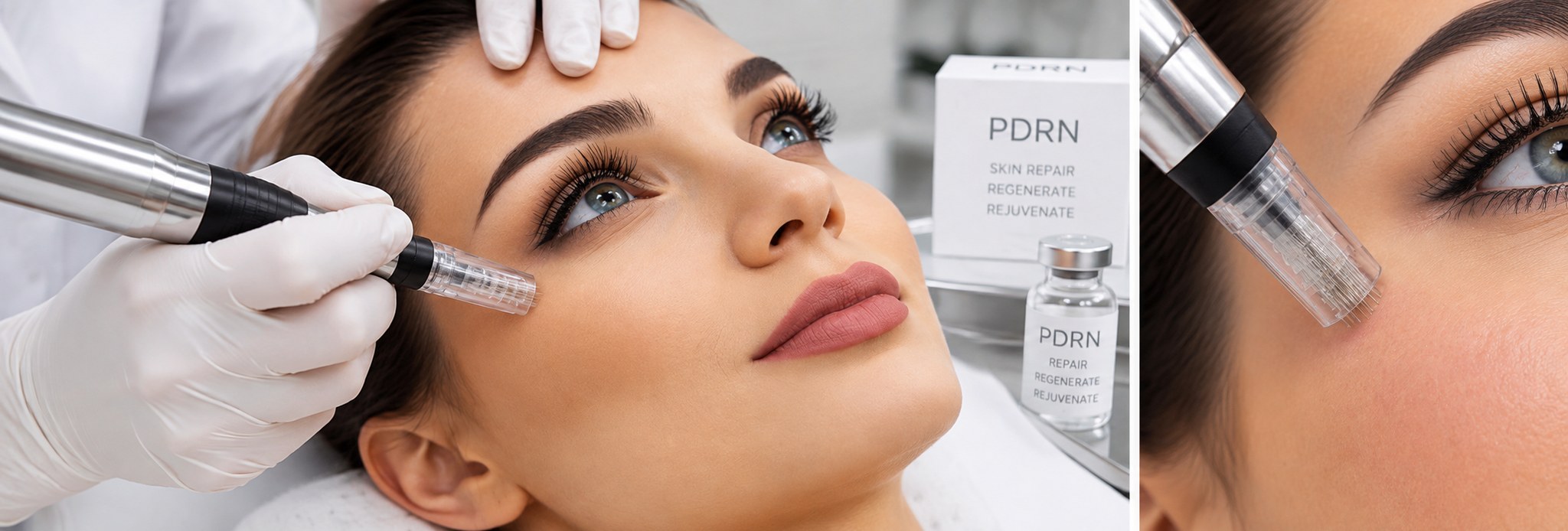
PDRN (Polydeoxyribonucleotide) is a purified mixture of DNA fragments used in regenerative and aesthetic medicine. Its main purpose is to support tissue repair and improve skin quality, rather than simply adding volume or color.
PDRN is primarily associated with activation of the adenosine A2A receptor pathway, which can influence:
In simple terms: PDRN helps create a more favorable environment for skin repair and regeneration.
These terms are often confused in aesthetic clinics:
PDRN
PN (Polynucleotide)
They are related, but PDRN ≠ PN, and products shouldn’t be assumed to be interchangeable simply because both contain DNA-derived polymers.
With microneedling, the skin’s barrier is temporarily disrupted and controlled micro-injuries stimulate wound healing. A PDRN-containing product may then be applied to the skin.
The proposed combination is:
Microneedling → controlled injury → collagen remodeling
PDRN → repair/regenerative signaling
Potential aesthetic targets include:
However, the evidence for PDRN specifically delivered through microneedling is less established than the evidence for microneedling itself. Much of the clinical literature on PDRN/PN involves other routes of administration
| Microneedling + PRP | Microneedling + PDRN/PN | Microneedling + Exosomes | |
| Source | Patient’s own blood | DNA-derived polynucleotide/PDRN product | Extracellular vesicles from a biological source |
| Primary concept |
Growth-factor–rich healing response
|
Tissue repair & regeneration signaling | Cell-to-cell signaling |
| Best established use | Acne scars, texture, rejuvenation
|
Skin quality, healing, fine lines, scars | Rejuvenation, texture, pigmentation — emerging |
| Evidence quality | Moderate | Emerging/moderate | Early/emerging |
| Product variability | Moderate | High | Very high |
| Autologous? |
Yes
|
No | Usually no |
| Main advantage | Your own biologic material
|
Regenerative/repair-oriented approach | Potentially broad regenerative signaling |
| Main concern |
Variable PRP preparation |
Limited high-quality trials | Product quality, standardization & regulation |
| Cost |
$$–$$$ |
$$–$$$ | $$$–$$$$ |
| My evidence ranking | 🥇 | 🥈 | 🥉 |