
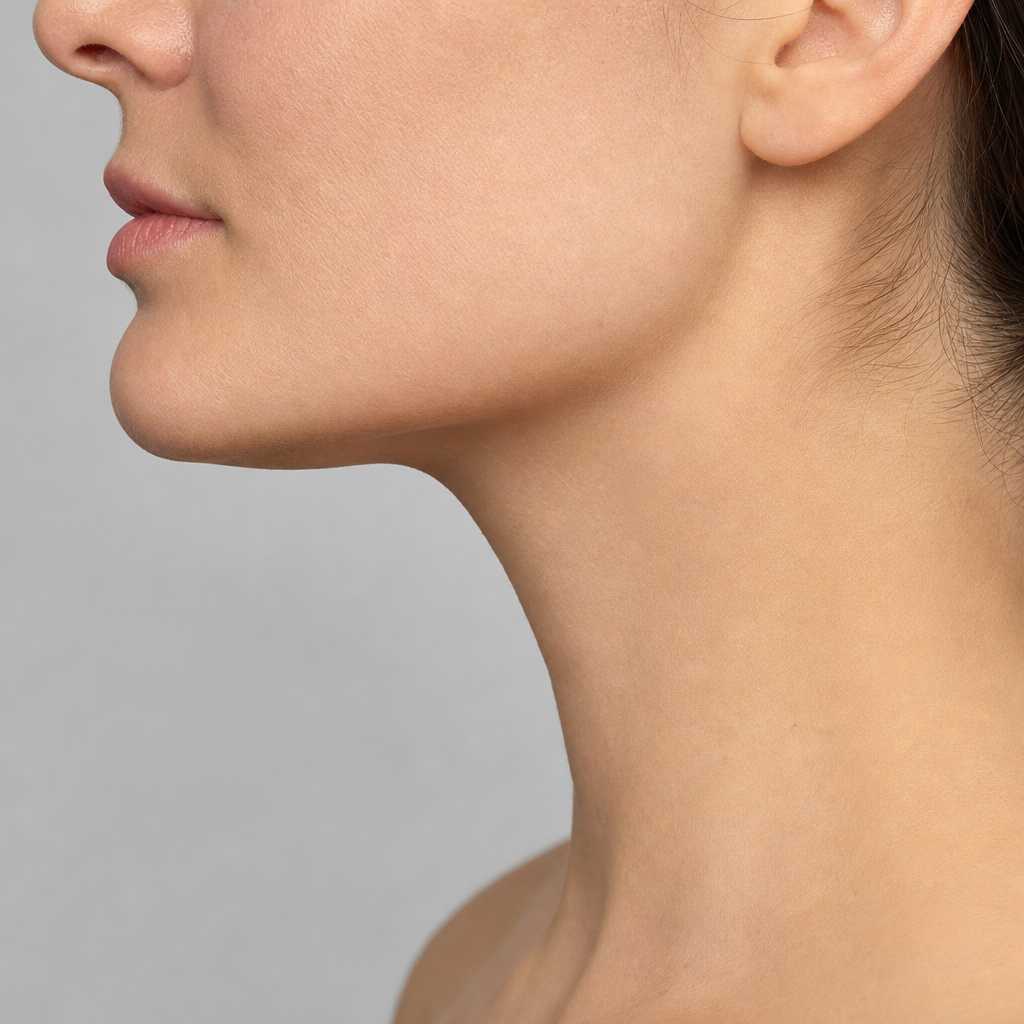
You can eat well, exercise consistently, and still have a stubborn pocket of fat sitting right under your chin. For a significant portion of adults, submental fullness, the medical term for a double chin, is genetic. It responds poorly to diet and exercise because the body simply prefers to store fat there. Belkyra Aurora treatments have become one of the most requested procedures at Skin Excellence Medispa for exactly this reason. This guide covers how Belkyra works, what realistic results look like, how it compares to other double chin treatments available across the GTA, and the questions you should be asking before booking a session.
Table of Contents
- Quick Takeaways
- What Is Belkyra and How Does It Work?
- Is Belkyra Permanent? What the Evidence Actually Says
- What to Expect During and After Treatment
- Comparing Double Chin Treatments in the GTA
- Who Is a Good Candidate for Belkyra in Ontario?
- Belkyra vs Kybella: Is There a Difference?
- Cost and Number of Sessions: What to Realistically Budget
- Frequently Asked Questions
- References
Quick Takeaways
| Key Insight | Explanation |
|---|---|
| Belkyra destroys fat cells permanently | The active ingredient deoxycholic acid breaks down fat cell membranes. Once destroyed, those specific cells cannot return. |
| Most clients need 2 to 4 sessions | A single session is rarely enough. Results build over multiple treatments spaced at least four weeks apart. |
| Swelling after treatment is expected and significant | Post-treatment swelling under the chin can last 2 to 4 weeks. This is part of the inflammatory process, not a complication. |
| Weight gain can affect long-term results | Destroyed fat cells do not return, but remaining fat cells in the area can still enlarge if you gain considerable weight. |
| Belkyra and Kybella are the same molecule | Kybella is the US brand name. Belkyra is the Health Canada-approved version sold in Ontario and across Canada. |
| Skin laxity matters for candidacy | Clients with poor skin elasticity may see better results combining Belkyra with a skin-tightening treatment like micro-needling. |
| Injector skill significantly affects outcomes | Improper placement can damage nerves or produce uneven results. Always choose a medically supervised clinic. |
What Is Belkyra and How Does It Work?

Belkyra is an injectable drug approved by Health Canada specifically for reducing submental fat, the fat pad located directly beneath the chin and jaw. Its active ingredient is deoxycholic acid, a naturally occurring molecule your body already produces to break down dietary fat in the digestive system. When injected into submental tissue, it does the same job locally: it disrupts and destroys the membranes of fat cells in that specific area.
Once a fat cell’s membrane is disrupted, the cell cannot survive. Your immune system then clears the cellular debris over the following weeks, which is why results are gradual rather than immediate. In practice, clients start noticing a visible reduction in chin fullness around six to eight weeks after their first session, with the full effect of each treatment visible at around twelve weeks.
The injection process itself takes roughly 15 to 20 minutes. A grid pattern is marked on the treatment area, and a series of small injections are placed systematically within that grid. A topical numbing agent is applied beforehand, and some clinics also use ice to minimize discomfort during the procedure.
Pro tip: Ask your injector specifically how many injection points they plan to use and why. A thorough assessment of your fat pad depth and distribution before the session indicates a practitioner who is treating your anatomy, not following a generic template.
Why Deoxycholic Acid Is Effective for Submental Fat
The reason Belkyra works specifically under the chin comes down to the biology of that fat depot. Submental fat is classified as a localized deposit, meaning it is structurally separate from the fat you might lose through caloric deficit. Clinical studies supporting Health Canada’s approval showed statistically significant reductions in submental fat with a good safety profile when administered correctly.
Deoxycholic acid is cytolytic, meaning it kills cells on contact. This is also why precise injection technique matters so much. Injected too close to the surface, it can damage skin. Injected into muscle tissue, it causes prolonged pain and uneven results. The correct target is the submental fat layer, and identifying that layer accurately requires training and experience, not just a course certificate.
Is Belkyra Permanent? What the Evidence Actually Says
The short answer is yes, with a condition attached. The fat cells that are destroyed during Belkyra treatment are permanently gone. Fat cells in adults do not regenerate. That part of the mechanism is well-established and is the reason Belkyra can deliver durable results that other non-invasive treatments cannot match.
The condition is this: you still have remaining fat cells in the submental area after treatment, particularly after early sessions. If you gain a significant amount of weight after completing your Belkyra sessions, those remaining cells can hypertrophy, meaning they grow larger, and your double chin can partially return. The data consistently shows that clients who maintain a stable weight see the most durable outcomes.
“The destruction of fat cells with deoxycholic acid is permanent, but the treatment does not create an impenetrable barrier against future fat accumulation in the area. Weight stability post-treatment is the most important factor in maintaining results.”
Health Canada Drug Product Database, Belkyra prescribing information
What Belkyra is not is a weight loss treatment. Clients who treat it as a shortcut for general weight reduction miss the point entirely and are more likely to be disappointed. It is a body contouring tool for a specific, localized area that has proven resistant to everything else.
Pro tip: If you are planning to lose a significant amount of weight, consider completing that process before starting Belkyra. Your ideal number of treatment sessions and your final contour result will be more predictable when your weight is stable.
What to Expect During and After Treatment
Knowing what the recovery period actually looks like is important before committing to treatment. A common mistake is scheduling a Belkyra session right before a major event or photoshoot. The post-treatment swelling under the chin is real, noticeable, and completely normal. It can be significant enough that some clients temporarily look like their double chin has gotten worse before it gets better.
The First 72 Hours
Immediately after injection, the treatment area will be red, swollen, and tender to the touch. Numbness is also common. Most clients describe the discomfort as a burning or stinging sensation that fades within a few hours. Swelling typically peaks at 48 to 72 hours and then begins to resolve.
Cold compresses help manage discomfort in this window. Arnica supplements taken before and after treatment can reduce bruising. Most people return to work the next day, though wearing a scarf or turtleneck is a practical choice for the first week.
Weeks Two Through Eight
As swelling resolves, the inflammatory process continues at a cellular level. Your lymphatic system is clearing destroyed fat cells. You will not see a dramatic visible result at week two. Patience here is not optional. The temptation to book a second session too early is something experienced practitioners will discourage because the full effect of each treatment needs time to manifest before deciding whether additional sessions are needed.
A minimum four-week interval between sessions is standard, and many practitioners at medically supervised clinics like Skin Excellence Medispa will recommend waiting closer to six to eight weeks for a more accurate before-and-after assessment.

Comparing Double Chin Treatments in the GTA
Belkyra is not the only option for reducing submental fat, and it is not the right choice for every person. Here is a direct comparison of the three most commonly offered approaches for double chin treatment in Ontario.
| Treatment | How It Works | Best For |
|---|---|---|
| Belkyra (Deoxycholic Acid) | Injects a fat-dissolving acid directly into submental fat, permanently destroying targeted fat cells over 2 to 4 sessions | Moderate to significant submental fat with reasonable skin elasticity; clients who want a non-surgical, permanent reduction |
| CoolSculpting (Cryolipolysis) | Freezes fat cells using a suction applicator placed under the chin, triggering natural cell death over 1 to 3 months | Mild to moderate submental fat; clients with very limited time for injectable recovery; typically requires fewer sessions |
| Liposuction (Submental) | Surgical removal of fat through a small incision under the chin, performed under local anesthesia by a plastic surgeon | Significant submental fat or cases combined with loose skin requiring simultaneous tightening; fastest, most dramatic result |
In practice, Belkyra sits in a useful middle ground. It is more targeted and permanent than some energy-based devices that only modestly reduce fat volume, and it does not carry the cost, surgical risk, or recovery time of liposuction. For most adults with a moderate double chin who are not surgical candidates or who simply prefer non-surgical options, it delivers meaningful, lasting improvement.
Who Is a Good Candidate for Belkyra in Ontario?
Ideal candidates are adults with a pinchable, localized fat deposit under the chin that bothers them aesthetically. They are at or near a stable body weight, have reasonable skin elasticity in the neck and jaw area, and have realistic expectations about the pace of results.
Belkyra is not appropriate for individuals who are pregnant or breastfeeding, have an active infection in the treatment area, or have previously had surgery in the submental region that may have altered anatomy or nerve placement. It is also less effective as a standalone treatment for clients with significant skin laxity, since removing the fat volume without addressing loose skin can sometimes make laxity more visible, not less.
At Skin Excellence Medispa in Aurora, practitioners perform a detailed consultation to assess fat pad depth, skin quality, and whether a combination approach, such as pairing Belkyra with micro-needling or PRF treatments, would produce a better overall result for the individual’s anatomy. That kind of case-by-case assessment is what separates a medispa from an injection mill.
Belkyra vs Kybella: Is There a Difference?
This question comes up constantly, and the answer is clean. Belkyra and Kybella are chemically identical products, both containing synthetic deoxycholic acid at the same concentration. Kybella is the brand name approved by the US Food and Drug Administration. Belkyra is the brand name approved by Health Canada for sale in Canada, including Ontario.
Some clients searching for double chin treatment in the GTA use both terms interchangeably, and that is fine because the clinical outcome is the same. If you see a clinic advertising Kybella in Ontario, they should technically be referring to Belkyra, since Kybella is a US product and is not the Health Canada-approved version for sale here. It is worth clarifying with any clinic which product they are actually using and confirming it is the properly licensed version for Canadian use.
Skin Excellence Medispa uses Health Canada-approved Belkyra, sourced from licensed Canadian distributors, which matters for both safety and product authenticity.
Cost and Number of Sessions: What to Realistically Budget
Belkyra is priced per vial, and the number of vials used per session depends on the size of the treatment area and the volume of submental fat being addressed. Most sessions require one to two vials. Across the GTA and Aurora area, pricing typically ranges from approximately $600 to $900 per session, though this varies by clinic and by the number of vials used.
Most clients require between two and four sessions to achieve their desired result, which puts the total treatment investment in the range of $1,200 to $3,600. This is comparable to a series of CoolSculpting treatments for the same area and is substantially less than surgical liposuction when the full procedure and anesthesia costs are factored in.
A common mistake is shopping purely by price per session without asking how many sessions a clinic typically recommends and why. A clinic that consistently recommends the maximum number of sessions regardless of the client’s anatomy is not doing you a service.
Pro tip: During your consultation at Skin Excellence Medispa, ask the practitioner to show you their assessment criteria for recommending additional sessions. Understanding what benchmark they are measuring against gives you a clear picture of whether follow-up treatments are clinically indicated or simply routine upselling.
Frequently Asked Questions
How many Belkyra sessions will I actually need?
Most clients need two to four sessions. The number depends on the volume of submental fat present and how your body responds to the first treatment. Clients with a smaller, defined fat pocket may see excellent results after two sessions. Those with a more pronounced double chin typically need three or four. Your practitioner should reassess after each session before recommending another round.
Does Belkyra hurt?
The injections cause a burning and stinging sensation during the procedure, which most clients describe as moderate and tolerable. A topical numbing cream is applied beforehand, and many practitioners use ice to manage discomfort. The treatment area will be tender and swollen for several days after, but acute pain during the procedure typically resolves within minutes of each injection.
Can Belkyra be used anywhere other than under the chin?
Health Canada has approved Belkyra specifically for submental fat. Off-label use on areas like jowls or bra-line fat is discussed in clinical circles, but this should only be considered under close medical supervision and with an honest conversation about the current evidence base. At Skin Excellence Medispa, off-label use is discussed transparently during consultation.
Will I need to take time off work after Belkyra?
Most clients return to work the following day. The main concern is the visible swelling, not functional impairment. If your work involves significant face-to-face client interaction and you are concerned about appearance, planning sessions on a Thursday or Friday allows the peak swelling window to fall over a weekend. Strenuous exercise should be avoided for 48 hours post-treatment.
How does Belkyra compare to Sculptra for facial contouring?
They serve different purposes. Sculptra is a collagen stimulator used to restore volume and improve skin structure in areas of the face that have lost fullness due to aging. Belkyra is a fat-reduction injectable used to eliminate a localized excess of fat under the chin. Some clients benefit from both treatments at different times in their aesthetic plan, but they are not interchangeable or competing options.
Is Belkyra safe?
Yes, when administered by trained practitioners in a medically supervised setting. Health Canada-approved Belkyra has a well-characterized safety profile from clinical trials and real-world use since its approval. The most commonly reported side effects are swelling, bruising, numbness, and tenderness at the injection site. Serious adverse events, including marginal mandibular nerve injury causing an asymmetric smile, are rare and almost always linked to improper injection technique.
If you have tried Belkyra or are currently exploring double chin treatment options in the GTA, share your experience or questions below, because your real-world perspective helps others make better-informed decisions.
We would love your feedback and any insights you would share with others. What perspective would you add?
References
- Health Canada official site, where you can verify drug approvals including Belkyra’s authorization for use in Canada
- PubMed and the National Library of Medicine, where peer-reviewed clinical studies on deoxycholic acid and submental fat reduction are indexed
- American Academy of Dermatology, which publishes clinical guidance on injectable fat-reduction treatments including deoxycholic acid
- Statista, where current data on minimally invasive cosmetic procedure trends in North America is tracked and reported
- Forbes Health, which covers consumer-facing analysis of medical aesthetic treatment costs and outcomes across North America