
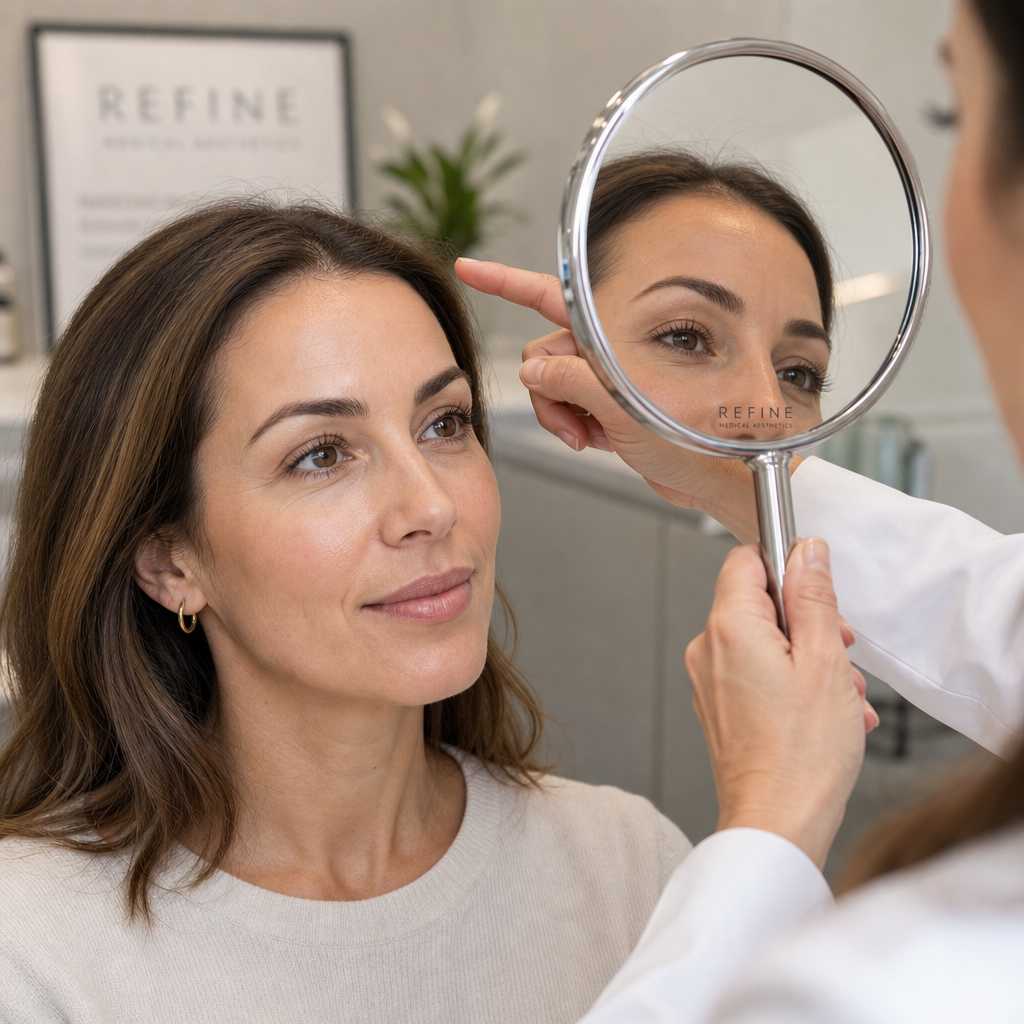
Most people considering Botox in Aurora, ON spend weeks researching online and still walk into their first appointment with the wrong expectations. They worry about frozen faces, sky-high prices, or whether it will hurt. The real risks are more subtle: choosing an undertrained injector, skipping a proper consultation, or misunderstanding what Botox actually does versus what fillers do. This guide covers the full picture, from how the treatment works to what distinguishes a quality medispa in the GTA from a clinic that just wants to fill appointment slots.
Table of Contents
- What Is Botox and How Does It Work
- Quick Takeaways
- Who Is a Good Candidate for Botox
- Botox vs. Dermal Fillers: Choosing the Right Treatment
- What to Expect at Your First Botox Appointment in Aurora
- How to Choose the Right Injector in Aurora, ON
- Cost of Botox in Aurora, ON
- Aftercare and Results: What Actually Happens
- Frequently Asked Questions
- References
What Is Botox and How Does It Work
Botox is a purified form of botulinum toxin type A, a neuromodulator that temporarily blocks the nerve signals responsible for muscle contraction. When injected into specific facial muscles, it prevents those muscles from contracting with their full force, which smooths the overlying skin and reduces the appearance of dynamic wrinkles.
The word “dynamic” matters here. Botox works on wrinkles caused by repeated muscle movement, such as the horizontal lines across your forehead, the vertical lines between your brows (often called frown lines or the “11s”), and the crow’s feet around your eyes. It does not work on static wrinkles, which are lines that remain when your face is completely at rest. Those require dermal fillers or skin resurfacing treatments.
Health Canada approved botulinum toxin A for cosmetic use in 2001, and it remains one of the most studied injectable treatments available. According to the American Society of Plastic Surgeons, neuromodulator injections have consistently ranked as the top minimally invasive cosmetic procedure performed each year across North America, with millions of treatments administered annually.
Quick Takeaways
| Key Insight | Explanation |
|---|---|
| Botox targets dynamic wrinkles only | Lines caused by muscle movement respond to Botox. Lines present at rest require fillers or resurfacing, not neuromodulators. |
| Results take 3 to 14 days to appear | Botox does not work instantly. Most patients see initial softening around day 3 to 5, with full results by day 14. |
| Injector qualification is the single biggest variable in outcomes | A trained nurse injector or physician with facial anatomy expertise produces dramatically safer results than a minimally trained technician. |
| Dosing is measured in units, not syringes | Pricing per unit is the honest model. Clinics that quote per area without disclosing unit counts make it hard to compare value. |
| Preventative Botox is real and evidence-backed | Starting treatments in your late 20s or early 30s slows the development of deep static lines, particularly in the forehead and glabellar region. |
| A consultation before any injection is non-negotiable | Your anatomy, muscle strength, and skin quality all affect dosing decisions. Good clinics in Aurora assess this before touching a needle. |
| Botox in Aurora, ON is medically regulated | In Ontario, botulinum toxin injections must be administered or directly supervised by a regulated health professional under the Regulated Health Professions Act. |
Who Is a Good Candidate for Botox
The ideal candidate for Botox in Aurora, ON is an adult who has noticed lines forming from repeated facial expressions, wants to soften those lines without surgery, and has realistic expectations about what a neuromodulator can do. Age range is wide: patients as young as 25 use it preventatively, while patients in their 60s use it as part of a broader anti-aging protocol alongside fillers or skin tightening treatments.
Certain people should avoid Botox entirely. Pregnancy and breastfeeding are absolute contraindications. Active skin infection at or near the injection site is another hard stop. People with neuromuscular conditions such as ALS, myasthenia gravis, or Lambert-Eaton syndrome should not receive botulinum toxin injections. A history of allergic reaction to any botulinum toxin product or its ingredients is also a disqualifier.
Preventative Botox for Younger Patients
In practice, one of the most common conversations at a quality Aurora medispa involves patients in their late 20s asking whether they are “too young” for Botox. The honest answer is no, provided the indication is appropriate. If a patient shows early dynamic lines in the forehead or glabella at rest after expression, small maintenance doses can prevent those lines from becoming etched into the skin permanently. This is not cosmetic vanity. It is basic preventive care for the skin.
Pro tip: If you are under 30 and considering Botox for the first time, ask your injector to start with a conservative dose across the fewest necessary areas. The goal at this stage is prevention, not correction, and less product is almost always the right starting point.

Botox vs. Dermal Fillers: Choosing the Right Treatment
A common mistake first-time patients make is conflating Botox with dermal fillers. They are fundamentally different products with different mechanisms and different indications. Botox relaxes muscles. Fillers add volume. Both address the appearance of aging, but they do it in distinct ways and for distinct problems.
At Skin Excellence Medispa, practitioners regularly see patients who have come in requesting Botox when their concern is actually better suited to a hyaluronic acid filler, or vice versa. A nasolabial fold that deepens because of volume loss in the mid-face does not respond meaningfully to a neuromodulator. A forehead with active expression lines is not the right target for filler.
Comparison: Botox, Hyaluronic Acid Fillers, and Sculptra
| Treatment | Mechanism | Best For |
|---|---|---|
| Botox (botulinum toxin A) | Temporarily relaxes targeted muscles by blocking acetylcholine release at the neuromuscular junction | Forehead lines, frown lines (11s), crow’s feet, brow lift, jaw slimming, excessive sweating |
| Hyaluronic acid fillers (Juvederm, Restylane) | Physically adds volume beneath the skin surface using a gel that attracts and retains water | Lip augmentation, nasolabial folds, marionette lines, under-eye hollows, cheek enhancement |
| Sculptra (poly-L-lactic acid) | Stimulates the body’s own collagen production over time; results build gradually over several months | Full-face volume restoration, temple hollowing, diffuse skin laxity in patients with significant volume loss |
Many patients benefit from a combination approach. Using Botox to address upper-face dynamic lines while using a hyaluronic acid filler in the mid-face produces natural, balanced results that neither treatment achieves alone. This is sometimes called a “liquid facelift” approach, though that term oversimplifies what is actually a carefully mapped treatment plan based on individual facial anatomy.
“The best aesthetic outcomes come from treating the whole face as a system, not cherry-picking a single line or fold. Anatomy-driven treatment planning is what separates good injectors from great ones.” – American Academy of Facial Esthetics educational guidance on combination injectable therapy
What to Expect at Your First Botox Appointment in Aurora
A first Botox appointment at a reputable Aurora clinic typically runs 30 to 45 minutes, with the actual injection portion taking under 10 minutes for a standard treatment area. The rest of the time involves consultation, informed consent, and facial assessment.
Step-by-Step Breakdown of the Appointment
Your injector will begin by reviewing your medical history, current medications, and any previous injectable treatments. They will photograph your face in multiple positions and ask you to make expressions so they can assess your muscle movement patterns. This step is not optional at a quality clinic. Skipping it is a red flag.
The injection itself involves a very fine needle. Most patients describe the sensation as a mild pinch. Topical numbing cream is available but rarely necessary for Botox, unlike filler injections. Each injection site takes seconds. A standard forehead-plus-frown-lines treatment involves roughly 8 to 15 injection points depending on anatomy and dose.
After the injections, you will be advised to avoid lying flat for four hours, skip vigorous exercise for 24 hours, and avoid rubbing or massaging the treated areas. These instructions are not arbitrary. Mechanical pressure on freshly injected Botox can cause the product to migrate to unintended muscle groups, which is the most common cause of the dreaded eyelid droop (ptosis) outcome.
Pro tip: Schedule your first Botox appointment at least two weeks before any major event. Results are not visible immediately, and you want time to assess your outcome and communicate with your injector if a follow-up touch-up is needed.

How to Choose the Right Injector in Aurora, ON
The GTA has no shortage of clinics offering Botox. Aurora and the surrounding York Region communities have seen significant growth in medical aesthetic providers over the past decade. This is largely good news for consumers, but it also means the quality range is wide. The single most important decision you will make is not which clinic is closest or which one ran the best Instagram promotion. It is who is holding the needle.
Credentials That Actually Matter in Ontario
In Ontario, botulinum toxin is a controlled act. It must be ordered and administered by or under the supervision of a regulated health professional, typically a physician, nurse practitioner, or registered nurse. A medical aesthetician or cosmetician cannot legally inject Botox without direct physician oversight. Ask the clinic directly: who is doing the injection, what are their credentials, and is there a physician involved in the clinical oversight of the practice?
Skin Excellence Medispa operates under a medically supervised model with experienced practitioners who understand facial anatomy from a clinical perspective, not just an aesthetic one. That distinction changes outcomes. A practitioner who understands where the levator palpebrae superioris muscle sits and how close it is to the frontalis knows exactly why precise dosing and placement prevent ptosis. Someone trained purely through a weekend aesthetic course does not have that foundation.
Questions to Ask Before Booking
Ask whether a consultation is included before any injection is performed. Ask how many units are being used and at what price per unit. Ask whether the clinic uses Health Canada-approved products exclusively. Ask about the clinic’s policy if you experience an adverse effect. A clinic that gives clear, direct answers to all of these questions is operating with integrity. One that hedges or deflects is not worth your trust.
Cost of Botox in Aurora, ON
Botox is priced by the unit across most reputable clinics in Aurora and the broader GTA. In 2024, the typical range in the Greater Toronto Area runs from approximately $10 to $15 per unit at medically supervised aesthetic clinics. A standard forehead treatment typically requires 10 to 20 units. The glabellar complex (the frown lines) typically requires 20 to 25 units. Crow’s feet use roughly 10 to 15 units per side.
A full upper-face treatment covering forehead, frown lines, and crow’s feet therefore runs approximately $400 to $800 depending on your anatomy, muscle strength, and the specific unit pricing at your chosen clinic. Patients with stronger facial muscles, which is common in men and in people who are very physically expressive, generally require more units to achieve equivalent relaxation.
Why Suspiciously Low Prices Are a Risk
If you see Botox advertised in Aurora at $5 per unit or less, that is not a deal. It is a signal. Either the product is underdosed, improperly stored, or the clinic is cutting corners on something that affects your safety. Botox requires cold chain storage. Dilution ratios matter. A clinic trying to compete primarily on price is prioritizing margin over patient outcomes. The data consistently shows that the most common reason patients switch clinics is dissatisfaction with results from a price-focused provider, not the cost of treatment at a higher-quality one.
Pro tip: When comparing clinics in Aurora, ask specifically for the price per unit and the number of units recommended for your concern. This is the only honest apples-to-apples comparison. A “per area” quote without unit disclosure tells you nothing about actual value.
Aftercare and Results: What Actually Happens
The first 24 to 48 hours after Botox are straightforward if you follow the instructions. Avoid touching or rubbing the treated areas. Stay upright for at least four hours post-injection. Skip high-intensity exercise for 24 hours. Avoid heat exposure, saunas, and hot tubs for 24 to 48 hours. These are not excessive restrictions. Each one exists for a specific physiological reason.
You may notice small raised bumps at the injection sites immediately after treatment. These typically resolve within 20 to 30 minutes. Some patients experience mild redness or a small amount of bruising, particularly around the eyes where skin is thin and vascular density is higher. Using a vitamin E supplement or blood thinners like aspirin or ibuprofen before treatment increases bruising risk. Mention all supplements and medications to your injector before your appointment.
What the Results Look and Feel Like
By day 3 to 5, most patients notice initial softening in the treated areas. Full results are visible by day 10 to 14. The goal with a properly performed treatment is not immobility. Your forehead should still be able to move. You should still show expression. The aim is a reduction in the depth and frequency of the lines, not complete paralysis of the muscle. Any injector who tells you that a completely frozen forehead is normal or desirable is not following current best practices.
Botox results typically last three to four months for most patients. Some patients report longer duration after multiple consistent treatments, likely because habitually underused muscles atrophy slightly over time and require less product to maintain relaxation. Regular maintenance, typically three to four sessions per year, is the standard protocol for patients who want to sustain results.

Frequently Asked Questions
Does Botox hurt?
Most patients describe Botox injections as a brief, mild pinch at each site. The needles used are very fine gauge, and the injection itself takes only a second per site. The forehead and crow’s feet areas are generally less sensitive. The glabellar region (between the brows) tends to be slightly more sensitive for some patients. Topical numbing cream can be applied beforehand if you have a low pain threshold, though most people find it unnecessary.
How long does Botox last in Aurora’s climate?
Duration of Botox results is determined by your metabolism, muscle mass, and treatment dosing, not by geographic climate. The average duration for most patients is three to four months. Very physically active patients or those with high metabolic rates may notice results fading closer to the two and a half to three month mark. Properly stored and freshly prepared Botox performs consistently regardless of season.
Can I get Botox if I’m also considering micro-needling or PRP?
Yes, but timing and sequencing matter. Micro-needling and PRP treatments involve controlled injury to the skin surface and stimulate a healing response. If you are combining these with Botox, most practitioners recommend either performing them at the same appointment before the Botox is injected or waiting at least two weeks after Botox to allow the product to settle fully. At Skin Excellence Medispa, combination treatment plans are built around your skin goals and mapped with this sequencing in mind.
Is Botox safe if I’ve had fillers before?
In the vast majority of cases, yes. Botox and hyaluronic acid fillers are frequently combined in the same treatment session or within days of each other. The key consideration is placement: injecting Botox too close to a recently placed filler deposit can theoretically displace it, which is another reason injector expertise matters. An experienced practitioner maps both treatments together and accounts for the location of existing product.
Will people be able to tell I’ve had Botox?
With proper dosing and placement, no. The goal of a well-performed Botox treatment is to make you look refreshed and well-rested, not treated. When people say someone “looks like they’ve had Botox,” they are usually describing over-treatment or improper technique that has eliminated natural facial movement. Conservative, anatomy-appropriate dosing with an experienced injector in Aurora produces results that your friends will attribute to a good night’s sleep, not a needle.
What is the difference between Botox and Dysport or Xeomin?
All three are botulinum toxin type A neuromodulators approved by Health Canada for cosmetic use. They differ in their protein formulation and dilution characteristics. Dysport tends to spread slightly more from the injection point, which can be advantageous for large areas like the forehead but requires careful dosing around delicate areas like the eyes. Xeomin contains no accessory proteins, which some practitioners prefer for patients who may be developing antibody resistance to traditional Botox. Your injector will recommend the product best suited to your anatomy and treatment goals.
If you have had your first Botox consultation or appointment in Aurora, share what surprised you most about the experience. Your feedback helps others prepare more realistically for their first visit.
References
- Health Canada: official regulatory guidance on approved medical treatments and therapeutic products in Canada
- American Society of Plastic Surgeons: annual statistics on minimally invasive cosmetic procedures including neuromodulator injection trends
- National Institutes of Health PubMed: peer-reviewed clinical research on botulinum toxin safety, efficacy, and cosmetic applications
- Forbes Health: consumer-facing reporting on medical aesthetics industry growth and patient safety considerations
- Statista: market data and statistics on the global and North American medical aesthetics and injectables industry